Riverboat Accident Guide: Causes, Steps & Safety

Imagine a sunny afternoon on the river turning into a nightmare in seconds. A riverboat accident can happen to anyone, and the fallout can be chaotic and costly. This guide walks you through what a riverboat accident really is, why they happen, what to do right after, how to get legal help, and how to stay safe on the water.
What Is a Riverboat Accident?
A riverboat accident is any unplanned event involving a watercraft on an inland waterway that results in injury, death, or property damage. The U.S. Coast Guard defines it as an incident where a vessel collides with another vessel, a fixed object, or the shoreline, or where a passenger is thrown overboard. In legal terms, the incident is recorded in official reports that help regulators track safety trends.
Because riverboats vary from small tour boats to large passenger ferries, the definition must cover many vessel types. The National Association of State Boating Law Administrators (NASBLA) maintains a set of standardized terms for incident reporting. Those terms were updated in recent years to help agencies capture consistent data across states NASBLA’s reporting glossary. Using the same language makes it easier to compare accidents from the Mississippi River to the Hudson.
Understanding the definition matters because it determines which laws apply, which agencies investigate, and whether you can file a claim. For example, an incident classified as a “collision” may trigger different insurance coverage than a “grounding.” The classification also guides the paperwork you’ll need to submit later.
Common Causes of Riverboat Accidents
Most riverboat accidents share a handful of root causes. Knowing these helps you spot danger before it turns deadly.
Human errortops the list. Operators who misjudge speed, fail to maintain a proper lookout, or lack proper training are far more likely to cause a collision. The U.S. Coast Guard reports that operator negligence contributed to more than half of all boating accidents in recent years. When a captain is distracted or overconfident, the margin for error shrinks dramatically.
Alcohol and drugsare another major factor. Studies show that alcohol was involved in 17% of fatal boating incidents. Boaters under the influence have slower reaction times, poorer judgment, and reduced balance , all critical when maneuvering a vessel in tight channels.
Mechanical failuresalso play a big role. Engine breakdowns, steering malfunctions, or faulty safety equipment can leave a boat adrift, unable to avoid obstacles. Regular maintenance can catch many of these issues before they become emergencies.
Weather and water conditionsadd another layer of risk. Sudden storms, high winds, low visibility, or strong currents can overwhelm even experienced operators. A sudden squall can push a boat off course, while shallow water can cause grounding.
Finally,overloadinga vessel can destabilize it. Exceeding the recommended passenger or cargo limits reduces buoyancy and makes the boat more prone to capsizing.
Understanding these causes lets you take concrete steps to avoid them. For instance, if you notice a boat with no visible safety equipment, keep a safe distance and report it to local authorities.
For a deeper look at the statistics behind these causes, from a leading maritime law firm Munley’s breakdown of accident factors.
What to Do Immediately After a Riverboat Accident
The moments after a collision are chaotic, but a clear plan can save lives and protect your legal rights.
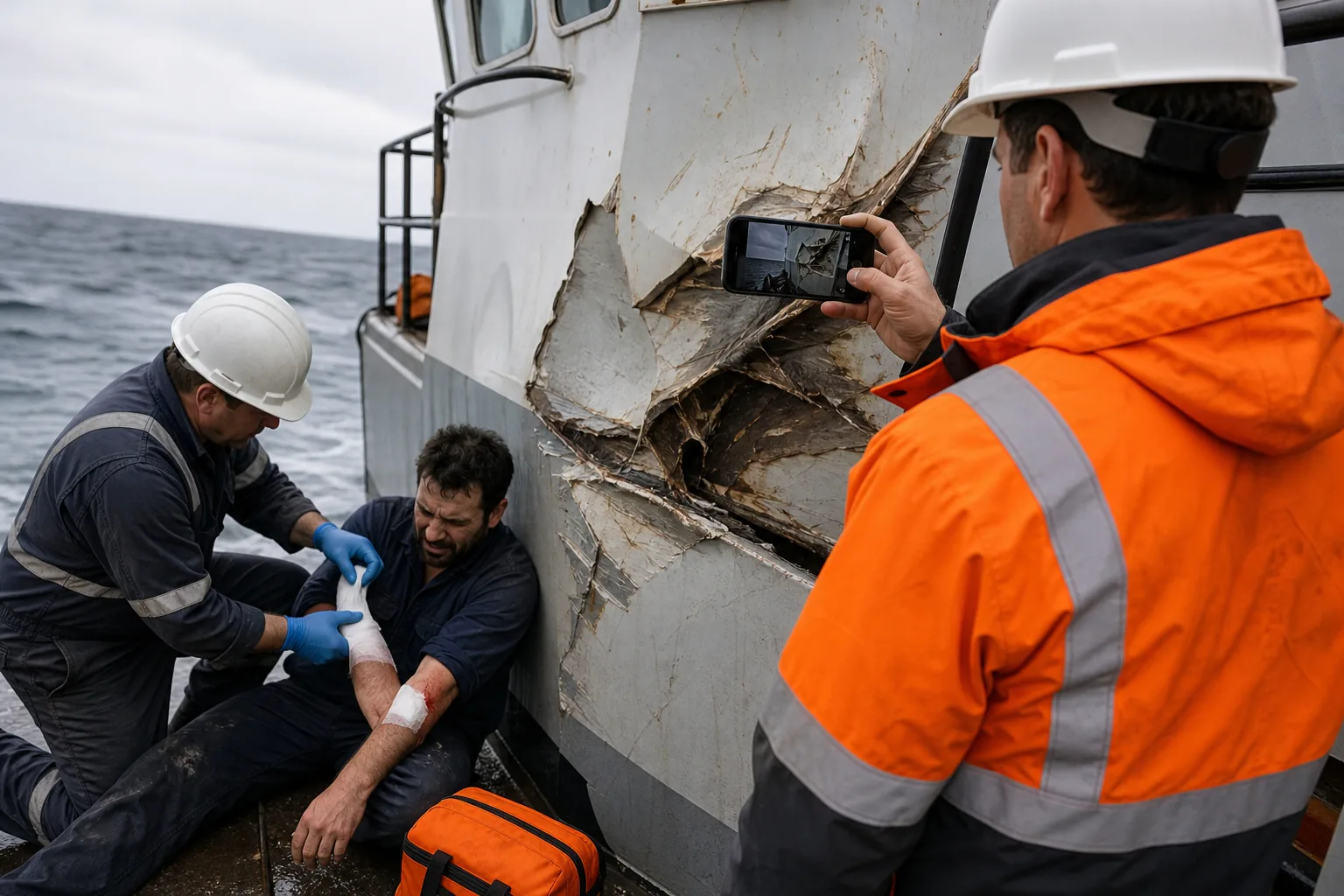
First, check yourself and passengers for injuries. If anyone is unconscious or has serious wounds, call emergency services right away. Keep the injured person still and, if possible, move them out of the water to prevent hypothermia.
Second, secure the scene. If the boat is still afloat, turn off the engine to avoid further damage. Deploy any available flotation devices and keep passengers calm. If the vessel is sinking, prioritize getting everyone onto life jackets and onto a stable platform.
Third, document the accident. Take photos of the damage, the water conditions, and any visible injuries. Note the time, location, weather, and what you were doing when the incident occurred. Gather contact information from any witnesses or other boat operators.
Fourth, report the incident to the appropriate authority. In California, the Division of Boating and Waterways requires a formal report within 48 hours for accidents involving injury or significant property loss. Their online portal lets you submit a report quickly California DBW reporting guidelines. Other states have similar requirements, so check local regulations.
Fifth, notify your insurance carrier as soon as possible. Provide them with the documentation you collected and a clear description of what happened. Early notification helps avoid claim delays.
Finally, avoid making statements about fault until you speak with a legal professional. Even well‑meaning comments can be used against you later.
"In the heat of a riverboat accident, staying calm and collecting evidence is just as important as providing first aid."
Legal Recourse for Riverboat Accident Victims
If you’ve been injured, you have several paths to compensation. The first step is to understand the legal landscape that governs riverboat incidents.
Most accidents fall under state maritime law, which blends local statutes with federal admiralty principles. In many cases, the boat owner’s liability insurance will cover medical expenses, lost wages, and pain‑and‑suffering. However, complex cases, especially those involving commercial operators, may end up in federal court under the Shipowners’ Limitation of Liability Act.
One key tool is the “Signal Claimant Exception,” which allows an injured party to keep a state‑court lawsuit alive even if the boat owner files a federal action first. This exception has been upheld by the Eleventh Circuit, offering victims a way to avoid being forced into a distant federal venue.
To pursue a claim, you’ll need solid evidence: the accident report, photographs, medical records, and witness statements. An experienced boating accident attorney can help you assemble this package and negotiate with insurers.
If you’re looking for a starting point, the Maritime Attorney AI site provides a clear overview of what a boating accident attorney can do for you What a Boating Accident Attorney Can Do for You in 2026. The guide explains how attorneys investigate the incident, identify liable parties, and work to secure fair compensation.
Keep in mind that some claims may involve multiple defendants, such as the vessel owner, the operator, and even equipment manufacturers. Each party may bear a portion of the responsibility, and a skilled lawyer will tease out those nuances.
Finally, be aware of deadlines. Most states impose a statute of limitations of two to three years for personal injury claims. Missing the filing window can bar you from recovery entirely.
Riverboat Safety Tips and Prevention
Prevention is the best defense against a riverboat accident. Below are usable steps you can take before, during, and after each trip.
Beyond the checklist, practice emergency drills with your crew. Run a short “man overboard” drill each season so everyone knows how to react quickly. Keep a spare set of flares and a waterproof radio on board for signaling.
When docking, approach at idle speed, use fenders, and communicate clearly with dockhands. If wind or tide pushes you off course, adjust throttle gently, big jerks can destabilize the boat.
Lastly, stay within your skill level. If a route looks too challenging, consider a guided tour or postpone the trip. Overconfidence has led to many capsizing incidents, especially when combined with heavy loads.
Frequently Asked Questions
What should I do if I’m injured but the boat is still moving?
Stay seated if possible to avoid falling. Signal the captain to stop the engine. If you can’t get the boat to stop, grab a sturdy rail or a flotation device to keep yourself upright. Once the vessel is stationary, assess your injuries, call for medical help, and start gathering evidence. Do not attempt to move unless you’re certain it’s safe; moving too soon can worsen injuries.
How long do I have to file a claim after a riverboat accident?
Statutes of limitation vary by state, but most allow two to three years for personal injury claims. Some maritime claims may have a shorter window, especially if the accident involved federal jurisdiction. It’s wise to consult an attorney within weeks to protect your rights and ensure you don’t miss the filing deadline.
Can I sue a boat manufacturer if a mechanical failure caused the crash?
Yes, if the failure is due to a design defect or faulty part, the manufacturer can be held liable under product liability law. You’ll need expert testimony to prove the defect existed before you bought the boat and that it directly caused the accident. An experienced attorney can help gather the necessary technical evidence.
Do I need a lawyer if my injury was minor?
Even minor injuries can lead to hidden costs like lost wages, future medical expenses, or chronic pain. A lawyer can evaluate the full scope of your damages and negotiate with insurers for a fair settlement. Many attorneys work on a contingency basis, so you pay only if you win.
What if the boat operator was under the influence of alcohol?
Alcohol impairment is a strong factor in many riverboat accidents. Law enforcement can conduct breath or blood tests, and the results become part of the official report. This evidence can boost your claim for negligence and may also lead to criminal charges against the operator.
How can I protect myself from overloading a vessel?
Every boat has a capacity label showing the maximum number of passengers and total weight. Before you board, add up the weight of people, gear, and fuel. If you exceed the limit, redistribute cargo, remove non‑essential items, or add another vessel to share the load. Overloading reduces stability and increases the chance of capsizing.
Conclusion
Riverboat accidents are preventable when you understand the causes, act quickly after an incident, and know your legal options. By inspecting your vessel, respecting weather, avoiding alcohol, and keeping a sharp lookout, you reduce the odds of a collision. If an accident does occur, follow the immediate steps we outlined, document everything, and reach out to a qualified attorney to protect your rights.
Ready for more detailed resources? Explore our Find the Right Boat Accident Lawyer Near Me: A 2026 Guide for deeper insight into choosing counsel and building a strong case.