Barge Accident Injury: Steps After a Crash
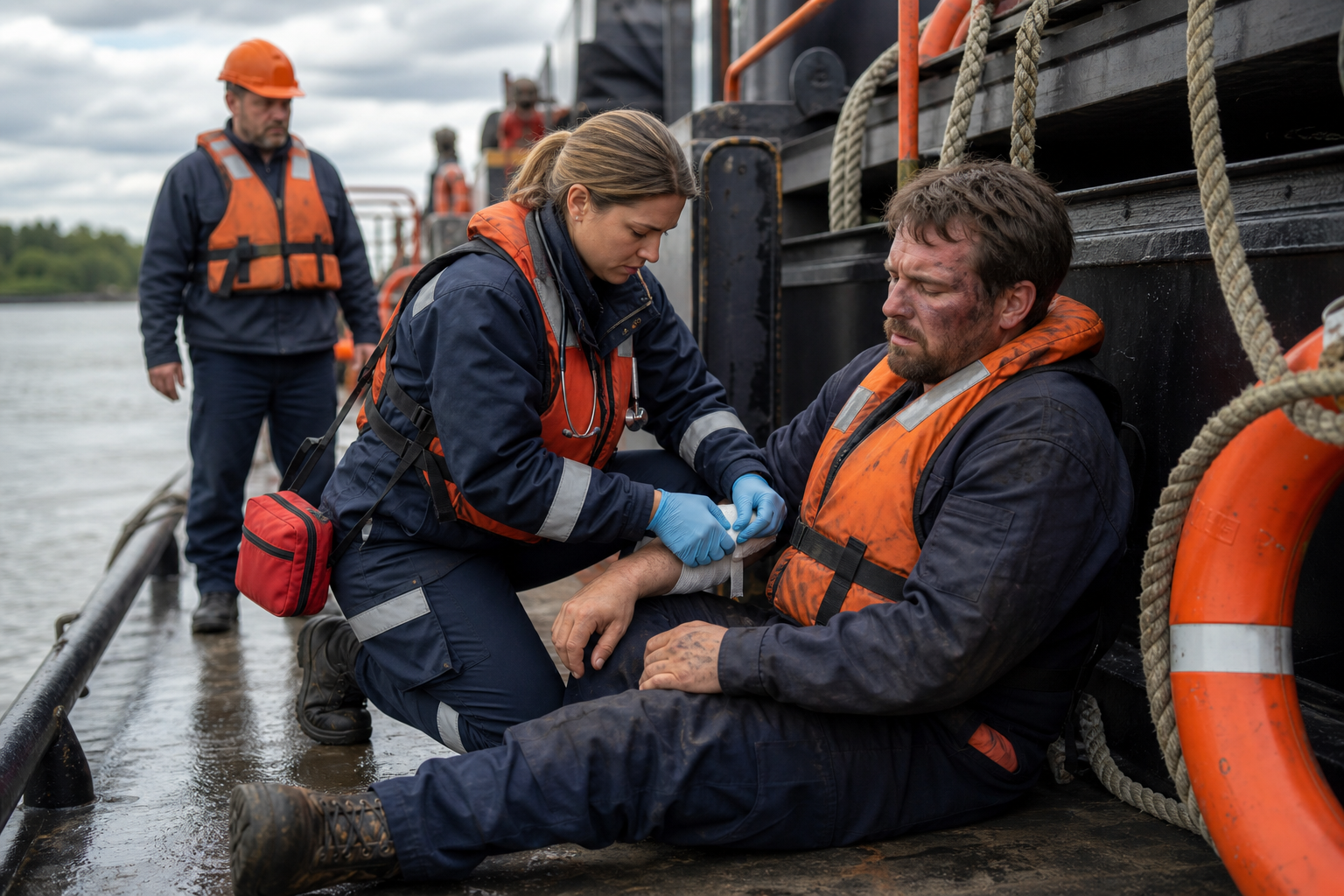
A barge crash can leave you hurt before you understand what happened. The next steps can affect your health, your records, and your legal claim. Get medical care first, report the incident, preserve evidence, and speak with maritime counsel before signing anything. These steps can help protect you after a barge accident injury.
Step 1: Get Medical Care and Report the Barge Accident
Your first goal after a barge accident injury is safety. Get away from fire, fuel, loose cargo, damaged railings, or any part of the vessel that may shift. If someone is in the water, alert the crew and emergency responders right away. Don't return to the scene for personal items.
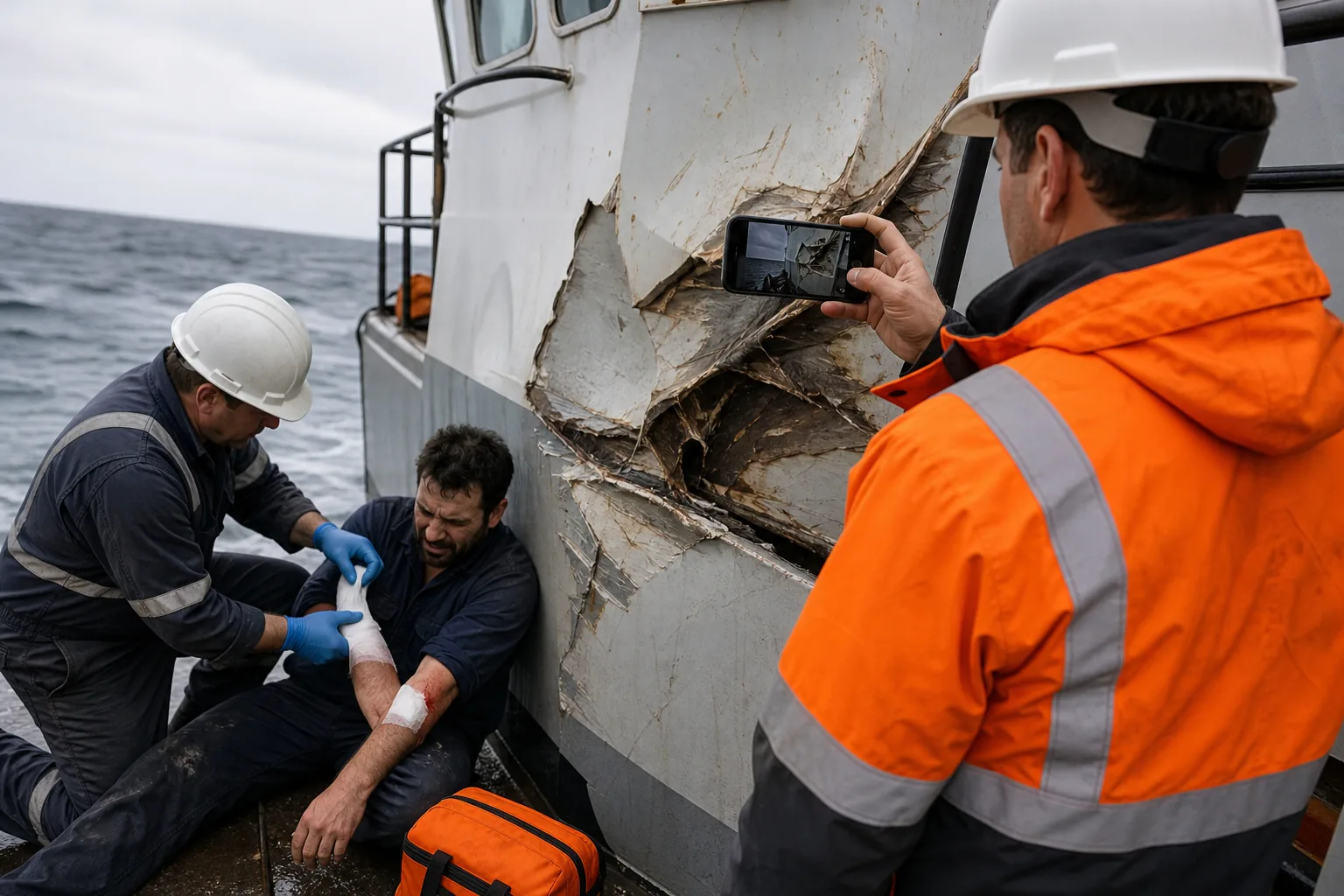
Ask for medical care even if the pain seems mild. Cold water, shock, and adrenaline can hide symptoms. A head injury may not feel severe at first. The same is true for back strain, internal injury, hearing damage, and some joint injuries.
Tell the provider exactly what happened. Say where you hurt and when the symptoms began. Don't guess at a diagnosis. Let the clinician examine you and follow the care plan. Keep every discharge paper, prescription record, work note, and bill.
Report the crash through the proper chain of command as soon as you can. Give a clear account of the event. State the time, location, vessel, task you were doing, and injury symptoms. Ask how the report will be recorded. If you can, keep a copy or write down who received it.
A barge is a flat, long boat often used to move goods, including heavy cargo. That design can mean a crash involves cargo shifts, deck hazards, tow operations, or contact with another vessel. Wikipedia's barge definition explains the basic vessel type in plain terms.
Don't post about the crash online. Avoid giving a recorded statement to an insurer before you understand your rights. You can tell the truth without giving a broad statement that leaves out later symptoms.
Step 2: Document Your Barge Accident Injury and the Accident Scene
Good records can show what changed after a barge accident injury. Start a private file as soon as your condition allows. Keep it in a safe place, not on a shared work device or account.
Write down your own account while the details are fresh. Include the weather, water conditions, lighting, vessel movement, alarms, instructions, and the position of people nearby. Record what you were doing just before impact. Note whether cargo moved or equipment failed.
Use your own words. Don't copy a company report. Don't fill gaps with guesses. If you don't know why the crash occurred, write that you don't know.
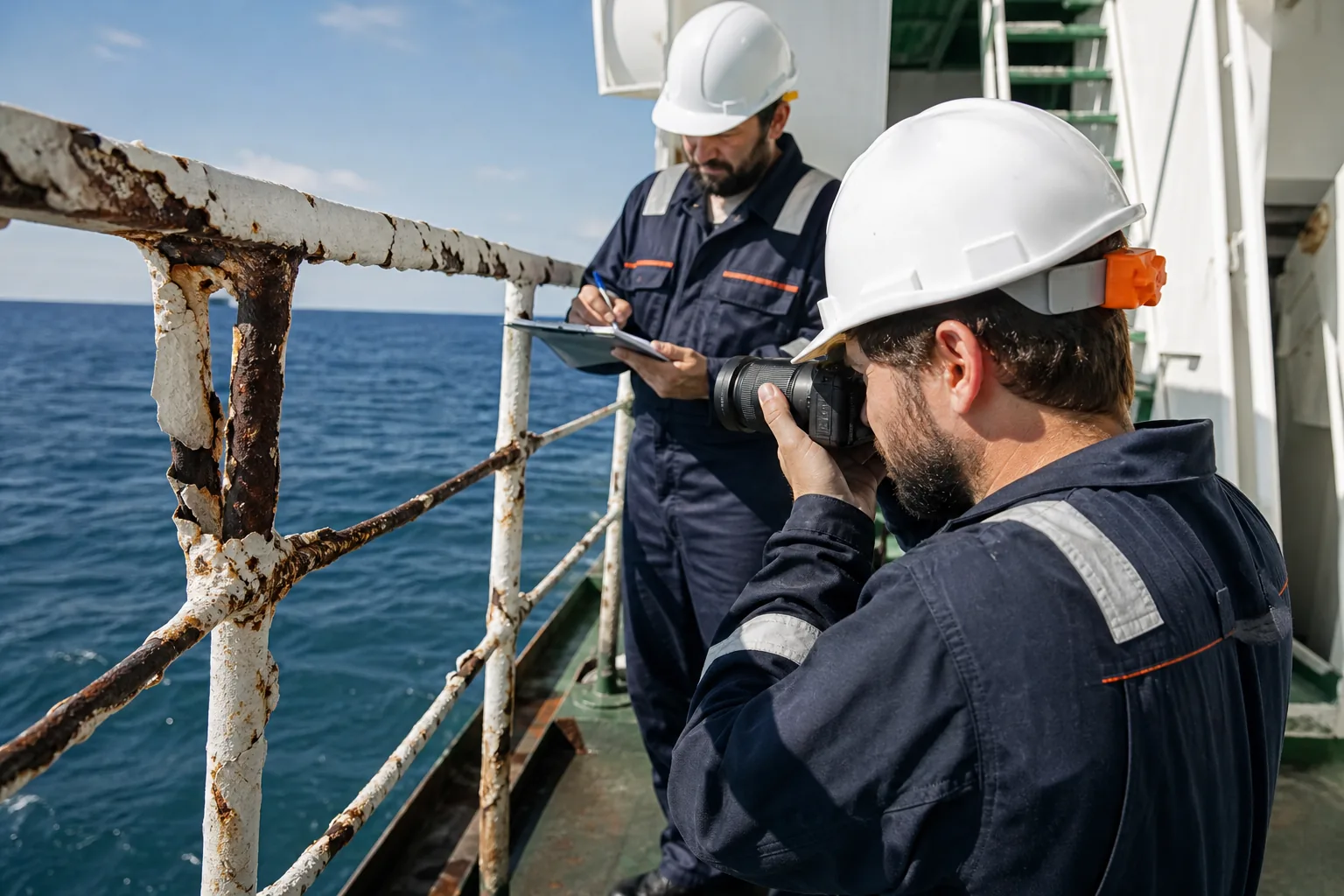
If it's safe and lawful, take photographs of the vessel and surrounding area. Focus on the damaged rail, deck, ladder, winch, line, hatch, cargo, or control area tied to the event. Take wide shots first. Then take close shots that show scale. Keep the original files and note when you took them.
Also preserve your clothing and gear. Don't wash clothing that shows fuel, blood, paint, or damage. Put it in a clean bag and store it dry. Keep damaged boots, gloves, helmets, or tools if they may show what happened.
Build a simple treatment and work log. Each entry can include:
- The date of a visit or call.
- The provider's name and the reason for care.
- Your pain level and limits that day.
- Missed shifts or tasks you could no longer do.
- Travel costs and other injury-related expenses.
Save texts, emails, crew messages, schedule changes, and safety notices. Keep the names of witnesses and a short note about what each person saw. Don't pressure anyone to change a statement. Just preserve contact details for your lawyer.
Companies may control vessel logs, maintenance files, cargo records, video, and personnel records. Tell a lawyer about any missing footage or sudden cleanup. A lawyer may be able to request those records before they disappear.
maritimeattorney.ai can help you find a barge accident lawyer resource guide when you need to organize those questions and records.
Step 3: Identify Which Maritime Injury Law May Apply
The law for a barge accident injury depends on your job, the vessel, the location, and the facts of the crash. Don't assume that an ordinary workers' compensation claim is the only path. Maritime law can divide workers into different groups.
If you worked as part of a vessel's crew, a seaman claim may be possible under the Jones Act. A seaman claim often turns on your connection to a vessel or group of vessels under common ownership or control. The details matter. Job title alone doesn't decide the issue.
If you worked on or near navigable waters but don't qualify as a seaman, the Longshore and Harbor Workers' Compensation Act may apply. That law can cover some longshore workers, ship repair workers, terminal workers, and other maritime employees. Coverage depends on both your work and your place of work.
General maritime law may also affect claims involving unsafe conditions, vessel negligence, unseaworthy conditions, or injuries to people who weren't employees. A passenger, contractor, visitor, or worker from another company may face a different set of rules.
Location matters too. A river accident, port collision, canal event, and offshore incident may involve different federal and state rules. The identity of the vessel owner can matter. So can the company that hired you, the operator that controlled the barge, and the party that loaded the cargo.
Barges carry bulk and heavy goods, and their work can take place on canals, rivers, ports, or coastal routes. The plain-language history of barges on Wikipedia's barge page shows why the word covers more than one kind of vessel and work setting. That variety is one reason a lawyer must examine the full job and voyage.
Gather the facts a maritime lawyer will need. Write down your role, payroll employer, vessel assignment, time aboard, work location, and whether you moved between vessels. Include any second job tied to the same company. Bring your medical file and accident report to the first meeting.
Don't choose a legal label before the facts are reviewed. The wrong label can cause you to miss a claim or send notice to the wrong party.
Step 4: Determine Who May Be Liable for the Barge Accident
Several parties may share responsibility for a barge accident injury. The person who caused the immediate mistake may not be the only party with legal responsibility.
Potentially responsible parties can include:
- The vessel owner, if poor maintenance or an unsafe condition contributed.
- The operator or towing company, if navigation or crew decisions caused the crash.
- A cargo owner or loading contractor, if an unstable load shifted.
- An employer, if training, staffing, supervision, or safety rules fell short.
- A maintenance contractor, if a repaired system failed.
- Another vessel or facility, if its conduct caused the impact.
Liability requires proof. A damaged part alone doesn't show who caused the harm. The investigation may need maintenance records, inspection notes, training files, voyage data, crew schedules, load plans, and witness accounts.
Think about a worker thrown against a bulkhead after a tow line snaps. The line might have been worn. It might have been used in a way the maker warned against. The deck may have lacked a safe place to stand. A supervisor may have ordered the task during unsafe conditions. Each fact points to a different question.
Preserve names and roles, not only names. The deckhand who saw the impact may not know the company that controlled the equipment. A terminal worker may know who loaded the cargo. A mechanic may know about a prior repair. Write down what each person did and what they may have seen.

Don't sign a release or accept a quick payment before a lawyer reviews it. A release may cover more claims than you expect. It may also affect medical liens or future treatment.
maritimeattorney.ai is a useful starting point if you need help sorting the owner, employer, operator, and contractor roles. Share the facts without editing them to fit a theory. The evidence should shape the claim.
Step 5: Protect Your Claim Before Deadlines Expire
A barge accident injury claim can weaken when notice is late or evidence is lost. Time limits vary by claim type and location, so don't wait for a final diagnosis before getting legal advice.
Start by asking for the written injury and accident procedures that apply to your job. Follow reasonable reporting rules, but keep your own copy of every notice. Send important communications in a way that shows when the company received them.
Keep treatment consistent. If a doctor refers you to a specialist or therapy, ask what happens if you can't attend. Tell the provider about transportation, cost, or work problems. Don't stop care without understanding the medical effect and how the gap may appear in your file.
Be careful with employer forms. Read each page before signing. Correct errors in dates, body parts, job duties, or the description of the crash. If a form asks for a recorded statement or broad medical authorization, ask a maritime lawyer to review it first.
Don't discuss fault with the crew or insurer. Don't guess about speed, signals, or equipment. A short statement such as “I was hurt during the collision” may be safer than a rushed explanation of events. You still need to be truthful. The point is to avoid speculation.
Ask counsel to check for special notice rules. Some maritime claims require notice within a set period. Others may have a longer filing limit. A contract, government-owned vessel, or public facility can add another rule. You cannot safely calculate the deadline from the accident date alone.
Prepare for the first legal review with a short packet:
- Your accident report and any reply from the company.
- Medical records, bills, and work restrictions.
- Photos, messages, names of witnesses, and your symptom log.
- Pay records that show missed work or reduced duties.
- Any insurer letter, release, or settlement proposal.
If you want a second place to organize the process, maritimeattorney.ai's maritime injury resources can help you prepare for a lawyer meeting. It isn't a substitute for advice based on your facts, but it can help you ask better questions.
Choose a lawyer who handles maritime injury matters, not only land-based injury cases. Ask what law they think may apply, which records they want preserved, and what deadline they are tracking. Then put the plan in writing.
Frequently Asked Questions About Barge Accident Injury Claims
What should I do after a barge accident injury?
Get to safety, seek medical care, report the crash, and preserve evidence. Tell the provider every symptom, even if it seems small. Write down what happened while you remember it. Avoid recorded statements or releases until a maritime lawyer reviews them. Early records can help connect the injury to the crash.
Who can be sued after a barge accident?
The vessel owner, operator, employer, cargo company, maintenance contractor, or another vessel may face a claim. The right party depends on who controlled the work and what caused the harm. A lawyer will review logs, training records, load documents, and maintenance files before deciding where responsibility may lie.
Does the Jones Act cover every barge worker?
The Jones Act doesn't cover every barge worker. It may apply to a worker who qualifies as a seaman based on a substantial connection to a vessel or fleet. Workers who don't meet that test may have rights under another maritime law. Your job duties and vessel assignment matter more than your title.
How long do I have to file a maritime injury claim?
The deadline depends on the legal claim, the employer, the vessel, and the place of the accident. Some claims also require early notice. Don't assume that workers' compensation rules or a standard personal injury deadline applies. Ask a maritime lawyer to identify each deadline before it passes.
Can I still claim compensation if I made a mistake?
You may still have a claim after making a mistake. Maritime law can assess shared fault rather than erase every claim. The result depends on what you did, what the employer required, and whether another unsafe condition contributed. Give your lawyer the full account, including facts that feel unfavorable.
Conclusion
After a barge crash, focus on care and proof before making any deal. Report the event, keep your records, preserve the scene, and contact maritimeattorney.ai or another qualified maritime lawyer promptly. Your next action should be simple: gather your medical papers and accident notes, then arrange a confidential legal review before a notice or filing deadline arrives.