Maritime Personal Injury Case Timeline for Foreign Workers

A maritime injury claim can start moving before you leave the vessel. The maritime personal injury case timeline for foreign workers begins with urgent steps, then turns on which law applies and how soon its filing rules require action.
Step 1: Get Medical Care and Notify Your Employer
Goal: Protect your health and make a clear record of when and how the injury happened.
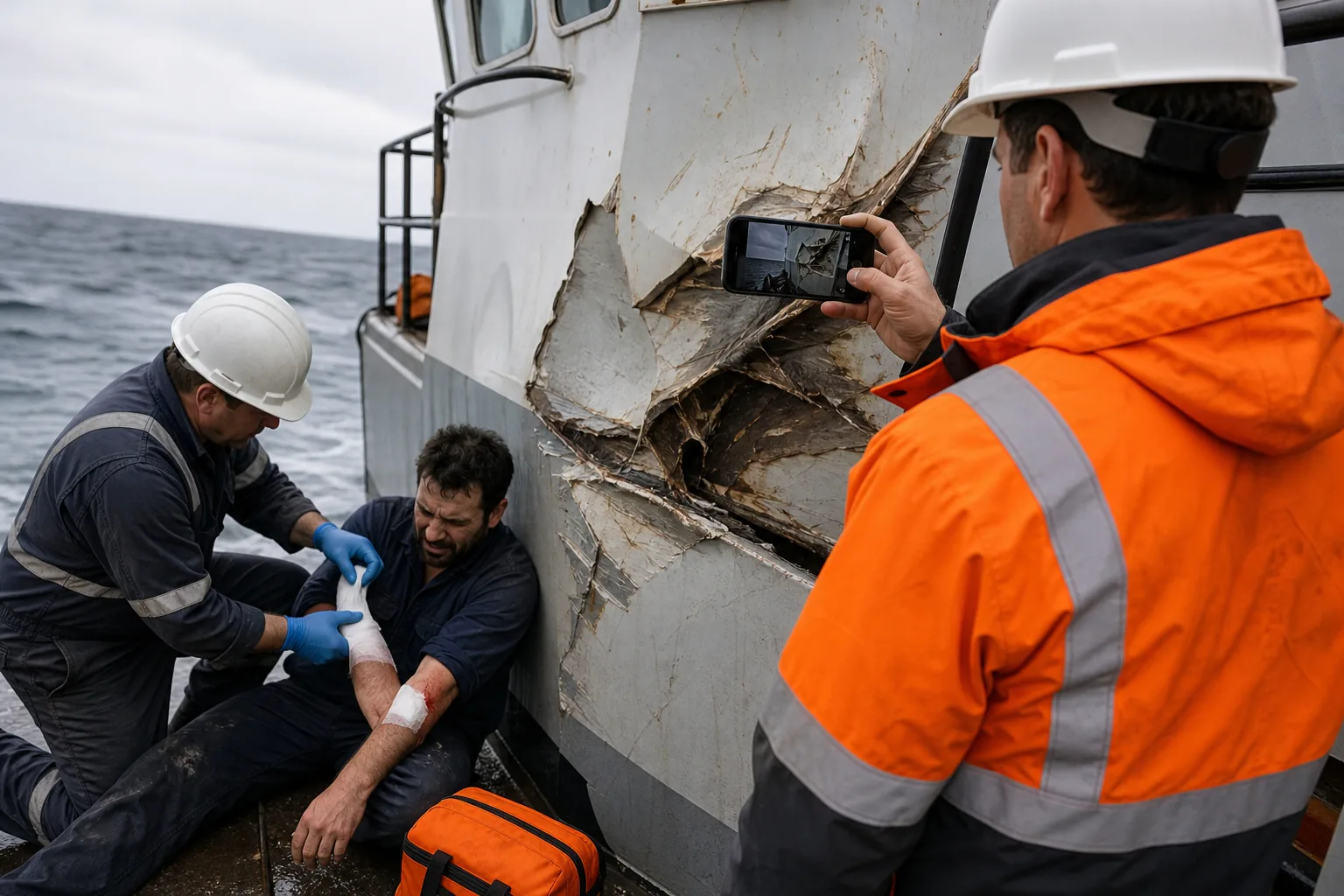
Get medical care as soon as you can, even if the injury seems minor. A fall, a blow from moving gear, or a strain during deck work may feel manageable at first. Tell the clinician that the injury happened while you were working aboard or near a vessel. Be clear about when symptoms began and what tasks you were doing.
Tell your supervisor, captain, or employer about the injury as soon as you’re physically able. If you can, report it in writing. Include the date, time, place, what happened, and where you feel hurt. Keep a copy or take a photo of the report before handing it over. Ask for the official injury report and keep a copy for your own records.
Use plain, direct words. If English isn’t your strongest language, ask for an interpreter or a trusted person to help you understand forms. Don’t sign a statement you can’t read or explain. And don’t guess at details. If you’re unsure about a time or name, say so.
Workplace health and safety practices may be part of the broader workplace context.
Keep all discharge notes, prescriptions, test results, and instructions. If you’re moved to another clinic or sent home, ask how to get a copy of your records. This early paper trail helps connect the injury, the report, and the treatment.
Step 2: Preserve Evidence and Get Legal Advice
Goal: Save details that may disappear and find out which claim route may fit your work.
Write down what you remember while it’s fresh. Note the vessel, work area, task, time, weather or sea conditions, and equipment involved. If it’s safe and allowed, take photos of the hazard or damaged gear. Don’t put yourself at risk to get a picture, and don’t remove or alter equipment.
Write down the names and job roles of people who saw the event. Ask witnesses to record what they remember in their own words, without coaching them. Keep messages with your employer or crewing agent. Save your contract, pay records, work schedule, and any safety instructions you received. These papers can help show what work you did and who directed it.
Make a simple daily note of pain, treatment, missed work, and new symptoms. Keep receipts for travel to care or other injury-related costs. If your employer asks for a recorded statement or offers a settlement form, take time to understand what it says. A quick signature can be hard to undo.
Get legal advice early, especially if you’re a foreign worker moving between vessels, ports, or countries. Ask the adviser to identify the likely law, the notice and filing dates, and any documents you should avoid signing. Your nationality alone doesn’t settle which rules apply. The type of job, vessel, employer, and location can all affect the analysis.
Maritimeattorney.ai has maritime injury information that can help you prepare questions for a legal review. Bring the timeline, work papers, medical records, and any report you received. That gives the adviser facts to assess instead of relying on memory alone.
If you’re away from home, keep digital copies in a secure place you can reach from another country. Share them only with people helping with your care or claim.
Step 3: Identify the Applicable Law and Protect Filing Deadlines
Goal: Confirm the rules for your specific work before relying on a familiar deadline.
Ask an adviser to classify your work and the incident. A seafarer may have a claim under the Jones Act if the legal requirements for seaman status are met. A worker who doesn’t qualify as a seaman may have a different route, such as a claim under the Longshore and Harbor Workers’ Compensation Act (LHWCA). A worker on a covered overseas government project may need to ask whether the Defense Base Act applies.
These routes are not interchangeable. A Jones Act negligence claim concerns an employer’s fault. Maintenance and cure are separate seaman protections for living support and medical care while the worker recovers, generally until maximum medical improvement. General maritime law may also raise an unseaworthiness claim if a vessel wasn’t fit for its intended use. The facts decide what claims may be available.
Don’t assume the three-year Jones Act lawsuit limit controls every case. Research on maritime claim deadlines identifies a 30-day filing window for some LHWCA and Defense Base Act claims. Public Vessels Act claims may involve a two-year limit, with an effective 18-month period after a six-month denial period. The exact requirement depends on the claim and its procedural stage, so confirm it promptly.
A late notice or filing can put a claim at risk before a longer lawsuit deadline arrives. Ask for each deadline in writing, including what must be filed, where it must go, and who must receive it. Save proof of delivery and a copy of the submitted form.
For an overview of common maritime accident types, compare the examples with your own work setting. The label for an accident doesn’t decide your claim, but a precise account can help an adviser ask the right questions.

Step 4: File the Claim and Follow the Investigation
Goal: Submit the right paperwork on time and keep the facts consistent as both sides review the event.
Once the likely claim route is clear, gather the forms and records it requires. Depending on the law, a claim may go to an employer, insurer, or government office. Ask who must receive it and whether the deadline concerns notice, a formal claim, or a lawsuit. Those are different steps. Keep a full copy of what you send and proof that it arrived.
After filing, expect questions about your job, the accident, and your medical care. The worker’s legal team and the employer’s side may investigate. They may seek medical records, work schedules, incident reports, or witness accounts. Give accurate answers. If you don’t know something, say so rather than filling in a gap.
Keep a dated record of every request and response. If a form arrives in a language you don’t understand, ask for a translation before answering. If an employer or insurer asks you to attend an exam, get clear instructions about the appointment and keep a copy of any paperwork you receive.
Tell your adviser when your symptoms change or a new treatment is recommended. Don’t downplay an injury to get back to work sooner, and don’t exaggerate it. Consistent medical notes help others understand how your condition has changed over time.
Foreign workers may face extra hurdles when records sit in different countries or when a crew member leaves the vessel. Preserve the original files and note where each copy came from. If a witness is due to depart, record their full name and role while you can. An adviser can decide what formal steps may be needed to preserve that account.
Keep working from the deadline sheet you made in Step 3. Filing one form doesn’t necessarily complete every required step.
Step 5: Evaluate Settlement, Litigation, and Compensation
Goal: Weigh any offer against your medical outlook, lost income, and the claims you may be giving up.
Settlement talks may begin while the investigation is still active. Before you respond, ask what the offer covers. Does it include past medical costs and lost wages? Does it release future claims? Does it end maintenance and cure or other benefits? Get the terms translated if needed, and ask an adviser to explain the effect before you sign.
It can be hard to value a claim before doctors understand the likely course of treatment. A straightforward injury with clear responsibility may resolve faster than a case involving surgery, disputed fault, several defendants, or arbitration.
Settlement isn’t the only path. If talks fail, a lawsuit may ask a judge or jury to decide responsibility and damages. That can add formal stages, including document exchange and testimony. Ask what evidence still needs to be gathered and what the next case milestone is. A case plan should explain both the likely work ahead and the risks of accepting or rejecting an offer.
Potential compensation depends on the law and facts. It may include medical costs and lost wages. A Jones Act or general maritime claim may address other losses, while maintenance and cure have their own purpose. Don’t treat an estimate as a guaranteed award.
If a decision or settlement is in another country or currency, ask how payment will be made and what documents you’ll need to complete the process. Also ask whether an appeal or enforcement step could delay payment. Keep copies of final agreements and payment records.
Use maritimeattorney.ai as a starting point for questions about maritime legal help and fee arrangements, then have your own documents reviewed before making a decision.
Frequently Asked Questions
Does a foreign seafarer have rights after an injury?
A foreign seafarer may have legal rights after an injury, but citizenship alone doesn’t decide which claim applies. The worker’s role, vessel, employer, location, and the facts of the incident can affect the answer. Keep your work contract and injury records, then ask a maritime lawyer to assess the law and deadlines that fit your case.
How long do I have to file a maritime injury claim?
There isn’t one deadline for every maritime injury claim. Some LHWCA and Defense Base Act filings may have a 30-day window, Public Vessels Act claims can involve a two-year limit, and a Jones Act lawsuit generally has a three-year limit. Confirm the rule for your exact claim, since notice and lawsuit deadlines can differ.
Can I claim maintenance and cure if I’m not a U.S. citizen?
Citizenship by itself doesn’t answer whether maintenance and cure may apply. This protection is tied to seaman status and the facts of the work and injury. Ask an adviser to review your role, contract, vessel connection, and medical records. Don’t assume this benefit replaces a separate negligence claim or another available filing route.
Should I sign an employer’s injury or settlement form?
Read and understand any form before signing it. A report may record basic facts, while a settlement agreement may release claims or affect future benefits. Ask for a copy and a translation if you need one. If the form asks you to give up rights, get legal advice before you sign or accept payment.
Can an immigration or language issue affect my claim?
It can make communication and document gathering harder, but don’t assume your immigration status automatically ends a claim. Save your work and travel papers, request an interpreter when needed, and ask an adviser how your status affects the specific case. Consular staff may help with communication or documents, but they don’t decide a maritime claim.
Conclusion
Act quickly on care, reporting, and evidence, then confirm the filing rule that fits your work instead of relying on a general deadline. Gather your contract, medical papers, and incident report now, and use them to seek advice through maritimeattorney.ai or another qualified maritime lawyer.