Offshore Worker Rights: What You Need to Know

Offshore workers face some of the most dangerous conditions in any industry, and the law gives them protections that most workers on land never have. But those protections only work if you know they exist. This guide breaks down exactly what rights you have, which laws apply, and what to do when an employer ignores them.
Which Laws Govern Offshore Worker Rights?
The legal framework for offshore workers is not a single statute. It's a layered set of federal laws, each covering a different type of worker or work situation. Knowing which law applies to you is the first real step in protecting yourself.
The Jones Act(46 U.S.C. § 30104) is the most well-known. It covers seamen , workers who spend at least 30% of their time aboard a vessel in navigation. Under the Jones Act, a seaman can sue an employer directly for negligence. That's a bigger deal than it sounds: ordinary workers' comp blocks most lawsuits. The Jones Act removes that barrier.
The Longshore and Harbor Workers' Compensation Act (LHWCA) covers a different group: maritime workers who aren't classified as seamen. This includes longshoremen, harbor workers, and many offshore workers on fixed platforms. The LHWCA works more like traditional workers' compensation. You don't sue for negligence. You file a claim through a federal system for medical costs and lost wages.
The Outer Continental Shelf Lands Act (OCSLA) extends federal law to fixed platforms on the outer continental shelf. Workers on oil platforms more than three miles offshore often fall under this law, which can bring in LHWCA coverage or, in some circumstances, the Jones Act if a vessel is involved.
General maritime law also matters. Even outside the Jones Act and LHWCA, courts apply centuries of maritime common law that gives seamen rights to a seaworthy vessel and protections that don't exist in land-based employment. According to Wikipedia's overview of the Jones Act, the law was passed in 1920 specifically to protect American maritime workers and the domestic shipping industry.
The key takeaway: which law covers you depends on where you work and what you do. A diver on a vessel is treated differently from a welder on a fixed platform. Get that classification wrong and you could file under the wrong statute, miss a deadline, or leave money on the table.
Your Right to a Safe Working Environment
Offshore workers have a legal right to a safe workplace. But the agencies and laws that enforce that right are more complicated offshore than they are on land.
The Occupational Safety and Health Administration (OSHA) covers some offshore environments. On vessels and boats, OSHA generally applies. On fixed platforms on the outer continental shelf, the Bureau of Safety and Environmental Enforcement (BSEE) takes over. BSEE sets drilling safety rules, blowout preventer requirements, and emergency response standards for offshore oil and gas operations.
For seamen specifically, the duty of seaworthiness goes beyond OSHA rules. An employer must keep the vessel reasonably fit for its intended use. That means proper equipment, a competent crew, and a ship that's structurally sound. If a vessel is unseaworthy , even temporarily , the owner is liable to injured seamen. You don't have to prove the employer was careless. The duty is absolute.
Employers also have a general duty to train workers on hazards. In offshore environments, that includes risks like fire and gas exposure, falls from height, crane and lifting operations, and equipment failures. When a company cuts corners on training to save time, and a worker gets hurt, that shortcut can be used as evidence of negligence in a Jones Act claim.
Workers also have protection against retaliation. Reporting safety violations should not cost you your job. Federal maritime law and OSHA regulations both prohibit employers from punishing workers who raise safety concerns, refuse to work in genuinely dangerous conditions, or cooperate with a federal investigation.
Maintenance and Cure: Injured Offshore Workers' Core Remedy
Maintenance and cure is one of the oldest protections in maritime law. If you're a seaman and you get sick or injured while in service of a vessel, your employer owes you two things regardless of fault. No negligence required. No investigation needed. Just a work-related illness or injury.
Maintenance is a daily living allowance that covers your basic expenses while you recover. Think rent, food, utilities. The exact amount is set by the employer or by a collective bargaining agreement, but courts have found that low maintenance rates can be challenged. Historically, rates were sometimes set at $8 or $15 a day , far below actual living costs. Courts now look more carefully at whether the rate reflects real expenses.
Cure covers your medical treatment. Your employer must pay for medical care until you reach maximum medical improvement (MMI). MMI doesn't mean you're fully healed. It means further treatment won't produce significant improvement. Once you hit MMI, the cure obligation ends. But the maintenance obligation can continue beyond that point if you're still out of work.
Employers sometimes try to cut off maintenance and cure early. They may dispute whether the injury happened in service of the vessel, question whether you've really reached MMI, or simply stop paying without explanation. If an employer refuses to pay maintenance and cure without a solid legal basis, they can face punitive damages , a financial penalty on top of the unpaid benefits.
Maintenance and cure is separate from a Jones Act negligence claim or an unseaworthiness claim. You can pursue all three at the same time. Each covers a different category of harm. Maintenance and cure handles ongoing expenses. A negligence claim handles pain, suffering, lost future earnings, and other damages that go beyond medical bills and daily living costs.
Filing an Injury Claim as an Offshore Worker
The process for filing an offshore injury claim depends on which law covers you. But a few steps apply across the board, and the timing matters more than most workers realize.
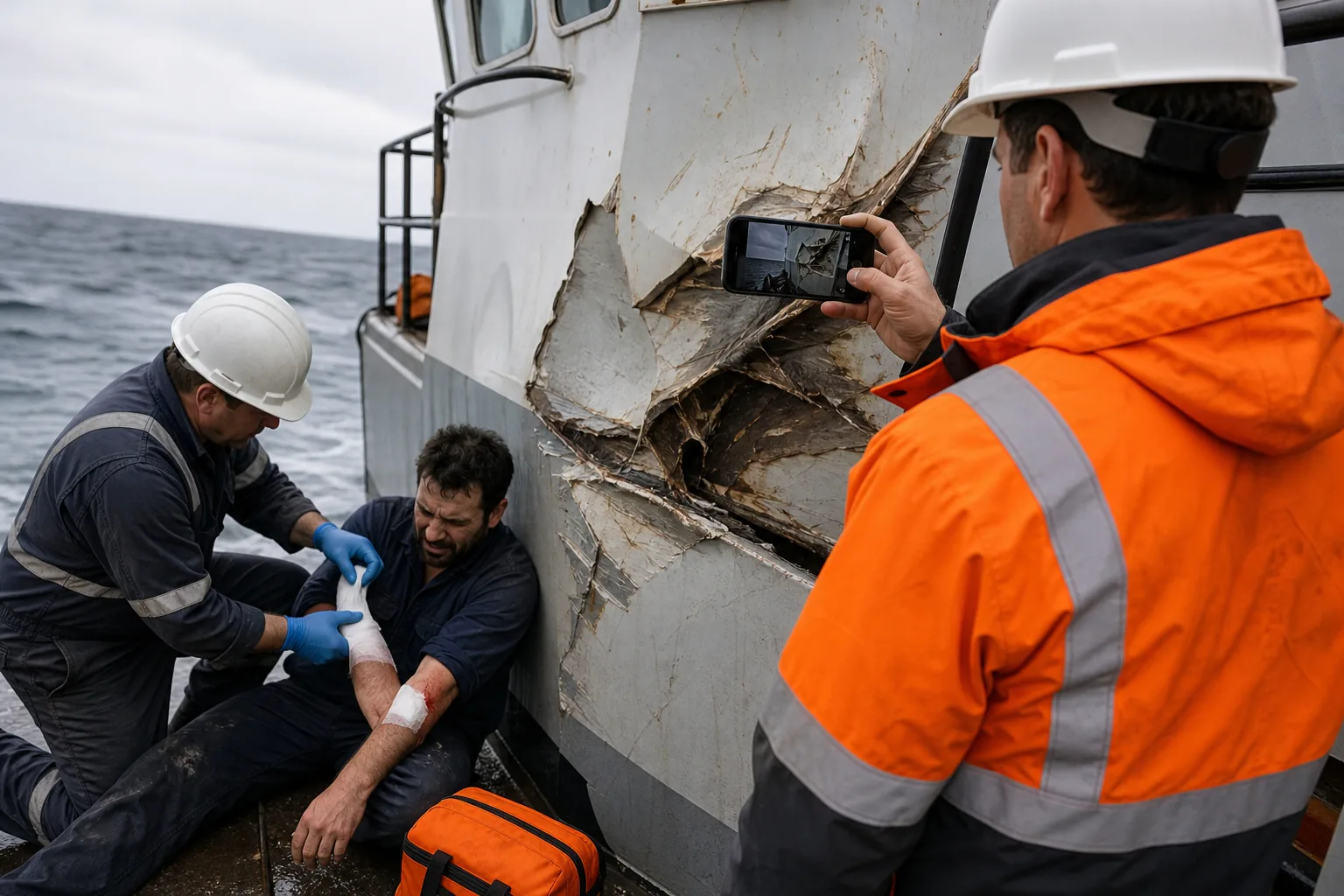
First: report the injury immediately. Tell your supervisor or captain as soon as the incident happens. This creates a formal record. If you wait, the employer can argue the injury didn't happen on the job, or that it wasn't serious. A delayed report can seriously damage your claim even if everything else is solid.
Second: get medical attention. Even if the injury seems minor, see a doctor. Offshore injuries can be deceptive , adrenaline masks pain, and some injuries worsen over hours or days. You have the right to see a doctor of your own choosing once you reach shore. You don't have to rely solely on the company-appointed physician, whose reports sometimes minimize the severity of injuries.

Third: gather evidence while you can. Take photos of the scene, the equipment involved, and any visible injuries. Get names and contact details of witnesses. Write down exactly what happened while the details are fresh. Evidence degrades fast in offshore environments , decks get cleaned, equipment gets replaced, crews rotate out.
Don't sign anything without legal advice. Employers and their insurers sometimes ask injured workers to sign statements or early settlement offers. These documents can permanently limit what you recover. An insurer's first offer is rarely close to the full value of a legitimate claim.
Deadlines are strict. Under the Jones Act, you generally have three years from the date of injury to file a claim. Under the LHWCA, you have one year. Missing these windows typically means losing your right to compensation entirely. If you're unsure which law applies to your situation, the team at maritimeattorney.ai's offshore injury guide explains how these overlapping statutes interact and how to figure out where you stand.
Wage and Hour Rights for Offshore Workers
Offshore workers often work long rotations , 14 days on, 14 days off, or longer. Whether the Fair Labor Standards Act (FLSA) applies to these workers, particularly those on vessels, has been a contested area of federal law.
The FLSA generally requires overtime pay for hours worked beyond 40 in a week. But the law has exemptions for certain maritime workers, and courts have wrestled with how those exemptions apply offshore. Workers on vessels engaged in foreign commerce have traditionally been exempt from FLSA overtime. Workers on vessels operating purely in domestic waters face different rules.
Fixed platform workers and shore-based maritime employees tend to have clearer FLSA coverage than vessel-based workers. If you work a 12-hour shift rotation on a platform and your employer classifies you as exempt to avoid paying overtime, that classification may be worth challenging.
Pay disputes in the offshore sector also involve how employers calculate wages for travel time, standby time, and time spent at the helipad or dock waiting for transport. Some employers treat that waiting period as unpaid. Whether that's legal depends on how the time is classified under federal law and your employment contract.
Collective bargaining agreements add another layer. Many offshore workers, particularly those in the maritime trades, are covered by union contracts that set wage rates, overtime structures, and benefits above the federal minimum. If you're a union member, your CBA may give you stronger protections than the law alone provides. Read it.
Workers who suspect wage theft or misclassification can file a complaint with the U.S. Department of Labor's Wage and Hour Division, which enforces FLSA compliance including for maritime workers where the statute applies.
Common Violations of Offshore Worker Rights
Rights on paper don't always translate to rights in practice. These are the violations that come up most often in offshore injury and labor disputes.
- Refusing or delaying maintenance and cure payments. Employers sometimes dispute the extent of an injury or claim a worker has reached MMI before they actually have. The result is a worker who's still recovering and unable to work but receiving nothing.
- Pressuring workers not to report injuries. Some supervisors discourage injury reports because incident rates affect contracts and bonuses. A worker who stays quiet loses their legal record of the event.
- Misclassifying workers to avoid Jones Act coverage. If a worker qualifies as a seaman but the employer labels them as a contractor or platform hand, the employer may try to funnel them into a cheaper compensation system.
- Using unseaworthy equipment. Defective cranes, worn rigging, faulty lifesaving gear, and overloaded decks are all conditions that can make a vessel legally unseaworthy. Employers have a duty to address these. Many don't until someone gets hurt.
- Rushing workers back after injury. Offshore schedules are tight and staffing is expensive. Workers sometimes feel informal pressure to return before they're medically ready, which can worsen injuries and weaken a future claim.
Liability waivers signed before an injury are often unenforceable under federal maritime law. Courts have struck down waivers where they found the employer was using them to sidestep responsibility for safety violations. If you were handed a waiver and later got hurt, don't assume you've signed away your rights. If you're based in Puerto Rico or another U.S. territory and handling offshore work disputes, a personal injury firm like Gilormini Law can help clarify how local and federal law interact in your specific situation.
The maritimeattorney.ai platform is built specifically for offshore and maritime workers who need to understand their legal options without first paying a consultation fee. The content there covers everything from Jones Act eligibility to how maintenance and cure disputes actually play out.
FAQ
What is the Jones Act and who does it protect?
The Jones Act is a federal law that gives seamen the right to sue their employer for negligence. It covers workers who spend at least 30% of their time aboard a vessel in navigation. Unlike standard workers' compensation, the Jones Act lets you pursue a lawsuit for pain, suffering, lost earnings, and other damages , not just medical bills. It's one of the most powerful protections available to offshore workers.
How long do I have to file an offshore injury claim?
Under the Jones Act, you generally have three years from the date of injury. Under the Longshore and Harbor Workers' Compensation Act, you typically have one year. Missing these deadlines almost always means losing your right to compensation. If you're unsure which law covers your situation, get legal advice as soon as possible after an injury. Don't wait to see how you feel in a few weeks.
Can I choose my own doctor after an offshore injury?
Yes. While an employer may have a company doctor examine you initially, you have the right to seek an independent medical evaluation. Company-appointed physicians sometimes downplay the severity of injuries. Getting your own doctor's assessment protects you and gives you independent medical evidence if your claim goes to litigation or settlement negotiation.
What is maintenance and cure, and can my employer stop paying it?
Maintenance and cure is a no-fault benefit for injured seamen. Maintenance covers daily living expenses. Cure covers medical treatment until you reach maximum medical improvement. Your employer can stop cure payments once you genuinely reach MMI, but they cannot stop maintenance without a valid legal reason. Cutting off benefits early without justification can expose the employer to punitive damages.
Do offshore workers get overtime pay?
It depends on your work situation. Some offshore workers on vessels are exempt from FLSA overtime rules under maritime exemptions. Workers on fixed platforms or shore-side maritime operations often do have FLSA overtime rights. The classification of your role and where you work matters significantly. If you think your employer is wrongly classifying you to avoid overtime, a wage and hour attorney or the U.S. Department of Labor can review your situation.
What if my employer retaliates for reporting a safety hazard?
Retaliation for reporting safety issues is illegal. Federal maritime law and OSHA regulations protect offshore workers who report violations, refuse to work in dangerous conditions, or participate in government investigations. If you lose your job, get demoted, or face harassment after raising a safety concern, you may have a retaliation claim on top of any underlying safety or injury claim.
Conclusion
Offshore worker rights are real, specific, and worth fighting for , but the law only helps if you use it correctly and on time. Know which statute covers you, report injuries immediately, and don't sign anything before talking to someone who understands maritime law. If you want a deeper look at how injury claims actually work from start to finish, maritimeattorney.ai is a good next stop.