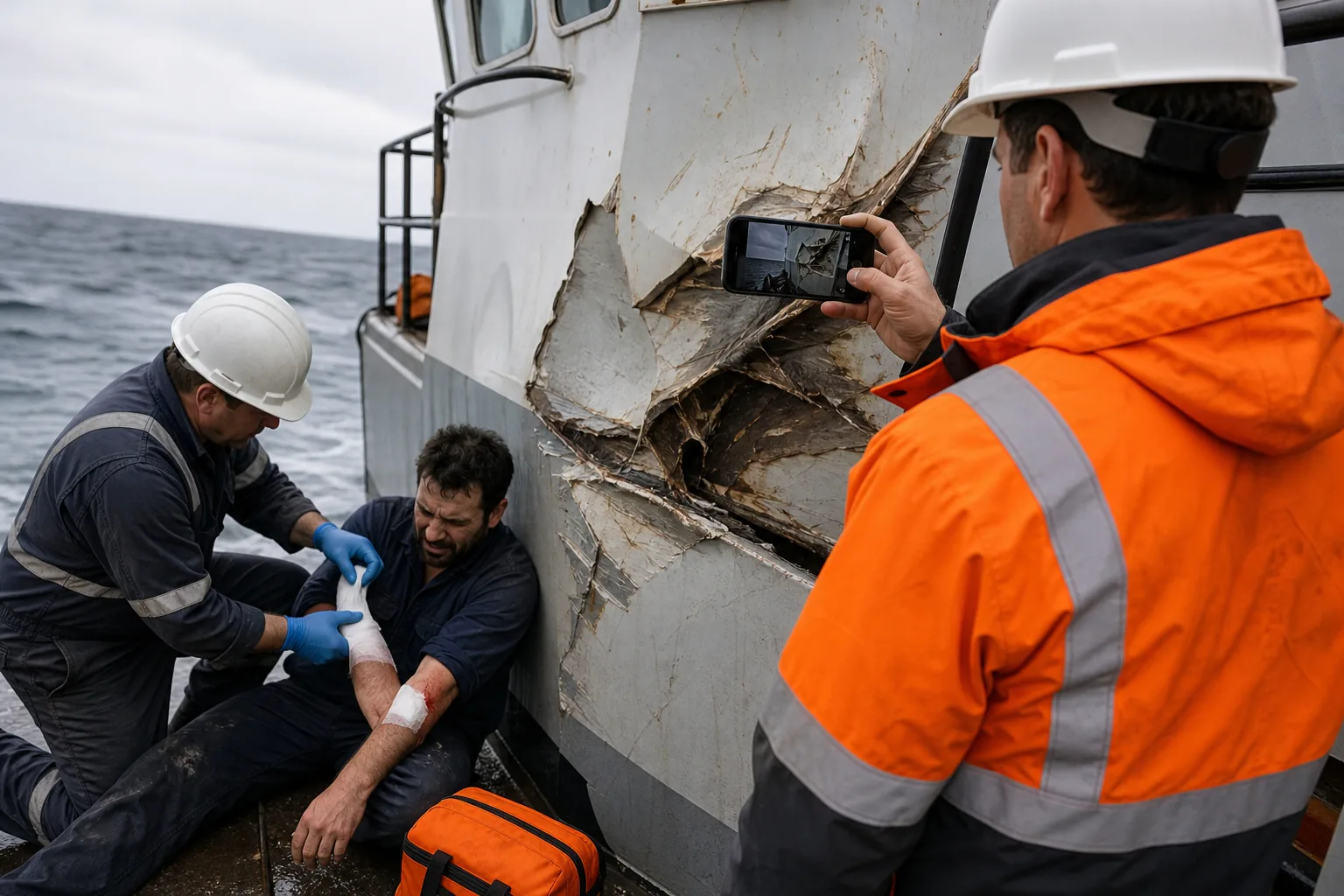
How to Handle a Boat Injury: Step-by-Step Guide
If a boat injury strikes, panic won’t help you or your passengers. Follow this quick roadmap to protect lives, preserve proof, and keep your claim on solid ground.
Step 1: Ensure Safety and Call for Help
The first move is to stop the emergency from getting worse. Keep calm, take a deep breath, and assess what’s happening. If the boat is taking on water, drop the anchor to stop drifting toward hazards. If a fire erupts, shut off the engine and use a fire extinguisher.
Everyone on board must wear a life jacket. Count heads, then move anyone away from the danger zone, engine room, open water, or broken rigging. Once the crew is stable, signal for rescue. Tune a VHF radio to Channel 16 and issue a clear Mayday: state the nature of the emergency, number of people, and location. If the radio fails, use a whistle, horn, flares, or a signal mirror to attract nearby vessels.
Activate any EPIRB or PLB you carry; they broadcast your GPS coordinates to rescue teams. While waiting, use bilge pumps or buckets to bail out water and keep the hull as dry as possible.
By the end of this step you should have the boat stable, passengers safe, and help on the way.
Step 2: Assess Injury and Provide First Aid
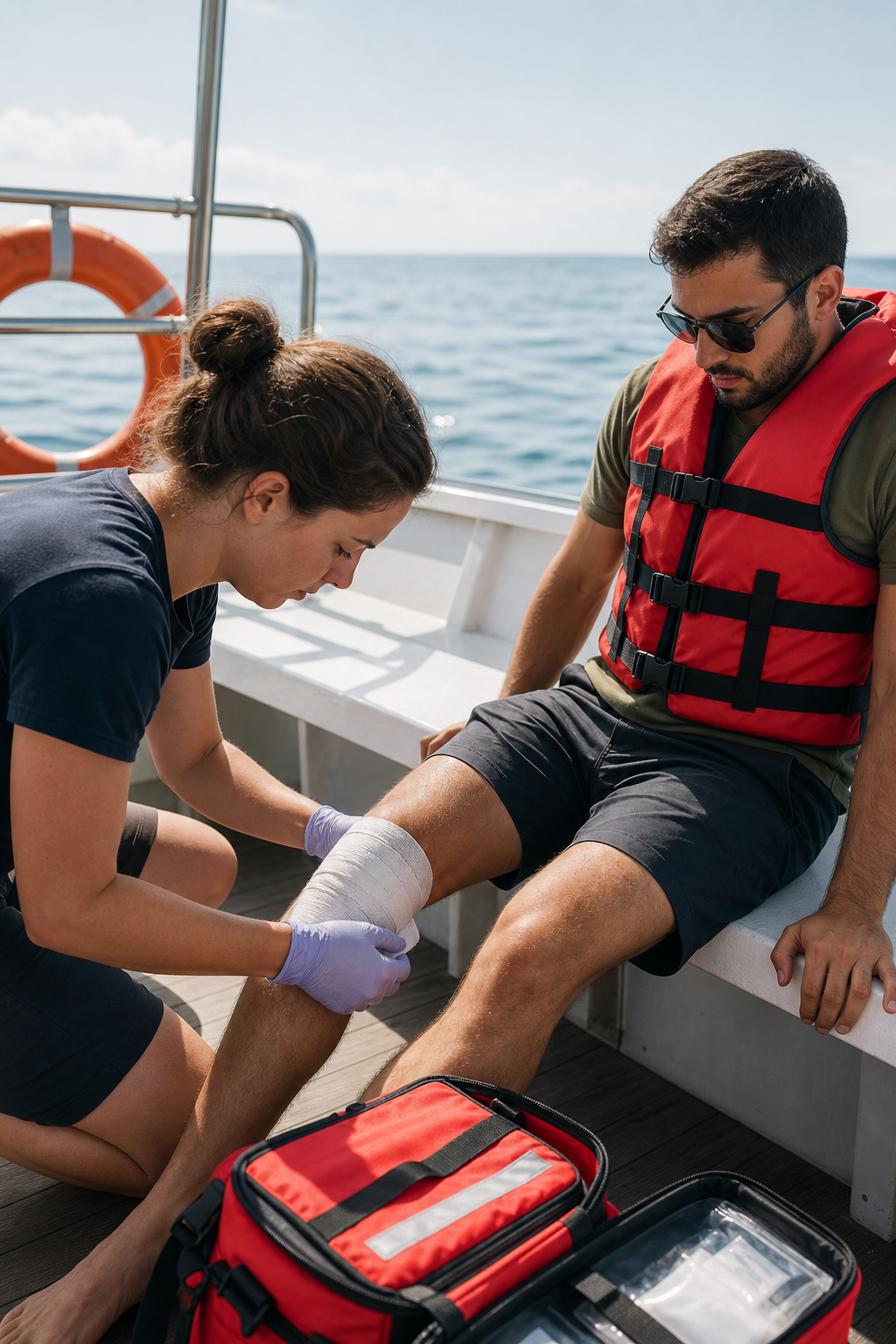
When a person is hurt, move them out of the water if possible and lay them flat on a dry surface. Check breathing, pulse, and any obvious bleeding. For cuts, apply direct pressure with a clean cloth. If someone is unconscious, keep their airway open and monitor vitals until professionals arrive.
Use a waterproof first‑aid kit that includes bandages, antiseptic wipes, and a tourniquet. Treat hypothermia quickly: wrap the victim in a blanket, keep them moving, and avoid giving them cold water.
By now you should have stabilized any injuries and be ready to hand over care to EMTs.
Step 3: Document the Incident and Gather Evidence
Accurate records are the backbone of any claim. Write down the time, weather, water conditions, and exact location. Note what caused the injury, collision, propeller strike, fall overboard, or equipment failure.
Take photos of the scene, damaged equipment, and any visible injuries. If other boats are nearby, ask their captains for statements and contact info. Preserve the boat’s logbook and any electronic data such as GPS tracks.
All this information will help insurers and courts understand what went wrong. According to Wikipedia’s overview of boating accidents, thorough documentation can dramatically increase the chance of a successful settlement.
When this step is complete you’ll have a clear factual picture to share with medical staff and legal counsel.
Step 4: Seek Medical Evaluation and Preserve Records
Even if injuries seem minor, get checked by a medical professional as soon as possible. Some trauma, like blunt force or water inhalation, can worsen over hours.
Ask the provider for a detailed report that lists diagnoses, treatments, and recommended follow‑up. Keep copies of all bills, prescriptions, and therapy notes. These documents show the true cost of the injury and are essential for compensation.
Insurance adjusters often downplay pain‑related claims. A solid medical record counters that bias.
At this point you have a medical baseline and all paperwork needed for the next phase.
Step 5: Consult a Maritime Attorney
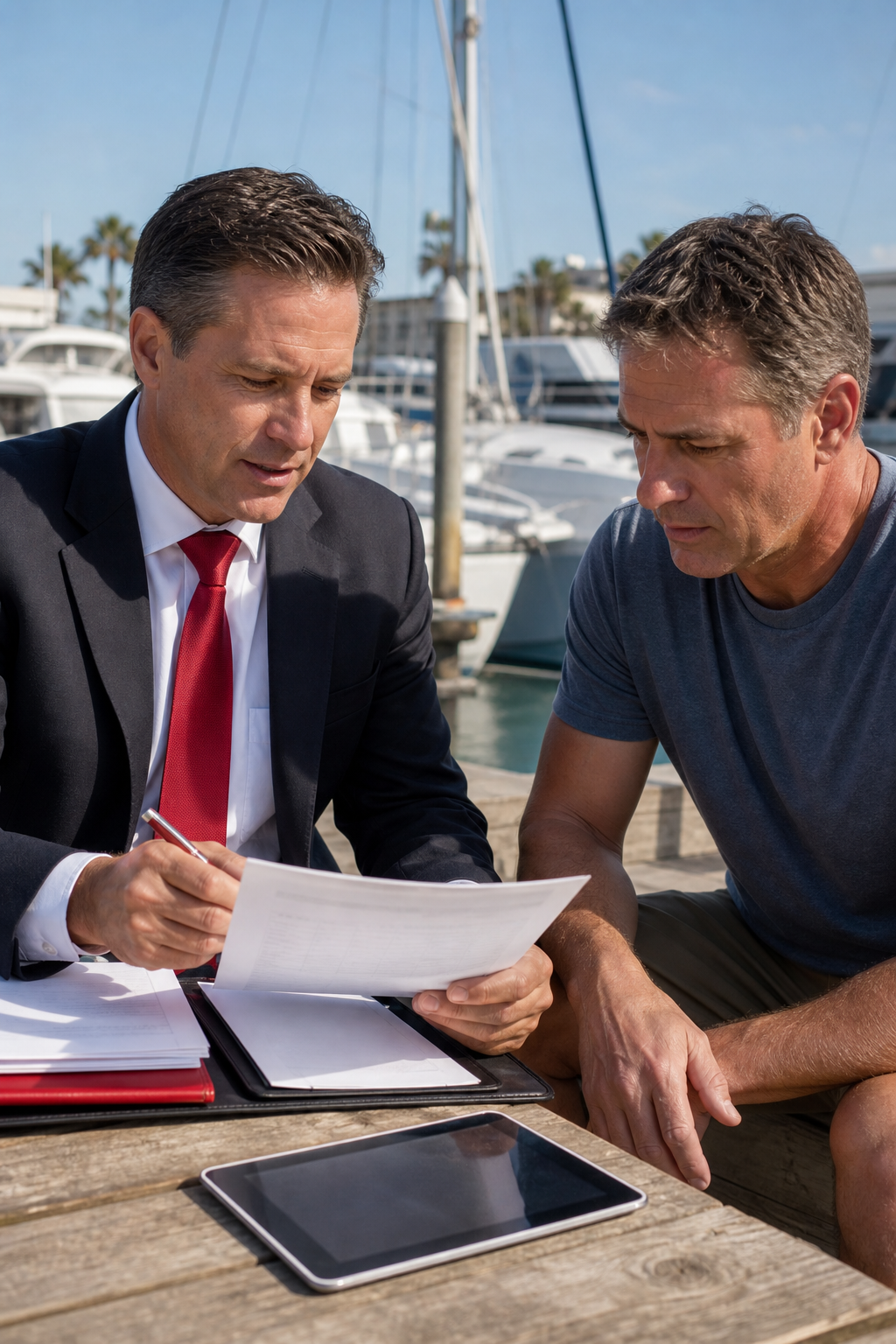
Now that safety, first aid, evidence, and medical care are covered, bring in legal expertise. A specialist knows how the Jones Act, the Maritime Law, and local regulations apply to your case.
Reach out to Best Boating Injury Attorney Guide 2026. The firm offers a free initial review and can help you handle claim filing, negotiate with insurers, and protect your rights.
During the consultation, share the incident log, photos, witness statements, and medical records. The attorney will assess liability, calculate damages, and outline the next steps toward compensation.
By the end of this step you’ll have a clear legal path and a partner fighting for your recovery.
FAQ
What should I do first if someone is injured on my boat?
First, keep the injured person safe, call for help, and provide basic first aid while waiting for emergency responders.
Do I need a lawyer for a boat injury?
While you can file a claim on your own, a maritime attorney understands complex regulations and can maximize compensation.
How long do I have to file a boat injury claim?
Statutes of limitation vary by state, but most require you to start a claim within two years of the incident.
Can I use my own insurance after a boating accident?
Your personal policy may cover some costs, but a dedicated maritime claim often recovers additional damages from the at‑fault party.
What evidence is most important for a boating injury case?
Photos, witness statements, the boat’s logbook, GPS data, and detailed medical records are the key pieces of proof.
Take the first step today: secure safety, get medical help, and reach out to a qualified maritime attorney to protect your rights.
Ready to put this into practice? maritimeattorney.ai was built for exactly this.