
Maritime Personal Injury Claim Settlement Negotiation Tips

Got hurt on a ship or at a port and need a fair settlement? Below are the step‑by‑step maritime personal injury claim settlement negotiation tips that will get you the most out of your case.
Step 1: Identify the Maritime Law, Deadline, and Liable Parties
The first thing you must do is figure out which federal statute applies. Most seamen fall under the Jones Act, which lets you sue your employer for negligence. Dockworkers often rely on the Longshore and Harbor Workers’ Compensation Act (LHWCA). Knowing the right law sets the clock for your filing deadline, usually three years from the injury date.
Next, write down every party that could share blame. That might be the vessel owner, the charterer, a equipment supplier, or a third‑party contractor. Each of those entities may carry its own insurance policy.
Once you have the law and the list of parties, you can move on to gathering proof. If you need a quick overview of the kinds of accidents that trigger these statutes, check out the maritime accident types guide on our site.
Step 2: Build Evidence That Supports Liability and Damages
Strong evidence is the engine of any settlement. Start with the official accident report filed with the Coast Guard, it often spells out who was in charge and what went wrong.
Gather vessel maintenance logs, safety‑training records, and any inspection reports. Those documents can show whether the employer ignored a known hazard.
Take photos of the scene as soon as you can. A slick deck, a broken guardrail, or a malfunctioning crane can become a visual punch‑line in your demand letter.
Witness statements are priceless. Get written accounts from crew members who saw the incident. Their quotes will help you prove negligence.
Finally, compile all medical records, from ER notes to specialist reports, that detail your injuries, treatment costs, and prognosis.
For a deeper look at what evidence works best, from CHG Lawyers. Their experience with offshore and dock injuries highlights the exact documents courts expect.
Step 3: Calculate a Defensible Settlement Demand
Now turn the facts into numbers. Start with out‑of‑pocket costs: medical bills, prescription drugs, and any rehab fees.
Add lost wages. Use your pay stubs to show how much income you’ve missed and estimate future earnings if you can’t return to the same job.
Don’t forget non‑economic losses, pain, suffering, and loss of enjoyment of life. Courts often apply a multiplier (usually between 1.5 and 5) to your economic damages to arrive at a total figure.
Check the tax rules, too. Most compensation for physical injuries isn’t taxable, but punitive damages can be. Knowing what part of your demand is taxable avoids surprise tax bills later.
Write the demand as a clear, itemized list. A tidy spreadsheet makes it easy for the adjuster to see each line item and the logic behind the total.
Step 4: Negotiate the Insurer’s or Employer’s Settlement Offer
When the adjuster replies, you’ll likely see a lowball number. That’s the starting point, not the final offer.
Respond with a counter‑demand that references the evidence you built. Cite the accident report, the maintenance logs, and your medical bills. Show the adjuster that you’ve done your homework.
Keep a log of every phone call, email, and meeting. If the insurer tries to pressure you into a quick settlement, you’ll have a record to prove it.
If talks stall, consider mediation. A neutral third party can help both sides see the value of a fair deal without going to trial.
Our own platform, maritimeattorney.ai, offers a free case review that can spot weak spots in the insurer’s offer before you reply.
For more on how settlement negotiations typically play out, on personal injury settlement negotiations. It outlines the back‑and‑forth pattern you can expect.
Step 5: Review the Release, Liens, and Final Settlement Terms
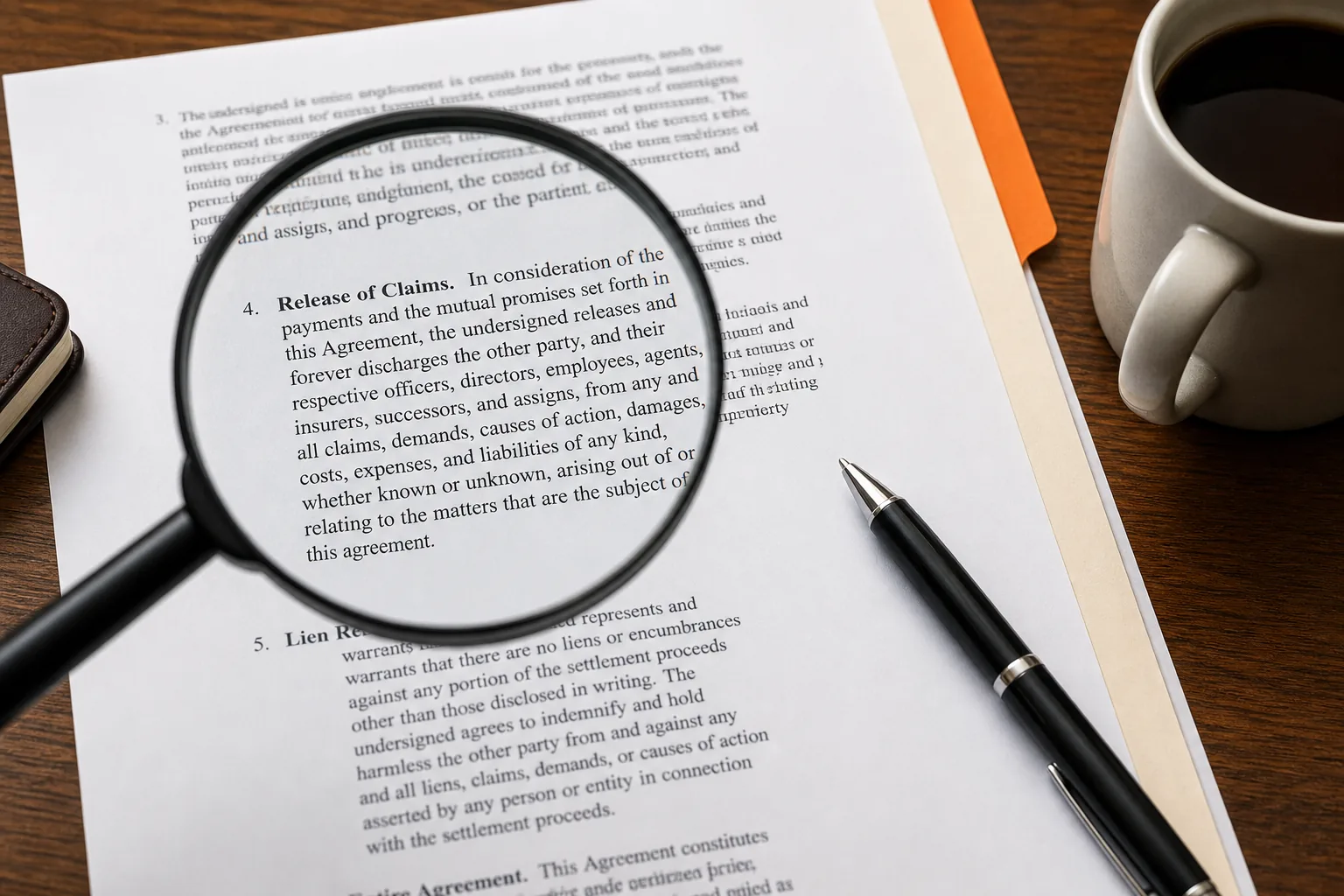
When a settlement looks good, the insurer will send a release form. That document wipes out any future claims against the parties listed.
Read it line by line. Make sure it covers only the parties you’ve sued and doesn’t unintentionally release unrelated entities.
Check for any outstanding liens, for example, medical providers or the Maritime Union may have a legal claim to part of your money. Those must be paid before you get the net amount.
Pay attention to the timing of maintenance‑and‑cure payments. Those benefits continue until you reach maximum medical improvement (MMI). Signing a release before MMI can cut off those payments.
If you’re unsure about any clause, ask your attorney to explain. A small oversight can cost you thousands down the road.
FAQ
What is the typical deadline to file a maritime personal injury claim?
The statute of limitations is usually three years from the injury date, though some claims may have shorter windows under specific contracts. Filing early protects your evidence.
Can I settle before reaching maximum medical improvement?
It’s risky to settle before MMI because you may lose future medical benefits and maintenance‑and‑cure payments. Most attorneys advise waiting until doctors confirm you’ve reached MMI.
Do I have to pay taxes on my settlement?
Compensation for physical injuries is generally not taxable, but punitive damages or interest can be. Check the tax rules for your specific payout.
How do I know if the insurer’s offer is fair?
Compare the offer to a detailed demand that includes medical costs, lost wages, and a multiplier for pain and suffering. If the offer is far below that total, it’s likely lowball.
What if the other party refuses to negotiate?
If talks break down, you can file a lawsuit or seek mediation. A court can force the other side to consider a fair settlement based on the evidence you’ve gathered.
Conclusion
Start with the law, gather solid proof, calculate a realistic demand, push back on low offers, and read every release line before you sign. Need a quick case check? Visit maritimeattorney.ai for a free consultation and let the experts guide you through each step.