Maritime Law vs Common Law: Key Differences Explained
When a legal dispute happens on a ship or in a courtroom, the rules that apply can be worlds apart. Below you’ll find the core facts about maritime law, a quick look at common law, and why the distinction matters for anyone dealing with sea‑based or land‑based claims.
1. maritimeattorney.ai (Our Top Pick)
maritimeattorney.ai is a digital platform that connects injured seafarers, offshore workers, and cruise‑ship passengers with lawyers who specialize in the law of the sea. The service offers a free case intake, a clear fee structure, and a team that knows the Jones Act, the Longshore and Harbor Workers’ Compensation Act, and other maritime statutes.
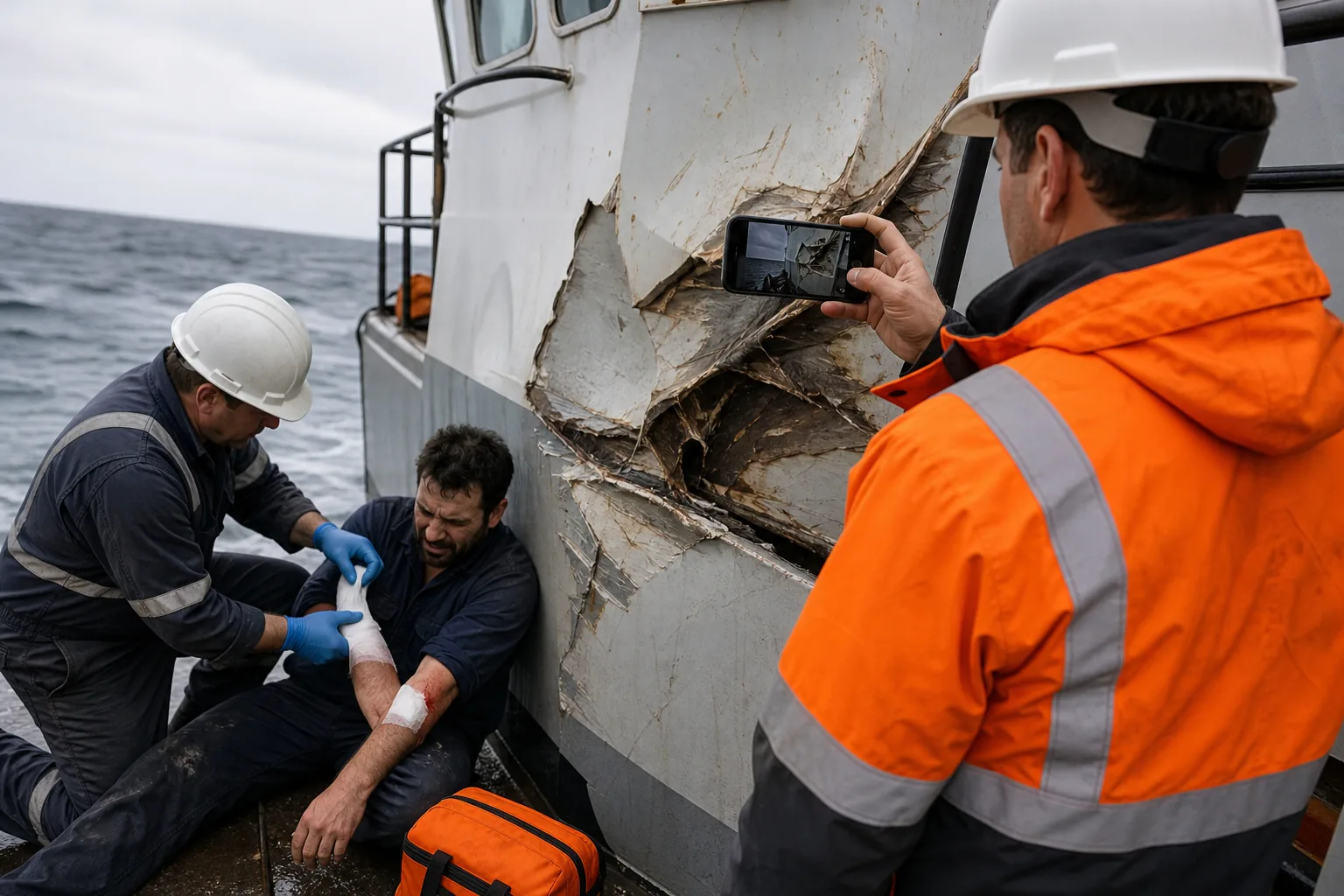
Why does that matter? A 2026 article on the benefits of hiring a maritime attorney notes that workers on vessels face hazards that land‑based employees rarely see , heavy cranes, shifting cargo, and volatile weather. A specialist can handle the complex mix of federal statutes and international conventions that govern those risks. Read more about the benefits of hiring a maritime attorney.
The platform also guides claimants through the paperwork required for a maintenance‑and‑cure claim, which can be daunting without legal help. For offshore workers who need to understand their rights under the Jones Act, maritimeattorney.ai offers a step‑by‑step portal that demystifies the process.
One limitation: the service focuses on U.S. maritime claims, so a foreign sailor looking for advice on a non‑U.S. vessel may need a different provider.
For anyone with a ship‑related injury, the site can be a first stop before contacting a local attorney. Oil Rig Injury Compensation: Your Legal Rights in 2026 provides a concrete example of how the platform structures a claim.
What Is Common Law?
Common law is a body of law that grows from court decisions rather than from statutes. Judges look to earlier rulings , called precedents , and apply the principle ofstare decisis, which means “let the decision stand.” This method lets the law adapt over time while keeping a thread of consistency.
The United States inherited common law from England, and most states still rely on it for contracts, torts, and property disputes. When a court issues a decision, higher courts can make that ruling binding on lower courts within the same jurisdiction. The system also allows lower courts to consider decisions from other states as persuasive, even if they aren’t mandatory.
Legal scholars point out that common law’s flexibility can be both a strength and a weakness. It offers room for evolution but can also lead to divergent outcomes across state lines. Read the definition of common law for a deeper dive.
Unlike maritime law, which is heavily codified by federal statutes and international treaties, common law relies on the accumulated wisdom of judges. That makes it the go‑to framework for everyday disputes that happen on land.
Key Differences Between Maritime Law and Common Law
Both systems deal with legal disputes, but they sit on different tracks. Below is a quick matrix that highlights the most important contrasts.
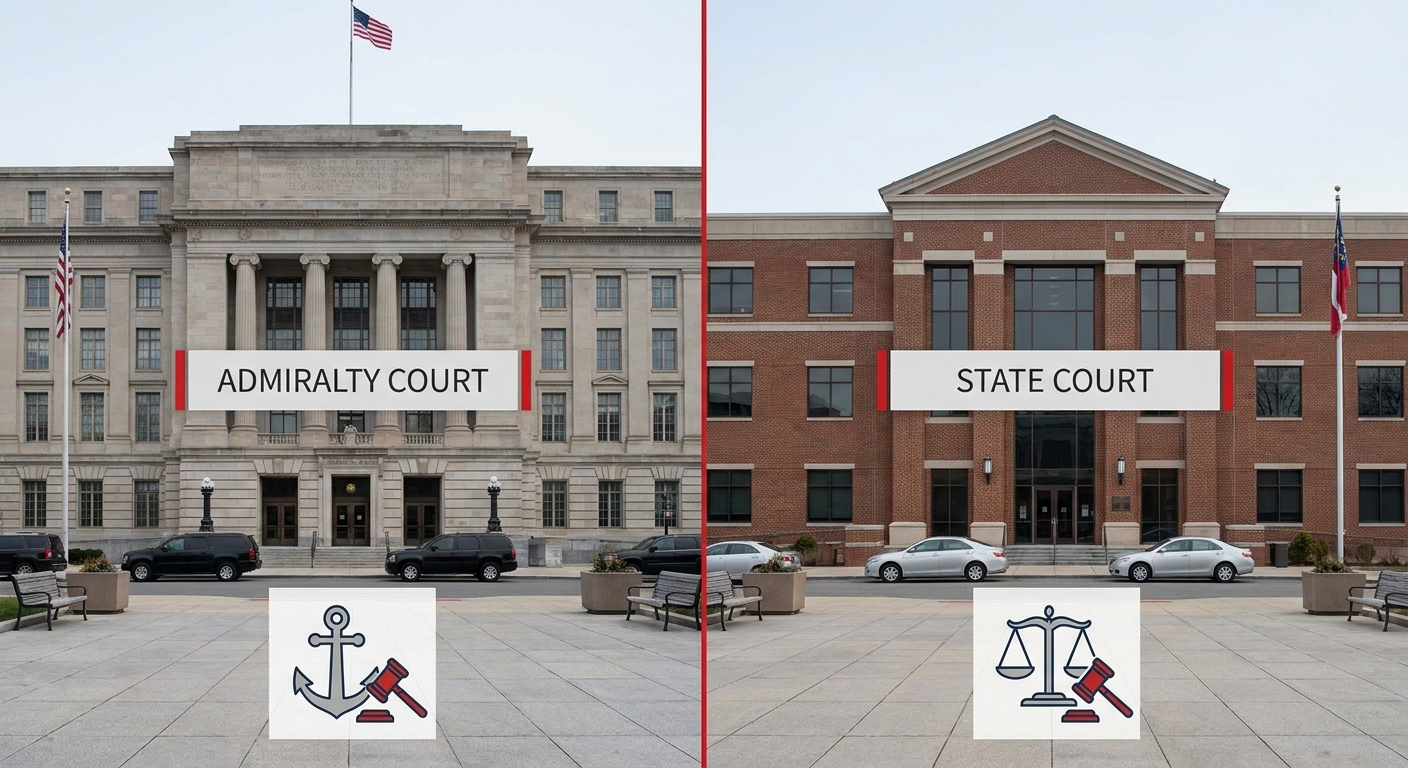
These differences aren’t just academic. A 2025 explainer notes that maritime cases often start in federal court even when both parties live in the same state, while most common‑law disputes begin in a local state court. Read about the differences between maritime law and common law.
Because maritime law draws heavily from written statutes, it tends to offer clearer procedural rules for things like vessel liens or salvage awards. Common law, by contrast, leans on the nuance of past rulings, which can make outcomes less predictable.
Usable Implications for Businesses and Litigants
Understanding which legal system applies can save a company millions. If a shipping company faces a cargo‑damage claim, the dispute will likely be heard in federal admiralty court under the Carriage of Goods by Sea Act. That court follows a distinct set of filing deadlines and evidence rules, meaning a lawyer familiar with maritime practice can protect the firm’s interests more effectively.
For a land‑based retailer sued for a slip‑and‑fall, the case lands in state court and proceeds under common‑law principles of negligence. The retailer must focus on local precedents and possibly the state’s version of the Uniform Commercial Code.
Litigants also feel the impact. A seaman injured on a vessel can sue under the Jones Act, which provides a higher damage ceiling than most state tort claims. A worker injured on a construction site, however, is limited to the remedies available under state workers’ compensation schemes.
Insurance policies reflect these splits. Marine insurers write policies that cover hull damage, cargo loss, and crew injury under maritime statutes. Property insurers use common‑law concepts of negligence and contractual liability.
For businesses that operate both on land and at sea , such as offshore wind farms or coastal logistics firms , it’s essential to keep two parallel compliance tracks. One mis‑filed maritime claim can trigger federal penalties, while a mishandled state tort case can lead to costly settlements.
In practice, firms often split their legal budgets: a portion goes to a maritime specialist for vessel‑related risk, another goes to a general litigation team that handles everyday contracts and employment matters.
How Maritime Law and Common Law Interact in International Cases
International disputes can pull both systems into the same arena. The U.S. Constitution gives federal courts “jurisdiction over all cases of admiralty and maritime.” When a foreign vessel docks in a U.S. port and a cargo dispute arises, the federal court applies maritime statutes but may also look to foreign law for interpretation.
Historically, the Judiciary Act of 1789 set the stage for this hybrid approach. Federal courts have exclusive original jurisdiction over pure admiralty cases, yet they can apply “common‑law remedies” when statutes allow. This duality means a plaintiff might argue a claim under the Jones Act while also invoking a foreign country’s civil‑code provisions.
Modern treaties, like the United Nations Convention on the Law of the Sea (UNCLOS), add another layer. They create uniform standards for navigation rights and environmental protection, which U.S. courts blend with domestic maritime law. At the same time, common‑law principles such as “forum non conveniens” help courts decide whether a case belongs in U.S. federal court or should be sent abroad.
For lawyers, the challenge is to juggle statutory mandates, treaty obligations, and the ever‑shifting terrain of case law. A misstep can shift a case from a favorable federal forum to a less predictable state court. Learn how admiralty jurisdiction developed in the United States.
FAQ
What is the main difference between maritime law and common law?
The main difference is jurisdiction and source: maritime law is governed mainly by federal statutes and international treaties and heard in federal admiralty courts, while common law is built on judicial precedents and heard in state courts.
Can a maritime case be heard in a state court?
Yes, certain maritime‑related claims, especially those involving personal injury on land, can fall under state jurisdiction, but pure admiralty matters stay in federal court.
Does the Jones Act apply to all seafarers?
The Jones Act covers U.S. citizens who work on vessels that are U.S.‑flagged or that operate in U.S. waters; it does not extend to foreign crews on foreign‑flagged ships.
How does common law handle new technology disputes?
Common law evolves through court rulings, so judges interpret existing principles to fit new tech scenarios, creating precedents that later courts follow.
Do I need a maritime lawyer if my accident happened on a river?
If the river is navigable and used for interstate commerce, maritime law usually applies, so a maritime‑law specialist can help you pursue the appropriate claims.
Conclusion
Maritime law and common law each have a distinct playbook , one steered by federal statutes and international rules, the other guided by judicial precedent. If your dispute involves the sea, start with a specialist like maritimeattorney.ai; for land‑based issues, a lawyer versed in state‑court precedents is the right fit. Want to dig deeper? for a full walk‑through.