
How to Secure Longshore Workers Compensation

Injured on the dock? You don't have to wait weeks wondering what to do next. The Longshore and Harbor Workers Compensation system can pay for medical care, lost wages, and even rehabilitation, if you follow the right steps. This guide walks you through each move, from reporting the injury to securing the benefits you deserve, and shows how to keep the process on track.
We'll cover five key steps, plus tips for dealing with the workers’ compensation board and a quick FAQ. By the end you’ll know exactly what forms to fill, when to file, and how to protect your rights.
Step 1: Report Your Injury to Your Employer
The first thing you must do is tell your employer about the injury. Time is critical; the Longshore and Harbor Workers’ Compensation Act (LHWCA) expects a report within ten days. If you wait longer, the U.S. Department of Labor can send a “show cause” letter (Form LS-512) and you could face a fine.
Here’s how to make the report clean and fast:
- Write a brief note that includes the date, time, location, and a description of how the injury happened.
- Attach any photos or witness statements you can get right away.
- Submit the note to your supervisor and keep a copy for your records.
Once you’ve reported, the employer must file Form LS-202. This form starts the official claim trail. If you’re returning to work after a brief injury, the employer also files Form LS-210 to note any new disability period.
Why report early? Prompt reporting often leads to faster medical care, lower overall costs, and reduces the chance of a dispute later on. It also protects you from any claim that you waited too long.
After you send the report, follow up in writing (email works well) to create a paper trail. If you don’t get a response within a day, call or visit the supervisor again. This shows good faith and helps you avoid the "show cause" situation.
Key Takeaway: A written injury report filed within ten days keeps the claim moving and shields you from penalties.
Step 2: Gather Medical Documentation
Medical proof is the backbone of any workers’ comp claim. The LHWCA lets you pick your own doctor, so you can choose a physician who understands maritime injuries.
Start by getting a thorough exam as soon as possible. Ask the doctor to do these things:
- Document every symptom, even ones that seem minor now.
- Provide a detailed diagnosis that links the injury to your job duties.
- Write a treatment plan that lists expected appointments, therapy, surgeries, and medication.
Keep copies of every report, prescription, and bill. Store them in a folder (digital or paper) labeled with the injury date. If you ever need to prove a later complication, you’ll have the record ready.
Don’t let your employer or insurance carrier dictate which doctor you see. The LHWCA explicitly says you can choose. If they push back, cite the law and request a written explanation.
In case you need a second opinion, get a written statement from the first doctor explaining why a referral is needed. That adds weight when the claim is reviewed.
When you get a treatment plan, note the estimated total cost. This figure will help you later when you argue for full medical reimbursement.
Imagine a scenario: a crane operator injures his back while unloading a container. He sees a sports medicine doctor within 48 hours, gets an MRI, and the doctor writes, "Lumbar strain caused by heavy lifting on a moving platform , directly related to job duties." That clear link makes the claim far easier to approve.
For deeper guidance on eligibility and the act itself, see Van Riper & Nies’ overview of the Longshore Act. It explains who’s covered and what benefits you can expect.
Step 3: File a Claim with Your Employer
Now that you have a report and medical proof, it’s time to file the official claim. This step moves the case from your workplace into the federal system run by the U.S. Department of Labor’s Office of Workers’ Compensation Programs (OWCP).
Here’s the filing flow:
- Complete Form LS-203, the Employee’s Claim for Compensation. The form asks for personal info, injury details, and the employer’s insurance carrier.
- Submit the form to your employer’s insurance carrier or directly to OWCP, depending on your employer’s setup.
- Keep a dated copy of the submission receipt. OWCP will send you a confirmation number.
After OWCP receives the claim, an adjuster has 14 days to decide whether to accept or dispute it. If they accept, you’ll start receiving benefits. If they dispute, they must give a written reason, and you can appeal.
Tip: When you fill out LS-203, double‑check the section on “Average Weekly Wage” (AWW). This number determines the amount of wage‑replacement benefits you’ll get.
Below is a short video that walks through the LS-203 form step by step.
Once the claim is filed, you’ll receive a benefits schedule. It usually shows a three‑day waiting period (similar to a deductible) that will be taken out of your first check.
Keep the schedule handy. If the numbers don’t match your AWW or you think the waiting period was misapplied, you can request a correction within 30 days.
Step 4: Handle the Workers’ Compensation Board Process
If your claim is disputed, or if you need a higher level of review, the case moves to the Office of Administrative Law Judges (OALJ) and then possibly to the Benefits Review Board (BRB). This three‑step process can feel like a maze, but knowing the milestones helps you stay in control.
The first stop is informal mediation at a Division of Longshore and Harbor Workers’ Compensation (DLHWC) district office. A mediator will try to settle the dispute without a formal hearing. Bring all your medical records, the employer’s response, and a clear list of what you think is fair.
If mediation fails, the case goes to a formal hearing before an OALJ. The judge will listen to both sides, review evidence, and issue a compensation order. The order is based on "substantial evidence" , a legal term meaning more than a mere scintilla. The judge’s findings of fact are reviewed by the Benefits Review Board under a "de novo" standard, meaning the Board looks at the case anew without assuming the judge was right.
Should you need to appeal the Board’s decision, you have 30 days to file a Notice of Appeal with the Clerk of the Board in Washington, DC. After that, you must submit a Petition for Review with a brief outlining the issues you’re challenging.
Each party then has 30 days to file a response brief, and any reply briefs are due within 20 days. The Board rarely takes new evidence, so your original record must be rock solid.
Pro tip: Register as an “e‑Filer” on the Board’s Electronic File and Service Request System before you need to file any briefs. The system simplifies submission and gives you automatic receipts.
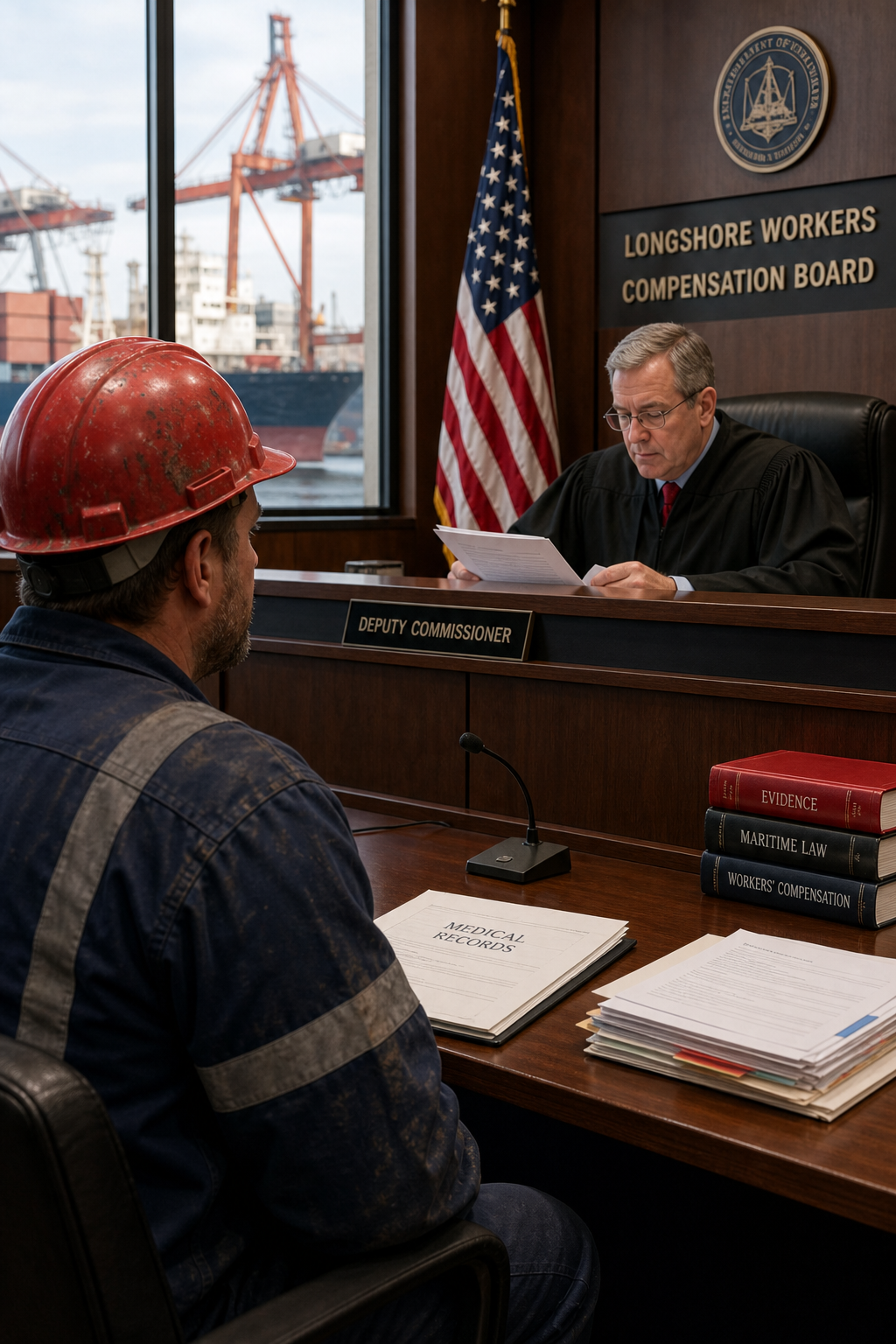
When the Board issues its written decision, it can affirm, modify, vacate, or reverse the OALJ’s order. The decision is final after 60 days, unless you take it to a federal circuit court.
Step 5: Secure Benefits and Follow Up
Once the claim is approved, the focus shifts to getting the money you’re owed. Benefits fall into three buckets: medical reimbursement, wage‑loss payments, and disability compensation.
Medical reimbursement covers all reasonable and necessary treatment. The amount you receive matches the actual cost of care, so keep every receipt, from prescriptions to physical‑therapy sessions.
Wage‑loss benefits are calculated at two‑thirds (66 2⁄3 %) of your average weekly wage. This percentage is set by law and applies to every longshore workers compensation case.
Disability compensation depends on whether your injury is temporary or permanent. If you’re unable to work, you’ll receive weekly payments based on a formula that weighs the severity of your loss. When you reach "maximum medical improvement" (MMI), your doctor will tell you if the injury is permanent. At that point, the board calculates a lump‑sum or ongoing payment.
Don’t assume the process ends when you get the first check. You have a one‑year window from the last payment to request a claim modification if your condition worsens. Submit a new petition with updated medical records to avoid losing out on additional benefits.
It’s also wise to stay on top of any employer‑issued statements. Some employers provide periodic status updates; if they stop, reach out yourself. Consistent communication keeps the claim active and shows you’re engaged.
If you run into a denial or a reduction, you can file a grievance with the OWCP or request a hearing before an OALJ. The same documentation you used earlier will be your strongest weapon.
Finally, keep a master file of everything, forms, medical records, correspondence, and benefit statements. When the claim finally closes, you’ll have a clear record in case you ever need it for future employment or tax purposes.
FAQ
What is the deadline to report a longshore injury?
You should report the injury within ten days of the incident. Reporting later can trigger a "show cause" letter from the Department of Labor and may result in a fine. Early reporting also speeds up medical care and benefit processing.
Can I choose any doctor for my treatment?
Yes. The LHWCA gives you the right to select your own physician. Your employer or the insurance carrier cannot force you to see a specific doctor. Be sure to keep copies of all medical records and bills for your claim.
What forms do I need to file a claim?
The key forms are Form LS‑202, Form LS‑203 (claim for compensation), and, if you return to work after a brief injury, Form LS‑210 for a second disability period. Each form must be completed accurately and submitted to your employer’s carrier or directly to OWCP.
How long does the Board’s appeal process take?
After an OALJ decision, you have 30 days to file a Notice of Appeal. The full review, including briefs and the Board’s decision, can take several months, but the Board aims to issue a written decision within 60 days of receiving all filings.
What if my employer disputes my claim?
If the employer or carrier disputes the claim, they must provide a written reason. You can then request a hearing before an OALJ, and if needed, appeal to the Benefits Review Board. Keep all evidence ready, as the Board will only consider the record established at the hearing.
How are wage‑loss benefits calculated?
Benefits are two‑thirds of your average weekly wage (AWW) from the 52 weeks before the injury. The calculation is set by law, and the three‑day waiting period is deducted from your first check. If you have paid leave, you can use that to cover the waiting days.
Conclusion
Getting longshore workers compensation isn’t magic, it’s a clear series of steps. Start with a prompt, written injury report, then gather solid medical documentation. File the proper federal forms, be ready for mediation or a hearing, and finally track your benefits until the claim closes. Staying organized, keeping copies, and meeting every deadline will keep the process moving and protect the pay you’re owed.
If you want to dive deeper into filing a claim, check out How to File Longshore Harbor Act Claims Successfully. That guide walks you through each form and offers extra tips for dealing with insurers.
Remember, the system works best when you act fast and keep detailed records. With the right approach, you’ll secure the medical care and wage replacement you need to get back on your feet.