
How to File Longshore Harbor Act Claims Successfully
Injured on a dock, a vessel, or at a port? You can get paid for medical bills and lost wages under the Longshore Harbor Act. But the process can feel like a maze. This guide walks you through every move , from checking if you qualify to appealing a denied claim. By the end, you’ll know exactly what to do, what paperwork to collect, and how to keep the agency on track.
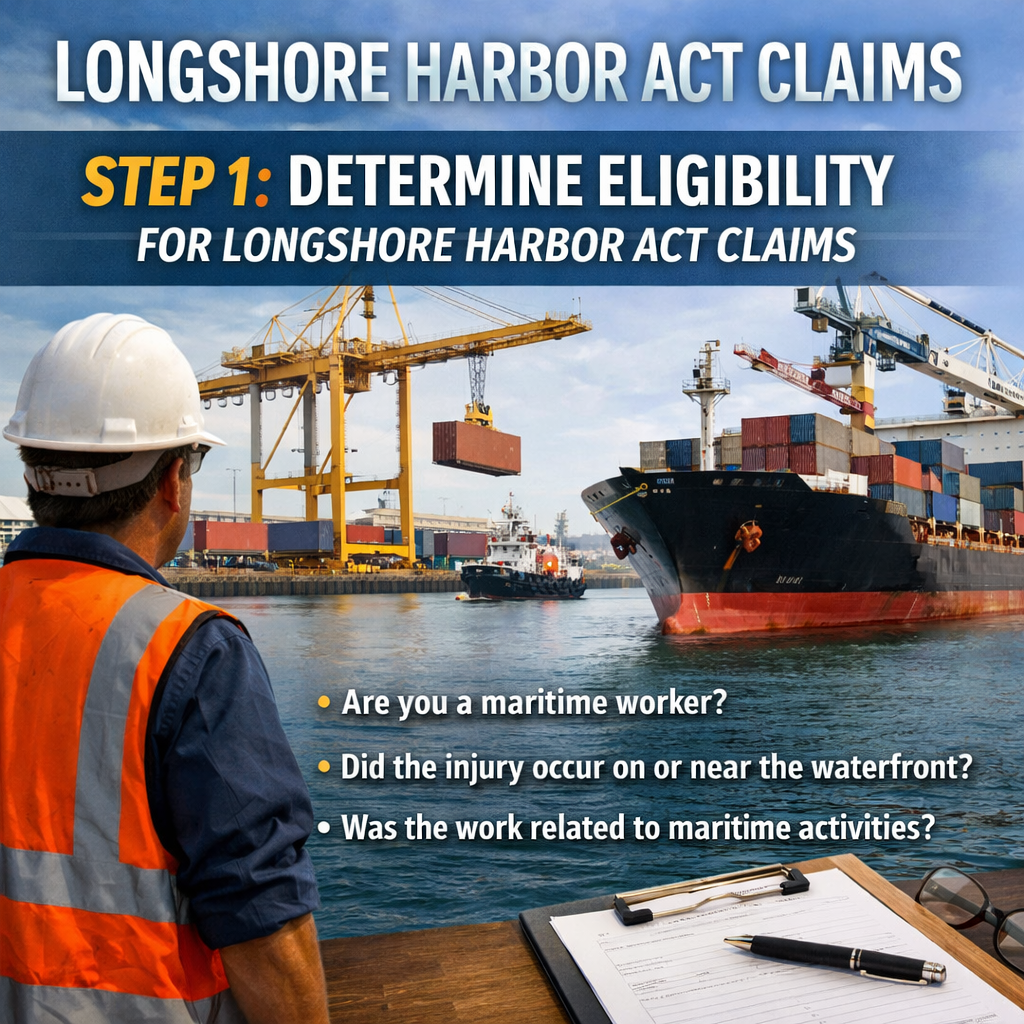
Step 1: Determine Eligibility for Longshore Harbor Act Claims
The Longshore and Harbor Workers' Compensation Act (LHWCA) covers workers who do maritime‑related jobs on or near navigable waters. Think loading cargo, repairing a ship, or driving a container truck at a port. If your duties fit the “status test” (maritime work) and the “situs test” (work near water), you’re likely covered.
But not everyone qualifies. Federal employees, state workers’ comp claimants, and those whose jobs are purely office‑based are excluded. The Office of Workers' Compensation Programs (OWCP) keeps a list of eligible occupations on its website.
Here’s a quick way to self‑screen:
- Do you perform any task that involves loading, unloading, repairing, or building a vessel?
- Does the work happen on a dock, dry dock, pier, or other waterfront area?
- Are you employed by a private maritime employer, not a federal agency?
If you answered “yes” to the first two and “no” to the third, you probably meet the basic eligibility.
Still unsure? A short consult with a maritime injury lawyer can confirm your status before you start gathering paperwork. The right attorney will check the status and situs tests, then tell you if you should file under LHWCA or your state’s workers’ comp system.
Bottom line:Eligibility hinges on maritime duties and work near navigable waters; verify with a qualified lawyer.
Step 2: Gather Required Documentation
Paperwork is the backbone of any claim. Missing forms or vague medical notes can stall the process, and you’ll waste time waiting for the agency to ask for more.
Start with a checklist:
Keep originals safe and make copies for the OWCP. When you submit, label each page clearly , e.g., “Medical Record , Dr. Smith , 03/12/2026.” This makes the agency’s review faster.
Pro tip: Ask your doctor to include the “relationship to employment” note on every medical entry. The agency often asks for that link later.
One more thing: the Department of Labor’s OWCP site lists current benefit rates, so you can estimate your medical and wage benefits early on.
Need a deeper dive on eligibility? The oil rig injury compensation guide walks through similar maritime tests and can help you spot gaps.
Bottom line:Gather a full set of incident, medical, and employment records early to avoid delays.
Step 3: Submit Your Claim to the Appropriate Agency
Once you have the paperwork, you file the claim with the Division of Longshore and Harbor Workers' Compensation (DLHWC), part of the U.S. Department of Labor. The claim form is called LS‑3. Fill it out online or download the PDF from the OWCP portal.
When completing LS‑3, watch for these common pitfalls:
- Leaving the “date of injury” blank , the agency needs a precise timeline.
- Skipping the “status test” section , you must explicitly state your maritime duties.
- Failing to attach all supporting documents , the claim will be returned for “incomplete evidence.”
After you submit, you’ll get a confirmation number. Keep it safe; you’ll need it for every follow‑up.
Here’s a simple three‑step filing flow:
- Log in to the OWCP e‑Filing system and start a new LS‑3 claim.
- Upload your scanned documents, double‑checking each file name.
- Submit and print the receipt for your records.
"The best time to file a Longshore claim is as soon as you have clear medical evidence linking the injury to work. Delays can trigger the statute of limitations."
When the agency reviews your claim, they may request more info. That’s normal; respond quickly to keep the clock from ticking.
Bottom line:File LS‑3 with the DLHWC, attach all evidence, and keep the confirmation number for future communication.
Step 4: Follow Up and Respond to Agency Requests
After you file, the agency will assign a claims examiner. Expect a phone call or letter asking for clarification. Respond within the deadline , usually 30 days , or risk a denial.
Key follow‑up actions:
- Mark every deadline on a calendar. Missing one can start the statute‑of‑limitations clock.
- Send all replies via certified mail or the OWCP portal so you have proof of delivery.
- Keep a log of every conversation, noting dates, names, and what was discussed.
Statutes of limitations matter. For a typical injury, you have one year from the date of injury to file. If you receive a payment, the clock may reset to one year from the last payment date. For occupational disease claims, you get up to two years after you become aware of the condition.
According to the U.S. Code, “the right to compensation … is barred unless a claim is filed within one year after the injury.” 33 U.S.C. § 913 explains the timing rules.
Pro tip: When you get a request for more info, submit a brief cover letter that restates the claim number and lists the new documents you’re attaching. This keeps the file tidy.
Below is a short video that shows how to handle the OWCP portal and upload files. Watch it to avoid common upload errors.
Bottom line:Track deadlines, respond promptly, and use certified channels to keep your claim moving.
Step 5: Appeal a Denied Claim or Seek Legal Assistance
Even with perfect paperwork, the agency can deny a claim. Common denial reasons include “insufficient medical evidence” or “worker not covered by LHWCA.” When that happens, you have a three‑step appeal path.
First, you can request informal mediation at the DLHWC district office. A mediator will try to settle the dispute without a formal hearing.
If mediation fails, you move to a formal hearing before an Office of Administrative Law Judge (OALJ). The OALJ reviews the record and can order a new decision.
Should the OALJ’s decision still be unfavorable, you can appeal to the Benefits Review Board (BRB). You must file a Notice of Appeal within 30 days of the OALJ’s order. Then you submit a Petition for Review, a brief outlining why the decision was wrong, and serve it on all parties.
The BRB reviews the case “de novo,” meaning they look at the evidence anew, but they cannot consider new evidence unless it meets a special exception.
Because the appeal process is legal‑heavy, many claimants hire a seasoned maritime attorney. An attorney can draft persuasive briefs, gather additional expert testimony, and ensure all filing deadlines are met.
The Department of Labor’s official page on the OALJ process gives detailed timelines and form links. Check it early so you don’t miss a filing window.
Bottom line:If denied, act quickly to use mediation, OALJ, or BRB appeals, and consider legal counsel to boost your chances.
FAQ
What types of workers are covered by Longshore Harbor Act claims?
Workers who perform maritime‑related duties such as loading, unloading, repairing, or building vessels, and who work on or near navigable waters, are covered. Federal employees and those already covered by state workers’ comp are excluded.
How long do I have to file a claim after my injury?
You generally have one year from the date of injury to file. If you receive a payment, the clock may restart from the last payment date. For occupational disease claims, you have up to two years after you become aware of the condition.
Can I file a Longshore claim and a state workers’ comp claim for the same injury?
No. The LHWCA and state workers’ comp are mutually exclusive. You must choose the system that matches your job duties and work location. Filing both can lead to a denial.
What medical evidence do I need to support my claim?
You need detailed medical records that link your diagnosis to the work incident, doctor’s notes stating the injury’s relation to employment, and any imaging or test results. Including the LS‑1 form can help authorize treatment.
Do I need a lawyer to file a Longshore claim?
You don’t have to, but a lawyer familiar with maritime law can help you handle eligibility tests, gather the right evidence, and avoid common filing mistakes that cause denials.
What if my claim is denied at the OALJ level?
You can appeal to the Benefits Review Board within 30 days by filing a Notice of Appeal and a Petition for Review. The Board will examine the record anew and issue a final decision, which you may then take to a federal appellate court if needed.
Conclusion
Filing Longshore Harbor Act claims takes careful planning, but you don’t have to go it alone. Start by confirming you meet the status and situs tests, then gather solid documentation, submit a complete LS‑3 claim, and stay on top of agency requests. If you hit a denial, remember the three‑step appeal path and consider hiring a maritime attorney to protect your rights.
Ready to protect your earnings and health?Start your free claim assessment todayand get expert guidance through every step.
Bottom line:Follow the step‑by‑step process, keep records tidy, and act fast on deadlines to secure the benefits you deserve.