Understanding Admiralty Jurisdiction: A Complete Guide
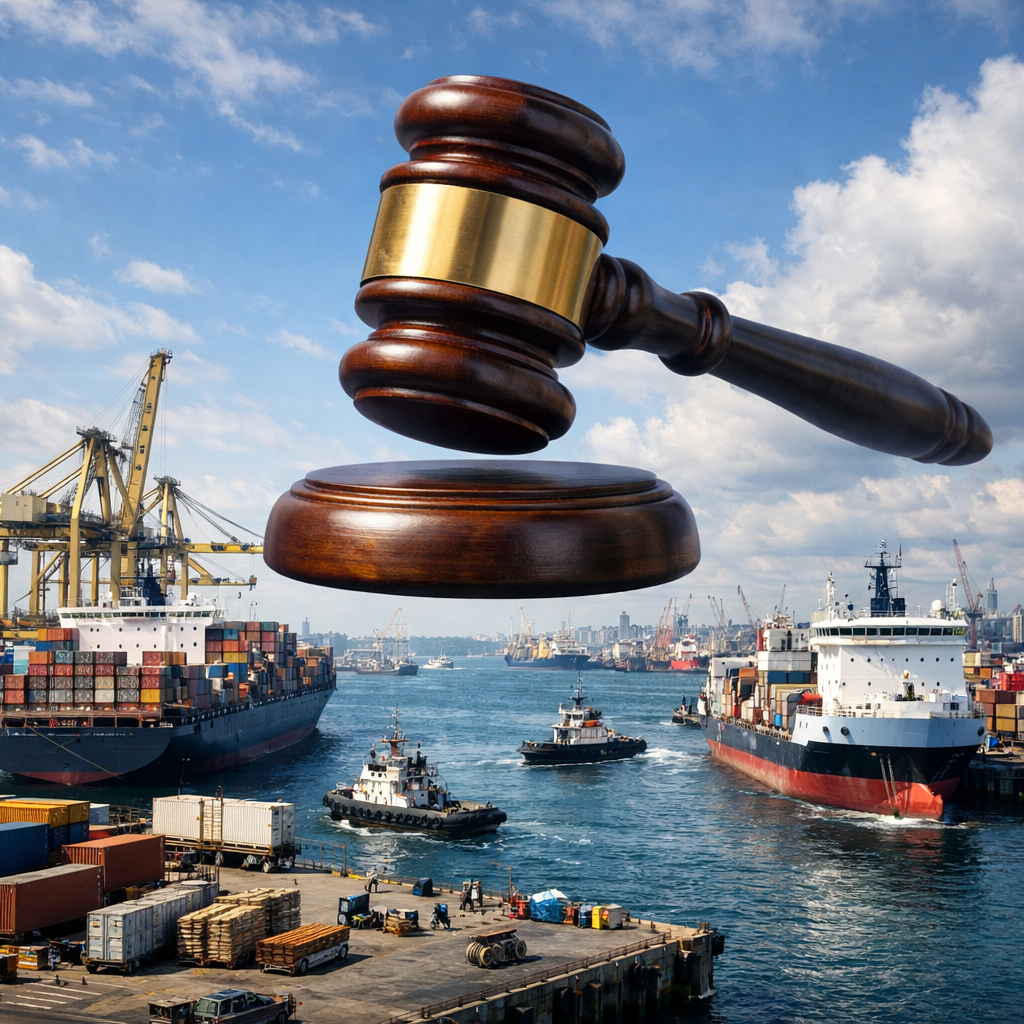
Admiralty jurisdiction, a core aspect of admiralty and maritime law, decides which court can hear a sea‑related dispute. If you ignore it, you might end up in the wrong courtroom and lose a case. In this guide you’ll get a clear picture of what admiralty jurisdiction means, where it came from, how it works with state courts, the kinds of cases it covers, and where the law is headed.
By the end you’ll know how to spot a claim that falls under admiralty, what pitfalls to watch for, and what steps to take when you need a lawyer who knows this niche area.
What Is Admiralty Jurisdiction?
Admiralty jurisdiction is the power of a court to hear cases that arise on the high seas, navigable waters, or involve ships, cargo, and maritime contracts. It is a special part of federal law that sits alongside the rest of the U.S. legal system. The courts get this power from Article III of the Constitution and from statutes like 28 U.S.C. § 1333, which says federal district courts have original jurisdiction over admiralty cases.
The scope is broad. It includes shipping disputes, collisions, salvage, seamen’s wages, marine insurance, and even piracy. Anything that touches navigation or commerce on water can fall under this umbrella.
Because admiralty law blends statutes, international conventions, and long‑standing common law, it often looks different from the rules you see in a typical contract case. For example, many admiralty actions are filed “in rem” , that means the lawsuit is against the vessel itself, not the owner.
Courts also apply a “saving to suitors” clause that lets a party bring a state‑law claim if the federal remedy doesn’t cover what they need. This creates a hybrid landscape where both federal and state courts can hear parts of the same case.
Admiralty jurisdiction isn’t limited to the open ocean. It reaches inland waterways that are navigable for interstate or foreign commerce , rivers, lakes, canals, and even some artificial reservoirs.
Cornell Law School’s legal encyclopedia explains that the federal courts derive exclusive jurisdiction from the Judiciary Act of 1789 and that the jurisdiction has expanded over time to include recreational boating.
Bottom line: Admiralty jurisdiction lets federal courts handle a wide range of maritime disputes, from ship collisions to seamen’s wage claims, using special rules that differ from ordinary civil cases.
Historical Development of Admiralty Jurisdiction
The roots of admiralty courts go back to medieval England. The first written record appears in the Black Book of the Admiralty, compiled during the reigns of several monarchs. While some say the High Court of Admiralty started under Edward I, most historians credit Edward III around 1360 for giving the court a real structure.
Early English admiralty courts handled both criminal matters , like piracy , and civil issues such as the seizure of enemy goods. They operated separately from the common law courts, using a mix of English common law and Roman civil law principles.
When the American colonies broke away, they inherited the English admiralty system. After independence, Congress placed admiralty under the jurisdiction of federal district courts with the Judiciary Act of 1789. This move shifted authority from state courts to the federal system, reflecting the national importance of maritime commerce.
Throughout the 17th and 18th centuries, the U.S. admiralty courts handled prize cases , claims arising from captured enemy vessels during wartime. These cases were crucial during conflicts with France and Britain.
In the 19th century, the rise of steam shipping and the increase in collisions and cargo loss expanded the court’s workload. Judges began to rely on nautical assessors for expertise, and the court became a key venue for maritime litigation.
The 1875 Judicial Act reorganized the courts, creating the High Court of Justice and placing admiralty matters in the new Probate, Divorce and Admiralty Division. Later, the Senior Courts Act 1981 moved the Admiralty Court into the Queen’s (now King’s) Bench Division, where it sits today.
Bottom line: The history of admiralty jurisdiction shows a steady shift toward federal oversight, driven by the need for uniform rules in international trade.
Key Principles Governing Admiralty Cases
Admiralty law rests on a handful of core ideas that shape every case. First, the “in rem” principle lets a court target the vessel itself. This means a ship can be seized or held liable even if the owner is unknown.
Second, the “lex maritima” concept , the law of the sea , pulls in international treaties, such as the United Nations Convention on the Law of the Sea (UNCLOS), and long‑standing customs. Courts treat these sources as part of the legal fabric.
Third, the “general maritime law” provides default rules for contracts, torts, and injuries when no specific statute applies. This includes the Jones Act, which lets seamen sue their employers for negligence.
Fourth, the “saving to suitors” clause in 28 U.S.C. § 1333 allows parties to pursue state‑law remedies when federal admiralty law doesn’t cover a particular claim.
Fifth, the procedural rules differ. Admiralty cases usually proceed without a jury, and the Federal Rules of Civil Procedure are supplanted by the Supplemental Admiralty Rules when there’s a conflict.
"Admiralty courts apply a distinct set of substantive and procedural rules that aim for uniformity across borders," notes the Villanova Law Library guide.
These principles guide judges when they decide whether a case fits under admiralty jurisdiction and which law applies.
Villanova University’s law library outlines how the Jones Act and the saving‑to‑suitors clause shape modern admiralty practice.
Bottom line: Admiralty cases follow unique substantive and procedural rules, focusing on the vessel, international customs, and the “saving to suitors” safety net.
Interaction Between Admiralty and Domestic Courts
Federal admiralty courts sit alongside state courts, and sometimes the two overlap. The key question is whether a claim is “purely maritime” or has a strong local element.
If the dispute involves a vessel on navigable waters, the federal court usually has exclusive jurisdiction. However, the “saving to suitors” clause means a plaintiff can also file a state‑law claim for damages that federal admiralty law doesn’t address, like certain types of punitive damages.
State courts retain “concurrent” jurisdiction for many contract and tort claims that happen on the water but don’t require the specialized maritime rules. For example, a slip‑and‑fall on a dock may be heard in state court unless the plaintiff elects the federal forum.
Courts also look at the “forum selection” clause in maritime contracts. If parties agree to a particular court, that choice often governs, unless it violates public policy.
When a case moves between courts, the doctrine of “preclusion” can block re‑litigation of issues already decided. This helps keep the system efficient.
Bottom line: Federal admiralty courts have primary authority, yet state courts may handle overlapping or supplemental claims, creating a layered legal environment.
Common Types of Cases Under Admiralty Jurisdiction
Admiralty courts hear a wide array of disputes. Below is a snapshot of the most common categories.
Beyond these, courts handle prize cases (historical), cargo damage during intermodal transport, and even disputes over floating casinos that may or may not be considered vessels.
Imagine a cargo shipment that moves from a ship to a train. The Supreme Court recently held that if the bill of lading calls for a substantial sea leg, the whole journey can fall under admiralty law, even the rail portion.
Another surprising scenario: a riverboat casino that has been docked for years. Some courts view it as a vessel, subjecting it to the Jones Act; others see it as a fixed structure, keeping it out of admiralty jurisdiction.
Bottom line: Admiralty jurisdiction covers collisions, salvage, seamen’s claims, insurance disputes, pollution, and a host of less‑obvious cases that hinge on contract language and vessel status.
Limitations and Challenges in Admiralty Jurisdiction
While admiralty jurisdiction offers a unified forum for maritime disputes, it isn’t without limits. One major hurdle is the “navigable waters” test. If a body of water isn’t deemed navigable for interstate commerce, the federal courts may lack jurisdiction.
Another challenge is the procedural difference. Admiralty cases are typically bench trials, which means no jury. Some litigants prefer a jury and may push for a state‑law claim to get one.
Complexity is also a factor. The blend of statutes, international treaties, and common law creates a steep learning curve. Lawyers need specialized knowledge to handle the Supplemental Admiralty Rules and the myriad conventions that may apply.
Finally, the “saving to suitors” clause can create strategic uncertainty. Parties must decide early whether to pursue a federal admiralty claim or a state‑law claim, as the choice affects the remedies available.
Bottom line: Practitioners must weigh jurisdictional scope, procedural nuances, and strategic considerations when handling admiralty matters.
Future Trends and International Harmonization
Maritime law is changing fast. New conventions aim to harmonize rules across borders, reducing the patchwork that can trap businesses.
One trend is the rise of the “York‑Antwerp Rules,” which modernize the General Average process for multi‑modal shipments. Another is the ongoing update of the Hague‑Visby Rules, which continue to shape cargo carriage contracts.
Technology also plays a role. Digital tracking of containers and blockchain‑based smart contracts are prompting courts to interpret traditional admiralty concepts in a high‑tech context.
Environmental pressure is driving stricter enforcement of pollution conventions like MARPOL, and courts are seeing more cases involving ballast‑water discharge and greenhouse‑gas emissions.
Finally, the International Maritime Organization (IMO) is pushing for greater consistency in safety standards, which will filter into admiralty rulings worldwide.
Bottom line: Admiralty jurisdiction is evolving with new international rules, tech‑driven contracts, and heightened environmental standards, pushing toward a more uniform global maritime legal system.
FAQ
What kinds of disputes fall under admiralty jurisdiction?
Admiralty jurisdiction covers any case that involves navigation, shipping, or maritime commerce. This includes collisions, salvage, seamen’s wage claims, marine insurance disputes, cargo damage, and pollution incidents. Even seemingly land‑based issues, like a train derailment of cargo that started its journey at sea, can be treated as admiralty if the contract’s primary purpose was maritime transport.
Can a state court hear a maritime case?
Yes, but only for the portions that the federal courts don’t cover. The “saving to suitors” clause in 28 U.S.C. § 1333 lets parties bring state‑law claims for remedies that aren’t available in admiralty, such as certain punitive damages. The federal court retains exclusive jurisdiction over the core maritime issues.
How does the flag of a vessel affect admiralty jurisdiction?
The vessel’s flag determines which nation’s maritime law applies. A U.S., flagged ship on the high seas is subject to U.S. admiralty law, while a foreign‑flagged vessel is generally governed by its own country’s laws. U.S. courts may still have jurisdiction if the vessel is in U.S. waters or if the case involves a U.S. party.
What is the “in rem” nature of admiralty cases?
In rem means the lawsuit is against the vessel itself, not the owner. The court can seize the ship, levy a lien, or order its sale to satisfy a judgment. This approach dates back to English admiralty practice and helps ensure a remedy even when the owner is hard to locate.
Why do admiralty cases usually go to bench trial?
Admiralty law traditionally uses bench trials because the cases often involve technical maritime issues that judges are better equipped to handle than juries. The Supplemental Admiralty Rules also give judges more control over evidence and procedure, which can speed up the process.
How can I tell if my claim should be filed in admiralty court?
Look at the contract and the location of the incident. If the dispute involves a bill of lading, a charter party, or a vessel’s flag, and the waterway is navigable for interstate or foreign commerce, admiralty jurisdiction is likely. Consulting an experienced maritime attorney early can help you pick the right forum.
Conclusion
Admiralty jurisdiction is a powerful tool for handling the complex world of maritime disputes. From its medieval roots to modern international conventions, it gives federal courts the ability to apply uniform rules across oceans, rivers, and lakes. Understanding the key principles, the interaction with state courts, and the types of cases that fall under its umbrella helps you avoid costly procedural missteps.
If you’re facing a maritime claim, the first step is to assess whether admiralty jurisdiction applies and then seek counsel that specializes in this niche field. Ready to protect your maritime interests? Start your free consultation today and see how expert admiralty guidance can keep your case on course.
Bottom line: Learning admiralty jurisdiction equips you to handle shipping disputes, protect seamen’s rights, and stay ahead of evolving international maritime law.