
How to Protect Your Cruise Ship Passenger Rights

You've booked a cruise and something goes wrong, lost luggage, medical issues, or a missed port. You need a clear plan to keep your rights safe. Below are the exact steps you should follow to protect your cruise ship passenger rights.
Step 1: Review the Cruise Contract and Disclosures
The contract you sign is more than a brochure; it spells out what the line owes you. Start by reading the Terms & Conditions, the Passenger Bill of Rights, and any itinerary add‑ons. Look for clauses about cancellations, medical care, and compensation for delays. Pay special attention to the “Limitation of Liability” section, many lines try to cap payouts.
Mark any language that seems vague or overly restrictive. Write a short note next to each clause with a question you want answered. If the contract mentions a “force majeure” clause, ask how it applies to storms or labor strikes.
Check the fine print for disclosure of the ship’s safety equipment, onboard medical staff credentials, and the procedure for filing a complaint while at sea. Some cruise lines provide a PDF of the contract on their website; download it and keep a copy on your phone.
When you spot a clause that limits your rights, you can raise it with the line’s guest services before boarding. A polite email that cites the specific paragraph shows you’ve done your homework.
For deeper legal insight, see Understanding Cruise Ship Overboard Incidents - Maritime Attorney. The site explains how contract language can affect liability in accidents.
Step 2: Know Your Core Passenger Rights on Board
U.S. law gives cruise passengers a set of basic protections. You have the right to safe travel, adequate medical care, and clear information about fees. The Department of Transportation (DOT) requires lines to post a Passenger Bill of Rights in each public area. This bill lists what the line must provide if a problem arises.
Typical rights include:
- Compensation for missed ports or itinerary changes that cut your vacation short.
- Reimbursement for reasonable medical expenses incurred on board.
- Refunds for services you never received, such as unused spa credits.
- The ability to file a written complaint within 30 days of the incident.
Remember that these rights apply whether you travel on a large liner or a boutique cruise. The same DOT rules cover both, though smaller ships may have fewer onboard amenities.
Read the official definition of passenger rights on Wikipedia for a quick overview: Maritime law , Wikipedia. It explains how international conventions intersect with U.S. consumer protections.
Knowing the baseline helps you spot when a line falls short. If a crew member tells you “that’s not covered,” you can point to the DOT’s bill of rights and ask for clarification.
Step 3: Document Issues and Communicate with the Cruise Line
When a problem occurs, start a paper trail right away. Take photos of any damage, keep receipts for extra expenses, and write down names of crew members you speak with. A dated note with details, what happened, when, and who was involved, strengthens your claim.
Send an email to the line’s guest services within 24 hours of the incident. Use a clear subject line like “Request for Compensation , Cabin Leak, 07/20/2026.” Attach the photos and a brief description. Keep the tone polite but firm; you’re establishing a record.
If the line replies, save the email. If they ignore you, send a follow‑up after 48 hours. When you’re at sea, use the ship’s Wi‑Fi or the satellite messaging service if available. Many lines also have an onboard app that logs complaints.
Below is a short video that walks you through taking effective photos and writing a concise complaint email.
After you’ve sent the email, wait for a written response. If the line offers a token gesture, like a free dinner, ask whether it counts as full compensation for your loss. If not, politely decline and restate what you’re seeking.
Step 4: File a Formal Claim with the U.S. Department of Transportation (or relevant authority)
If the cruise line’s response falls short, you can take the issue to the DOT’s Consumer Protection Division. The agency handles complaints about U.S.‑registered vessels and can mediate disputes.
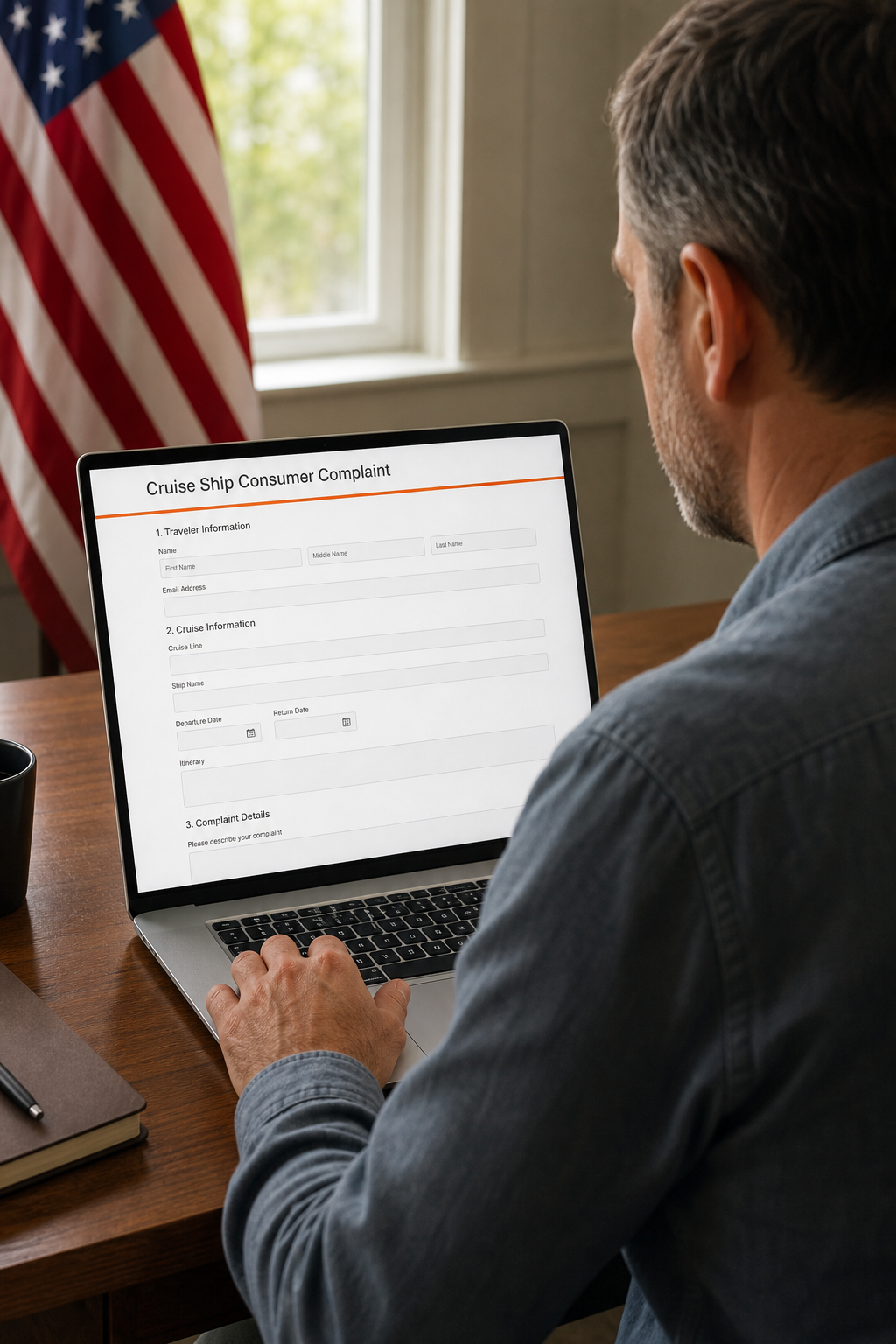
To file, go to the DOT’s online portal and fill out the “Cruise Ship Consumer Complaint” form. Provide the contract excerpt, your documentation, and any email exchange you’ve saved. The form asks for the ship’s name, sailing dates, and a brief description of the problem.
Once submitted, the DOT will acknowledge receipt and may contact the cruise line on your behalf. They often secure a settlement without needing a lawsuit.
For the exact filing steps, see the official guidance on the DOT website: U.S. Department of Transportation , Cruise Ship Complaints. The page walks you through each field and explains what evidence the agency expects.
Keep a copy of the confirmation number. If the DOT asks for additional proof, you already have a solid file from Step 3.
Step 5: Pursue Legal Remedies and Compensation
When the DOT cannot secure a fair payout, you may need a lawyer. Maritime law firms specialize in these cases and understand the nuances of international jurisdiction.
Start by consulting a firm that offers a free case review. Explain the issue, share your documentation, and ask whether the claim falls under the “Jones Act” or other maritime statutes. Many firms work on a contingency basis, meaning they only get paid if you win.
Below is a simple checklist you can hand to any attorney you meet:
Maritimeattorney.ai can connect you with vetted lawyers who focus on passenger rights. Their platform lets you upload your file securely and get matched with a specialist within 24 hours.
If you decide to sue, the case may go to federal court under the “Merchant Marine Act.” A successful suit can recover medical costs, lost vacation value, and sometimes punitive damages. The court will weigh the contract language against federal statutes, so having a clear record is critical.
Even if you settle out of court, ask the agreement to be in writing and to include a release of all future claims. That protects you from the line trying to reopen the case later.
FAQ
Can I file a claim while the cruise is still at sea?
Yes, you can start a written complaint with the line’s guest services as soon as the issue occurs. Use the ship’s Wi‑Fi or satellite messaging to send an email; keep a copy for later.
What if the cruise line is not U.S.‑registered?
If the vessel is foreign‑registered, you may need to file a complaint with the flag state’s maritime authority. Some countries have similar consumer protection offices.
How long does the DOT take to respond?
The DOT usually acknowledges a claim within 5 business days and may take 30‑60 days to mediate, depending on the case’s complexity.
Do I need a lawyer for a small refund?
Not always. For refunds under $500, the line’s internal dispute process often suffices. However, a lawyer can help if the line refuses a reasonable offer.
Are cruise passenger rights the same worldwide?
No. Rights vary by flag state and regional regulations. The U.S. DOT rules apply to ships that start or end in U.S. ports, but other countries have their own statutes.
Conclusion
Start with the contract, know the DOT’s bill of rights, document everything, file a claim, and then let a maritime lawyer take over if needed. For fast legal help, visit maritimeattorney.ai and upload your case today.