How Maritime Injury Claims Work: A Complete Guide

Got hurt on a ship, rig, or dock? You don’t have to guess what to do next. Below is a clear, step‑by‑step look at how maritime injury claims work and what you can expect.
Understanding Maritime Injury Claims
Maritime injury claims are legal actions that let workers at sea recover money for medical bills, lost wages, and more. The law treats these claims differently from ordinary workers’ compensation because the work happens on water and often under federal jurisdiction.
The main statutes are the Jones Act, which protects seamen, and the Longshore and Harbor Workers’ Compensation Act (LHWCA) for dockworkers and other non‑seaman laborers. Both laws require the employer to pay for medical care and, in many cases, additional damages for pain and suffering.
For a quick definition of the Jones Act, see Wikipedia’s Jones Act entry. It explains that the act lets a seaman sue an employer for negligence, covering medical costs, lost earnings, and even emotional distress.
Similarly, the LHWCA provides a safety net for workers who don’t meet the strict “seaman” definition. It covers medical treatment, wage replacement, and survivor benefits for families of deceased workers.
Understanding which law applies is the first hurdle. A qualified attorney can sort out whether you’re a seaman, a longshoreman, or fall under another maritime provision.
Even though the statutes sound technical, the core idea is simple: if you’re injured while performing your job on a vessel or at a maritime facility, you have a right to compensation.
Maritime law also includes “maintenance and cure,” a no‑fault benefit that covers living expenses and medical care until you reach maximum medical improvement. This benefit often shows up alongside a Jones Act claim, giving you a broader safety net.
Because the rules differ from state workers’ comp, filing the wrong form or missing a deadline can cost you dearly. That’s why many injured workers turn to specialists who understand the nuances of admiralty law.
Key Steps in Filing a Maritime Injury Claim
The filing process has several clear stages. Acting quickly helps preserve evidence and keeps your claim on track.
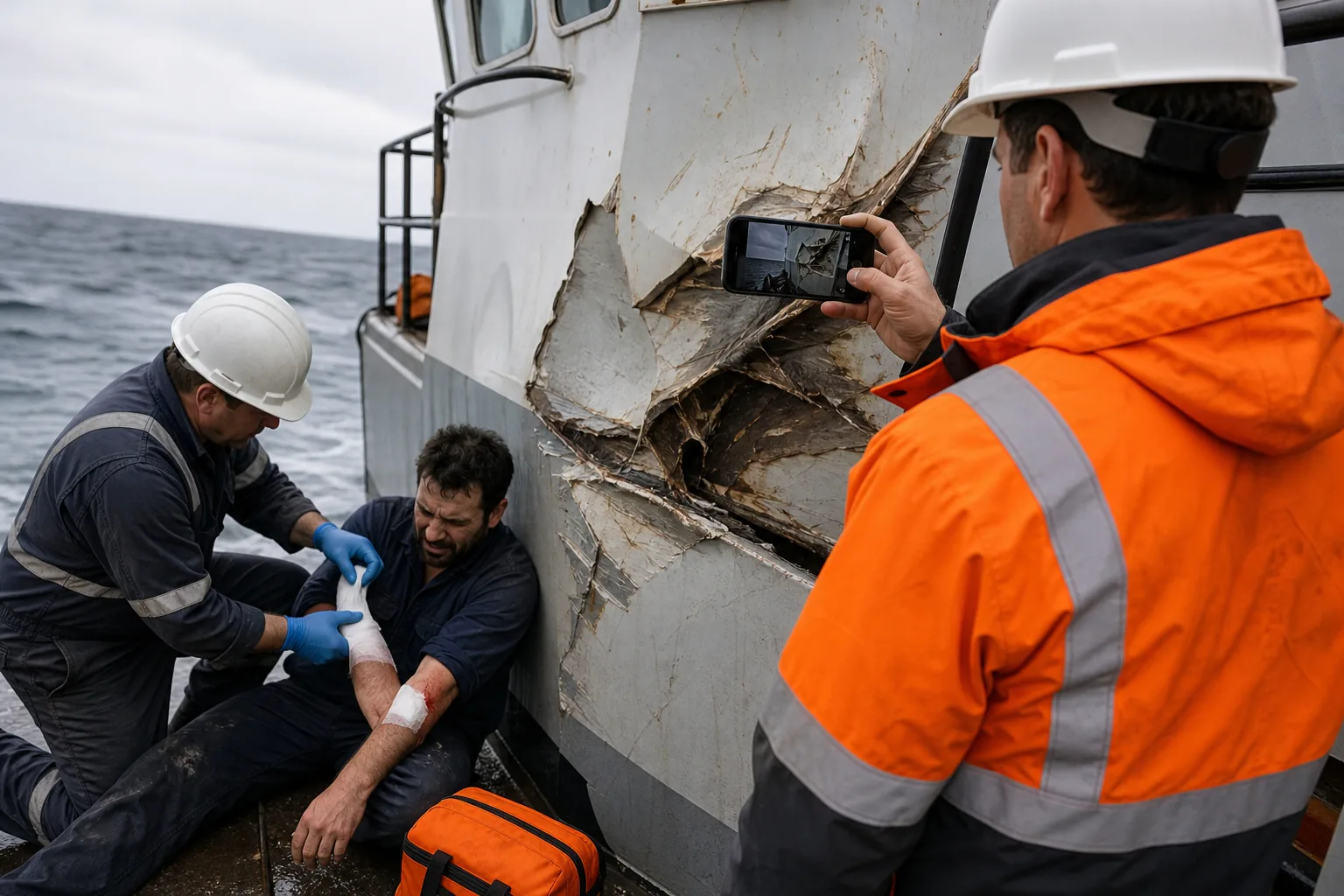
First, get medical attention right away. Whether you’re on the vessel or ashore, prompt treatment creates a medical record that will become a cornerstone of your case.
Second, report the injury to your employer. The Jones Act requires a written notice within seven days, while the LHWCA allows up to thirty days. Missing these windows can bar your claim.
Third, gather documentation. Photos of the accident scene, witness statements, and copies of all medical bills are essential. Keep a log of symptoms, doctor visits, and any time off work.
Fourth, consult a maritime‑injury lawyer. An experienced attorney can help you determine which statutes apply, calculate the full value of your claim, and protect you from employer pressure to settle early.
For a deeper look at the types of evidence you’ll need, see Jones Act Law’s guide on maritime injury claims. It walks through the paperwork and timing in plain language.
Once you have your evidence, the attorney will file the complaint in federal or state court, depending on the claim’s nature. The filing triggers a formal discovery phase, where both sides exchange medical records, employment documents, and expert testimony.
During discovery, you may be asked to undergo independent medical examinations. It’s smart to have your own doctor review any new findings before you sign anything.
Negotiations usually start soon after filing. Insurance companies often make low‑ball offers, hoping you’ll accept before you understand the full scope of your damages.
If a settlement can’t be reached, the case goes to trial. A jury will weigh the evidence and decide on liability and damages.
Our team at Maritime Injury Guide: Types, Legal Rights, and Compensation has helped dozens of workers handle these steps, ensuring no deadline is missed and no claim is undervalued.
After the trial, the court may award a judgment that includes back‑pay, medical costs, and pain‑and‑suffering. Even if you win, collecting the money can take months, especially if the defendant appeals.
Keeping organized records throughout the process makes post‑judgment collection smoother. Store all correspondence in one folder and track any payment schedules the court orders.
Common Types of Maritime Injuries
Injury patterns at sea differ from land‑based workplaces. The most frequent accidents involve slips, trips, and falls on deck, which account for roughly 38 % of all reported incidents.
Extremity injuries, especially to the arms and hands, make up about 63 % of cases. These include fractures, lacerations, and crush injuries from equipment like winches or fishing nets.
Commercial diving is the deadliest sector, with a fatality rate far higher than any other maritime occupation. The high pressure and underwater environment create unique risks that often lead to severe injury or death.
Other common injuries include:
- Burns from fuel spills or engine fires.
- Concussions from falling objects or collisions.
- Respiratory problems caused by inhaling toxic fumes on rigs.
- Musculoskeletal strains from lifting heavy gear.
Even seemingly minor injuries can become serious if the vessel lacks proper medical supplies. That’s why the “maintenance and cure” provision is so valuable, it guarantees you can get proper care, even in remote locations.
Understanding the injury type helps your lawyer build a stronger case. For example, a slip‑and‑fall claim often hinges on proving the deck was wet and unmarked, while a diving accident may require expert testimony on equipment safety.
Data from the Bureau of Labor Statistics, summarized by the IL Work Injury Lawyer study, shows that over 70 % of accidents happen while the vessel is docked or moored, highlighting the importance of safe deck conditions even when the ship isn’t underway.
Knowing the common injury mechanisms lets you anticipate the evidence you’ll need, photos of a slick deck, maintenance logs for diving gear, or witness statements from fellow crew members.
Damages You Can Recover
Maritime claims can recover a wide range of damages, far beyond the simple medical‑expense reimbursement you see in standard workers’ comp.
Economic damages include:
- Past and future medical bills.
- Lost wages from the day of injury forward.
- Unearned wages, pay you would have earned had you not been injured.
- Maintenance and cure payments for living costs.
Non‑economic damages cover the less tangible impacts:
- Pain and suffering.
- Loss of enjoyment of life.
- Emotional distress, including PTSD from traumatic events at sea.
- Disfigurement or permanent disability.
The Jones Act allows plaintiffs to seek punitive damages if the employer’s conduct was especially reckless. While punitive awards are rare, they signal that the court found the employer’s behavior egregious.
Wrongful‑death claims under the Death on the High Seas Act (DOHSA) let surviving family members recover funeral costs, loss of financial support, and loss of companionship.
For a concise overview of the Jones Act’s compensation scheme, see Wikipedia’s entry on the LHWCA. It lists the specific benefits available to non‑seaman maritime workers.
When calculating future earnings, courts often look at your career trajectory, age, and any certifications you hold. An experienced attorney will enlist an economist to produce a credible projection.
Don’t forget ancillary costs like transportation to medical appointments, adaptive equipment for a new disability, and even child‑care expenses if your injury limits your ability to care for family.
All these elements add up. A well‑prepared claim can easily exceed six figures, especially when long‑term disability is involved.
Potential Challenges and How to Overcome Them
Filing a maritime injury claim isn’t always smooth sailing. Several hurdles can slow or even derail a case.
First, jurisdictional complexity. Maritime law can involve federal courts, state courts, and even foreign courts if the injury occurred on an international vessel. A mis‑filed complaint can be dismissed on technical grounds.

Second, proving negligence or unseaworthiness. Employers often argue that the injury was caused by the employee’s own actions. To counter this, you’ll need clear evidence, photos of unsafe equipment, maintenance records, and expert testimony on industry standards.
Third, employer pressure to settle early. Insurance adjusters may offer a fraction of what you’re entitled to, hoping you’ll accept before the case fully develops. Remember, you have the right to reject any settlement until you’ve reviewed the full damage calculation.
Fourth, the “maintenance and cure” benefit can be contested. Some employers try to limit the stipend by arguing that you’ve reached “maximum medical improvement” prematurely. Keeping detailed medical records helps refute such claims.
Fifth, statutory deadlines are strict. Missing the filing window, seven days for a Jones Act notice or thirty days for LHWCA, can bar your claim entirely. That’s why the first step after an injury is to contact a lawyer as soon as possible.
Sixth, evidentiary challenges arise when the accident happened offshore, far from witnesses. Satellite data, ship logs, and electronic navigation records can fill the gap, but you’ll need a forensic specialist to extract and interpret that information.
Seventh, comparative negligence rules can reduce your award. If a court finds you partly at fault, your recovery may be cut by your percentage of responsibility. This makes it vital to build a narrative that shows the employer’s primary breach of duty.
Overcoming these obstacles usually means assembling a team: a maritime lawyer, a medical expert, and sometimes an engineering or safety specialist. Their combined expertise helps you meet the legal thresholds and present a compelling case.
At Kalfus & Nachman, for example, attorneys partner with safety engineers to document vessel defects, strengthening unseaworthiness claims. While we’re not naming that firm here, the approach illustrates a best‑practice model.
Bottom line: early legal involvement, meticulous documentation, and expert support are the three pillars that keep a maritime claim afloat.
FAQ
What is the first thing I should do after a maritime injury?
Get medical care right away. Prompt treatment creates a medical record that will be essential for any claim you file.
Do I have to be a seaman to file a claim?
No. If you work on a vessel but don’t meet the strict “seaman” definition, you may still be covered under the Longshore and Harbor Workers’ Compensation Act or general maritime law.
How long do I have to file a maritime injury claim?
Under the Jones Act you must give written notice to your employer within seven days; the LHWCA allows up to thirty days. Missing these windows can bar recovery.
Can I sue for pain and suffering?
Yes. Both the Jones Act and many state courts allow you to recover non‑economic damages such as pain, emotional distress, and loss of enjoyment of life.
What if my employer offers a settlement quickly?
Think twice. Early offers are often far below what you’re entitled to. Consult a maritime attorney before signing anything.
Do I have to use the employer’s doctor?
No. You can choose your own physician for treatment, although you may need to see the employer’s doctor once for a status report.
Ready to protect your rights?on filing a Jones Act claimto learn the exact paperwork you’ll need.
Take the next step: schedule a free consultation with a maritime‑injury specialist today and get a personalized roadmap for your case.
Ready to put this into practice? maritimeattorney.ai was built for exactly this.