
Commercial Diver Injury Compensation Explained

Getting hurt while working underwater is a nightmare you never signed up for. If you’ve been injured on a commercial dive job, you need to know how the compensation system works so you can get the money you’re owed.
In this guide we’ll break down the types of injuries divers face, the laws that protect you, how a marine attorney can help, the key factors that affect a settlement, and the exact steps to file a claim. By the end you’ll have a clear road‑map to protect your rights and get the benefits you deserve.
Understanding Commercial Diver Injuries
Commercial divers spend long hours beneath the surface, often with heavy tools, welding gear, and noisy engines humming nearby. That mix creates a perfect storm for accidents. Common injuries include barotrauma from rapid pressure changes, drowning, hypothermia, burns from welding equipment, and cuts from propellers or sharp tools. Even a simple slip in murky water can turn deadly when visibility is low.
Because divers rely on complex life‑support systems, a single equipment failure can cause severe harm. Imagine a regulator that stops delivering air mid‑dive , the result can be a rapid loss of consciousness and a crash into the seabed.
Beyond the direct injuries, divers also face long‑term health issues such as decompression sickness, joint pain, and lung problems caused by exposure to toxic gases. These conditions may not appear until weeks after the dive, making early medical attention important.
Employers are required by federal maritime law to provide proper training, safety gear, and regular equipment checks. When they fall short, say, by scheduling overly long shifts that cause fatigue, the risk of an accident rises dramatically.
When a diver is hurt, the law treats the injury as a maritime personal‑injury claim. That means the diver can seek compensation for medical bills, lost wages, and pain and suffering, even if the accident wasn’t clearly the employer’s fault.
According to the Maritime Injury Center, commercial diving is one of the most hazardous maritime jobs, with a disproportionate number of accidents among a relatively small workforce source.
Key Takeaway: The combination of heavy gear, hazardous environments, and long work hours makes commercial diving uniquely risky, so any lapse in safety can lead to serious injury.
Legal Framework for Compensation Claims
The legal landscape for diver injuries is built around a few core statutes. The most common is the Jones Act, which treats a diver as a seaman and gives the right to sue the employer for negligence. If the diver works on a vessel that is “in navigation” and has a substantial connection to the vessel’s operations, the Jones Act applies.
Another pathway is the Longshore and Harbor Workers’ Compensation Act (LHWCA). This law provides no‑fault benefits, such as medical care and wage replacement, to workers injured on the navigable waters of the United States, regardless of who is at fault.
In offshore oil‑rig environments, the Outer Continental Shelf Lands Act can also come into play, allowing divers to claim compensation even when negligence isn’t proven.
Each statute has its own filing deadline, known as a “statute of limitations.” Missing that deadline can bar you from recovering any money, so act quickly.
In Washington State, for example, the state’s Administrative Code (WAC 296‑37) sets strict safety rules for dive operations. Violations of those rules can strengthen a negligence claim under the Jones Act.
Legal experts say that a well‑documented safety assessment, showing that the employer ignored required protocols, often makes the difference between a modest settlement and a sizable award.
For a deeper look at the numbers, the Marine Injury Law group notes that divers who qualify under the Jones Act can recover “maintenance, cure, and unearned wages” as part of their award source.
How a Marine Attorney Handles Your Claim
A marine attorney does more than file paperwork. First, they assess the dive operation’s safety record, looking for any missed training, faulty gear, or schedule pressures that could prove negligence.
Next, they gather evidence. This includes dive logs, equipment maintenance records, witness statements from fellow crew members, and any video footage of the incident. The attorney will also request the employer’s safety policies to spot gaps.
Once the evidence is in hand, the lawyer drafts a demand letter that outlines the injuries, the applicable statutes, and the monetary amount being sought. The goal is to push the insurer to settle before a lawsuit is needed.
If the insurer refuses a fair offer, the attorney prepares a complaint and files it in federal court (for the Jones Act) or state court (for LHWCA). Throughout litigation, the lawyer works with medical experts to quantify future care costs and with economists to calculate lost earning capacity.
Throughout the process, communication is key. A good attorney will keep you updated, explain each legal term in plain language, and make sure you understand how each decision affects your compensation.
Bottom line: A seasoned marine attorney turns complex maritime law into a clear path toward a payout.
Factors Influencing Compensation Amounts
Not every diver injury results in the same payout. Several variables shape the final figure.
Severity of injury.A broken bone that heals in weeks will bring a smaller settlement than permanent spinal damage that ends a career.
Lost earnings.The court looks at your pre‑injury wage, the time you’re out of work, and the earnings you can expect after recovery. If you can’t return to diving, the loss of future earnings can be substantial.
Negligence level.If the employer ignored clear safety rules, like failing to replace a worn‑out regulator, that negligence can boost damages.
Age and health.Younger divers with longer earning horizons often receive higher future‑wage estimates. Pre‑existing conditions can also affect the calculation.
Jurisdiction.Some courts are more plaintiff‑friendly than others. For instance, federal courts handling Jones Act cases may award higher pain‑and‑suffering damages than state courts.
- Document every medical visit, prescription, and therapy session.
- Keep records of all income, including overtime and bonuses.
- Track non‑economic impacts such as loss of enjoyment of life.
For an overview of how the Jones Act calculates damages, see the Offshore Injury Lawyer guide. This resource walks through the key components of a claim in plain language.
Steps to Pursue Your Compensation Claim
Knowing the exact steps can keep you from missing deadlines or losing evidence.
- Seek medical care immediately.Get a full evaluation, even if you feel fine. A doctor’s report is the cornerstone of any claim.
- Notify your employer.Report the injury in writing as soon as possible. Most statutes require a written notice within a set number of days.
- Collect evidence.Gather dive logs, equipment maintenance records, safety manuals, and witness statements. Photographs of the accident scene help too.
- Consult a marine attorney.An attorney will review the facts, determine which statute applies, and advise on the best strategy.
- File the claim.Depending on the law, you may file a Jones Act suit in federal court or a LHWCA claim with the employer’s workers’ comp carrier.
- Negotiate settlement.Most cases settle before trial. Your lawyer will present a demand package that includes medical bills, wage loss, and non‑economic damages.
- Prepare for trial if needed.If settlement talks stall, your attorney will file a complaint, conduct discovery, and present your case to a judge or jury.
During each step, keep copies of all correspondence. Email threads, certified letters, and receipt logs protect you if the other side disputes what you said.
Remember, the clock starts ticking the day you are injured. Missing a filing deadline can close the door on any recovery.
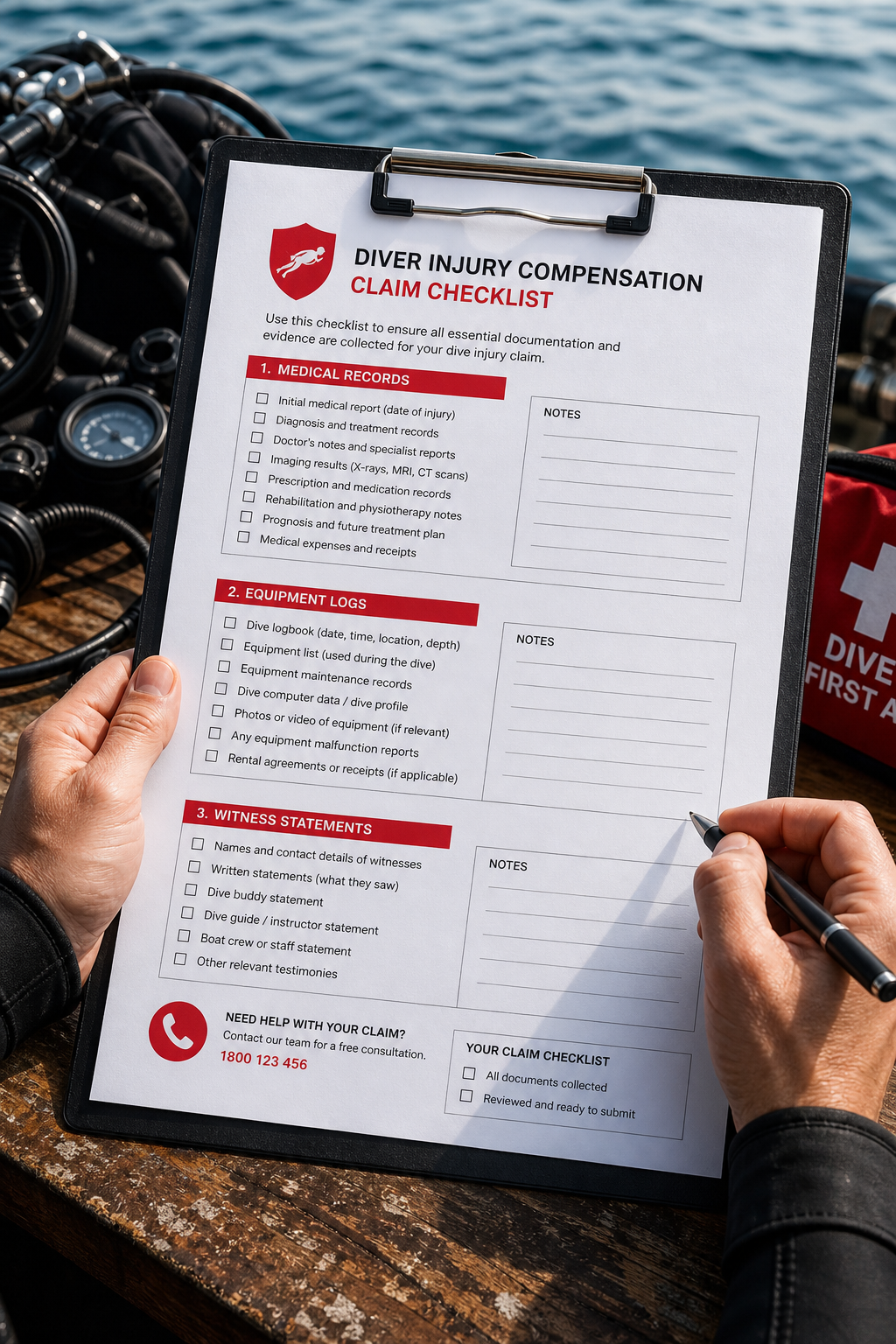
Bottom line: Follow the steps methodically, and let a qualified attorney handle the legal heavy lifting.
FAQ
What types of injuries qualify for commercial diver compensation?
Any injury that occurs while you are performing your dive duties can qualify. This includes physical trauma like cuts, burns, broken bones, as well as medical conditions such as decompression sickness, barotrauma, or long‑term respiratory issues. Even psychological harm, like PTSD from a near‑drowning event, may be recoverable if it’s linked to the work accident.
How long do I have to file a claim?
The deadline, or statute of limitations, varies by law. Under the Jones Act, you generally have two years from the date of injury to file a lawsuit. For the Longshore and Harbor Workers’ Compensation Act, the limit is often three years. Some state statutes may be shorter, so it’s critical to act quickly and consult an attorney as soon as possible.
Can I get compensation if the accident wasn’t my employer’s fault?
Yes. The Jones Act allows you to recover damages even if the employer’s negligence is only one factor among many. The LHWCA provides no‑fault benefits, meaning you can receive medical care and wage replacement regardless of fault. However, proving negligence can increase the amount you receive.
What is “maintenance and cure”?
Maintenance and cure is a maritime benefit that covers your living expenses (food, lodging, and other basic needs) while you recover, plus the full cost of all medical treatment related to the injury. It starts the moment you’re injured, even if a lawsuit is still pending.
Do I need a special marine attorney?
Maritime law is a niche field. A lawyer who specializes in the Jones Act, LHWCA, or offshore injury cases will understand the specific procedural rules, evidence requirements, and how to calculate future earning loss for divers. Choosing a general personal‑injury lawyer could limit your recovery.
How are future earnings calculated?
Future earnings are projected based on your age, experience level, expected career trajectory, and the wage you would have earned if the injury hadn’t occurred. Economists use actuarial tables and industry salary data to produce a fair estimate that the court can rely on.
What if my employer denies my claim?
If the employer or insurer rejects your claim, you can appeal the decision or file a lawsuit. An experienced marine attorney will review the denial letter, identify any legal errors, and file the appropriate appeal or complaint to protect your rights.
Will I have to pay legal fees up front?
Most marine attorneys work on a contingency basis, meaning they only get paid if you win or settle. They typically take a percentage, often between 30% and 40%, of the final recovery. This arrangement lets you pursue your claim without worrying about upfront costs.
Conclusion
Commercial diver injury compensation is a complex mix of maritime statutes, medical evidence, and careful documentation. Knowing the types of injuries covered, the legal pathways available, and the factors that shape a settlement puts you in a stronger position to claim what you’re owed.
If you’ve been hurt on the job, start by seeking medical care, notifying your employer, and gathering every piece of evidence you can find. Then, reach out to a marine attorney who knows the Jones Act and LHWCA inside out. Their expertise will help you handle the filing deadlines, negotiate a fair settlement, and, if needed, take the case to court.
Don’t wait, delays can cost you the chance to recover. Take the first step today and schedule a free case review. Your health and livelihood are worth protecting.