Offshore Injury Lawyer Guide: Protect Your Rights on the High Seas

Injured at sea? You’re not alone. The law gives you tools to get paid for medical bills, lost wages, and pain. This guide shows how an offshore injury lawyer can turn a nightmare into a clear path to compensation.
You’ll learn what counts as an offshore injury, what judges look for, how to pick the right lawyer, the exact steps to file a claim, and the pitfalls that can cost you money.
Understanding Offshore Injury Claims
Offshore work is tough. You’re on a ship, a rig, or a fishing boat. One slip, a broken crane, a wave, and you can be hurt badly. The good news is that federal law steps in. If you spend at least 30% of your time on a vessel, the Jones Act shields you.
The Jones Act says you get "maintenance and cure" right away. That means your employer must pay for daily living costs and all medical care, even if they didn’t cause the accident. Read the full breakdown of maintenance and cure here. This benefit is automatic , you don’t have to prove fault first.
But you also have a right to sue for negligence. If the ship’s safety gear was faulty, if training was missing, or if the employer ignored a known hazard, you can claim damages beyond medical costs. Those damages can include pain and suffering, lost earning power, and future care.
Most offshore workers think they only get workers’ comp, but that’s not true. The Longshore and Harbor Workers’ Compensation Act (LHWCA) covers shore‑based employees who get hurt on a dock or while boarding a vessel. Learn how LHWCA differs from the Jones Act. Knowing which law applies is the first step to a strong claim.
Why does this matter? Because the right law determines the damages you can chase and the time limits you face. The Jones Act has a three‑year statute of limitations, while LHWCA gives you one year from the injury. Missing a deadline can close the door on any payout.
Here’s a quick checklist you can use right after an accident:
- Get immediate medical care , your health comes first.
- Ask for a written incident report from your captain or supervisor.
- Collect contact info for any witnesses on board.
- Preserve any equipment that may have caused the injury, if safe to do so.
- Notify your employer in writing about the injury within 24‑48 hours.
Following these steps helps an offshore injury lawyer prove negligence and preserve the "maintenance and cure" benefits you deserve.
Key Factors Judges Consider in Offshore Injury Cases
When a judge reads your case, they look for a handful of core elements. First, they check if you qualify as a seaman under the Jones Act. That means you must be employed or contracted to work on a vessel that spends at least 30% of its time on water.
Next, judges weigh the doctrine of unseaworthiness. This legal idea says the shipowner must keep the vessel safe. If a faulty railing broke and you fell, the owner could be held strictly liable. See how unseaworthiness is argued in Texas courts. The judge will ask: Was the equipment maintained? Were proper safety drills given?
Another factor is causation. You must link the injury directly to the employer’s negligence. That’s why medical records, witness statements, and logbooks are vital. The judge also looks at the extent of your damages , both economic (medical bills, lost wages) and non‑economic (pain, suffering, loss of enjoyment).
Judges also consider the venue. Most offshore cases land in federal court because the Jones Act is a federal statute. However, some can be filed in state court if the vessel operates on inland waters. The venue can affect how evidence is gathered and which jury you face.
Below is a simple table that shows the main factors and why they matter:
| Factor | Why It Matters |
|---|---|
| Seaman Status | Determines if Jones Act applies. |
| Unseaworthiness | Creates strict liability for unsafe vessels. |
| Causation | Links employer’s act to your injury. |
| Damages | Sets the compensation range. |
| Venue | Influences procedural rules and jury pool. |
Understanding these points helps you and your offshore injury lawyer build a story that a judge can follow.
Judges also weigh the credibility of the evidence. That’s why a lawyer will hire marine experts to inspect the vessel, review maintenance logs, and testify about industry standards. The more concrete the proof, the higher the chance of a favorable verdict.
How to Choose the Right Offshore Injury Lawyer
Picking a lawyer feels like a big decision, but you can break it down. First, look for a firm that lives and breathes maritime law. General personal injury lawyers may not know the Jones Act, the LHWCA, or the Death on the High Seas Act.
One quick way to start is to search for a local specialist. Find the Right Boat Accident Lawyer Near Me: A 2026 Guide offers tips on locating attorneys who focus on offshore cases. Use that guide to check reviews, bar standing, and case results.
Next, evaluate experience. Ask how many Jones Act cases they have tried and what the outcomes were. A lawyer with ten years and several seven‑figure settlements shows they know how to handle complex vessel ownership disputes and jurisdictional quirks.
Communication matters too. Your attorney should return calls within a day, explain legal terms in plain language, and give you a clear timeline. If you feel rushed or confused, keep looking.
Fees are another piece. Most offshore injury lawyers work on a contingency basis , they get paid only if you win. Make sure you understand what percentage they’ll take and if any costs come out of the settlement.
Finally, trust your gut. You’ll be sharing personal health details and possibly grief. You need someone who respects you and shows empathy.
Here are three quick actions you can take right now:
- Make a list of at least three maritime law firms.
- Schedule a free case review with each.
- Write down the answers to the questions above and compare.
When you find a firm that ticks the boxes, you’ll be ready to move forward with confidence.
Don’t forget to check a firm’s track record on similar offshore cases. Look for verdicts involving rig explosions, deck‑hand injuries, or fishing‑boat accidents. That history shows they can navigate the unique challenges of maritime litigation.
Choosing the right offshore injury lawyer can make the difference between a modest settlement and full compensation for your future needs.
Steps to File an Offshore Injury Claim
Now that you have a lawyer, the claim process becomes a series of clear steps. First, your attorney will draft a complaint that outlines the facts, the legal basis (usually the Jones Act), and the damages you seek.
The complaint is filed in federal court unless the vessel operates solely on inland waters. Learn what to expect during the filing stage here. After filing, the case enters discovery.
During discovery, both sides exchange documents. You’ll provide medical records, employment contracts, and the ship’s logbook. The defense may request an independent medical exam (IME). It’s important to attend the IME with your lawyer’s guidance , the examiner is chosen by the defense, but you can still contest any biased findings.
Depositions follow. You’ll answer questions under oath while a court reporter records everything. Your lawyer will prepare you with mock questions so you stay calm and clear.
Most cases settle before trial. Settlement negotiations can happen through mediation or arbitration, which are faster and cheaper than a full trial. Your lawyer will calculate a fair number by adding up medical costs, lost wages, and a reasonable amount for pain and suffering.
Want to estimate that number yourself? How to Use a Personal Injury Settlement Calculator to Maximize Your Claim explains a simple tool you can use for a ballpark figure before you talk numbers with the insurer.
If settlement talks stall, the case moves to trial. A judge or jury hears testimony, reviews evidence, and decides liability and damages. Trials can last days or weeks, but most offshore cases resolve within a year of filing.
Throughout, keep detailed records of every expense , prescriptions, travel to medical appointments, and even home‑care costs. Those receipts become part of the final compensation tally.
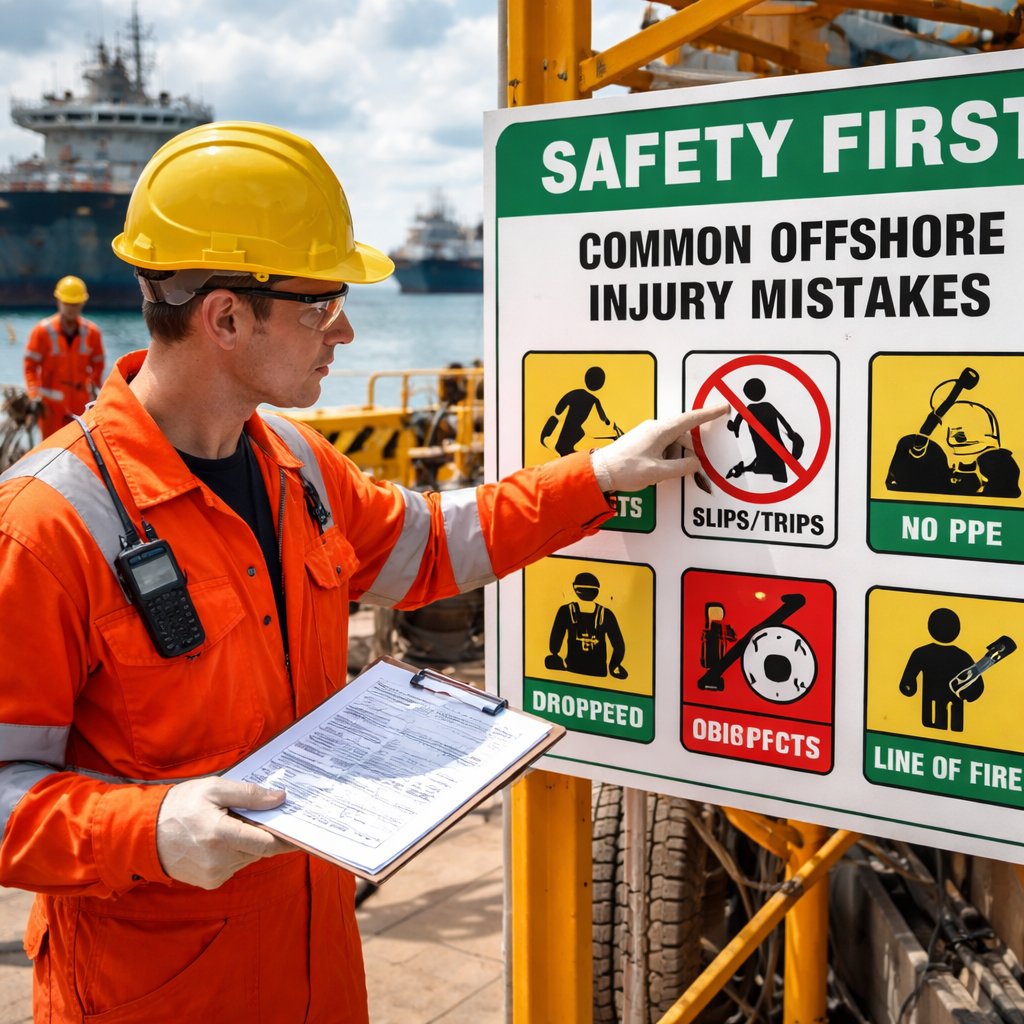
Common Mistakes to Avoid When Pursuing Offshore Injuries
Even with a good lawyer, a misstep can shrink your payout. One big error is waiting too long to report the injury. Delays give the employer a chance to argue the injury was unrelated to work.
Another mistake is signing away rights without a lawyer. Some employers ask injured workers to sign a "release" that waives maintenance and cure. Read the six common mistakes to avoid when hiring a lawyer for more detail.
People also forget to keep their medical treatment consistent. Skipping appointments or not following a doctor’s plan can be used to claim you weren’t serious about recovery.
Using social media the wrong way is a trap. Posting about your injury or the accident can be quoted by the defense to downplay the severity.
Finally, many offshore workers try to handle negotiations on their own. Without a lawyer who knows maritime law, you risk accepting a low settlement that doesn’t cover future care.
Here are three practical tips to stay on track:
- Document everything the day of the accident , photos, notes, and witness contacts.
- Never sign any paperwork until your offshore injury lawyer reviews it.
- Keep a daily log of pain levels, medication, and activities you can’t do.
Technology can help you stay organized. AI Content Optimization: A Practical How‑To Guide for 2026 mentions tools that can automate note‑taking and file management, which is handy when you need to share large amounts of evidence with your lawyer.
Avoiding these pitfalls means more of your compensation goes where it belongs , toward your recovery and future security.
Conclusion
Getting hurt at sea is scary, but the law gives you strong protection. An offshore injury lawyer can turn a complex maritime claim into a clear path to payment. You now know the types of claims you can make, what judges focus on, how to pick a lawyer, the exact filing steps, and the mistakes that can cost you.
Take action today. Gather your medical records, write down what happened, and reach out to a qualified offshore injury lawyer for a free case review. The sooner you move, the better your chances of preserving evidence and locking in the benefits you deserve.
Ready to protect your rights and get the compensation you need? Start your free consultation with an offshore injury lawyer now →
FAQ
What is the difference between the Jones Act and the LHWCA?
The Jones Act covers seamen who work on vessels that spend most of their time on water. It gives you maintenance, cure, and the right to sue for negligence. The LHWCA protects dockworkers and other maritime employees who aren’t classified as seamen. Both provide compensation, but the statutes, benefits, and deadlines differ, so an offshore injury lawyer will tell you which applies.
How long do I have to file a claim?
For Jones Act claims, you have three years from the date of injury. The LHWCA gives you one year. Missing these windows can bar you from recovering any money, so act quickly.
Can I get compensation for future medical care?
Yes. An offshore injury lawyer can include future medical expenses, rehabilitation, and even long‑term care in your damages. They work with medical experts to estimate those costs accurately.
Do I have to pay my lawyer up front?
Most offshore injury lawyers work on a contingency basis. That means they only get paid if you win or settle. You won’t owe fees unless you receive compensation, and the fee percentage is agreed in advance.
What if my employer denies my maintenance and cure benefits?
An offshore injury lawyer can file a claim to enforce those benefits. Employers who refuse can face penalties, attorney fees, and punitive damages. Your lawyer will pressure the employer and, if needed, take the case to court.
Will my case go to trial?
Most maritime cases settle before trial because both sides want to avoid the cost and uncertainty of a courtroom. However, if a fair settlement isn’t offered, your offshore injury lawyer will be ready to argue your case before a judge or jury.