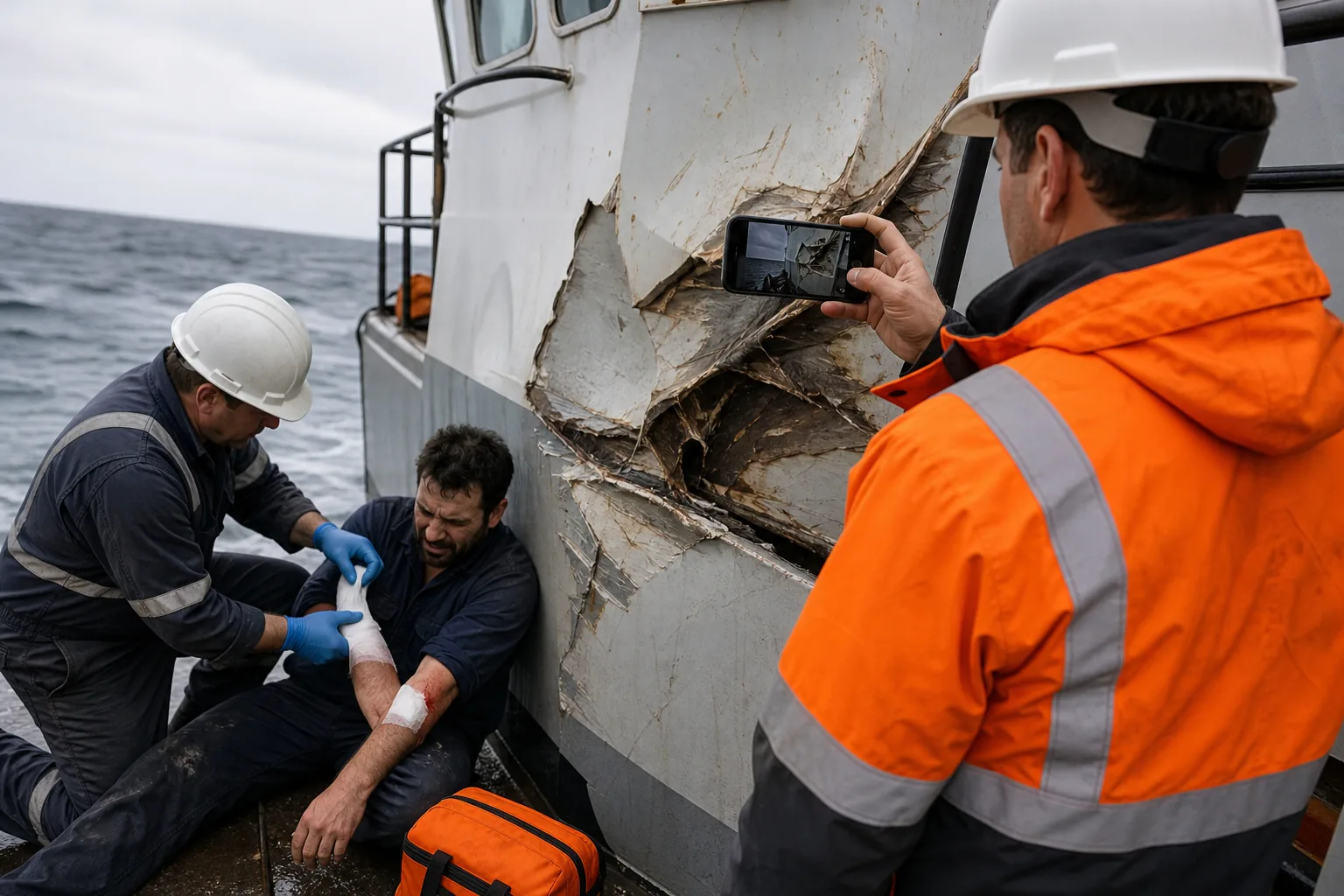
How to Handle an Unseaworthiness Claim in 2026

Got hurt on a ship? You might have an unseaworthiness claim. It’s a legal tool that lets you go after a shipowner when the vessel itself was unsafe. In this guide you’ll see what the claim means, the law behind it, how to file, common defenses, and what to avoid. By the end you’ll know how to protect your rights and get the compensation you deserve.
What Is an Unseaworthiness Claim?
An unseaworthiness claim is a suit that a seaman can bring when a ship’s condition caused injury. The ship must be "unseaworthy" , meaning it isn’t fit for its intended use. The claim does not need to prove the owner was careless, just that the unsafe condition existed.
The courts break the claim into three parts. First, you must be a seaman. Second, the vessel must be unseaworthy. Third, the unseaworthy condition must have caused your injury. The plaintiff bears the burden of proving each element by a preponderance of the evidence.1
Here’s what the jury instruction says:
"On the plaintiff’s unseaworthiness claim, the plaintiff has the burden of proving the following elements by a preponderance of the evidence: First, the plaintiff was a seaman; Second, the vessel was unseaworthy; and Third, the unseaworthy condition was a cause of an injury or damage to the plaintiff."
The law treats the shipowner’s duty as absolute. Even if the owner never saw the problem, liability can still attach.2
Imagine you slipped on a slick deck that had not been cleaned. Even if the crew didn’t know the deck was wet, the owner may still be on the hook.
Unseaworthiness claims often sit alongside a Jones Act claim. While the Jones Act focuses on negligence, the unseaworthiness claim looks at the vessel itself. Because the two claims share the same defendant, you can usually ask for a jury trial on both.
When you file, you’ll need proof of three things: your status as a seaman, the unsafe condition, and the link to your injury. Evidence can include photos, maintenance logs, witness statements, and expert testimony.
- Identify the vessel’s owner or operator , they are the proper defendant.
- Gather any written safety inspections or repair records.
- Secure medical records that tie your injury to the incident.
Bottom line: The claim rests on three clear elements , you, the unsafe ship, and the injury link.
Legal Grounds and Statutes Behind the Claim
The doctrine of unseaworthiness lives in general maritime law. It sits alongside two other key causes of action for seamen: maintenance and cure, and the Jones Act. While maintenance and cure is a no‑fault benefit, the unseaworthiness claim is a fault‑based remedy that targets the vessel itself.
The core statute says a shipowner has an absolute duty to provide a seaworthy vessel. This duty covers the hull, all equipment, and even the crew. Anything that is part of the ship must be reasonably fit for its intended use.3
One important case, Mitchell v. Trawler Racer, Inc., held that the duty is non‑delegable. That means the owner can’t dodge liability by pointing to a contractor or a crew member.
Because the duty is absolute, the plaintiff does not need to prove the owner knew about the defect. The law assumes the owner should have known and taken steps to fix it.
The unseaworthiness doctrine also expands to crew adequacy. An insufficient crew or untrained crew members can make a vessel unseaworthy. Even temporary hazards like an oil slick on deck count as unseaworthy conditions.
Below is a quick checklist of what the law looks at when deciding if a vessel is unseaworthy:
| Aspect | What to Check |
|---|---|
| Hull integrity | Corrosion, cracks, or structural damage |
| Equipment | Working safety gear, ladders, winches |
| Crew | Number, training, fitness for duty |
| Safety procedures | Emergency drills, signage, PPE |
When a claim succeeds, the seaman can recover the full range of maritime damages , medical costs, lost wages, pain and suffering, and even loss of consortium. This is broader than a Jones Act claim, which caps certain damages.
For a deeper dive on related maritime claims, see How to File a Jones Act Claim in 2026. It explains how the Jones Act and unseaworthiness claims can work together in the same lawsuit.
Remember, the law does not require proof of negligence, only that the unsafe condition existed.
Bottom line: The legal framework gives you a strong footing once you can show the vessel was unsafe and caused harm.
How the Claim Process Works (Step‑by‑Step)
Filing an unseaworthiness claim starts with a race against time. The clock begins on the day the injury occurs, unless the injury is hidden and later discovered. In that case, the clock may start when you learn of the injury.
Step 1: Seek medical attention right away. Your health comes first, and medical records become core evidence.
Step 2: Report the incident to your captain or supervisor. Get a written incident report if possible.
Step 3: Preserve any physical evidence. Take photos of the unsafe area, keep damaged equipment, and note any witnesses.
Step 4: Consult a maritime attorney early. A lawyer can help you meet the filing deadline, which is usually three years for unseaworthiness claims, but state-specific rules may apply.
Step 5: Your attorney will draft a complaint that names the vessel’s owner and operator. The complaint must allege the three elements of unseaworthiness.
Step 6: File the complaint in the appropriate federal district court. The venue is typically where the injury occurred or where the vessel is based.
Step 7: Engage in discovery. This is where you request the owner’s maintenance logs, crew schedules, and safety manuals.
Step 8: If the case doesn’t settle, it proceeds to trial. Because the claim is based on absolute duty, juries often side with the seaman when evidence is solid.
Throughout the process, keep detailed records of lost wages, medical bills, and any other out‑of‑pocket costs.
Below is a quick step‑by‑step checklist you can print and follow:
- Get immediate medical care.
- Report the incident in writing.
- Document the unsafe condition.
- Gather witness contacts.
- Consult a maritime lawyer within 30 days.
- File the complaint before the statute runs.
- Preserve all records for discovery.
- Prepare for settlement talks or trial.
For more on filing deadlines and evidence gathering, see BoatLaw’s guide to maritime injury claims. It breaks down the statutes of limitations and why early action matters.
Another useful resource is the same BoatLaw page which emphasizes the need for prompt documentation.
Bottom line: Follow the step‑by‑step plan to avoid missing deadlines and to build a strong unseaworthiness claim.
Common Defenses and Pitfalls to Watch For
Shipowners don’t sit back quietly. They will push back with several defenses. Knowing these can help you stay ahead.
One common defense is the “assumption of risk.” If you knowingly worked in a hazardous area, the owner may argue you accepted that danger.
Another is “contributory negligence.” If you slipped because you weren’t watching your step, the court may cut your damages.
Owners also claim “superseding cause.” They argue that an outside event, like a sudden storm, was the real reason for the injury.
In some cases, the owner will try to argue “transitory unseaworthiness.” They say the unsafe condition was brief and they had no chance to fix it. To beat this, you need prompt documentation showing the condition existed when you were injured.
Don’t forget the statutory limits. If you file after the three‑year window, the claim is barred no matter how strong your evidence.
Here’s a quick list of pitfalls to avoid:
- Waiting too long to seek medical care.
- Failing to get a written incident report.
- Not preserving evidence like photos or logs.
- Skipping a lawyer early in the process.
- Assuming the owner will settle without proof.
Shipowners may also invoke the “no right to a jury trial” defense on a pure unseaworthiness claim. However, if you also bring a Jones Act claim, you can demand a jury for both.
For a deeper look at how owners defend themselves, read BoatLaw’s overview of unseaworthiness defenses. It outlines the legal tactics owners use.
Another perspective comes from Abraham Watkins’ guide. It highlights real‑world examples of how courts weigh crew adequacy and equipment failures.
Bottom line: Knowing the common defenses lets you gather the right proof and avoid easy pitfalls.
FAQ
What qualifies as a seaman for an unseaworthiness claim?
A seaman is someone who spends a significant portion of work time on a vessel that is in navigation. The role must contribute to the vessel’s mission, such as a deckhand, engineer, or fisherman. Courts look at time on board and the nature of duties to decide if the person fits the legal definition.
How long do I have to file an unseaworthy claim?
The standard filing period is three years from the date of injury, but some cases start the clock when the injury is discovered. Missing the deadline can bar the claim entirely, so talk to an attorney as soon as possible.
Can I file an unseaworthiness claim without a Jones Act claim?
Yes. The unseaworthiness claim stands on its own because it rests on the absolute duty of the owner. However, many plaintiffs join a Jones Act claim to broaden the damages and secure a jury trial.
What types of damages can I recover?
You can seek medical costs, lost wages, pain and suffering, loss of consortium, and future earning loss. The claim can also cover damages that go beyond what the Jones Act allows, such as non‑economic losses for survivors in death cases.
Do I need expert testimony?
While not always required, expert testimony often helps prove that the vessel was unseaworthy. An marine engineer can explain why a broken pump or inadequate crew made the ship unsafe.
Will the shipowner argue the condition was temporary?
Owners often claim “transitory unseaworthiness,” saying the unsafe condition was brief. To counter, you need immediate photos, witness statements, and any maintenance logs that show the condition existed at the time of injury.
Can I still claim if the unsafe condition was caused by a contractor?
Yes. The duty to provide a seaworthy vessel is non‑delegable. Even if an independent contractor caused the defect, the shipowner remains liable under the unseaworthiness doctrine.
Conclusion
Understanding an unseaworthiness claim gives you a powerful tool to hold shipowners accountable. You now know the three core elements, the legal backdrop, the step‑by‑step filing path, and the defenses owners may raise. With this knowledge, you can act quickly, gather solid proof, and work with a skilled maritime lawyer to protect your rights.
Ready to protect your rights and get the compensation you deserve? Start your free consultation with an offshore injury lawyer today. Don’t let a missed deadline or weak evidence stand in your way.
Bottom line: An unseaworthiness claim is your pathway to recovery when a ship’s unsafe condition harms you , act fast, document everything, and get expert help.