
How to File a Cargo Damage Claim
You just got a shipment. You open the box. Your heart sinks. The product is smashed, wet, or missing pieces. It happens all the time. And it stings because you paid for shipping. You expected your goods to arrive safe.
But now you have to deal with the carrier. You need money back. That means you need to file a cargo damage claim.
Don't panic. The process is clear if you know the steps. In this guide, I'll walk you through each part. From taking photos to negotiating a settlement. You'll learn what to do, what not to do, and how to protect your rights.
Let's get started.
Step 1: Document the Damage Immediately
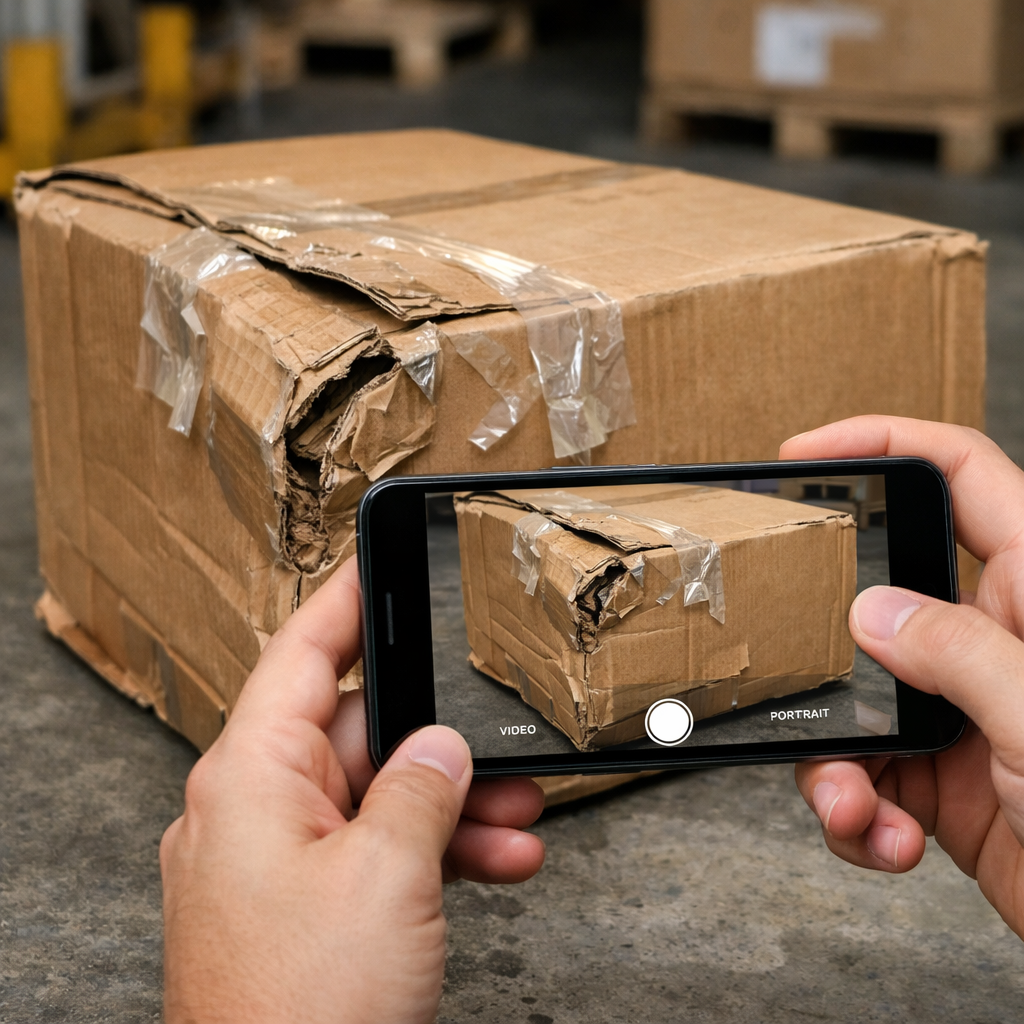
The moment you see damage, stop. Don't move the box. Don't toss the packaging. Don't call your boss yet. First, grab your phone and start taking pictures.
You need proof. Lots of it. Take photos of the outside of the box. Show every dent, tear, and water stain. Then open the box and photograph the inside. Show the packing material. Is it wet? Crushed? Missing? Take photos of the actual product from all angles.
Don't just snap one or two. Take twenty. Show the container number if it's a shipping container. Show the delivery receipt with any damage notations you made.
Here's what the U.S. General Services Administration recommends: preserve the damaged cargo and all packaging until the carrier tells you it's okay to dispose of it. If you throw away the box, the carrier can deny your claim. The GSA's freight damage claim guidance says failure to retain damaged cargo and packaging may result in a denial.
So keep everything. Store it in a clean, dry area. Don't let anyone move it.
Also write down notes. What time did the delivery arrive? Who signed for it? Was the driver present when you opened the box? Any witnesses? Write it all down while it's fresh.
If you find damage right at delivery, write "damaged" on the delivery receipt before you sign. Don't sign clean. Make the driver wait. Note every issue.
"The best evidence is evidence you collect before anyone touches the shipment."
Now, one more thing: don't try to fix the damage yourself. Don't repack. Don't clean. Leave it exactly as it arrived. The carrier may want to send an inspector. If you've already tampered with it, they'll say you caused the damage.
Bottom line: Document everything immediately with photos, notes, and preserved evidence to avoid claim denial and build a strong case.
Step 2: Notify the Carrier and File a Claim Within Time Limits
Time is not on your side. Most carriers give you a short window to report damage. Typically 3 to 7 days. Some are even shorter. If you miss that window, your claim dies.
So once you have your photos, call the carrier. Email them. Use their claim portal. Do it the same day if possible.
Don't just call. Follow up in writing. An email creates a record. A phone call can be forgotten. Send a formal notice of loss. This is different from a full claim. It's an alert saying "we have damage, we plan to file a claim."
The international law firm Marlin Blue explains that issuing a notice of loss is the first formal step. It triggers the carrier's obligation to investigate. Their cargo damage claim guide emphasizes acting swiftly to preserve claim rights. Timeframes often range from 3 to 7 days, depending on the contract.
Now, what about the actual claim? You usually have longer. The Carmack Amendment gives you nine months for domestic ground shipments. Ocean shipments often have a one-year deadline. But don't wait. File as soon as you can.
Here's a common mistake: people think filing a claim means they've exhausted all options. No. Filing early locks in your rights. You can amend the claim later. But if you miss the deadline, you lose everything.
Make sure you know who to notify. Is it the trucking company? The freight forwarder? The shipping line? Check your bill of lading or contract. Send the notice to the right party. If you send it to the wrong person, they may not forward it, and you'll miss the window.
Keep copies of all emails. If you send a letter, use certified mail with return receipt. That way you can prove they received it.
Also, don't forget to notify your insurance company if you have cargo insurance. They may want to handle the claim. But their deadlines are separate. Check your policy.
Bottom line: Notify the carrier in writing within the contractual time limit (usually 3-7 days) and file the formal claim as soon as possible to protect your legal rights.
Step 3: Gather All Necessary Evidence
Now you need to build your case file. Photos are great, but they're not enough. You need documents. Lots of them.
Here's a checklist of what to collect:
- Original bill of lading (the contract of carriage)
- Commercial invoice showing value
- Packing list
- Delivery receipt with damage notations
- Photos and videos of damage
- Survey report (if you hired an independent surveyor)
- Correspondence with the carrier
- Any inspection report from the carrier
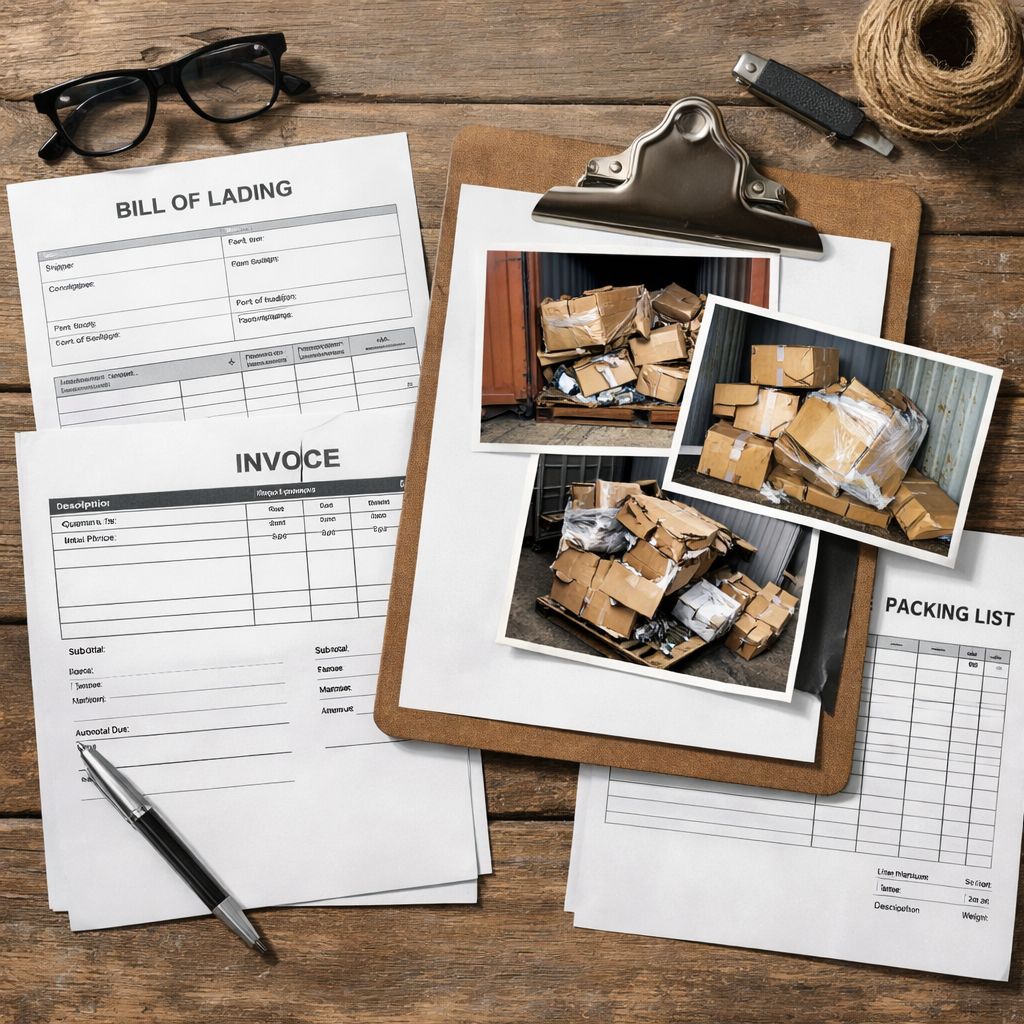
Expeditors Cargo Insurance Brokers lists the top five critical documents: the bill of lading, commercial invoice, packing list, delivery receipt, and a written description of the loss. Their article on critical cargo claims documents says these are essential for claims staff to quickly resolve a claim.
Don't just toss these in a folder. Organize them. Make a timeline. Number the pages. Create a cover letter summarizing your claim. The more organized you are, the faster the adjuster can work.
Now, let's talk about the survey report. For high-value or complex damage, consider hiring an independent marine surveyor. They inspect the cargo, take professional photos, and write a report. That report carries weight. It shows the carrier that you're serious and that an expert backs your claim.
If the carrier sends their own surveyor, that's fine. But you can also get your own. If you disagree with the carrier's survey, Recoupex recommends getting a second independent survey. Your photos can help challenge a biased report.
| Document | Why It Matters | Source |
|---|---|---|
| Bill of Lading | Shows contract terms, parties, and cargo description | Carrier |
| Commercial Invoice | Proves value of goods for compensation | Shipper |
| Packing List | Shows what was packed and how | Shipper |
| Delivery Receipt | Records condition at delivery; note damage here | Carrier |
| Photos/Videos | Visual proof of damage and packaging | Recipient |
| Survey Report | Expert assessment of damage and causation | Surveyor |
One more thing: save all packaging. Even the strapping, the pallet, the shrink wrap. If the carrier wants to inspect, they'll want to see how the cargo was packed. If you've already thrown it in the dumpster, they'll argue that improper packing caused the damage.
Bottom line: A strong evidence package includes the bill of lading, invoice, photos, survey report, and preserved packaging, all organized in a clear claim file.
Step 4: Understand Liability and Legal Options
Who pays? It depends on the law and the contract. Carriers are not always fully liable. They often limit their liability to a certain amount per pound or per package.
For domestic trucking in the U.S., the Carmack Amendment sets the rules. The carrier is liable for actual loss or damage, but they can limit liability if they offer lower rates and the shipper agrees. The limit might be as low as $0.50 per pound. For a 50-pound box, that's only $25. If your product is worth $500, you're out of luck.
Ocean shipping follows the Hague-Visby Rules. Liability is limited to about $500 per package or 2 SDR per kilogram, whichever is higher. That's often far below the cargo's value.
This is why cargo insurance exists. As the Roanoke Group explains, cargo insurance is a risk transfer method that covers the full value of goods. Their comparison of cargo insurance vs carrier legal liability shows that carrier liability has low limits and requires proving negligence. Insurance covers loss regardless of fault.
Now, let's talk about legal options. If the carrier denies your claim or offers too little, you can take them to court. But that's expensive and slow. Most claims settle before trial. You can also use alternative dispute resolution like mediation or arbitration. These are faster and cheaper.
Sometimes the carrier accepts liability but offers a lowball settlement. You have the right to negotiate. Don't accept the first offer. Counter with your evidence. Show them the survey report. Show them the photos. Show them the invoice. Be firm but professional.
Also, understand subrogation. If your insurance pays you, they may go after the carrier to recover their money. That's called subrogation. Let your insurer handle it. But you must cooperate and provide all documents.
If you don't have insurance, you're on your own. Then you need to be your own advocate. Know the law. Know the deadlines. Know the limits. If the claim is large, consider hiring a maritime attorney who specializes in cargo claims.
For related legal concepts in maritime law, you might find this resource useful: Best Guide to Maritime Personal Injury Claims. While focused on personal injury, it covers the legal framework of maritime liability that can inform cargo claim strategies.
Bottom line: Carrier liability is often limited; know the limits in your contract and buy cargo insurance for full protection; negotiate or seek legal help if the offer is unfair.
Step 5: Follow Up and Negotiate the Settlement
You filed the claim. Now what? Don't just sit and wait. Follow up. Carriers and adjusters are busy. Your claim can sit on a desk for weeks if you don't push.
Call or email every week. Ask for status. Ask what documents they still need. Keep a log of every conversation: date, time, who you spoke with, what was said.
If the carrier makes an offer, don't accept immediately. Evaluate it. Does it cover your full loss? If not, prepare a counter. List each item of damage. Show the repair cost or replacement cost. Show the invoice. Show any survey report that confirms the damage. Use your evidence to justify a higher amount.
Veritas Claims, a third-party claims administrator, provides excellent guidance on do's and don'ts. Their article on cargo loss reporting emphasizes tracking and responding to communications quickly, and not being afraid to involve a claims expert.
Here's what to do when negotiating:
- Do be polite but firm. You have a valid claim.
- Do reference your evidence repeatedly.
- Do get everything in writing. Verbal promises mean nothing.
- Don't threaten litigation unless you're actually prepared to sue.
- Don't sign a release until you're satisfied with the payment.
- Don't throw away the damaged cargo until the claim is closed.
If the carrier denies the claim outright, ask for their reason in writing. Sometimes they cite a technicality like late notice. If that's the case, see if you can prove it was timely. Maybe you have the email timestamp. If they say you didn't prove damage, send more evidence.
If the claim is large or complicated, you may want to hire a public adjuster or attorney. They take a percentage of the recovery, but they often get you a higher settlement. Weigh the cost.
Remember that the goal is to get paid what you're owed. Don't let frustration make you give up. Many claims settle after a few rounds of negotiation.
Bottom line: Follow up regularly, negotiate based on evidence, and don't settle for less than your documented loss; get everything in writing.
Frequently Asked Questions
What is a cargo damage claim?
A cargo damage claim is a formal request for compensation submitted when goods are damaged during transportation. It involves providing evidence of damage, proving that the carrier was responsible, and following contractual and legal procedures. The claim can be filed by the shipper, consignee, or their insurer. Success depends on timely notification, thorough documentation, and understanding the carrier's liability limits.
How long do I have to file a cargo damage claim?
Deadlines vary by mode of transport and contract. For domestic trucking under the Carmack Amendment, you have 9 months from delivery to file a written claim and 2 years to sue if the claim is denied. Ocean shipments under the Hague-Visby Rules require notification within 3 days of delivery and a lawsuit within 1 year. Always check your bill of lading or shipping contract for the exact deadlines. Missing them forfeits your right to compensation.
Can I file a claim if I signed the delivery receipt clean?
Yes, but it's harder. If you signed "clean" (without noting damage), you're presumed to have received the goods in good condition. However, you can still file a claim if you discover hidden damage later. You must prove that the damage occurred during transit, not after delivery. Photographs, survey reports, and timely notification (usually within 3-7 days) are critical to overcome a clean receipt.
What documents do I need to file a cargo damage claim?
At minimum, you need the original bill of lading, commercial invoice, packing list, and delivery receipt with damage notations. You should also include photos of the damage, a written description of the loss, and any survey reports. Insurance policies and correspondence with the carrier help. The more complete your evidence package, the faster and more favorable the claim resolution.
Do I need a lawyer to file a cargo damage claim?
Not for small claims. Many claims are handled directly with the carrier or through insurance. But for high-value claims (over $10,000), complex damage, or if the carrier refuses to pay, a maritime attorney or claims specialist can help. They understand the legal nuances, deadlines, and negotiation tactics. Their fee is often a percentage of the recovery, so evaluate whether the expected increase justifies the cost.
What if the carrier denies my cargo damage claim?
If the carrier denies your claim, ask for a written explanation. If it's based on late filing, you might still have time to sue under the applicable law. If it's based on insufficient evidence, provide more documentation or get an independent survey. You can also negotiate with the carrier's claims department. If all else fails, consider mediation, arbitration, or litigation. Many claims are resolved through these processes before trial.
Can I get compensated for lost sales or business interruption from damaged cargo?
Generally, no. Carrier liability and most cargo insurance policies cover only the physical loss or damage to the goods, not consequential damages like lost profits, lost sales, or business interruption. Some policies offer optional coverage for consequential loss, but it's rare and expensive. To protect against business interruption, consider separate insurance or contractual provisions with the carrier. Always read your policy carefully.
What is the difference between cargo insurance and carrier liability?
Carrier liability is the legal responsibility of the transportation company for goods in their care. It is limited by law or contract, often to a low amount per pound or per package. Cargo insurance is a separate policy purchased by the shipper or consignee that covers the full value of the goods. Insurance covers damage regardless of fault, while carrier liability requires proving the carrier was negligent. Insurance is recommended when the cargo value exceeds the carrier's limit.
Conclusion
Filing a cargo damage claim isn't fun. It takes work. But if you follow these steps, you give yourself the best chance of getting paid.
Start with fast documentation. Take photos, write notes, keep the packaging. Then notify the carrier immediately, in writing. Gather all your documents: bill of lading, invoice, packing list, delivery receipt, survey reports. Know the liability limits in your contract and whether you have insurance to cover the gap. Don't be afraid to follow up and negotiate. Carriers expect negotiation; they often start with a low offer.
Remember that the law is on your side if you act correctly. The Carmack Amendment, Hague-Visby Rules, and your own contract give you rights. Use them. If the claim is large, get professional help from a lawyer or claims adjuster.
One final tip: prevention is better than cure. Inspect shipments before they leave. Use proper packing. Take photos of the cargo before loading. That gives you a baseline. If damage happens, you can show it was in good condition when shipped.
But when damage does happen, you now know what to do. Don't delay. Don't panic. Follow the steps. You can file a cargo damage claim successfully and recover the compensation you deserve.