Offshore Accident Attorney Guide: Protect Your Rights After a Maritime Incident

Injured at sea? You may think the ocean will swallow your claim. It won’t. A skilled offshore accident attorney can keep your rights afloat and get you the money you need.
In this guide you’ll learn what claims look like, when to call a lawyer, how to pick the right one, what the lawyer will focus on, and the steps the case will follow from start to finish.
Understanding Offshore Accident Claims
When a worker gets hurt on a rig, a vessel, or any offshore platform, the law steps in fast. The Jones Act and other maritime rules give seamen a safety net that most land workers don’t have.
First, the worker gets "maintenance and cure" , money for daily living costs and a promise that the employer will pay for all medical care. This benefit starts the moment the injury happens, even if the fault is still being decided.BoatLaw explains the basics of maintenance and cure. The idea is to let the injured person focus on healing, not on bills.
Second, if the injury was caused by negligence, the worker can sue under the Jones Act. That suit can bring back lost wages, medical expenses, and even pain‑and‑suffering money. The law treats offshore workers like any other employee who gets hurt on the job, but it also adds extra layers because the workplace is water.
Third, not every offshore worker fits the Jones Act definition. Those who work on the dock, in a harbor, or who spend less than 30 % of their time on a vessel may fall under the Longshore and Harbor Workers’ Compensation Act (LHWCA). That act still offers medical care and wage replacement, just on a different schedule.BoatLaw details the LHWCA benefits. Knowing which law applies is the first step in getting the right help.
Here’s a quick checklist to run after an injury:
- Get medical attention right away.
- Ask your employer for the maintenance and cure paperwork.
- Write down what happened, who was there, and any unsafe conditions you saw.
- Take photos of the scene if you can safely do so.
- Contact an offshore accident attorney as soon as possible.
Why does timing matter? Evidence on a ship can disappear with the tide. Logs get overwritten, witnesses get called to other jobs, and insurers may try to say the injury wasn’t work‑related. A lawyer helps lock down proof before it’s gone.
Imagine a deckhand who slipped on a wet deck because the crew didn’t put up a safety rail. He gets a broken wrist. Without a lawyer, he might get a short settlement that only covers the cast. With a lawyer, the case can bring compensation for the cast, the lost wages while he can’t work, the permanent loss of dexterity, and the pain he feels each day.
That example shows why you need a lawyer who knows maritime law. They know how to ask the right questions, how to get the ship’s maintenance logs, and how to prove that the employer didn’t follow safety rules.
And if the employer tries to deny the claim, the lawyer can push for penalties, attorney fees, and sometimes punitive damages. Those extra dollars can make a big difference when you’re trying to pay rent while you heal.
Ready to protect your rights? Try our solution free →
When to Hire an Offshore Accident Attorney
The moment you feel a sharp pain or see a dangerous spill, you should think about a lawyer. The offshore world moves fast, and the legal clock starts ticking.
One key sign you need help now is a serious injury that stops you from working for weeks or months. Burns, broken bones, head injuries, and loss of a limb all fall in this zone. A lawyer can make sure you get the full maintenance and cure payout while they build a claim for future losses.
Another sign is a claim denial. If your employer says the injury isn’t covered, an offshore accident attorney can challenge that decision. They know the language of the Jones Act and can point out where the employer broke the rule.
And if you notice paperwork missing, like a missing log of safety inspections, that’s a red flag. The lawyer will request the records, file a motion if needed, and keep the evidence chain intact.
Here’s a short list of moments that call for a lawyer:
- Severe injury that needs hospital care.
- Employer refuses to start maintenance and cure.
- Insurance adjuster offers a low settlement.
- Deadline to file a claim is approaching.
Why act quickly? Maritime claims have strict deadlines, usually one year from the injury. Miss the date and you lose the right to sue.
In a recent offshore oil‑rig case, a worker waited three months before talking to a lawyer. By then, the rig’s logs had been archived, and the company argued the injury happened onshore. The case settled for far less than it could have. That story shows why speed matters.
And you don’t have to go it alone. An offshore accident attorney will talk to the insurance company, collect expert testimony, and keep you informed at every step.
When you’re ready, reach out for a free case review. Most lawyers work on a contingency fee, meaning they only get paid if you win.
For more on why timing matters, seeSt. Pé Law’s guide on when to call an offshore accident attorney.
And if you need a quick way to negotiate with insurers, check out15 Crisis Negotiation Techniques Every Negotiator Should Master. Those tips can help you stay calm and get better offers while your lawyer works on the big claim.
How to Choose the Right Offshore Accident Lawyer
Not every lawyer who says they handle personal injury knows maritime law. You need someone who lives and breathes the Jones Act, LHWCA, and the quirks of offshore work.
Start by checking their track record. Look for cases involving rigs, vessels, or offshore platforms. A lawyer who has won a six‑figure settlement for a deckhand or a verdict for a diver knows the terrain.
Second, ask about their team. Maritime cases often need experts, naval architects, safety engineers, and medical specialists. A solo practitioner may not have those resources. A firm with a dedicated maritime department can pull in the right people fast.
Third, talk about fees up front. Most offshore accident attorneys work on a contingency basis, but the percentage can vary. Some may ask for a small retainer for costs like expert fees. Make sure you understand what you’ll owe if you win.
Fourth, feel the vibe. You’ll be sharing personal details and medical info. You need someone who listens, answers quickly, and explains things in plain language, not legalese.
Here’s a quick comparison table you can use when you interview lawyers:
| Factor | What to Look For | Why It Matters |
|---|---|---|
| Maritime Experience | At least 3 similar cases | Shows they know the rules and courts |
| Resources | Access to expert witnesses | Strengthens proof of negligence |
| Fee Structure | Clear contingency terms | Avoid surprise costs |
| Client Communication | Responsive, plain‑talk | Reduces stress during recovery |
When you’re ready, reach out for a free consult. During that call, ask for references, ask about the timeline they expect, and note how they answer. If they speak in jargon, move on.
And if you want to hear how founders handle risk, listen to theProfitable Founder Podcast. The hosts often discuss legal safeguards for offshore businesses, which can give you extra insight when you talk to your lawyer.
Offshore Injury Lawyer Guide: Protect Your Rights on the High Seasoffers a clear step‑by‑step plan you can follow after an accident. It’s a solid place to start while you wait for your own lawyer’s advice.
Key Factors an Attorney Considers
When an offshore accident attorney takes on a case, they run a mental checklist. Each item can add or cut the amount you may receive.
First, they look at the type of injury. A broken arm may bring a few thousand dollars, but a traumatic brain injury can mean lifelong care costs that run into millions. The severity shapes the settlement.
Second, they check the employer’s safety record. If the company has a history of violations, that can push the case toward a higher award or even punitive damages.
Third, they examine the evidence. Ship logs, maintenance reports, witness statements, and video footage all help prove who was at fault. The more solid the proof, the stronger the claim.
Fourth, they consider jurisdiction. Some courts are friendlier to workers, while others favor ship owners. The attorney may move the case to a different venue if it helps the client.
Fifth, they factor in the time needed for medical treatment. Ongoing therapy, rehab, or surgeries mean future expenses that must be covered now.
Sixth, they think about the family. If the injured worker can’t return to work, the attorney may ask for loss‑of‑future‑earning calculations, which require a financial expert.
Here are three practical steps you can take to help the attorney:
- Gather all medical records as soon as you can.
- Write a short, factual account of the accident while it’s fresh.
- Save any communication from your employer about the injury.
And if you need a quick legal FAQ, theAbout Young Peoplesite offers plain answers on many topics, including how to talk to lawyers.
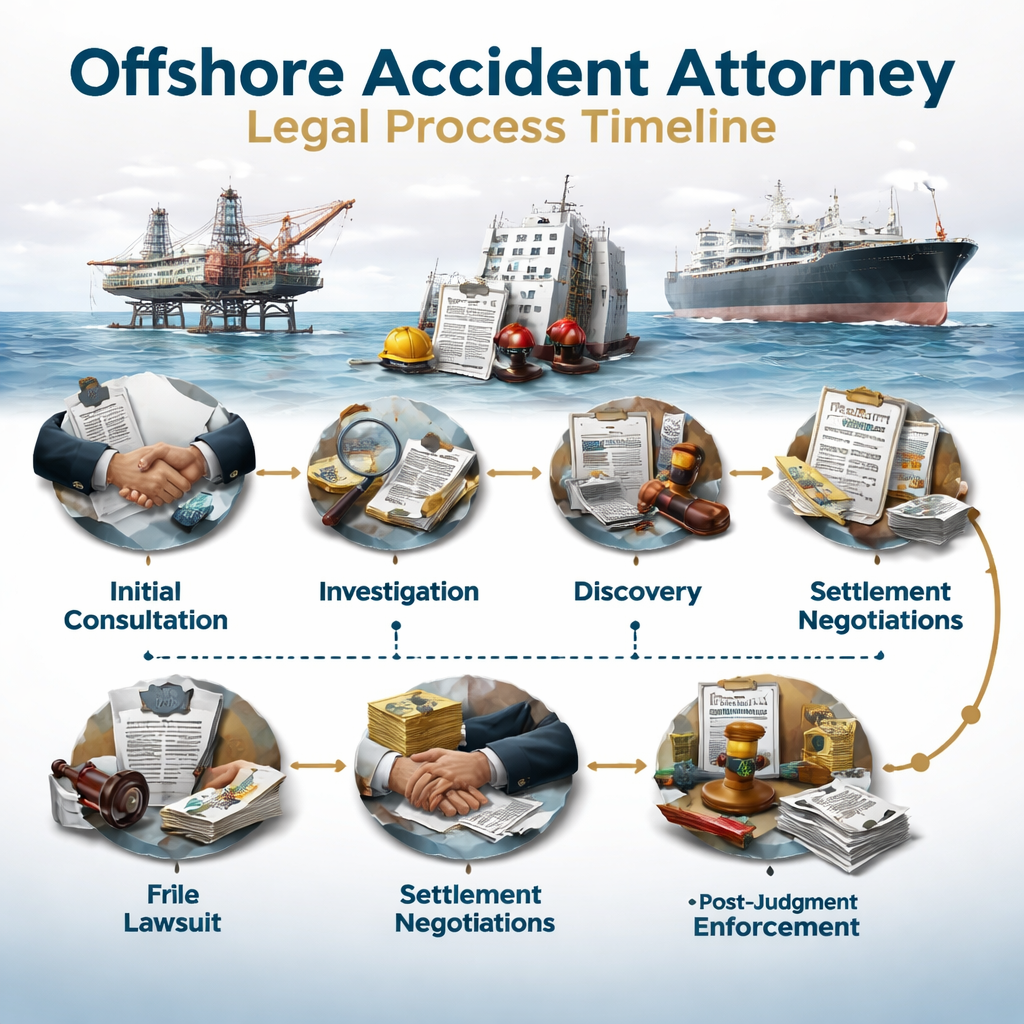
Navigating the Legal Process: Timelines & Steps
Once you’ve hired an offshore accident attorney, the case moves through a series of stages. Knowing each step helps you stay calm and know what to expect.
Step 1: Initial Consultation. The lawyer reviews your medical records, the accident report, and any employer paperwork. They tell you if you qualify under the Jones Act or LHWCA and outline the next moves.
Step 2: Evidence Collection. This can take weeks or months. The attorney orders ship logs, talks to witnesses, and hires experts to inspect the equipment that failed.
Step 3: Filing the Claim. The lawyer drafts a complaint and files it in the appropriate federal district court. The filing deadline is usually one year from the injury, so timing is tight.
Step 4: Discovery. Both sides exchange documents, answer written questions (interrogatories), and take depositions. This is where the attorney’s skill in asking the right questions shines.
Step 5: Negotiation. Most cases settle before trial. The attorney uses the gathered evidence to push the insurer for a fair settlement. Good negotiation can save months of court time.
Step 6: Trial (if needed). If a settlement can’t be reached, the case goes to trial. A jury hears the story, sees the expert testimony, and decides on damages.
Step 7: Post‑Judgment. Even after a win, the employer may try to delay payment. The lawyer can file motions to enforce the judgment and collect the money.
Here’s a simple timeline graphic you can picture: a straight line with markers at each step, showing roughly how many weeks each phase might take.
Why does each phase matter? Missing a document in discovery can cut the settlement by tens of thousands. A weak depositions answer can give the insurer a chance to argue the injury wasn’t work‑related.
For a deeper look at how long each phase can last, readLouisiana maritime lawyers’ guide on lawsuit timelines. They break down the average weeks for each step, which helps you plan medical appointments and income needs.
Conclusion
Getting hurt offshore is scary, but you don’t have to face the legal maze alone. An offshore accident attorney knows the Jones Act, can lock down evidence, and can fight insurers who want to pay you less than you deserve. From the first call to the final payment, the right lawyer makes the difference between a small check and a settlement that covers medical costs, lost wages, and future care.
Take the first step today. Call a qualified offshore accident attorney for a free review of your case. The sooner you act, the stronger your claim will be. Don’t let the tide wash away your rights.
FAQ
What does an offshore accident attorney do right after I’m injured?
The lawyer will get your medical records, check if you qualify under the Jones Act or LHWCA, and start gathering ship logs and witness statements. They also make sure the employer begins the maintenance and cure payment right away, so you don’t have to pay for care out of pocket.
How long do I have to file a claim?
Generally, you have one year from the date of injury to file a lawsuit under the Jones Act. Missing that deadline can bar you from recovering any compensation, so act fast.
Can I still get paid if the accident wasn’t my fault?
Yes. Maritime law gives you maintenance and cure benefits regardless of fault. If negligence by the employer or a third party caused the injury, you can also sue for additional damages like lost wages and pain‑and‑suffering.
Do offshore accident attorneys work on a contingency fee?
Most do. That means they only get paid if you win or settle. The fee is usually a percentage of the recovery, and the contract should spell out any costs you might owe for experts or filing fees.
What kind of compensation can I expect?
You may receive money for medical bills, daily living expenses, lost wages, future earning loss, pain‑and‑suffering, and sometimes punitive damages if the employer’s conduct was especially reckless.
How can I help my attorney win my case?
Keep detailed notes of the accident, preserve all medical records, obey doctors’ orders, and stay in contact with your lawyer. The more organized you are, the easier it is for the attorney to prove liability and get a fair settlement.