
Maritime Lawyer Salary: A Detailed Guide

Thinking about a career on the water but not sure how much you can earn? Maritime law pays a lot more than most people think. In this guide we break down the salary picture, show why pay varies, and give you steps to raise your earnings.
By the end you’ll know what a maritime lawyer does, what moves the pay needle, how experience and location matter, and what actions can lift your paycheck.
What Is a Maritime Lawyer?
A maritime lawyer helps people who work on ships, offshore rigs, or in ports protect their rights when something goes wrong. They work on cases that involve injured seamen, deckhands, longshore workers, offshore oil workers, and even cruise‑ship passengers. The job isn’t just about filing paperwork; it’s about knowing which law applies, keeping evidence safe, and pushing for compensation.
For example, if a deckhand is hurt by a broken mooring line, the lawyer will identify the relevant statutes, often the Jones Act, and guide the client through medical documentation and settlement talks. If a cargo ship collides with a dock, the attorney will sort out fault, look at limitation of liability rules, and may file a claim under the Carriage of Goods by Sea Act.
Maritime lawyers also handle insurance disputes, salvage awards, oil‑spill liability, and ship‑arrest actions where a vessel is held in port to secure a claim. They may represent governments, ship owners, or workers, depending on the case.
Because the work touches both federal admiralty law and international conventions, a lawyer must stay current on treaties like MARPOL and statutes such as the Oil Pollution Act of 1990.
Want a real‑world example of a firm that handles these cases? Maritime Lawyer New Orleans guide walks through the types of claims you might see in a Gulf‑coast practice.
Key Factors Influencing Maritime Lawyer Salary
Salary isn’t a flat number. It moves with many factors, each of which you can influence.
1. Practice area focus.Lawyers who specialize in high‑stakes offshore energy disputes often earn more than those handling routine cargo claims. The risk and complexity of oil‑rig cases drive higher fees.
2. Firm size.Large firms with global shipping clients typically have bigger billing rates than small boutique practices that serve regional ports.
3. Geographic market.Cities with dense maritime activity, like New York, Houston, or Seattle, pay premium salaries because the client pool is larger and the cases are more complex.
4. Experience and reputation.An attorney who has a track record of winning Jones Act verdicts can command a higher hourly rate or a larger contingency share.
5. Certification and bar membership.Holding a certification from the Maritime Law Association or being admitted to the admiralty bar signals expertise and can boost earning potential.
According to LawCrossing, the average nationwide salary sits around $28,188. That number gives a baseline, but most lawyers earn well above it once they add the factors above.
And here’s a visual that sums up the drivers:
Bottom line: Your pay grows with the complexity of the cases you take, the market you serve, and the reputation you build.
Maritime Lawyer Salary by Experience Level
Entry‑level lawyers start low, but the climb can be steep.
Junior (0‑3 years), Most start at a modest base, often under $40,000, while they learn the ropes of admiralty procedure and build a client base.
Mid‑level (4‑9 years), With a few successful cases, salaries jump to $70,000‑$120,000. Lawyers at this stage may start taking on larger oil‑rig or salvage disputes.
Senior (10+ years), Seasoned attorneys in top firms can earn $150,000‑$250,000 or more, especially if they lead a team or have a niche reputation in Jones Act litigation.
Below is a simple table that maps typical earnings:
Seeing these numbers, many wonder how to accelerate the climb. One tactic is to specialize early in a high‑value niche like offshore energy or large‑scale cargo litigation.
Another lever is to pursue certifications from the Maritime Law Association, which signal expertise to high‑paying clients.
Maritime Lawyer Salary by Location
Where you set up shop matters a lot. Coastal hubs with busy ports pay the most because the demand for legal services is constant.
New York & New Jersey, These states host large shipping firms and global trade houses. Salaries often exceed $180,000 for senior lawyers.
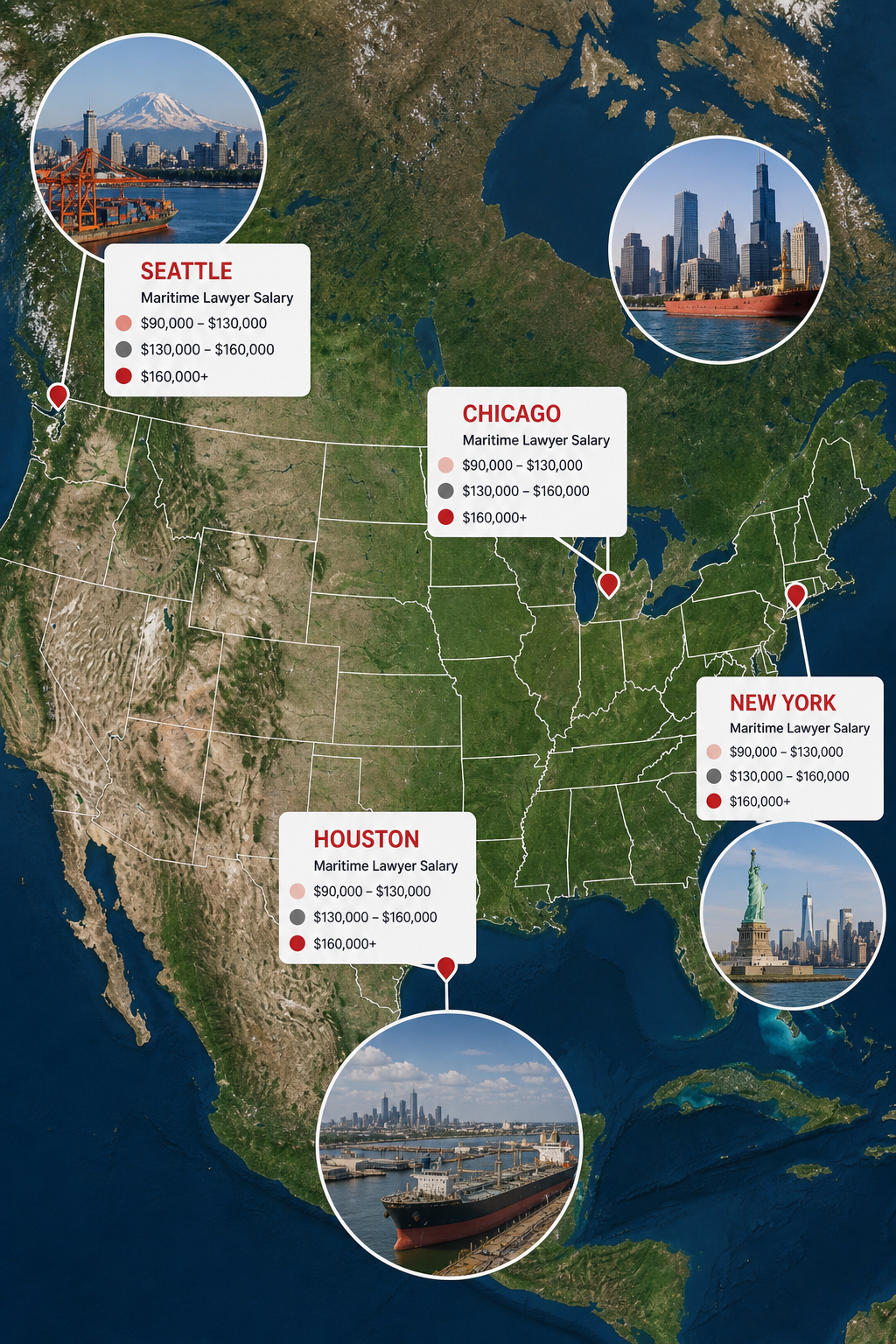
Houston, Texas, The Gulf Coast’s oil and gas industry fuels high‑value cases. Mid‑level attorneys can expect $90,000‑$130,000.
Seattle, Washington Midwest inland ports (e.g., Chicago)Below is a quick map of salary tiers by city:
And a visual helps illustrate the spread:
Bottom line: Choose a port city if you want the highest pay, but remember cost of living can offset the raw numbers.
How to Maximize Your Maritime Lawyer Salary
Now that you see the landscape, here are concrete steps you can take.
- Earn a focused LLM in maritime law from a school that offers a strong alumni network. The Maritime Law module at MTU provides a solid academic foundation and industry contacts.
- Target high‑value practice areas early, offshore energy, large‑scale cargo, or ship‑arrest work tend to pay more.
- Join the Maritime Law Association and attend its annual conferences. Networking there can land you a spot at a top firm.
- Develop expertise in a niche statute, like the Jones Act, and market yourself as the go‑to attorney for that claim type.
- Consider moving to a coastal market where demand is higher, but weigh the cost of living.
Pro tip: Keep a portfolio of successful cases and quantify the settlements you helped secure. When you can show you earned clients $5 million in recoveries, you’ll negotiate higher fees.
Finally, think about alternative compensation models. Some firms offer profit‑sharing or equity stakes for senior lawyers who bring in big accounts.
Frequently Asked Questions
What is the average entry‑level maritime lawyer salary?
Entry‑level attorneys typically earn between $30,000 and $45,000 per year. The figure reflects the need to build a client base and learn the specialized procedural rules that govern admiralty courts.
Do maritime lawyers earn more in the private sector or government?
Private‑sector lawyers usually earn higher base salaries, especially at large firms that serve shipping corporations. Government positions, like working for the U.S. Coast Guard or a port authority, offer steadier pay but often lower ceilings.
How does the Jones Act affect earnings?
Specializing in Jones Act cases can boost earnings because the statute allows for higher damages and punitive awards. Lawyers who win large Jones Act verdicts often secure contingency fees that dwarf hourly rates.
Is certification worth the cost?
Yes. Certifications from the Maritime Law Association signal expertise to high‑paying clients. The credential can also open doors to senior roles at firms that prioritize niche knowledge.
Can I work remotely as a maritime lawyer?
Remote work is possible for document‑heavy tasks like drafting contracts or reviewing evidence, but courtroom appearances and client meetings often require travel to ports or courts.
What are the biggest salary‑boosting skills?
Strong litigation ability, deep knowledge of international conventions, and savvy negotiation skills top the list. Being able to translate complex statutes into clear client advice also commands premium rates.
How does cost of living impact salary decisions?
Cities like New York pay higher nominal salaries, but housing and taxes can cut net income. Smaller ports may offer lower salaries but a higher quality of life, which can be attractive for work‑life balance.
What is the career outlook for maritime lawyers?
The outlook remains solid. Global trade continues to expand, and new offshore projects, like wind farms, create fresh legal challenges that need seasoned counsel.
Conclusion
Maritime lawyer salary depends on practice focus, firm size, location, experience, and certifications. Starting salaries sit near $30,000, but senior lawyers in high‑value markets can earn well over $200,000. By choosing a lucrative niche, gaining specialized credentials, and positioning yourself in a busy port city, you can push your earnings toward the top of the range.
If you want to dive deeper into the hiring process or see examples of top firms, on Maritime Law Firm services and costs. That resource walks you through firm selection, fee structures, and client expectations, helping you turn knowledge into a profitable career.