
How to File a Maritime Injury Claim for Charter Boat Crew
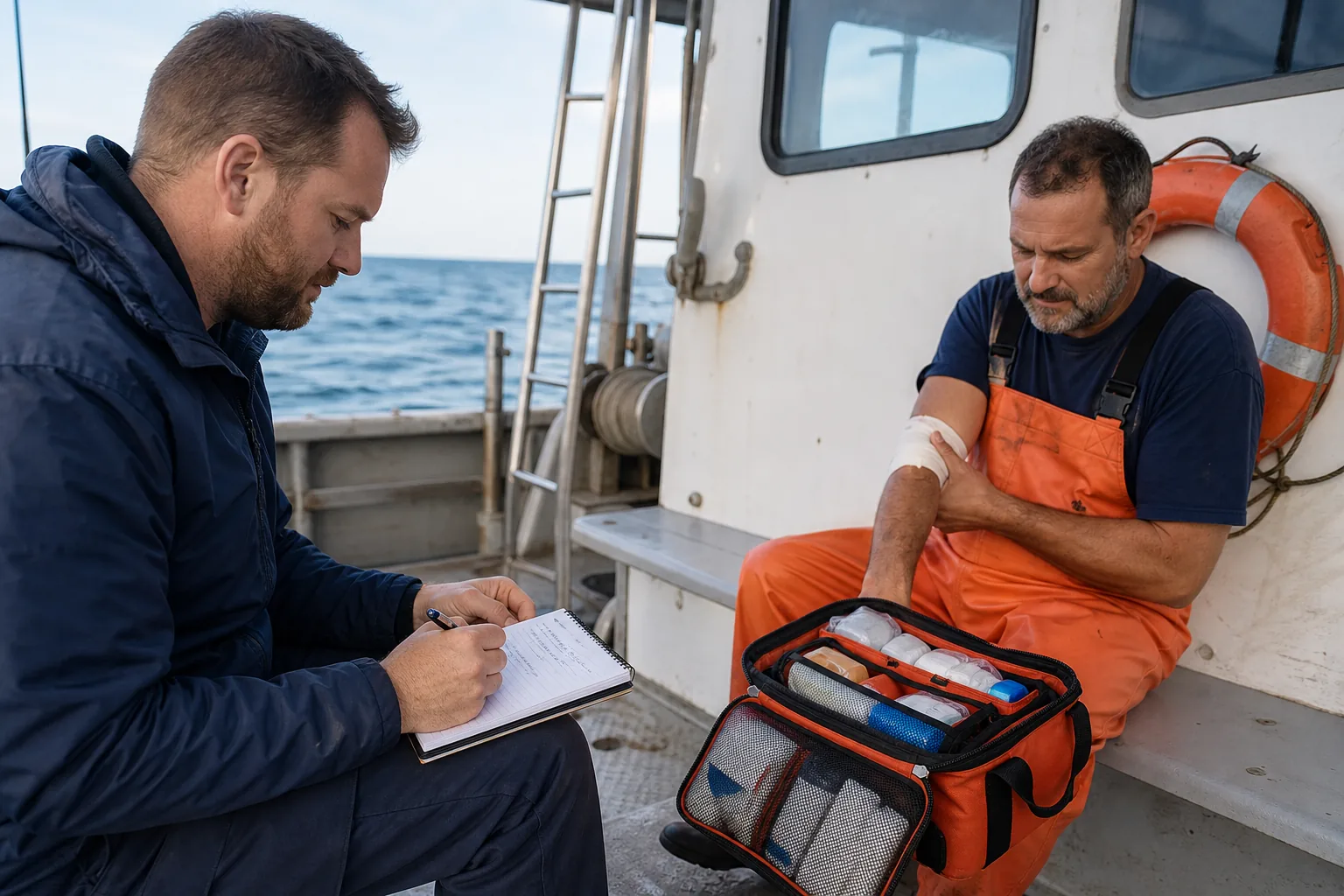
A maritime injury claim for charter boat crew can turn on what happens in the first hours after an accident. Get care, report the injury, and save records before they’re lost. Then work out which maritime rules apply and how much time you have to act.
Step 1: Establish Your Seaman Status and Work Relationship
Start by writing down what your job involved and how your work connected to the vessel. Your title alone won’t settle whether you count as a seaman under the Jones Act.
Note how often you worked aboard, what duties you performed, and whether those duties helped the vessel carry out its work. A deckhand who regularly handles lines, gear, or passenger safety may have a different status from a worker hired for a brief task on shore. The exact test depends on the facts, so don’t rule yourself in or out based on one detail.
The Jones Act gives qualifying seamen a way to bring a negligence claim against their employer for work-related injuries. Read the Jones Act overview for its basic legal context, but don’t use a general summary to decide your own status.
Gather the records that show the work relationship. Save your contract, job description, pay records, work schedule, and any messages about your duties. If the charter operator, vessel owner, captain, and employer are different parties, write down each name and what role they had.
Review your crew contract and handbook for how to report injuries. These documents may set out who needs notice and where to send it. A contract’s wording doesn’t answer every legal question, but it can affect what you do next.
For a first review, maritimeattorney.ai has material on questions to ask a maritime lawyer and how to compare fee terms. Use that information to prepare for a conversation, not as a substitute for advice about your status or contract.
Step 2: Get Medical Care and Preserve Evidence
Get medical attention as soon as you can. Tell the clinician how the injury happened and describe every symptom, even if it seems minor at first. Follow the care plan and keep copies of visit notes, test results, bills, and work restrictions.
Report the incident to your supervisor or captain promptly. Ask for a written report and keep a copy. Check that it states the date, time, location, task you were doing, and how you were hurt. If a detail is wrong, ask how to submit a correction in writing. Don’t sign a statement you believe is inaccurate.
Preserve evidence before the vessel is repaired or records are overwritten. If it’s safe, photograph the area and the equipment involved. Write down the names of witnesses while you still remember them. Keep relevant messages, shift schedules, vessel logs, and any safety complaint you made before the incident.
Start a symptom diary. Record pain, limits on daily tasks, missed work, and changes in your treatment. Keep it factual and dated. A short note made each day is usually more useful than trying to rebuild the timeline months later.
Some marine casualties must be reported to the relevant authorities. Ask the employer whether a report was filed and request a copy if one exists. Don’t assume an employer’s report replaces your own written account or medical records.
Falls, collisions, and equipment failures can call for different evidence. This overview of maritime accident types can help you name the event when you organize your notes.
Step 3: Identify Deadlines and Give Required Notice
Don’t wait for a claim decision before checking the deadline. A Jones Act lawsuit generally has a three-year filing period for personal injury claims, as set out in 46 U.S.C. § 30106. A deadline to file in court is different from a deadline to report an injury or submit an insurance claim.
Make a simple timeline with the injury date, the date you first reported it, each medical visit, and any written notice the employer or insurer requested. Add the name of the person who received each notice. Keep copies of emails, forms, and delivery receipts.
Read the contract for notice terms or a claim-filing clause. Some agreements may set out shorter time limits for certain steps. The wording and enforceability depend on the facts and the law that applies. Don’t assume every contract term changes the legal deadline, but don’t ignore it either.
Deadlines may differ if your claim doesn’t fall under the Jones Act. A lawyer can assess your work status and the right legal path before you rely on a date. That matters for charter crew, whose work may mix time aboard with dockside tasks or short-term assignments.
Use the exact dates you know. If you’re unsure when a notice was received, write down what you can confirm and flag the gap for legal review. Avoid waiting for your treatment to end before asking about deadlines.
Here’s a short overview of the steps involved after an injury:
Put the earliest possible deadline on your calendar, then ask a maritime lawyer to verify it against your contract and claim type.
Step 4: Determine Which Maritime Claims and Benefits May Apply
Ask a maritime lawyer to identify each possible legal path before you file or sign anything. A crew member’s options depend on seaman status, the injury, the vessel’s condition, and who employed or controlled the worker.
Jones Act negligence
A qualifying seaman may bring a Jones Act claim if employer negligence played a part in the injury. That could involve an unsafe work practice, poor equipment care, or a failure to address a known hazard. For example, if a crew member slips on a wet deck, the cause may depend on why the deck was wet and what steps the operator took.
Unseaworthiness
A separate claim may apply if an unsafe vessel or piece of equipment made the work environment unfit for its intended use. The facts matter. A broken rail, faulty hatch, or damaged deck surface may need inspection and documentation before repairs change the scene.
Maintenance and cure
A seaman injured while in the service of a vessel may be entitled to maintenance and cure. These benefits generally address basic living costs and necessary medical care, without requiring proof that the employer caused the injury. Keep track of what the employer pays and any expense you cover yourself. Don’t assume this benefit replaces a negligence or unseaworthiness claim.
Other work-related coverage
Not every maritime worker is a Jones Act seaman. Some workers who don’t meet that status may fall under a different workers’ compensation law, depending on their duties and where they worked. A charter crew member who spends some shifts at a dock shouldn’t assume that shore work alone decides coverage.
Potential recovery may include medical costs, past or future lost earnings, reduced ability to earn, and pain and suffering, where the law allows. Punitive damages aren’t automatic. Ask counsel whether any specific facts support that type of claim rather than treating it as a standard payment.
Insurance can affect how a claim is handled, but the operator’s policy, the named insured, and any exclusions must be checked. Ask for the claim contact and preserve any coverage correspondence. Don’t assume the charter company’s insurer is the only party or policy involved.

Step 5: Submit and Evaluate the Claim Before Accepting a Settlement
Once you know which claim may apply, organize a clear submission. Start with a short account of what happened, the injury date, your job duties, and the care you’ve received. Add copies of your incident report and relevant medical records. Keep the originals.
Make a loss file. Include bills and receipts tied to treatment, records of missed shifts, wage information, and notes about limits on your work. If your doctor expects future care or restricts certain duties, keep that record too. Separate confirmed costs from estimates so the insurer or court can see what each amount represents.
Send notice through the channel stated by your employer or insurer, and keep proof of delivery. Ask for written confirmation that the claim was received. If the insurer asks for a recorded statement or broad medical release, get legal advice first. The wording may affect what information you share or how later disputes are handled.
A maritime attorney can check the deadline, review the contract, identify the parties, and assess whether the evidence supports the claim. They can also help you compare a settlement offer with documented losses and possible future needs. No one can promise a result from the records alone.
Read every settlement paper before signing. A release may end some or all of your rights to seek more money for the injury. Ask what claims it covers, whether future treatment is included, and how it affects any ongoing maintenance and cure payments. If you still need treatment, don’t rush to trade an uncertain future cost for a fixed amount.
For background as you prepare, maritimeattorney.ai publishes information about maritime lawyer interviews and fee terms. Use it to frame questions about the lawyer’s plan and the agreement you’re asked to sign.
Take the next step when your records are in order: ask a maritime attorney to review the claim and the deadline before you accept an offer.
FAQ
How long do I have to file a Jones Act injury claim?
A Jones Act personal injury lawsuit generally must be filed within three years of the injury. That court deadline may differ from a contract’s notice terms or an insurer’s claim process. Check the exact dates with a maritime lawyer, especially if your contract mentions a shorter period or your work status is uncertain.
Does every charter boat crew member qualify as a seaman?
No, the job title alone doesn’t decide seaman status. The analysis looks at the worker’s duties and connection to a vessel or fleet, including the nature and amount of work aboard. A charter crew member should save work schedules and job records so a lawyer can assess the facts.
What should I do if my employer won’t make an injury report?
Write your own dated account and send it to your supervisor or the person named in your crew documents. Keep proof that you sent it, and note who received it. Seek medical care and preserve witness names, photos, and relevant messages. A lawyer can advise whether another report or notice is needed.
Can I get maintenance and cure if no one caused my injury?
Possibly. A seaman injured while serving a vessel may qualify for maintenance and cure even if no one’s negligence caused the injury. These benefits generally cover basic living costs and necessary medical care. Eligibility and the amount depend on the facts, so keep records of treatment and payments.
Should I accept the insurer’s first settlement offer?
Don’t accept an offer until you understand what the release covers and whether your medical needs are known. A settlement may close some or all claims tied to the injury. Compare the offer with your records, lost income, and likely future care, then ask a maritime lawyer to review the terms.
Conclusion
Act quickly, keep your own record, and have a maritime lawyer check the claim type and deadline before you settle. Your next step is to gather the incident report, contract, and medical records for that review.