
Understanding the Longshore Act: A Complete Explainer

In the world of ports and offshore work, a single law can shape daily safety and pay. That law is the Longshore Act. This guide breaks down what the act means, where it came from, what it forces employers to do, and how it changes the shipping business. By the end you’ll know the basics, the history, the key rules, and how to stay on the right side of the law.
What Is the Longshore Act?
The Longshore Act, formally called the Longshore and Harbor Workers' Compensation Act (LHWCA), is a federal workers‑compensation program. It covers workers who labor on docks, piers, shipyards, and on vessels that are fixed in place, like oil rigs. If a covered employee gets hurt, the act forces the employer to pay medical care, wage replacement, and certain death benefits.
Unlike state workers’ comp, the Longshore Act is run by the U.S. Department of Labor’s Division of Longshore and Harbor Workers' Compensation. The division decides who qualifies, what benefits apply, and how disputes are settled.
Eligibility hinges on two ideas. First, the work must be tied to a “navigable water” , a body of water deep enough for a vessel to travel. Second, the employee must be doing work that supports the vessel’s mission, even if the job is performed on shore.
Because the act is federal, it applies the same across every state. That uniformity makes it easier for large shipping firms to plan benefits, but it also means local employers must follow a national rulebook.
For a quick reference, see the official Wikipedia entry on the law: Longshore and Harbor Workers' Compensation Act. It lists the statutory language and the agencies involved.
Bottom line: If you work on a pier, a dock, a shipyard, or a fixed offshore platform, the Longshore Act is likely the law that will cover you if you get hurt.
Historical Background of the Longshore Act
The Longshore Act was born in the early 20th century when the federal government recognized that maritime work faced unique dangers. Before the act, injured dock workers had to rely on state workers‑comp laws, which varied widely and often left gaps.
Congress passed the act in 1927 after a series of high‑profile accidents in busy ports. The legislation aimed to create a single, reliable safety net for the nation’s growing maritime trade.
Early enforcement was handled by a small office in the Labor Department. Over time the Division of Longshore and Harbor Workers' Compensation grew into a full‑scale agency with regional offices that inspect workplaces and adjudicate claims.
In the 1970s, amendments expanded coverage to include offshore oil platforms. That change reflected the boom in Gulf‑of‑Mexico drilling and the need for a consistent benefits system for those workers.
Today, the act sits alongside the Jones Act and the Defense Base Act as the three major federal statutes governing maritime labor. Each serves a different slice of the industry, but all share the goal of protecting workers on the water.
For a scholarly look at the act’s evolution, the Social Security Administration’s historical series provides a deep dive: SSA’s analysis of longshore legislation. It outlines the policy shifts and the economic forces that shaped the law.
One lesson from history: the act has been tweaked many times, but its core promise, fair compensation for maritime injuries, has stayed the same.
When you understand the backstory, you can see why certain provisions exist and how they protect you today.
Key Provisions and Requirements
The Longshore Act lays out a clear set of duties for employers. First, they must provide medical treatment that meets the standards of the employer’s health plan or the federal schedule.
Second, wage replacement kicks in after the first seven days of disability. The benefit is two‑thirds of the employee’s average weekly wage, up to a statutory maximum.
Third, the act defines “dangerous occupation” and requires extra safety training for those roles. This includes crane operators, riggers, and workers who handle hazardous materials.
Employers also need to keep detailed records of each injury, the medical care given, and the wage calculations. Those records stay on file for at least three years and must be available for audit.
If a claim is denied, the employee can appeal to the Division. The appeal process includes a hearing, a decision, and, if needed, a review by the U.S. Court of Appeals for the Federal Circuit.
For a concise rundown of the Jones Act, which often interacts with the Longshore Act, see Jones Act Wikipedia page. It explains the separate but related rights for crew members.
Pro tip: Keep a personal log of any injury, no matter how small. A dated note, doctor’s name, and description of the incident can become critical evidence if you need to file a claim later.
Finally, the act requires employers to post a notice of rights in a conspicuous place at the worksite. That notice must include the phone number for the Division’s regional office and a brief outline of benefits.
Remember, the act’s purpose is to make sure you aren’t left without help after a workplace accident.
Impact on the Shipping Industry
Since its inception, the Longshore Act has reshaped how shipping companies manage risk. Before the act, many firms saved money by skimping on safety gear. The federal requirements forced a shift toward better equipment and training.
Today, a typical container terminal must budget for medical‑benefit funds, safety‑training programs, and compliance audits. Those costs add up, but they also reduce the likelihood of costly lawsuits.
Insurance premiums for maritime employers have fallen in recent years because the act provides a predictable claims process. Insurers can calculate exposure more accurately, leading to lower rates for compliant firms.
However, the act also creates a competitive edge for companies that excel at compliance. A terminal that can prove a clean safety record often wins contracts from shippers who value reliability.
Below is a simple comparison of how a fully compliant port stacks up against a non‑compliant one.
These numbers come from a Senate study that examined claim trends across major U.S. ports: Senate report on maritime compensation. The data show that compliance pays off.
"A safe workplace is good business. The Longshore Act forces us to think like that every day," says a senior safety manager at a leading terminal.
One caution: compliance does not guarantee zero accidents. It only sets a baseline. Companies still need strong leadership and a culture that values safety.
Bottom line: The act has turned safety from an optional expense into a core business driver for the shipping industry.
Common Compliance Challenges
Even with clear rules, many employers stumble when trying to follow the Longshore Act. One frequent issue is record‑keeping. Small contractors often use paper logs, which can be lost or incomplete.
Another hurdle is training. The act demands that workers receive instruction on hazards specific to their role. Yet budget cuts sometimes lead firms to offer generic, one‑size‑fits‑all sessions that don’t meet the legal standard.
Third, determining who counts as a “covered employee” can be tricky. Workers who split time between dock duties and office tasks may fall through the cracks, leaving them without benefits.
To help, the Division publishes a compliance checklist that outlines the steps employers should follow each year. The checklist covers injury reporting, benefits calculation, and posting requirements.
Our team often points clients to a usable resource that walks through the filing process step by step: How to File Longshore Harbor Act Claims Successfully. It explains what paperwork to gather, how to contact the Division, and what to expect during an appeal.
Pro tip: Run a quarterly audit of your safety records. Compare what you have on file with the Division’s checklist. Spotting gaps early saves money and headaches later.
Finally, remember that the act’s rules apply even when work is performed on a vessel that never leaves the harbor. If you think a job is “offshore enough” to be exempt, check the definition of navigable waters. Misreading that term is a common source of denied claims.
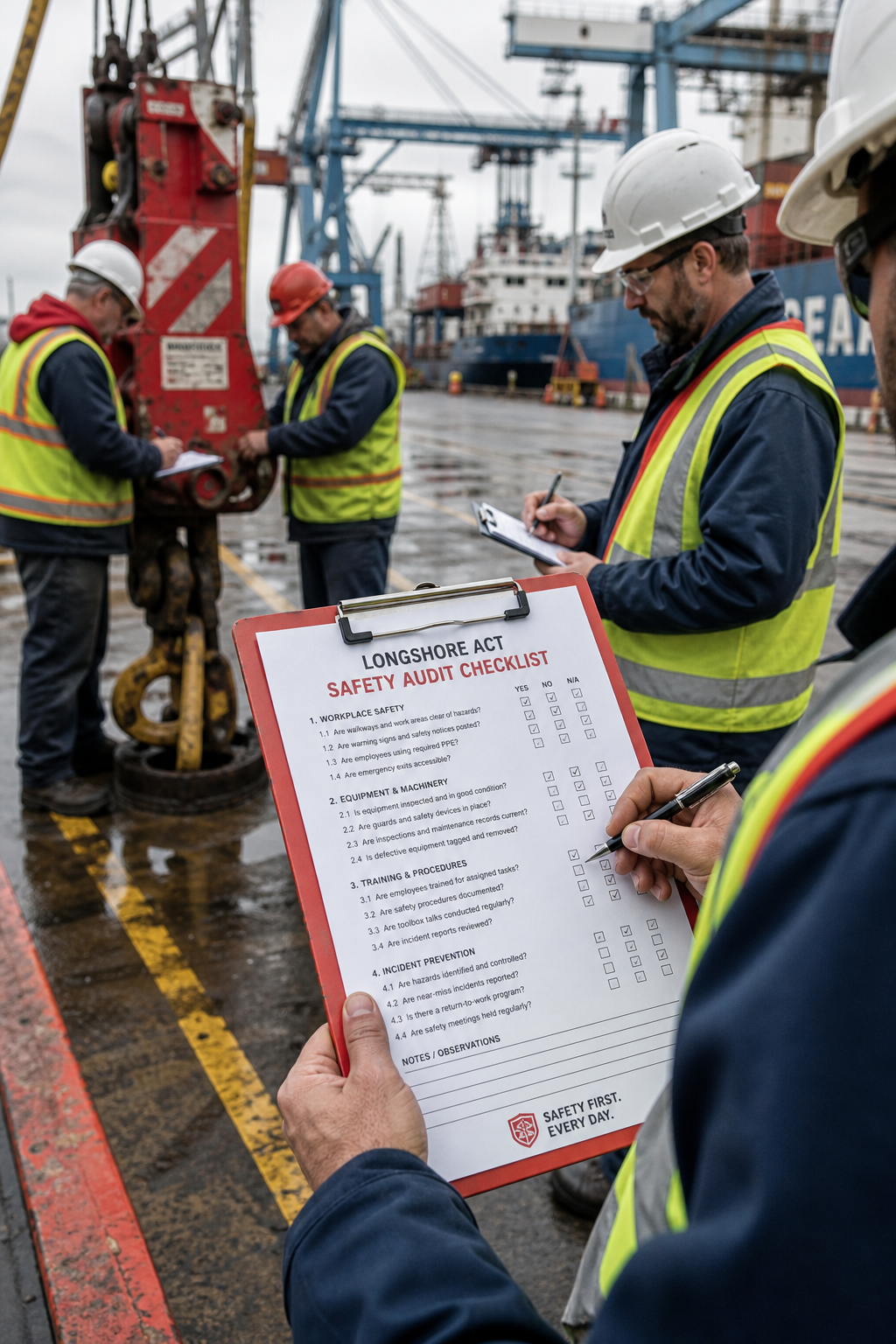
In short, the biggest compliance obstacles are paperwork, training, and classification. Tackling each head‑on keeps your operation on solid legal ground.
FAQ
What types of workers does the Longshore Act cover?
The act covers anyone who works on or near navigable waters, including dock laborers, shipyard employees, and workers on fixed offshore platforms. It does not cover crew members who work on moving vessels; those workers fall under the Jones Act instead.
How are medical benefits calculated under the act?
Medical benefits follow the employer’s health‑plan schedule or the federal schedule if no plan exists. The employer must pay for all medically necessary treatment related to the injury, from emergency care to rehabilitation.
What is the wage‑replacement rate?
Workers receive two‑thirds of their average weekly wage, up to a statutory cap, after a seven‑day waiting period. The benefit continues until the employee reaches maximum medical improvement or returns to work.
Can I appeal a denied claim?
Yes. If the Division denies a claim, the worker can request a hearing. After the hearing, a decision can be reviewed by the U.S. Court of Appeals for the Federal Circuit if necessary.
Do I need to file a claim within a certain time?
Claims must be filed within two years of the injury. Missing that window usually bars you from receiving benefits, although there are limited exceptions for certain medical conditions.
How does the Longshore Act differ from the Jones Act?
The Longshore Act protects maritime employees who work on docks, shipyards, or fixed platforms. The Jones Act protects crew members who work on vessels that travel on navigable waters. Both provide compensation, but the Jones Act also allows for negligence lawsuits.
What records must employers keep?
Employers must keep injury reports, medical bills, wage calculations, and proof of posted notices. These records stay on file for at least three years and must be available for audit by the Division.
Are there penalties for non‑compliance?
Yes. Employers who fail to meet the act’s requirements can face fines, increased insurance premiums, and may be required to pay back‑pay benefits with interest. Persistent violations can lead to civil lawsuits.
Conclusion
Understanding the Longshore Act is essential for anyone who works around ports, shipyards, or offshore platforms. The law sets clear duties for employers, offers a reliable safety net for workers, and has reshaped the shipping industry’s risk management practices. By keeping good records, providing proper training, and staying aware of who is covered, businesses can avoid costly penalties and protect their workforce.
If you want to dive deeper into maritime labor law, explore our guide on the Jones Act and see how the two statutes intersect. Staying informed helps you make smarter decisions and keep your crew safe.