Legal Evidence Checklist for Shipwreck Claims
A shipwreck claim can turn on small details: who owned the vessel, where it lies, and what happened to its cargo. Use this checklist to build a dated, traceable file, then have a maritime lawyer check the law and deadlines that apply.
Step 1: Identify the Claim, Jurisdiction, and Applicable Rules
Start by writing down what you’re asking a court, insurer, or other party to recognize. A claim for cargo loss needs different proof from a claim to salvage a wreck or recover for an injury. Name the claimant, the vessel, the event, and the requested outcome in a short case summary.
Next, note where the wreck sits and where the loss took place. Record the nearest known coordinates, the country or state whose waters may be involved, and any port tied to the voyage. The location can affect which court has authority and which laws or permits apply. Don’t assume that a claim belongs in state court just because the wreck is close to shore.
Make a separate list of possible claim types. For instance, crew injury may involve medical and work records, while a cargo claim may rely on shipping and value papers. A salvage claim may raise questions about permission and the wreck’s legal status. This overview of maritime accident types can help sort an incident claim from a property or salvage dispute.
Check whether the Abandoned Shipwreck Act could affect a claim involving an abandoned wreck in state waters. The statute sets out rules for certain wrecks and their transfer to states. It doesn’t mean every old or sunken vessel is abandoned. The statutory definitions in the Abandoned Shipwreck Act are a useful starting point, but a lawyer should assess how the law fits the facts.
Build a deadline tracker now, even if you don’t yet know every date. List the incident date, discovery date, notice dates, policy deadlines, and any deadline stated in a contract or court rule. Deadlines differ by claim type and forum, so get legal review promptly.
By now, you should have a one-page claim summary, a location note, and a list of legal questions to resolve.
Step 2: Gather Evidence of the Wreck’s Status and Location
For a shipwreck claim, show which wreck you mean and why its status matters. Save the best available location data, including coordinates with the source and date. Keep maps, survey records, charts, and any official wreck or casualty reports you can lawfully obtain. A map without a date or source is hard to check later.
Look for records that can help establish whether the vessel was abandoned, remains embedded in submerged land, or may qualify for a historic register. These are separate questions. Don’t treat age, a missing owner, or a wreck’s location as proof of any one legal status.
For an Abandoned Shipwreck Act claim, gather evidence of abandonment and whether the wreck is embedded in submerged lands. The evidentiary standard for these factual issues is preponderance of the evidence. That point isn’t a universal standard for every shipwreck dispute, so ask counsel which test applies to your claim.
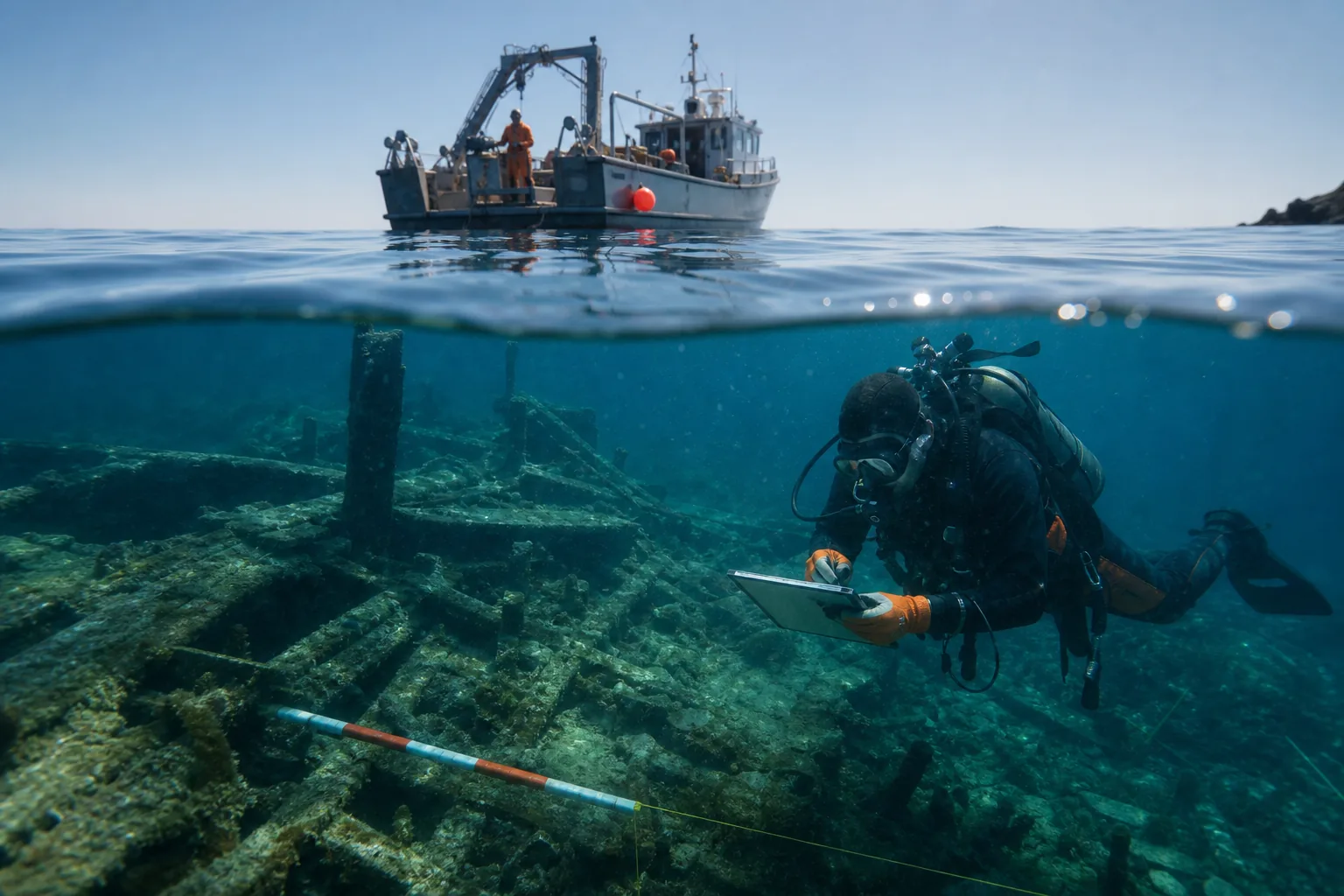
For underwater documentation, keep the original sonar files and survey output. If a qualified team uses photogrammetry, preserve the source images and the method used to build the model. Ask divers to date and sign field notes. Record who handled any recovered object, where it was found, and each transfer after recovery. Don’t alter, clean, or move an artifact just to make it easier to photograph.
Save photos and video in their original form. Keep a separate working copy for labels or notes, and record who made it. Add a short log for each file: date, time, location, device or survey method, and the person who captured it. If the wreck may be protected, pause any recovery work until a lawyer checks permit and environmental rules.
Pro Tip: Keep location data in its original format. A screenshot can help a reviewer, but it shouldn’t replace the source file or survey record.
By now, your file should show where the wreck is, how that location was recorded, and which status questions remain open.
Step 3: Prove Vessel and Cargo Identity, Ownership, and Authority
Identity comes before ownership. Match the wreck to a named vessel using its name, registration or flag records, hull details, build records, voyage documents, or other records tied to the ship. A name alone may not settle identity, especially if records changed over time. Keep copies that show the issuing body and date.
Then trace who held an interest in the vessel when the loss occurred. Gather bills of sale, registration records, title papers, finance or lien records, and estate or company documents if relevant. Make a timeline of transfers. If names differ across records, note the reason only when a document supports it. Don’t fill a gap with an assumption.
Cargo needs its own paper trail. A Bill of Lading can help identify the shipment and show cargo details. Pair it with the commercial invoice and any packing or manifest records available. The cargo owner or shipper may hold some of these papers; an insurer may hold policy or claim records. Track who supplied each item and whether it is a full copy.
Also document who can act for the claimant. Collect signed authorization, company authority records, probate papers, or other documents that show the person submitting the claim has permission to do so. If an agent signs a guarantee for a cargo owner, keep the written authority for that act. A signature without proof of authority can create a new dispute.
Build a simple identity index. Give each record a short ID, such as V-01 for a vessel record or C-01 for cargo. Add the record date, source, and the fact it supports. Keep originals untouched and store review copies separately. If two documents conflict, include both and mark the conflict for counsel instead of quietly choosing one.
By now, you should be able to explain who the vessel and cargo were, who claims an interest, and who has authority to act.
Step 4: Document the Casualty, Loss, Cargo Value, and Insurance
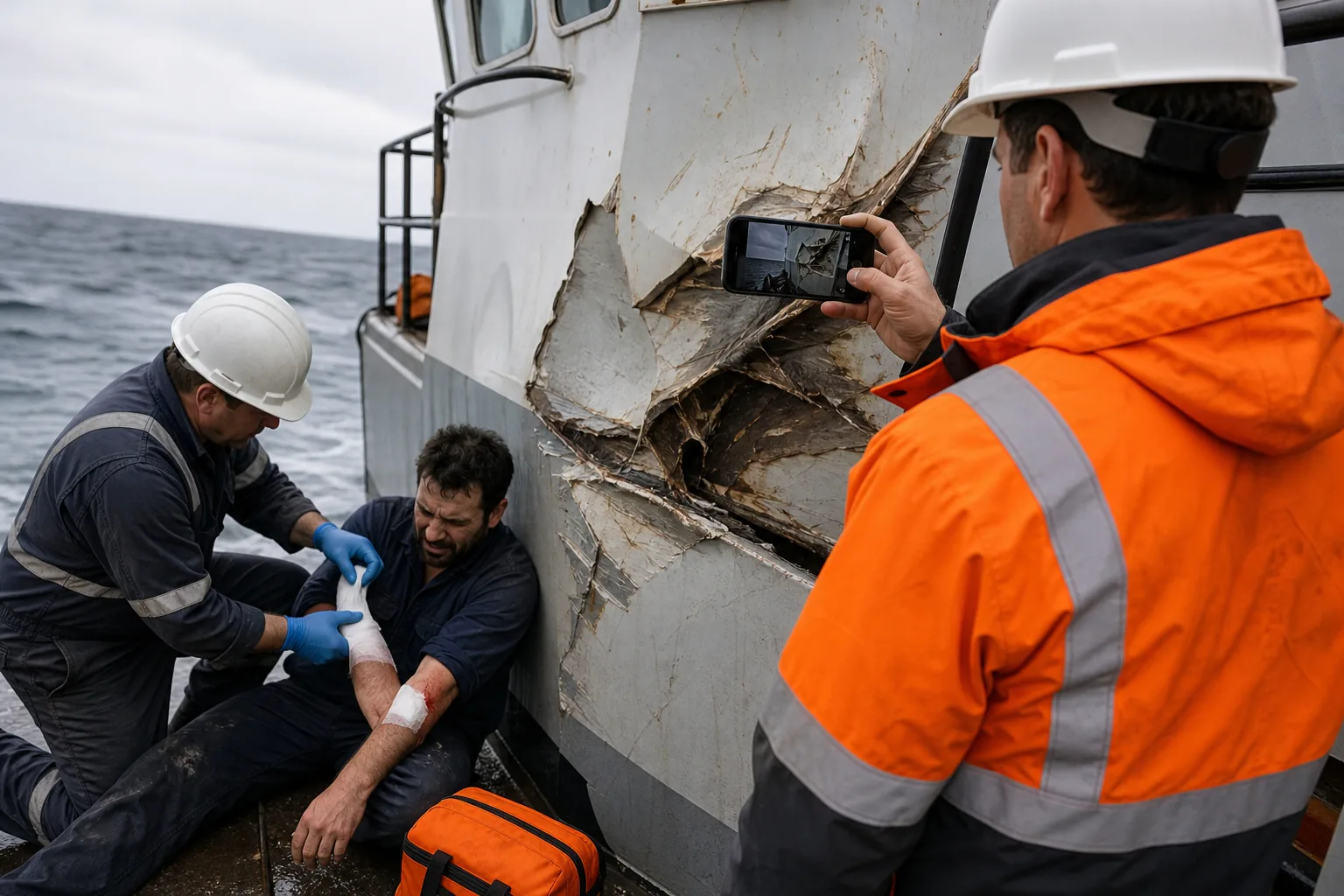
Record the event while details are fresh. Preserve the vessel’s logbook, bridge or engine records, voyage data, maintenance records, and relevant messages. Keep official reports and any written notice sent to an authority or insurer. For witness accounts, note the person’s name, role, contact details, and when the statement was made. Ask the witness to review and approve their own words.
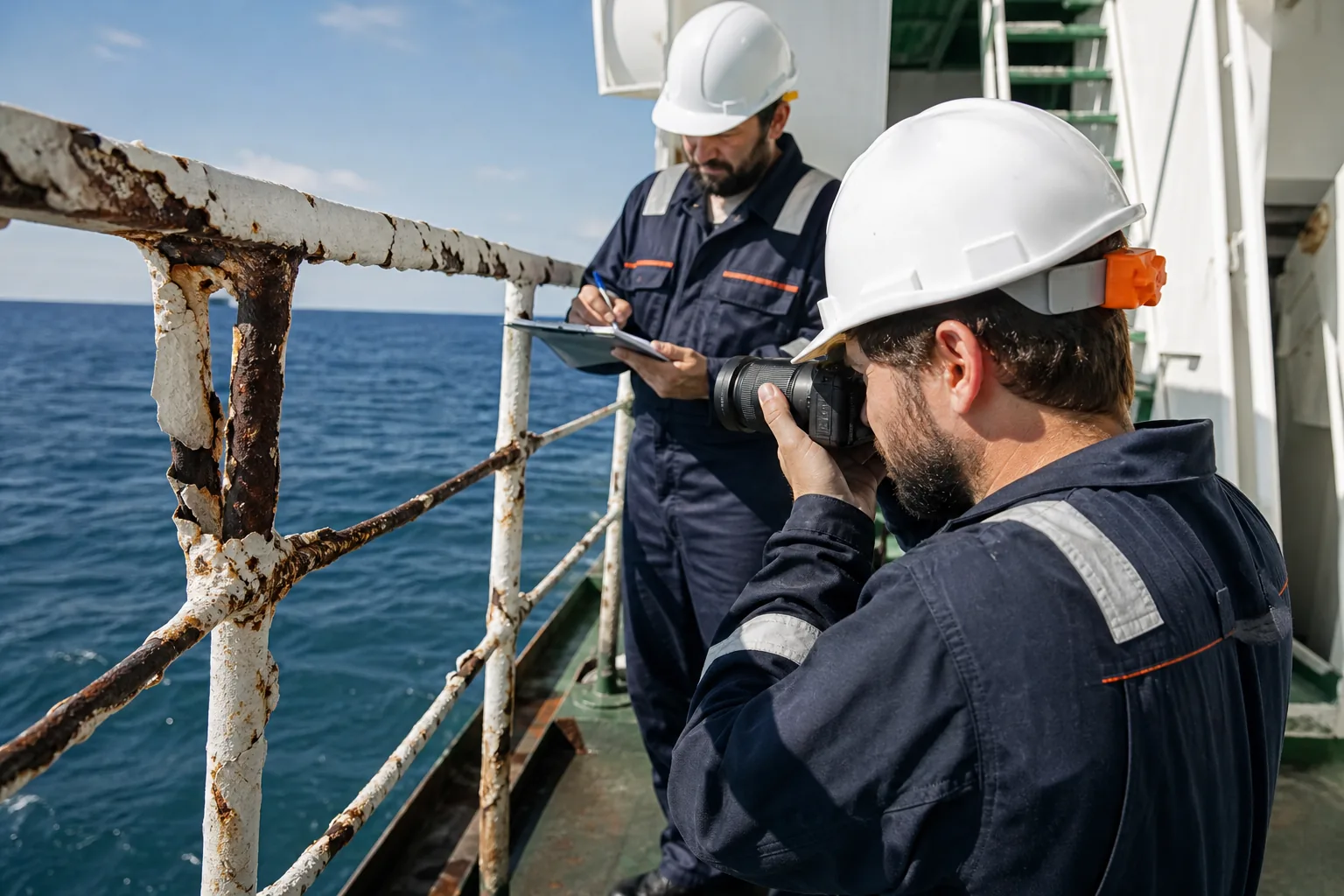
Photograph damage from more than one angle. Keep the original images, along with the date and location if available. For injury claims, seek medical care and keep visit notes, test results, bills, and records of follow-up care. For property claims, list each missing or damaged item and link it to a bill of lading, invoice, inventory, or survey when possible.
Use this quick comparison to check whether the file has the right kind of proof. It’s a sorting aid, not a statement of every legal element.
| Claim type | Evidence to gather first | Key gap to flag |
|---|---|---|
| Personal injury | Incident report, photos or video, witness accounts, medical records | Does the record connect the injury to the event? |
| Vessel or cargo loss | Logs, casualty reports, ownership records, bills of lading, invoices | Can each loss be tied to the vessel or shipment? |
| Salvage rights | Wreck location and status records, permits, work logs, recovery records | Was the work authorized, and who had authority to approve it? |
Read the hull and cargo policies, not just the claim summary. Note what property is insured, named exclusions, notice requirements, limits, deductibles, and any duty to protect property after a loss. Don’t assume hull coverage also covers cargo or injury. Save every version of the policy and every message about coverage.
For value, keep the commercial invoice and the method used to calculate the claimed amount. If a General Average adjustment is involved, preserve the CIF value calculation and records of deductions. A marine surveyor, engineer, or cargo specialist may help explain damage or value. Ask the expert to state what records they reviewed and what limits affect their opinion.
By now, each loss should have a dated record, a value basis, and a clear link to the relevant policy or claim.
Step 5: Organize Salvage, General Average, and Claim-Submission Records
Salvage and General Average files often focus on financial security as well as the underlying loss. Keep the signed General Average Bond, any GA guarantee, and any security request with the notice that explains why it was requested. These documents serve different roles, so label each by its exact name. Don’t file every guarantee under a vague heading such as “insurance.”
For a cargo claim, gather the Bill of Lading, commercial invoice, and Insurance Policy with the security papers. If an agent signs a guarantee, include the cargo owner’s written authority. If a letter of indemnity is requested as counter-security, keep the signed copy and the request that led to it. The record should show who gave each document and what it was meant to secure.
Keep the General Average value papers together. Add the CIF value calculation at discharge, records of deductions, and any adjustment correspondence. If a number changes, save each version and note who revised it. That makes it easier to see whether a difference came from new evidence or a changed calculation.
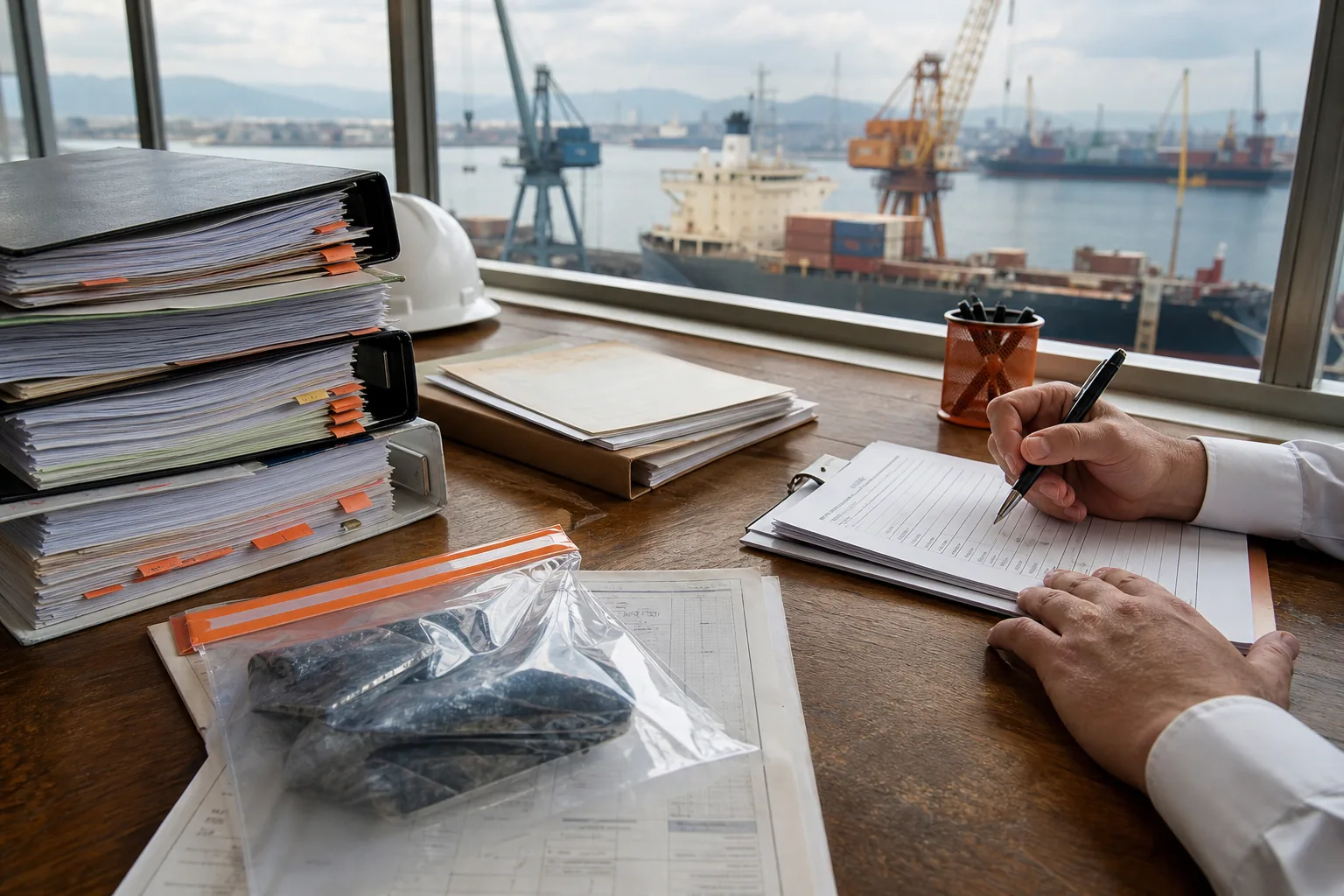
Use one master index and a separate folder for each evidence type. Name files with the date first, then a short description and record ID. Keep an untouched original folder. Store a second copy in a secure location and limit access to people working on the claim. For physical items, use a custody log that records collection, storage, transfer, and any examination.
Before submitting a claim, check that every document can be read and that the file opens. Confirm that scans include all pages and signatures. Keep proof of delivery for every submission and save the exact version sent. If a document is missing, list it as outstanding and say who has been asked to provide it. Never edit an original log, image, or survey file to make it fit the claim.
For a case-specific review, you can bring the indexed file and open questions to maritimeattorney.ai. A website or checklist can help organize the handoff, but it can’t establish ownership or confirm that a deadline has been met. Keep your own copy of every record you submit.
Key Takeaway: A claim file is easier to review when each item has a source, date, purpose, and custody history.
Frequently Asked Questions
What evidence do I need for a shipwreck claim?
A shipwreck claim usually needs proof of the vessel’s identity, the claimant’s interest, the wreck’s location, and the loss or right being claimed. Add logs, official reports, photos, witness accounts, relevant cargo papers, and insurance records. The exact file depends on the claim type. Have a maritime lawyer check missing documents and deadlines before filing.
Does the Abandoned Shipwreck Act apply to every old wreck?
No, age alone doesn’t prove that the Abandoned Shipwreck Act applies. The claim may turn on the wreck’s legal status and location, along with facts such as abandonment or embeddedness. Preserve records that bear on those facts, and don’t disturb a wreck or recover items until you’ve checked the rules and any permit needs.
Should a shipwreck claim go to federal or state court?
It depends on the facts and the law that applies to the claim. A wreck’s location, the type of dispute, and the parties involved may affect the proper court. Don’t choose a court based only on the nearest shore or port. Record the location and ask a maritime lawyer to assess jurisdiction before submitting a claim.
How do I preserve underwater evidence?
Keep the original sonar or survey files, dated diver notes, and source images used for any photogrammetry model. Record who collected each item and every transfer after recovery. Don’t alter or clean artifacts to improve their appearance. Before a dive or recovery, check whether the wreck is protected and whether a permit or other approval is needed.
Conclusion
Build the file around dates, sources, ownership, wreck status, and the specific loss you’re claiming. Then ask a maritime lawyer to review jurisdiction, permits, and deadlines before you submit anything. For a focused handoff, prepare an index of the records you have and a short list of what remains missing for maritimeattorney.ai to review.