How to File a Jones Act Lawsuit in 2026

Injured at sea? You can sue your boss. The Jones Act lets you get back what you lost. This guide shows you how to start a Jones Act lawsuit in 2026, step by step. By the end you’ll know if you qualify, what proof you need, how to pick a lawyer, and what to expect in court.
Step 1: Determine Your Eligibility Under the Jones Act
The first thing you need to check is whether you’re a "seaman" under the law. The Jones Act only helps people who work on a vessel that’s moving or can move, and who help the ship do its job.
If you spend at least 30% of your work time on a vessel that’s in navigation, you probably qualify. That rule comes from the Supreme Court caseChandris, Inc. v. Latsis. Think about every shift you’ve done in the last year. Add up the hours on the boat, the barge, the tug, or the offshore rig. If the total is about a third of your total work hours, you meet the “30% rule.”
Here are some common jobs that usually pass the test:
- Deckhand on a fishing boat
- Tugboat crew member
- Offshore supply vessel worker
- Cruise ship staff
- Harbor pilot
Jobs that often do NOT qualify include dock workers, shipyard laborers, and longshoremen. Those roles fall under other laws like the Longshore and Harbor Workers’ Compensation Act.
To be sure, you can use this quick checklist:
- Do you work on a vessel that sails or can sail?
- Do you spend at least 30% of your time on that vessel?
- Does your work help the vessel move, carry cargo, or keep passengers safe?
If you answered yes to all three, you likely qualify for a Jones Act lawsuit.
Remember, you have three years from the day of injury to file a claim. The clock starts ticking the moment you get hurt.
Read more about the law that backs your right to sue federal Jones Act law.
And if you want a step‑by‑step guide on filing the claim, check out How to File a Jones Act Claim in 2026. It walks you through the whole process.
Bottom line:Verify your seaman status early, because it decides if you can file a Jones Act lawsuit.
Step 2: Gather Critical Evidence for Your Claim
Once you know you qualify, the next move is to collect proof. The stronger your evidence, the higher the chance you get a fair payout.
Start with medical records. See a doctor who knows maritime injuries. Ask for a copy of every report, x‑ray, and note that links your injury to the work accident.
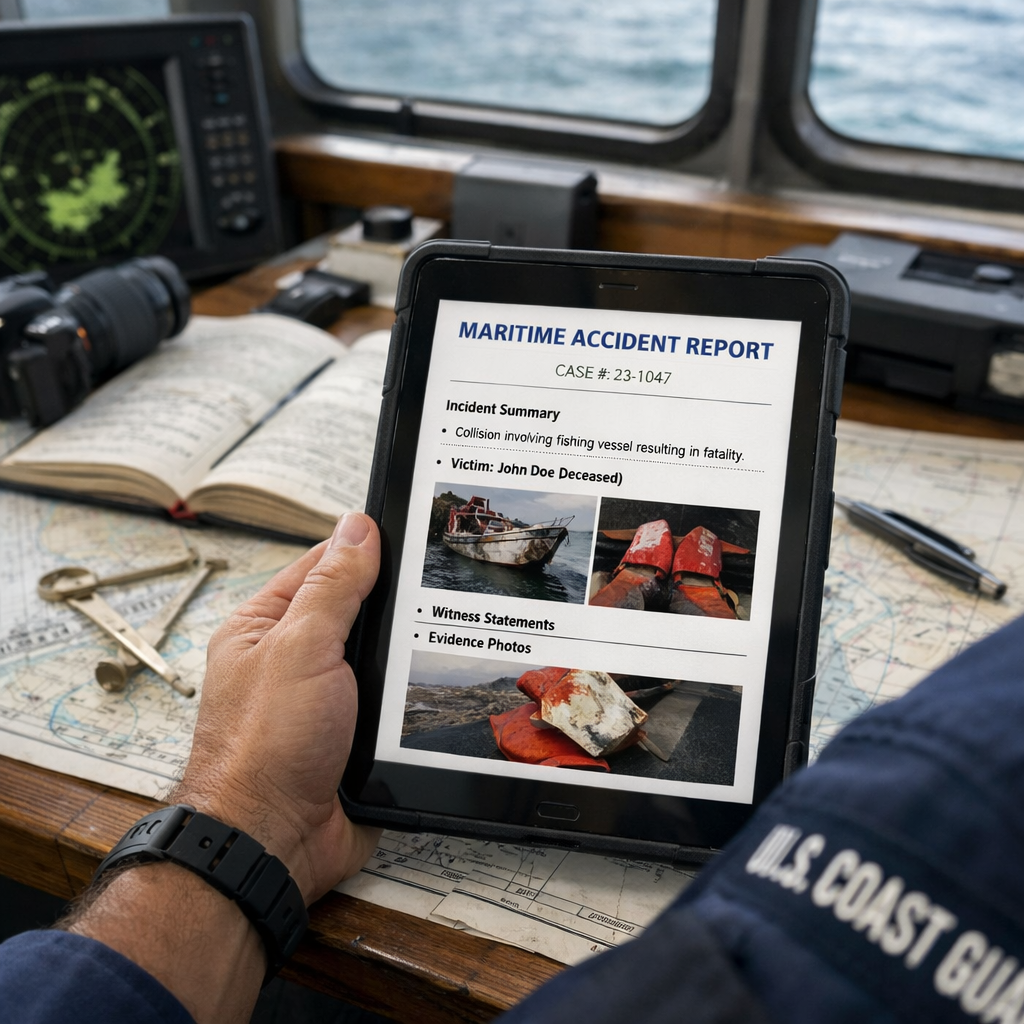
Next, get the ship’s incident report. Most vessels must file a report after an accident. This document can show what the crew said happened and who was in charge.
Witness statements are gold. Talk to anyone who saw the slip, the fall, or the equipment failure. Write down their names, phone numbers, and what they saw. Get them to sign a short statement.
Don’t forget photos. Snap the injury, the area of the deck, any broken gear, and the weather conditions. Use a phone with good resolution and timestamp the images.
Here’s a simple checklist you can print:
Store everything in one folder, either paper or digital. Label each file with the date and type. A tidy file makes it easy for your lawyer to build a story.
When you work with a maritime lawyer, they will ask for this exact set. The sooner you hand it over, the faster the case moves.
"Documentation is the backbone of any Jones Act lawsuit. Without it, even a clear injury can fall flat."
Bottom line:Collect medical, incident, witness, and visual proof early to give your claim a solid foundation.
Step 3: Choose an Experienced Maritime Lawyer
Not every lawyer knows the Jones Act. You need someone who lives and breathes maritime law.
Look for these qualities:
- Focus on Jones Act and maritime injury cases
- Proven courtroom experience , many Jones Act suits go to trial
- Ability to hire experts like marine engineers and economists
- Clear fee structure, usually a contingency fee
Read reviews on sites like Avvo or Martindale‑Hubbel, but also ask the lawyer for references from past clients.
Ask these questions during a free consult:
- How many Jones Act cases have you tried to verdict?
- What is your success rate for settlements above $500,000?
- Do you have expert witnesses you work with regularly?
When you interview a lawyer, pay attention to how they explain the process. They should break down complex terms into plain language, just like this guide does.
Here’s a quick pro tip on vetting:
Once you pick a lawyer, sign a representation agreement. This document spells out the fee, the scope of work, and how updates will be shared.
Watch this short video that explains what to expect when you meet a maritime attorney:
And remember, a good lawyer will fight for a jury trial if a fair settlement can’t be reached.
Bottom line:Your lawyer is the bridge between your evidence and the courtroom , pick one with a proven track record.
Step 4: File the Complaint and Initiate the Lawsuit
With a lawyer on board, you’ll draft the complaint. This legal paper names the employer, describes the injury, and cites the Jones Act.
The complaint must be filed in the federal district court that covers the location where the injury happened or where the employer is based. Your attorney will handle the filing fees and serve the papers to the other side.
After filing, the court will assign a case number and a judge. The employer will get a copy and has a set time to answer , usually 21 days.
Watch out for these common pitfalls:
- Missing the three‑year deadline , a late filing gets dismissed.
- Failing to include the proper legal language , the judge may reject the complaint.
- Not attaching all key evidence , the case can be weakened early.
Once the answer is filed, the case moves to discovery.
Bottom line:A well‑drafted complaint puts you on the legal road toward recovery.

Step 5: Handle the Discovery Process
Discovery is where both sides swap information. It can feel like a paperwork marathon, but it’s where you build the strongest case.
You’ll receive "interrogatories" , written questions you must answer under oath. You’ll also get "requests for production" , a demand for documents like crew logs, maintenance records, and internal emails.
Depositions are another key tool. A court reporter records you and any witnesses as you answer questions out of court. Your lawyer will prep you with mock questions so you feel calm.
Don’t forget the possibility of an "independent medical exam" (IME). The defense may ask the injured worker to see a doctor they choose. This exam is meant to challenge your injury claim, so bring all your records and be ready to explain the pain.
Here’s a quick timeline you can follow:
- Week 1‑2: Receive interrogatories and document requests.
- Week 3‑4: Gather and produce documents.
- Week 5‑6: Schedule depositions.
- Week 7‑8: Attend IME if requested.
Read more about the discovery steps on the law firm site. It gives a clear view of what to expect.
Stay organized. Use a spreadsheet to track each request, the due date, and the status (sent, received, pending).
Bottom line:Master the discovery timeline and you’ll keep the case moving forward.
Step 6: Consider Settlement or Prepare for Trial
Most Jones Act lawsuits settle before they ever reach a jury. Insurance companies prefer a sure payout over the risk of a big verdict.
Why do they settle?
- Strong evidence shows the employer was negligent.
- Medical costs and lost wages can add up to hundreds of thousands.
- Insurance firms know a jury can award millions, so they offer a fair middle ground.
If the offer is low, your lawyer can use expert witnesses , a marine engineer to prove unseaworthiness, an economist to calculate future earnings, and a medical specialist to detail pain and suffering.
When you get a settlement offer, evaluate it with these questions:
- Does it cover all past medical bills?
- Does it include projected future earnings?
- Does it pay for pain, suffering, and loss of enjoyment?
- Is the amount higher than what a jury might award?
If the answer is no, you can reject the offer and move toward trial. Trial prep includes:
- Finalizing expert reports
- Preparing opening statements
- Mock cross‑examinations
- Jury selection strategy
Keep in mind that a trial can take months, even years, and it adds stress. But if the insurance company won’t meet a fair number, a trial can bring a larger award.
Bottom line:Choose the path that best meets your financial needs and peace of mind.
Frequently Asked Questions about Jones Act Lawsuits
What injuries are covered by a Jones Act lawsuit?
A Jones Act lawsuit can cover any injury that happened while you were performing your job on a vessel. That includes broken bones, hearing loss from loud engines, chemical burns, repetitive‑strain injuries, and even mental anguish caused by a traumatic event. You must show the injury is linked to your work duties and that the employer was negligent.
How long do I have to file a Jones Act lawsuit?
You have three years from the date of the injury to file a claim. This is called the statute of limitations. If you miss the deadline, the court will dismiss your case, even if you have strong evidence. It’s best to start the process as soon as you can.
Can I still file if I was partly at fault?
Yes. The Jones Act follows a pure comparative negligence rule. That means you can still recover money even if you were 10% at fault, though your award will be reduced by your share of the blame.
Do I get a jury trial?
Yes. The Jones Act gives you the right to have your case heard by a jury, unless both sides agree to a bench trial. A jury can award higher damages for pain and suffering, so many lawyers push for a jury when the evidence is strong.
What is “maintenance and cure”?
Maintenance and cure is a no‑fault benefit that gives you daily living expenses and full medical care while you recover, regardless of who caused the injury. It starts the moment you’re hurt and continues until you reach maximum medical improvement.
How are damages calculated?
Damages include past and future medical bills, lost wages, fringe benefits, and compensation for pain and suffering. Economists help calculate future earnings, while medical experts detail ongoing care needs. The total can range from a few thousand dollars for a minor injury to millions for a catastrophic one.
Will my case be covered by workers’ compensation?
No. The Jones Act is separate from state workers’ compensation. It offers broader recovery, including pain and suffering, which workers’ comp does not provide. You can pursue a Jones Act claim even if you receive workers’ comp benefits, but you may have to offset the two.
What if my employer is a foreign‑flagged vessel?
If the vessel is foreign‑flagged but operates in U.S. waters or is owned by a U.S. company, the Jones Act may still apply. The specifics depend on the vessel’s registration and the employer’s ties to the United States.
Conclusion
Filing a Jones Act lawsuit can feel like a big mountain, but breaking it down into steps makes it doable. First, confirm you’re a seaman. Then gather every piece of proof, pick a lawyer who lives the maritime law, file the complaint, survive discovery, and decide if settlement or trial is best for you. Throughout, keep organized records and lean on expert help.
Our team at Maritime Attorney AI has helped hundreds of seamen get the compensation they deserve. If you’re ready to start, use our free case review tool or schedule a call with a specialist.
Remember, the law is on your side. Take the first step today and protect your future.
Bottom line:A Jones Act lawsuit gives injured maritime workers a clear path to fair compensation , follow the steps, stay organized, and let an experienced attorney guide you.