
Understanding Jones Act Compensation: A Complete Guide
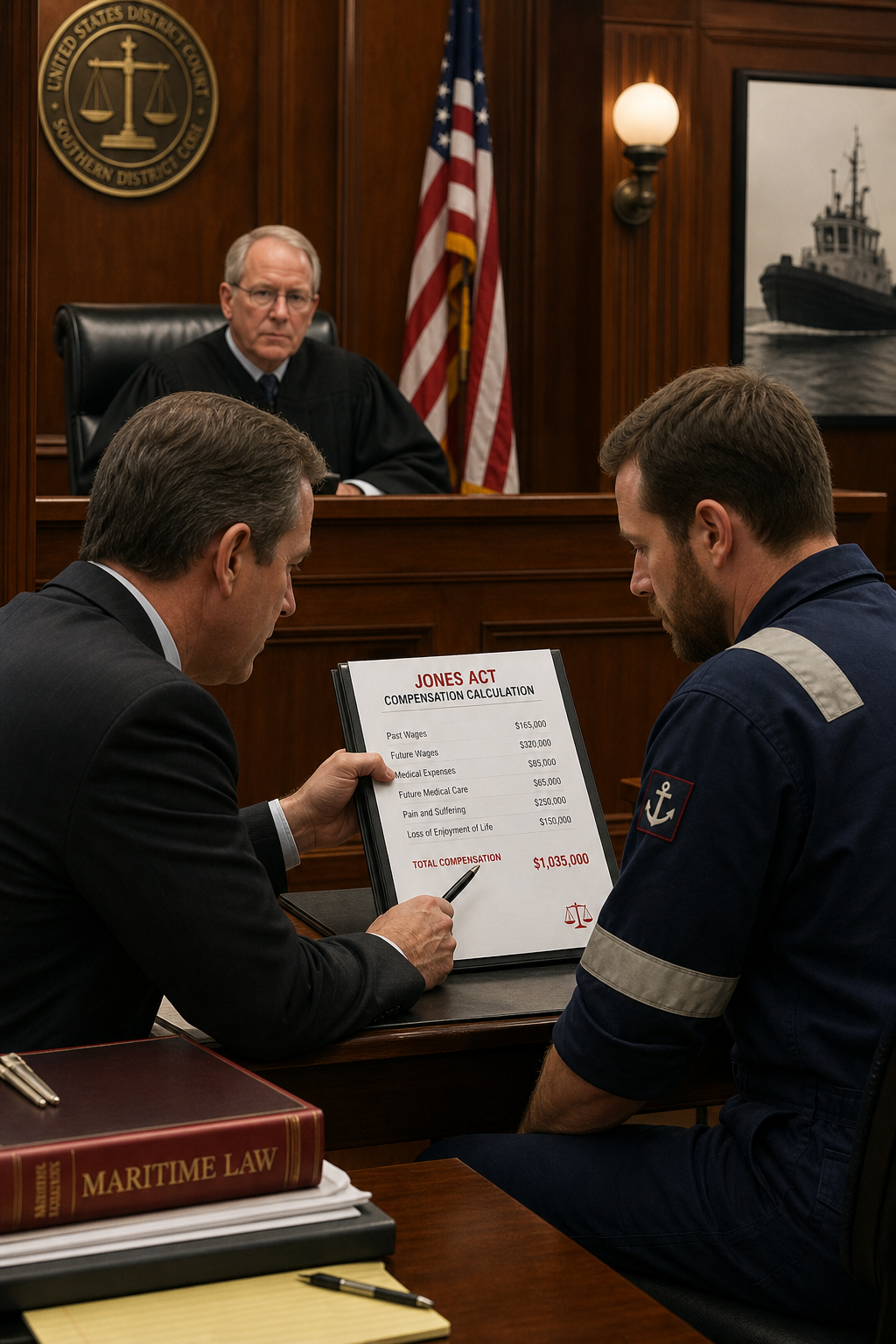
Injured on a vessel? You might think you’re stuck with limited benefits. The truth is that the Jones Act can give you far more than a typical workers‑comp claim. It lets a seaman sue an employer for negligence and recover a full package of damages.
In this guide you’ll discover what Jones Act compensation means, how the numbers are worked out, the types of damages you can chase, the roadblocks most claimants hit, and a step‑by‑step path to get your claim moving.
What Is Jones Act Compensation?
The Jones Act, officially the Merchant Marine Act of 1920, is a federal law that protects maritime workers who are injured while on the job. It applies when the injury is linked to an employer’s negligence or to an unsafe vessel. The law was written to address the unique dangers of working at sea, and it gives seamen a legal route that goes beyond the no‑fault workers’‑comp system.
Under the Act a seaman can bring a civil action in federal or state court and even demand a jury trial. The plaintiff must prove that the employer’s negligence played any part in the injury , even a small contribution is enough. This “featherweight” standard is far easier than the typical negligence test used in land‑based personal injury cases.
The Act also opens the door to a range of damages that are not available under regular workers’ compensation. Those include pain and suffering, loss of future earning capacity, and even punitive damages when the employer’s conduct is especially reckless. In short, Jones Act compensation is designed to make a seaman whole again, covering both economic losses and the human impact of the injury.
For a quick side‑by‑side view of how the Jones Act differs from standard workers’ comp, see Jones Act vs Workers Compensation: Key Differences. Knowing those distinctions helps you decide which path fits your situation.
Beyond the legal definition, the law also creates a duty for ship owners to keep vessels seaworthy. If a ship is found unfit for its purpose, a seaman can file an “unseaworthiness” claim that does not require proof of negligence. That claim runs alongside a negligence claim, adding another layer of protection.
Source: Jones Act overview and Cornell Law School.
How Compensation Is Calculated Under the Jones Act
When a seaman files a claim, the court breaks the award into several buckets. Each bucket reflects a different kind of loss, and the total amount is the sum of those parts.
First, medical expenses are tallied. This includes everything from emergency care on the dock to long‑term rehab and specialist visits. A skilled attorney will pull every bill, future treatment estimate, and even the cost of prosthetic devices to make sure nothing is left out.
Second, lost wages are calculated. The court looks at the income the seaman earned before the injury and projects what he or she would have earned if the injury hadn’t happened. Factors such as age, experience level, and typical career trajectory shape the future‑earning estimate. Economic experts often use actuarial tables to forecast this figure.
Third, pain and suffering is a non‑economic damage. While there’s no exact formula, judges consider the severity of the injury, the length of recovery, and the impact on daily life. Some courts apply a multiplier to the combined medical and wage losses , for example, a 2.5× multiplier for a moderate injury, higher for more serious cases.
Beyond these, the Act provides “maintenance and cure.” Maintenance covers living expenses (food, housing, utilities) while the seaman can’t work, and cure covers all medical care until maximum medical improvement (MMI) is reached. These benefits continue even if the lawsuit is still pending.
Finally, if the employer acted with gross negligence or intentional misconduct, punitive damages may be added. These are meant to punish and deter reckless behavior.
Imagine a deckhand who slipped on a wet deck because the crew failed to post a warning sign. He incurs $30,000 in medical bills, loses $40,000 in wages, and endures chronic back pain. A court might award $30,000 + $40,000 + $70,000 (pain and suffering) + maintenance payments, resulting in a total well beyond what a state workers’ comp plan would offer.
Source: Jones Act damages guide.
Key Types of Damages Available
The Jones Act’s damage categories fall into two broad groups: economic and non‑economic.
Economic damagesare the easier to quantify. They include:
- Medical expenses , past, present, and future.
- Lost earnings , both the wages you missed and the earnings you’ll miss in the future.
- Loss of earning capacity , the reduced ability to earn at the same rate after the injury.
- Unearned wages , a narrow benefit that covers the period from the injury date until the end of the employment contract or voyage.
Non‑economic damagesaddress the human side of injury:
- Pain and suffering , physical discomfort and emotional distress.
- Loss of enjoyment of life , the inability to engage in hobbies or family activities.
- Disfigurement or permanent impairment , any lasting change to the body.
In addition, the Act guaranteesmaintenance and cure. Maintenance is a daily stipend for basic living costs, while cure is the employer’s duty to pay for all reasonable medical treatment until MMI. These benefits are paid regardless of fault and cannot be reduced by any settlement amount.
Some cases also allow for punitive damages. Courts reserve these for conduct that is willful, reckless, or malicious. They are not automatic; the plaintiff must prove that the employer’s behavior rises to that level.
To illustrate, consider a fisherman who suffered a permanent loss of hand function after a crane malfunctioned on a vessel. He can claim the cost of his prosthetic hand (economic), the wages he’ll never earn as a deckhand (future earnings), the daily pain of adjusting to a new way of life (non‑economic), and maintenance until he reaches MMI. If the crane was knowingly left uninspected, the court may also tack on punitive damages.
"The Jones Act’s breadth lets a seaman recover the full price of his injury, not just a fraction."
Understanding each damage type helps you and your attorney build a claim that captures every dollar you’re owed.
Common Challenges in Claiming Jones Act Compensation
Even though the law is generous, many claimants hit roadblocks that can shrink or stall a recovery.
First, proving eligibility can be tricky. A seaman must spend at least 30 % of his working time on a vessel that is in navigation and must perform duties that contribute to the vessel’s mission. Courts look at the whole employment record, not just a single voyage.
Second, the statute of limitations is three years from the injury date. Missing this deadline usually bars the claim forever, unless a very narrow exception applies. That’s why prompt reporting and early legal counsel are critical.
Third, gathering evidence is often the hardest part. Accident reports, ship logs, maintenance records, and witness statements are essential. Employers may try to downplay the incident or withhold records, so a lawyer who knows how to subpoena maritime documents can make a big difference.
Fourth, many seamen sign release forms offered by the employer before they fully understand their rights. Those releases can waive the right to sue, leaving the worker with only maintenance and cure. Never sign anything without a lawyer present.
Fifth, funding the lawsuit can be a burden. Legal fees, expert witness costs, and medical record retrieval add up fast. Some firms offer contingency arrangements or Jones Act funding loans to bridge the gap.
Finally, the comparative negligence rule can reduce the award. If a court finds the seaman partly at fault, the total compensation is cut by that percentage. That’s why thorough documentation of the employer’s role is essential.
Source: Maritime Injury Center guide.
Steps to Pursue a Jones Act Compensation Claim
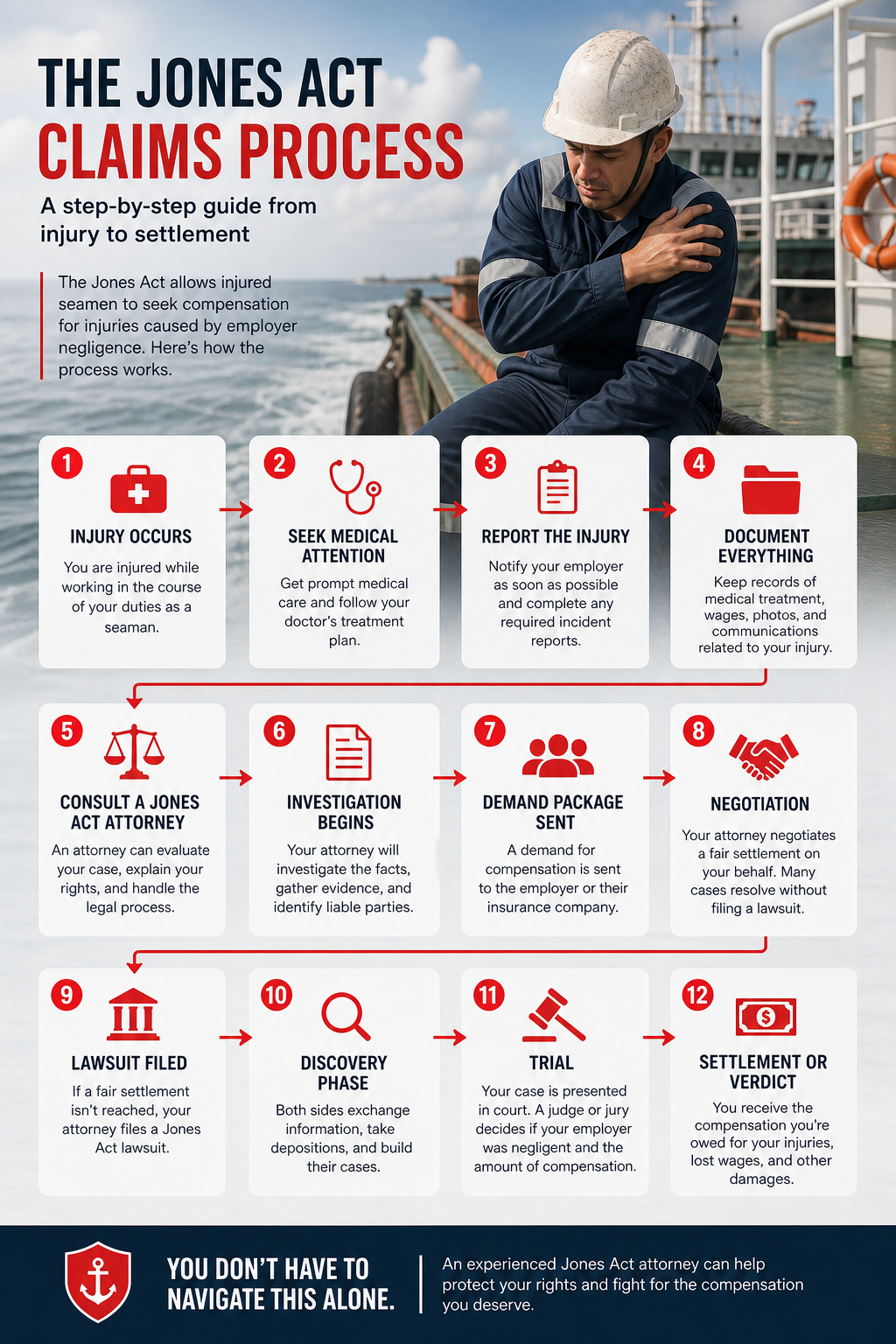
Getting a claim off the ground starts with a clear plan. Below is a usable checklist you can follow from the moment the injury occurs until the settlement is signed.
Each step builds on the previous one, so skipping a piece can weaken the entire case. For example, failing to get a written accident report early can make it harder to prove negligence later.
When you’re ready to start, the first thing to do is call a lawyer who specializes in maritime law. They will run a quick eligibility check and tell you what evidence you’ll need.
During the discovery phase, expect to see subpoenas for the vessel’s maintenance logs. Those logs often reveal missed inspections or known safety issues, which are key to establishing negligence.
After a settlement is reached, the court will issue a final judgment that includes all damages, maintenance, and cure. The employer must then pay the awarded amount, and the seaman can use it to cover medical bills, replace lost income, and rebuild his life.
Source: LKSA Law Firm overview.
FAQ
Can I file a Jones Act claim if I was partially at fault?
Yes. The Jones Act follows a pure comparative negligence rule. If a court finds you 20 % at fault, your total award is reduced by that same 20 %. You still receive compensation for the remaining 80 % of your losses, which can still be a substantial sum.
What is the “30 % rule” for seaman status?
The rule means you must spend at least 30 % of your working time on a vessel that is in navigation, and your duties must contribute to the vessel’s mission. Courts look at the whole employment record, not just a single trip, to decide if you qualify.
How long do I have to file a claim?
The statute of limitations is three years from the date of injury. If you miss that deadline, you generally lose the right to sue, unless you can prove a very limited exception, such as fraud that concealed the injury.
What is maintenance and cure?
Maintenance is a daily stipend for living expenses while you can’t work. Cure is the employer’s obligation to pay for all reasonable medical treatment until you reach maximum medical improvement. Both are paid regardless of who caused the injury.
Can I get punitive damages?
Punitive damages are available only when the employer’s conduct is willful, reckless, or intentional. You must prove that the negligence was more than ordinary carelessness. If successful, punitive damages can significantly increase the total award.
Do I need a lawyer to file a Jones Act claim?
While you can technically file on your own, the law is complex, and the evidence required is often technical maritime data. An experienced Jones Act attorney knows how to subpoena ship logs, work with medical and vocational experts, and handle the comparative negligence rules, greatly improving your chances of a full recovery.
Conclusion
Jones Act compensation offers a powerful safety net for maritime workers who suffer injuries on the job. By understanding the law’s scope, how damages are calculated, the types of recovery available, and the common hurdles, you can move forward with confidence. The process starts with immediate medical care, followed by prompt reporting, careful evidence collection, and a consultation with a seasoned maritime attorney. From there, a structured claim‑building approach, covering economic losses, non‑economic harms, and the guaranteed maintenance and cure, will help you secure the full package you deserve.
If you’re ready to take the next step, reach out for a free, no‑obligation case review. Our team will evaluate your situation, outline the potential damages, and guide you through every stage of the claim. Don’t let a workplace injury linger without the compensation you’re entitled to, act now and protect your future.