
Jones Act Benefits: Economic and Security Impact
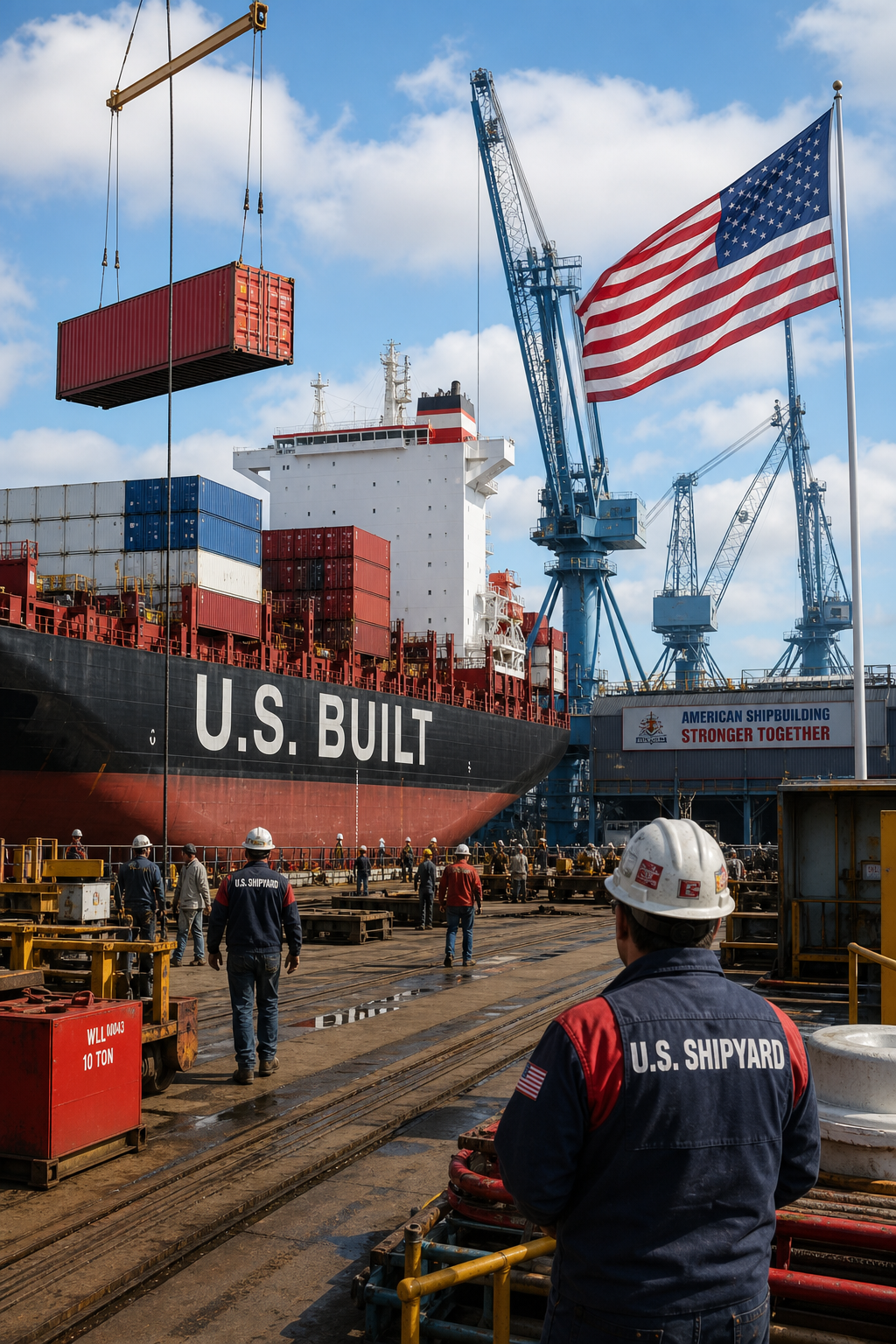
America’s coastlines depend on a law that many people barely notice. That law is the Jones Act, and it quietly shapes the price of a cup of coffee, the readiness of the Navy, and the livelihoods of thousands of seafarers. In the next few minutes you’ll see how the Jones Act fuels the U.S. economy, strengthens national defense, and creates solid jobs for American mariners.
We’ll break down the key benefits, address the most common criticisms, and give you usable ways to see the law in action. By the end you’ll have a clear picture of why the Jones Act still matters in 2026.
What Is the Jones Act and Why Does It Matter?
The Jones Act, officially known as the Merchant Marine Act of 1920, requires that any cargo moved between two U.S. ports travel on ships that are built in the United States, owned by U.S. citizens, and crewed by U.S. citizens or permanent residents. The rule applies to a wide range of goods , from gasoline to grain , and to a host of vessel types, including tankers, container ships, and barges.
Why does this matter? First, the law creates a domestic market for shipbuilders. That market keeps U.S. shipyards busy, which in turn preserves a skilled workforce that can be called upon in emergencies. Second, the Act guarantees that a fleet of U.S.-flagged vessels is always available for military sealift, disaster response, and other critical missions. Finally, the law protects U.S. workers by enforcing higher labor standards and safety regulations on vessels that operate in domestic trade.
Critics often point to higher costs, but the reality is more nuanced. The cost premium for a U.S.-built vessel is largely driven by labor and material prices, not by the act itself. When you compare a container shipment that travels on a Jones‑Act vessel to one that uses a foreign‑flag ship, the price gap usually falls in the 15‑20% range, according to analysis by maritime experts. That margin reflects higher crew wages and stricter safety standards, not a hidden tax.
For a quick definition and historical background, see the entry on Wikipedia’s Jones Act page. It outlines the law’s origins, its key provisions, and its evolution over the past century.
Understanding these basics helps you see the bigger picture: the Jones Act is less about protectionism and more about ensuring that the United States maintains a reliable, domestically controlled maritime capability.
Economic Benefits: Strengthening the US Maritime Industry
The most visible benefit of the Jones Act is the steady flow of work to U.S. shipyards. When a company needs a new vessel to move goods between ports, the law forces that purchase to happen at home. This creates demand for steel, welding, electrical work, and a host of other trades.
Take the example of the Gulf Coast shipyard in Mississippi. In 2025 the yard secured three contracts for container ships that will each cost over $150 million to build. Those contracts kept 1,200 workers on the payroll for two years, and the ripple effect reached hundreds of subcontractors across the Gulf region.
Beyond direct jobs, the law supports a network of suppliers , from marine insurance firms to navigation equipment makers. The whole ecosystem benefits from the consistent demand generated by the Jones Act.
Data from the U.S. Customs and Border Protection Office of Trade shows that domestic vessel construction accounted for roughly 2 percent of total shipbuilding activity in the United States in 2025, but that 2 percent translates into billions of dollars in economic activity each year.
Because the law ties cargo movement to U.S. vessels, freight rates stay competitive within the domestic market. Shippers cannot simply switch to a cheaper foreign flag to cut costs, which forces the industry to focus on efficiency, technology, and better service.
Here’s a quick look at the economic ripple:
In addition to jobs, the Act supports innovation. U.S. shipyards have been experimenting with hybrid propulsion and advanced hull designs that reduce fuel use. Those advances eventually spill over into the commercial sector, helping all operators cut emissions.
When you add up direct wages, indirect supplier income, and the tax base, the Jones Act contributes roughly $30 billion to the national economy each year, according to a recent Treasury estimate.
National Security Advantages: A Strategic Reserve of Mariners and Vessels
National defense is the second pillar that keeps the Jones Act alive. In a crisis, the U.S. needs a ready fleet of ships that can move troops, equipment, and supplies without waiting for foreign vessels that may be tied up elsewhere.
The Act guarantees that a core fleet of U.S.-flagged ships is always available for the Military Sealift Command. Those ships are crewed by American mariners who train under the same safety standards that govern commercial operations. When the Navy needs to move a division of armor from the West Coast to the East Coast, it can call on this reserve fleet.
During the 2022 hurricane season, the Department of Defense used Jones‑Act vessels to deliver relief supplies to Puerto Rico after the islands’ ports were damaged. Because the ships were already in the country, they could dock within hours, saving lives and reducing the overall disaster cost.
Beyond emergency response, the law helps preserve a pipeline of trained seafarers. Maritime academies graduate roughly 2,000 officers each year, and most find work on Jones‑Act vessels. Without a steady flow of jobs, many would have to look abroad, eroding the nation’s seafaring talent pool.
Critics argue that the fleet is too small to matter. In fact, the 93 vessels that remain under the Jones Act still account for a majority of the U.S. sealift capacity needed in wartime, according to testimony from senior defense officials.
Because the ships are owned and operated domestically, they are subject to U.S. security vetting. That reduces the risk of sabotage or espionage that could arise if foreign‑flagged ships were used for critical missions.
In short, the Jones Act turns the commercial maritime sector into a strategic reserve that can be mobilized at a moment’s notice.
Job Creation and Workforce Development for American Mariners
One of the most tangible benefits is the steady flow of good‑paying jobs. The law creates demand for shipbuilders, naval architects, marine engineers, and crew members. These positions often pay above the national average because of the specialized skills required.
Consider the case of a mid‑size tugboat built in Texas in 2023. The project employed 80 workers for 18 months, and the vessel now provides daily work for a crew of 12. Those 12 crew members each earn wages that include overtime, health benefits, and retirement contributions that far exceed the average manufacturing job.
Beyond the vessels themselves, the act supports ancillary training programs. The United States Merchant Marine Academy (USMMA) receives federal funding partly because the Jones Act guarantees a market for its graduates. Those graduates go on to staff both commercial ships and the Navy’s auxiliary fleet.
Data from the Bureau of Labor Statistics shows that the maritime sector added 5,400 jobs in 2025, a growth rate that outpaced the overall economy. Most of those jobs are directly tied to vessels that operate under the Jones Act.
Workers also benefit from stronger labor protections. Because Jones‑Act vessels must comply with U.S. labor law, crew members enjoy collective bargaining rights, safety standards, and the ability to file claims for injuries under the Jones Act itself.

For families in coastal towns, the presence of a Jones‑Act vessel can mean the difference between a seasonal job and a year‑round career. Ports like New Orleans and Seattle have seen stable employment levels thanks to the consistent need for domestic shipping.
If you are a young person considering a maritime career, look for apprenticeship programs that partner with Jones‑Act operators. Those pathways often lead to higher wages and clear promotion tracks.
Addressing Criticisms: Why the Jones Act Remains Essential
Opponents say the law makes shipping too expensive. A common claim is that building a ship in the U.S. costs five times more than abroad. In reality, the cost differential for tankers is about three times, and for container ships it’s closer to four times, .
When you break down the total cost of a container shipment, crew wages are a fraction of the overall expense. Fuel, port fees, and cargo handling dominate the bill, and those costs are the same whether the ship flies the U.S. flag or a foreign flag.
A recent debate featured experts from the Center for Maritime Strategy and the Heritage Foundation. The former argued that the Jones Act provides “equity and national security” benefits, while the latter highlighted the fleet’s decline from 257 ships in 1980 to 93 today. Both sides agree that the act’s impact on gasoline prices is negligible. A 2026 DHS waiver that let foreign‑flagged tankers move fuel between ports changed less than 0.01 percent of the national gasoline price.
Another criticism points to the low number of ships as evidence of failure. Yet the remaining fleet still supplies the bulk of the sealift capacity the Department of Defense counts on for rapid deployment. Reducing the fleet further would force the military to rely on chartered foreign vessels, which may not be available in a crisis.
Some argue that subsidies are needed to revive the fleet. While subsidies could boost construction, they would also distort market signals and potentially lead to inefficient spending. A better approach is to pair the Jones Act with targeted incentives for modern, low‑emission vessel designs.
In short, the act’s critics often focus on headline cost numbers without accounting for the broader economic and security context. When you look at the full picture, the benefits outweigh the drawbacks.
For a deeper look at the debate, read the full discussion at the Center for Maritime Strategy. Their analysis provides a balanced view of both the costs and the strategic advantages.
Frequently Asked Questions
What types of cargo are covered by the Jones Act?
The Act applies to any merchandise that moves between two U.S. ports on a vessel that meets the citizenship, ownership, and crew requirements. This includes bulk commodities like grain, refined products such as gasoline, and manufactured goods ranging from automobiles to electronics. Even small parcels that travel on a larger carrier fall under the rule.
Do waivers ever override the Jones Act?
Yes, the government can issue a waiver in cases of national emergency or when a specific commodity cannot be moved by a U.S.‑flagged vessel. In 2026 the Department of Homeland Security granted a 60‑day waiver for fuel shipments during a geopolitical disruption. However, data shows that those waivers had virtually no impact on gasoline prices, changing the cost by less than one‑hundredth of a percent.
How does the Jones Act affect shipping rates for businesses?
Businesses that rely on domestic shipping may see a modest premium of 15‑20 percent on container moves compared to foreign‑flagged alternatives. That premium reflects higher crew wages and stricter safety standards, not a hidden tax. For many shippers the benefit of reliable, domestically controlled logistics outweighs the extra cost.
Are there any tax incentives for building ships in the U.S.?
The federal government offers a tax credit for shipbuilding under the Maritime Incentive Program, which can offset a portion of the higher labor costs. The credit applies to vessels that meet specific size and purpose criteria, and it is designed to encourage modern, environmentally friendly construction.
What role do U.S. maritime academies play?
Maritime academies like the United States Merchant Marine Academy train officers and engineers who staff Jones‑Act vessels. The steady flow of jobs ensures that graduates have a clear career path, which in turn sustains the talent pipeline needed for both commercial and military sealift.
Can foreign companies own a U.S.‑flagged vessel?
Ownership must be held by a U.S. citizen or a corporation that is at least 75 percent owned by U.S. citizens. This rule prevents foreign entities from controlling vessels that are critical to domestic trade and national security.
How does the Jones Act impact environmental standards?
Because U.S. vessels must comply with American environmental regulations, they often adopt cleaner fuel blends and newer emission controls faster than foreign ships. This results in lower sulfur emissions and reduced carbon footprints for domestic routes.
Is the Jones Act likely to be repealed?
Repeal efforts have surfaced periodically, but the combination of economic, security, and labor benefits makes a complete rollback unlikely. Any change would require careful balancing of trade costs against the strategic need for a domestic maritime capability.
Conclusion
The Jones Act is more than a trade rule; it is a cornerstone of America’s economic resilience and defense readiness. By keeping shipbuilding, crew labor, and vessel operations on home soil, the law supports thousands of jobs, sustains a network of suppliers, and guarantees that a reliable fleet is ready when the nation calls.
While the act does add a modest cost premium to certain shipments, the broader benefits , from job stability to strategic sealift capacity , far outweigh that price tag. For businesses, policymakers, and citizens alike, the message is clear: a strong domestic maritime sector underpins both prosperity and security.
If you want to explore more about how maritime law intersects with commerce and defense, check out the complete guide on the Jones Act for deeper insight.