How to Handle Being Injured on a Cruise Ship in 2026

Getting hurt while you’re out at sea can feel like a nightmare. You’re on vacation, the sea is beautiful, and then, boom, an injury. This guide shows you exactly what to do when you’re injured on a cruise ship. You’ll learn how to get medical care fast, keep solid proof, tell the cruise line the right way, protect your rights, and chase the compensation you deserve.
Step 1: Seek Immediate Medical Attention
The first thing you must do is get checked out. Cruise ships have a medical center on a lower deck, away from the crowds. Head there right away, even if the injury seems minor. The staff can give you bandages, ice packs, or a wheelchair if you need one.
Why act fast? The ship’s doctors will write a medical report that later becomes a key piece of evidence. If you wait, you might forget details or the injury could get worse.
Here’s a quick checklist:
- Tell the nurse exactly how you got hurt.
- Ask for a written copy of the diagnosis and any treatment you receive.
- Request the ship’s incident number, if they assign one.
Most injuries on cruise ships are slips, trips, and falls, about 45% of all cases according to industry data. That means the medical staff are used to treating sprains, bruises, and even broken bones.
Even if you think the pain is mild, get a professional look. Some conditions, like a concussion, may not show up right away.
And if the injury is severe enough to need evacuation, the ship will arrange transport to a shore hospital. Keep a copy of the evacuation paperwork; you’ll need it later.
Bottom line: Get on the ship’s medical center right away and secure a written medical report.
Step 2: Document the Incident and Gather Evidence
After you’ve been treated, it’s time to build a solid record of what happened. Documentation is your strongest ally because maritime law often pits your word against a cruise line’s legal team.
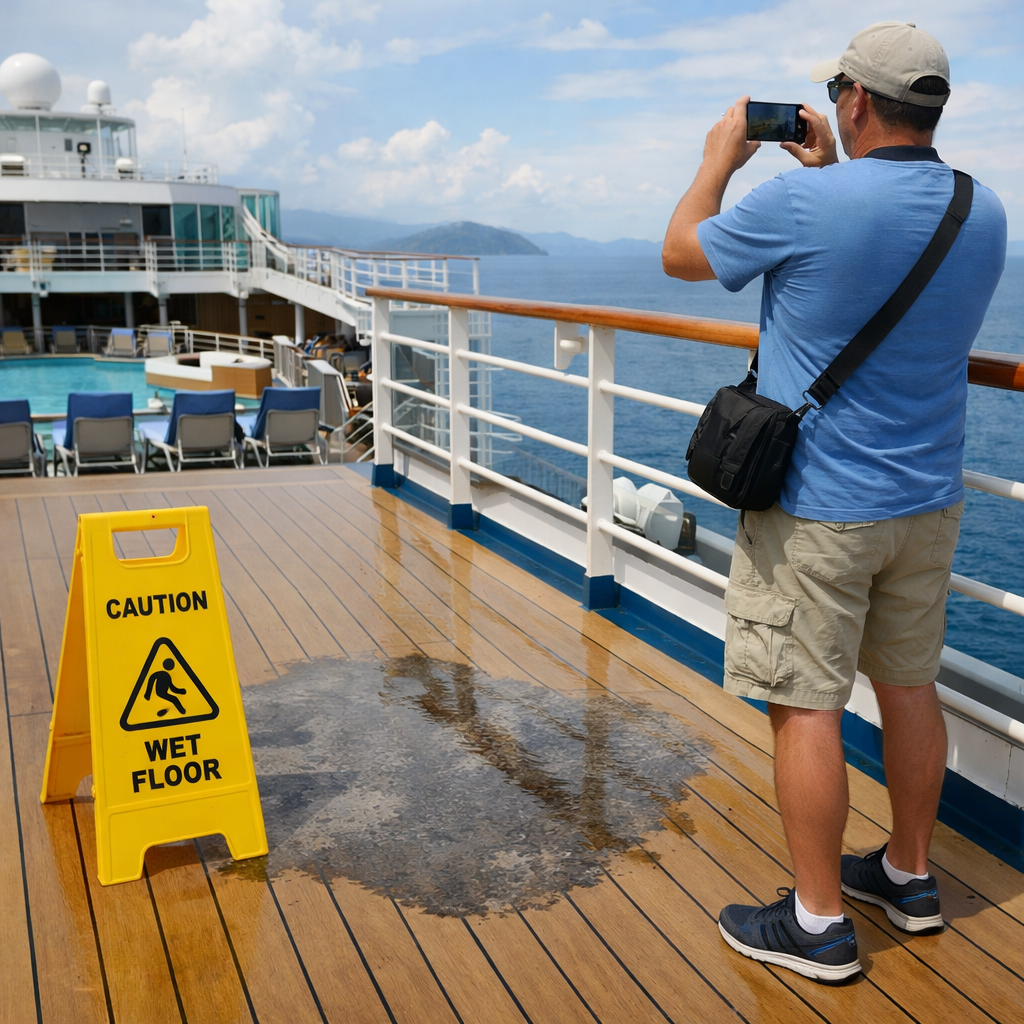
Start with photos. Use your phone to snap the exact spot where you fell, any hazards you saw, and the surrounding area. If the floor was wet, capture the lack of a “wet floor” sign.
Next, write a detailed note while the memory is fresh. Include:
- Date and time of the incident.
- Exact location (deck number, near the pool, etc.).
- What you were doing right before the injury.
- Weather conditions, lighting, and any crowd density.
Don’t forget witnesses. Ask anyone who saw the event for their name, phone number, and a brief statement of what they observed. Even a fellow passenger who saw a wet patch can be useful.
Collect all paperwork the ship gives you, medical forms, incident report copies, and any receipts for medication.
Why is this step crucial? A study of cruise injury claims shows that passengers who kept thorough records were far more likely to receive a settlement.
When you’re ready, reach out to a lawyer who knows cruise‑ship law. They can help you sort the paperwork and make sure you meet the strict filing deadlines.
Here’s a handy template you can copy:
Incident Report
Date: __________
Time: __________
Location: __________
What I was doing: __________
What caused the injury: __________
Witnesses: __________
Bottom line: Document everything, photos, notes, witnesses, and paperwork, right after the injury.
Step 3: Notify the Cruise Line and File a Formal Report
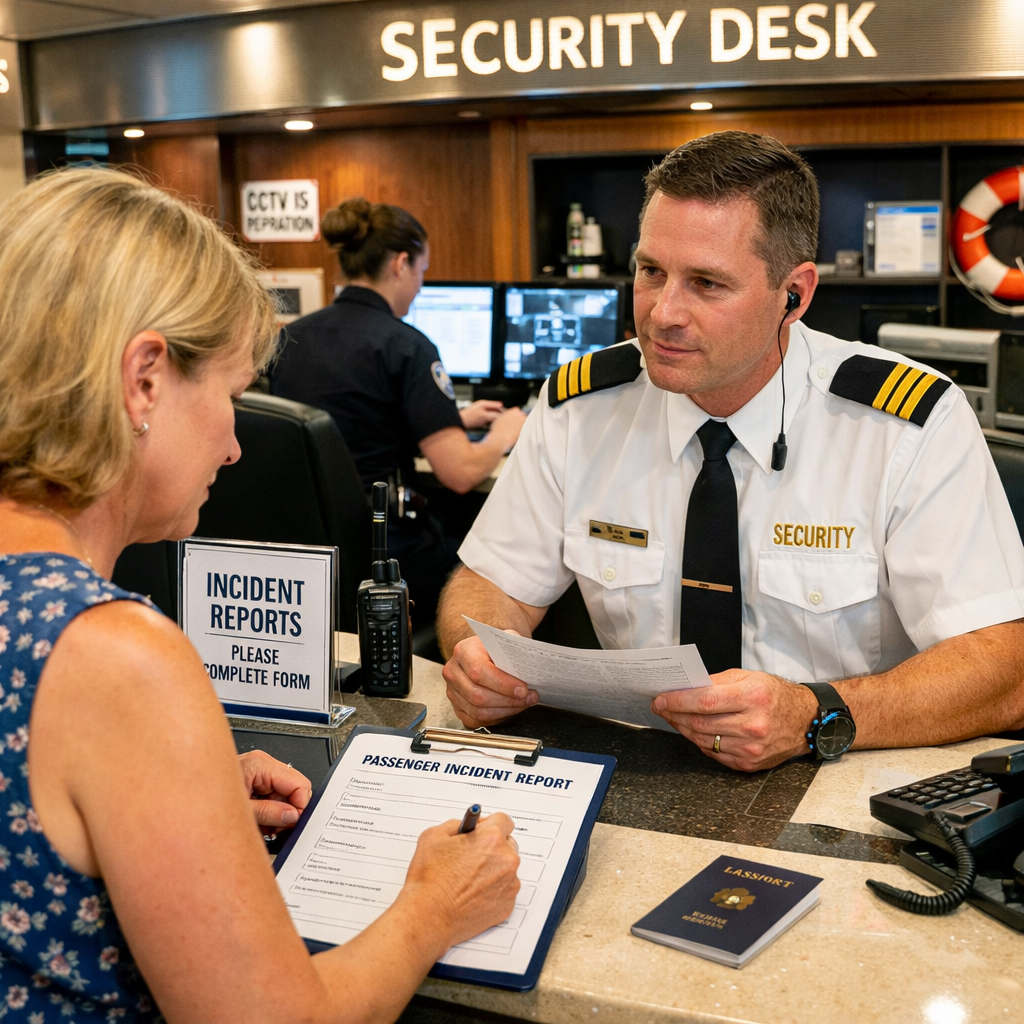
Now that you have medical proof and a photo trail, tell the cruise line. Find the ship’s security or guest‑services office and ask for the official incident report form. Fill it out truthfully; avoid blaming yourself or the crew.
Make sure you get a copy of the completed report. The cruise line’s version may look different from what you wrote, so keep both for comparison.
Many cruise lines have a risk‑management team that will follow up. They may offer a settlement or ask you to sign a waiver. Don’t sign anything until you’ve spoken with a lawyer.
Here’s a quick step‑by‑step:
- Go to the security desk within 24 hours of the injury.
- Ask for the incident report form and fill it out.
- Request a written copy for your records.
- Note the name of the officer you speak with and the time.
And remember, the cruise line may try to downplay the incident. That’s why your own copy is vital.
"The best time to start building a claim was yesterday."
Once you’ve filed, the ship’s crew will start an internal investigation. That process can take days, but you should keep a log of any follow‑up calls or emails.
Bottom line: File the ship’s formal incident report right away and keep every copy you receive.
Step 4: Understand Your Rights and File Insurance Claims
Being injured on a cruise ship doesn’t mean you have to pay for everything yourself. Your ticket contract, travel insurance, and even your health plan may cover costs.
First, read the fine print on your ticket. Most lines limit lawsuits to a specific court (often Miami) and set short filing windows, sometimes as short as six months.
Second, check any travel insurance you bought. Many policies cover medical evacuation, hospital bills, and lost luggage caused by the injury.
Here’s a quick comparison of what you might claim:
| Option | Pros | Cons |
|---|---|---|
| Direct claim with cruise line | Potential quick settlement; no court fees | Often low offers; may require signing a waiver |
| Travel insurance claim | Covers medical bills and evacuation; third‑party pays | Policy limits; may need proof of negligence |
| Litigation | Can recover full damages; sets precedent | Expensive; takes months or years |
When you file an insurance claim, attach all the evidence you gathered: medical reports, photos, witness statements, and the ship’s incident report. Insurance adjusters will look for proof that the cruise line was at fault.
If the cruise line denies responsibility, you still have the option to sue. The deadline (statute of limitations) is usually one year from the injury date, so act fast.
Bottom line: Know your ticket’s contract terms, use travel insurance, and don’t miss the one‑year lawsuit deadline.
Step 5: Follow Up and Seek Legal Advice if Needed
After you’ve filed reports and insurance claims, keep the conversation going. Call the cruise line’s risk‑management office every week to ask for an update. Write down each call’s date, who you spoke with, and what was said.
If the line offers a settlement, have a lawyer review it before you sign. Many offers are lower than what you could win in court.
Should the cruise line stall or deny your claim, it’s time to bring in a lawyer who specializes in maritime injury. They can file a lawsuit in the proper federal court and push for a fair payout.
When you meet a lawyer, bring:
- All medical records from the ship’s clinic.
- Copies of the incident report you filed.
- Photos, videos, and witness contacts.
- Any insurance correspondence.
Many attorneys work on a contingency basis, meaning they only get paid if you win. That can ease the financial pressure while you recover.
Bottom line: Regular follow‑up and a qualified lawyer are essential to protect your rights and get the compensation you deserve.
Conclusion
Being injured on a cruise ship is stressful, but you don’t have to handle the aftermath alone. Get medical help right away, document every detail, file the ship’s report, understand your contract and insurance, and stay on top of follow‑up. If the cruise line doesn’t play fair, a maritime‑law attorney can level the playing field.
Take the steps in this guide, keep your paperwork organized, and act before the deadline passes. Your health and your compensation depend on it.
Start your free claim review today and move forward with confidence.
FAQ
What should I do first if I’m injured on a cruise ship?
Head straight to the ship’s medical center, get a written diagnosis, and ask for the incident number. Even minor injuries need a professional record because it becomes key evidence later on.
Do I have to report the injury to the cruise line?
Yes. You must file an incident report with the ship’s security or guest services within 24 hours. A written copy protects you if the line later disputes the facts.
How long do I have to file a lawsuit after being injured on a cruise ship?
Most cruise contracts give you one year from the injury date to file a suit, though some lines set a six‑month limit. Check your ticket and act fast.
Can my travel insurance cover medical costs from a cruise injury?
Often it can. Policies usually cover medical treatment, evacuation, and sometimes lost wages. Submit all medical records and the ship’s report to the insurer for a smoother claim.
What evidence is most important for a cruise injury claim?
Photos of the hazard, the ship’s medical report, the incident report you filed, and witness statements are the strongest pieces. Keep every document you receive.
Should I sign any forms the cruise line gives me?
Never sign anything until you’ve spoken with a lawyer. Some forms waive your right to sue or limit compensation. A lawyer can explain the fine print.
Do I need a lawyer to get compensation?
You can try a direct settlement, but cruise lines have powerful legal teams. A maritime‑law attorney can negotiate a better deal or take the case to court if needed.
What if the injury happened during a shore excursion?
Treat it the same as an onboard injury: get medical care, document the scene, and file a report with both the excursion operator and the cruise line. The same deadlines apply.