Your Complete Guide to a Cruise Ship Accident Lawyer
Got hurt on a cruise? You’re not alone. Every year dozens of passengers end up with broken bones, slips, or worse while on board. The good news? A cruise ship accident lawyer can help you get the money you need to cover medical bills, lost wages, and pain. In this guide you’ll learn when to call a lawyer, how evidence is gathered, what the claims process looks like, and how to pick the right attorney for your case.
We’ll walk you through each step, give you real‑world tips, and end with a clear next‑step plan. Let’s get started.
Understanding When to Hire a Cruise Ship Accident Lawyer
The clock starts ticking the moment you fall on a wet deck or get hurt in a shore excursion. If you wait weeks, the evidence you need can disappear. That’s why you should reach out to a cruise ship accident lawyer within days, not months.
A cruise ticket is a legal contract. It hides strict deadlines: a six‑month written notice and a one‑year lawsuit filing deadline. Miss either and the case is gone forever. The Naylor Law blog explains these deadlines in plain terms. A lawyer knows exactly where to send the notice , Carnival wants it in Miami, Princess in California , and can meet the forum‑selection clause that forces the case into a specific federal court.
Imagine you slipped on a deck on Jan. 15. Your lawyer must send a notice by July 15 and file the suit by Jan. 15 next year. No wiggle room.
Beyond timing, the cruise line’s legal team jumps on your claim the second you report it. They’ll ask you for a recorded statement, offer a quick settlement, and try to get you to sign away rights. A seasoned lawyer tells you to stay silent and let the attorney handle all communications. That alone can save you from signing a release that ends your case.
What kinds of accidents demand a lawyer right away? Slip‑and‑fall injuries, assaults by crew or other passengers, medical negligence, norovirus outbreaks, and injuries on shore excursions all have complex liability issues. Each one creates a different trail of evidence that can vanish quickly.
Here are three quick signs you need a lawyer now:
- You've been told to sign a form that looks like a settlement offer.
- The incident involved a safety failure, like a missing rail or no warning sign.
- Your injuries require treatment beyond the ship’s infirmary.
When any of these happen, call a cruise ship accident lawyer. The sooner you act, the better chance you have to lock down surveillance footage, get crew statements, and keep the cruise line from destroying records.
And remember, the legal landscape is federal maritime law , not the state personal‑injury rules you might be used to. That difference changes everything, from where the case is filed to how damages are calculated.
Bottom line: early contact = stronger case. Don’t wait.
Key Factors Lawyers Evaluate in Cruise Ship Accident Cases
A cruise ship accident lawyer looks at a handful of core factors before deciding how to move forward. Those factors decide whether the cruise line can be held liable and how much you might recover.
First, the lawyer checks duty of care. Under maritime law, the ship operator must keep public areas safe. If a deck is wet and there’s no sign, that duty was breached.
Second, the lawyer reviews breach evidence , maintenance logs, crew interviews, and safety inspection reports. Elf‑Legal breaks down common negligence points, like uneven flooring, inadequate lighting, and missing safety equipment.
Third, causation is key. The lawyer must link the breach directly to your injury. If you slipped because the crew didn’t mop up a spill, that’s a clear causal chain.
Fourth, damages are quantified. This includes medical costs, lost wages, and pain‑and‑suffering. The lawyer will gather bills, pay stubs, and doctor notes to build a full picture.
Lastly, jurisdiction matters. The ticket’s forum‑selection clause may force the case into a specific federal court. A lawyer who knows the exact filing city can avoid a costly jurisdictional battle.
| Factor | Why It Matters | Typical Evidence |
|---|---|---|
| Duty of Care | Shows the cruise line’s legal responsibility | Ship safety manuals, passenger contracts |
| Breach | Proves the operator failed to meet that duty | Maintenance logs, crew testimonies |
| Causation | Links breach to your injury | Incident reports, medical records |
| Damages | Quantifies what you lost | Invoices, wage statements |
| Jurisdiction | Determines where you sue | Ticket contract, forum‑selection clause |
Pros of a strong factor set: higher settlement offers, quicker resolution. Cons: missing any piece can lower the payout or even bar the claim.
Here’s a step‑by‑step way a lawyer checks these factors:
- Review the ticket for deadline dates and forum‑selection language.
- Collect the ship’s safety logs and maintenance records.
- Interview witnesses before they leave the ship.
- Obtain medical records from the ship’s infirmary and any follow‑up providers.
- Calculate total losses, including future medical care.
When you understand what the lawyer looks for, you can help by preserving any paperwork you have and noting who you saw on deck. That cooperation makes the lawyer’s job easier and can boost your payout.
And if you’re curious about how to pick the right attorney,our guide on choosing the right cruise ship injury lawyer in 2026walks you through the key questions to ask.
Remember, each factor is a piece of a puzzle. The stronger each piece, the clearer the picture for the court or the settlement talks.
How to Collect Evidence After a Cruise Ship Incident
Evidence is the lifeblood of any claim. On a moving ship, you have just a few days before video is overwritten and crew members are reassigned.
Start by asking for a written incident report. Note the report number and keep a copy. Cowen Edwards outlines why that report matters. It’s the official record the cruise line will use to defend itself.
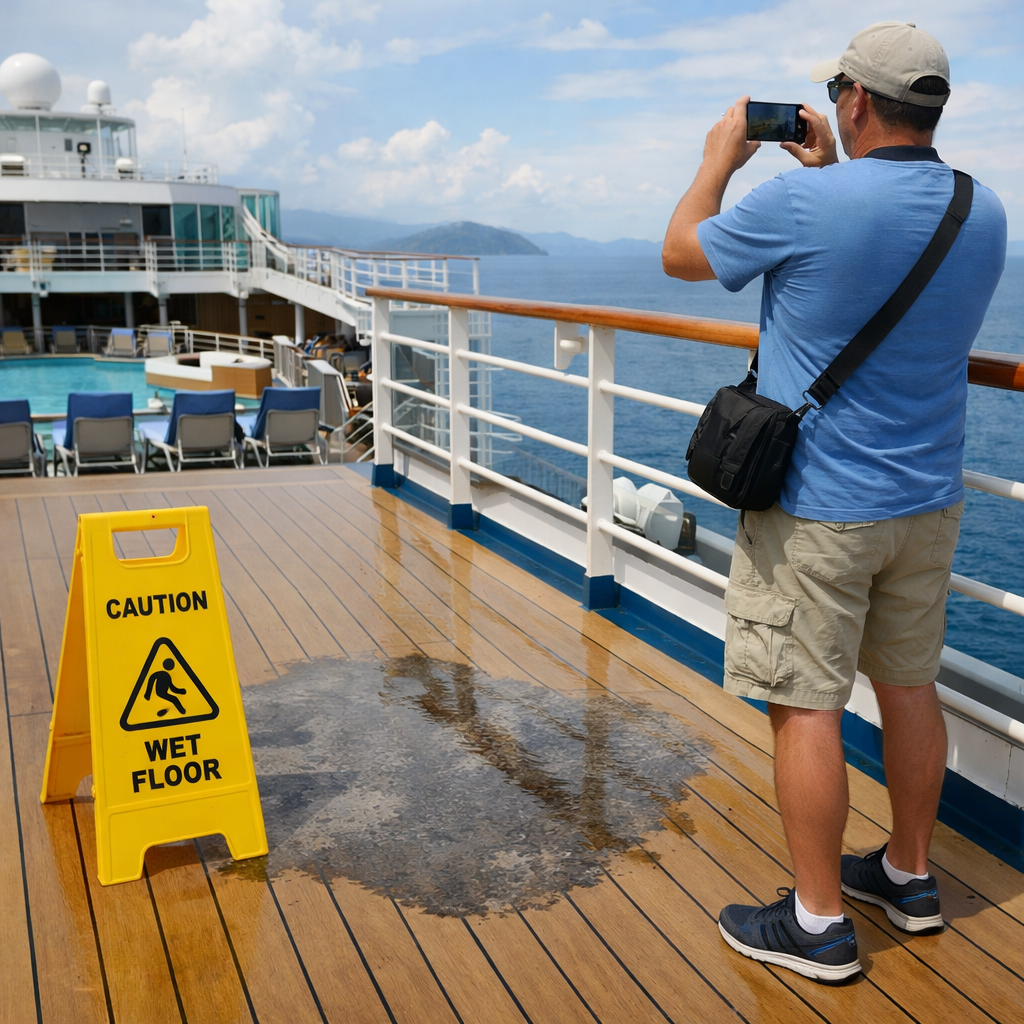
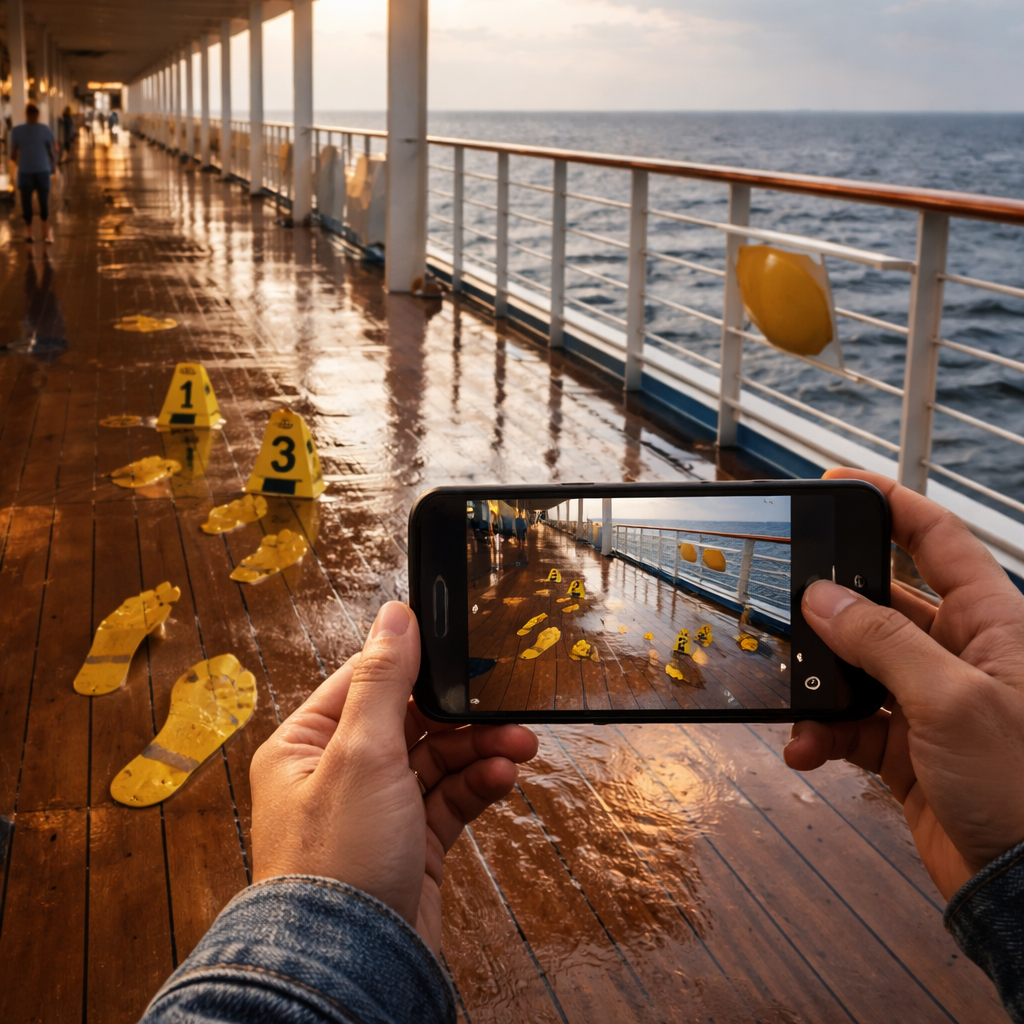
Next, photograph the scene. Use your phone to snap the exact spot where you fell, any warning signs (or lack thereof), and the condition of the floor. Take multiple angles. If the deck is wet, capture the water, the surrounding area, and any nearby railings.
Gather witness info. Ask nearby passengers for their names and contact details right away. Even if they seem casual, their statements can be vital later.
Don’t sign any release forms until your lawyer reviews them. Those forms can strip you of the right to sue.
Here are three actionable tips for evidence collection:
- Save all receipts for medical treatment you get on board.
- Record the time, date, and weather conditions , a stormy deck can affect liability.
- Request copies of surveillance footage before the ship’s system erases it (usually within 30 days).
And here’s a quick checklist you can print:
- Incident report number
- Photos of the hazard and injuries
- Witness names and phone numbers
- Medical records from ship infirmary
- Copy of your ticket (for contract clauses)
Once you have this, hand everything to your cruise ship accident lawyer. The lawyer will send a preservation letter to the cruise line, demanding they hold onto video, logs, and maintenance records.
Why act fast? Cruise lines routinely delete footage after 30 days to free up storage. If you wait, the video is gone and you lose a key piece of proof.
And remember, the evidence you collect today can mean the difference between a six‑figure settlement and a denied claim.
Finally, keep a personal journal of how the injury affects your daily life. Note pain levels, missed activities, and any emotional stress. That journal helps quantify pain‑and‑suffering later.
Navigating the Claims Process: Steps and Timeline
Once you’ve got a lawyer and evidence, the claim moves through a set path. Knowing the steps helps you stay on track and avoid surprise delays.
Step 1: The lawyer sends a formal notice to the cruise line. This triggers the preservation of evidence and starts the legal clock.
Step 2: The cruise line’s insurer reviews the claim and may make an initial offer. Most offers are low, hoping you’ll settle quickly.
Step 3: Your lawyer evaluates the offer against the evidence. If it’s too low, they’ll negotiate or move toward filing a lawsuit.
Step 4: If negotiations stall, the lawyer drafts a complaint and files it in the forum‑selected federal court before the one‑year deadline.
Step 5: Discovery begins. Both sides exchange documents, take depositions, and request medical records. This is where the evidence you gathered shines.
Step 6: Settlement talks continue throughout discovery. Many cases settle before trial, saving time and money.
If it reaches trial, a judge or jury decides liability and damages. But most cases settle, especially when the cruise line sees strong evidence.
Here’s a timeline visual you can picture:
- Days 1‑10: Notice, evidence preservation, witness interviews.
- Weeks 2‑4: Initial offer and negotiation.
- Months 2‑6: Discovery and deeper negotiations.
- Month 7‑12: Possible settlement or filing of lawsuit.
Remember the hard deadlines: six‑month written notice, one‑year filing. Missing them ends the case.
And a quick tip: keep a calendar reminder for each deadline. Your lawyer will set one, but having your own reminder avoids a costly slip.
Watch the short video below for a visual walk‑through of the process.
Ready to move forward?Ready to protect your rights and get the compensation you deserve? Try our free case evaluation now →
After the video, your next move is to sit down with your lawyer, review the evidence list, and decide if you want to push for a settlement or go to court. The decision depends on how strong the cruise line’s defense looks.
Common Compensation Types and What to Expect
When a cruise ship accident lawyer wins a case, the compensation can cover many areas. Knowing what you can claim helps you set realistic expectations.
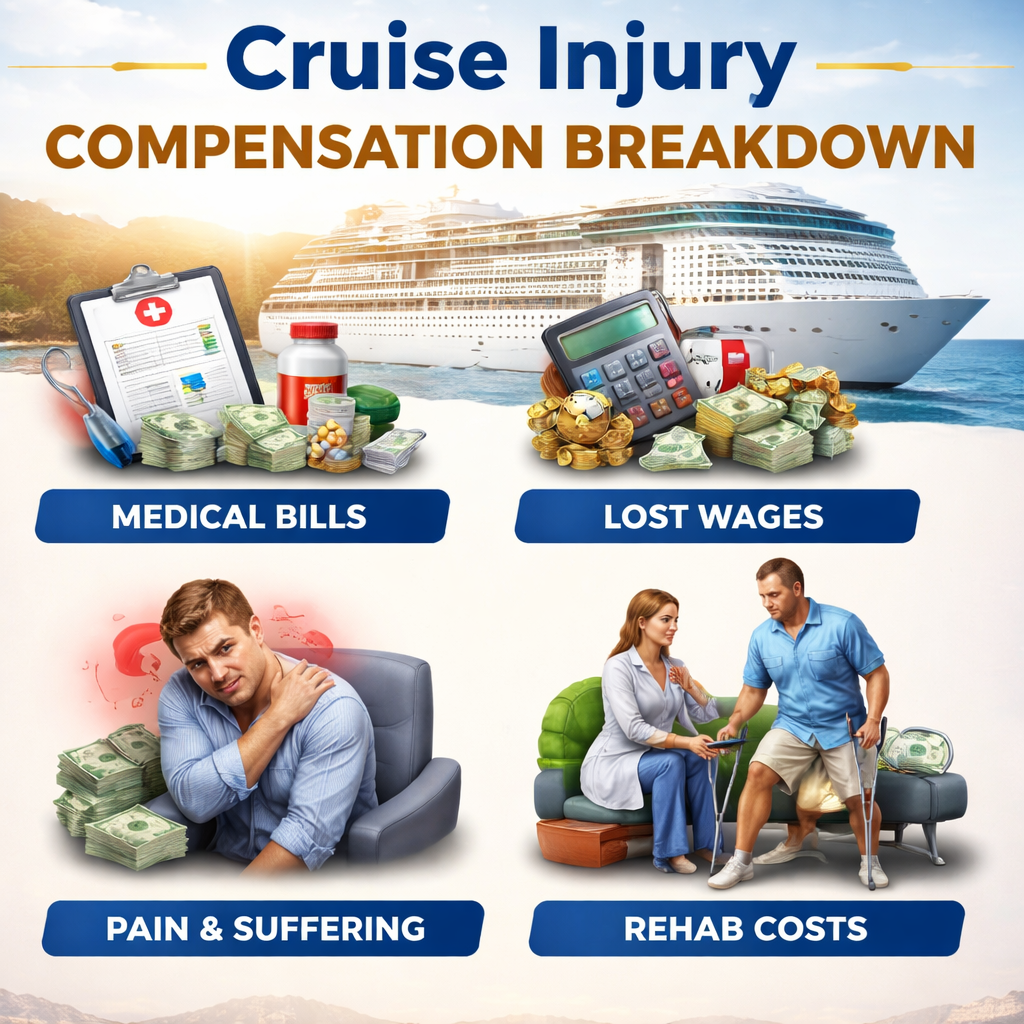
Medical expenses are the most obvious. This includes emergency care on the ship, hospital stays after disembarkation, surgeries, physical therapy, and any future treatment you’ll need.
Lost wages are next. If your injury keeps you from work, you can claim the salary you missed. If you can’t return to the same job, you may claim lost earning potential.
Pain‑and‑suffering is a catch‑all for the physical hurt and emotional distress. Courts look at the severity of the injury, recovery time, and impact on daily life.
Other possible damages include:
- Travel costs for follow‑up appointments.
- Rehabilitation equipment like braces or wheelchairs.
- Loss of enjoyment of life if you can’t partake in activities you loved.
There’s no statutory cap on cruise injury settlements under maritime law. That means a severe case can reach into the hundreds of thousands or even millions, depending on the facts.
Here’s a simple example: Imagine a passenger broke a hip on a slippery deck. Medical bills total $80,000, lost wages $30,000, and they can’t ski again , a hobby they loved. A lawyer may seek $250,000 to cover all losses and the intangible pain.
Why does the amount vary so much? Because each factor , duty breach, causation, damages, jurisdiction , shapes the value. Strong evidence of negligence and clear medical documentation push the number up.
And remember, the cruise line may try to settle early with a lowball offer. Your lawyer will compare that offer to the total damages you could prove at trial.
Bottom line: expect a multi‑part settlement that covers both out‑of‑pocket costs and the less tangible hurts. Your lawyer will break down each component for you.
Choosing the Right Lawyer: Questions to Ask During Consultation
Not every attorney knows the quirks of maritime law. A good cruise ship accident lawyer should have a proven track record with cases similar to yours.
Ask these questions to gauge fit:
- How many cruise ship accident cases have you handled in the past two years?
- Do you regularly practice in the federal court named in my ticket’s forum‑selection clause?
- What’s your strategy for preserving evidence on a moving vessel?
- Can you give an example of a settlement you secured for a slip‑and‑fall case?
- How do you charge , contingency, hourly, or a mix?
Listen for confidence and specific answers. Vague responses can signal a lack of experience.
Also, check their communication style. You’ll want an attorney who returns calls promptly and explains legal terms in plain language , no jargon.
Another tip: request a written retainer agreement that outlines fees, costs, and what happens if the case settles before trial.
When you compare lawyers, use a simple pros‑and‑cons list. For example:
- Pros: 10+ cruise cases, licensed in New York federal court, strong negotiation record.
- Cons: Higher contingency rate, limited office hours.
Finally, trust your gut. If the lawyer seems rushed or dismissive, keep looking. The right lawyer will make you feel heard and confident.
Conclusion & Next Steps
Being injured on a cruise is stressful, but you don’t have to face the big cruise line alone. A cruise ship accident lawyer knows the tight deadlines, the evidence rules, and the federal courts that handle these cases. By acting fast, gathering solid proof, and choosing an attorney with maritime expertise, you give yourself the best shot at a fair settlement.
Take the next step today. Schedule a free case review with a qualified cruise ship accident lawyer, bring your incident report and any photos you took, and let the expert handle the legal maze. The sooner you move, the stronger your claim will be.
Don’t let the cruise line’s legal team win by default. Protect your rights, get the compensation you deserve, and get back to enjoying life on solid ground.
FAQ
How soon should I contact a cruise ship accident lawyer after an injury?
You should reach out within the first few days. Early contact lets the lawyer send a preservation letter, lock down surveillance footage, and meet the six‑month written‑notice deadline that’s hidden in your ticket contract.
What if the cruise line offers a settlement right away?
Most early offers are low. A lawyer will review the offer against your medical bills, lost wages, and pain‑and‑suffering calculations. If it’s too low, the lawyer can negotiate a higher amount or prepare to file a lawsuit before the one‑year filing deadline.
Can I file a claim if I didn’t notice the injury until after the cruise ended?
Yes, but the clock still starts on the date of the accident, not when you discovered the full extent of your injuries. Missing the deadlines can bar your claim, so act fast even if symptoms appear later.
Do I need to prove the cruise line was negligent?
Yes. You must show the ship had a duty to keep you safe, that it breached that duty (like a wet deck without warning), that the breach caused your injury, and that you suffered damages. Your lawyer will gather the proof you need.
What types of compensation can I expect?
You can seek medical expenses, lost wages, pain‑and‑suffering, rehabilitation costs, travel for follow‑up care, and loss of enjoyment of life. There’s no cap on damages under maritime law, so a strong case can bring a substantial settlement.
How do I know if a lawyer is right for my cruise injury case?
Ask about their experience with cruise ship accidents, whether they practice in the required federal court, and how they preserve evidence. Look for a clear track record of settlements or verdicts in similar cases and a communication style that feels clear and supportive.