
Top Tugboat Accident Lawyer Resources for 2026

If you or a loved one has been hurt on a tugboat, you need help fast. The law can protect you, but you have to act. This guide shows where to find a tugboat accident lawyer, which firms have a track record, and what resources can boost your case.
We’ll walk through how to locate a specialist, compare firms, tap into free legal aid, and prep your claim. By the end you’ll know the exact steps to get the compensation you deserve.
Finding a Specialized Tugboat Accident Lawyer
Not every personal‑injury attorney knows maritime law. Tugboat cases involve the Jones Act, maintenance‑and‑cure benefits, and often complex liability questions. Start by looking for lawyers who list tugboat or maritime injury work on their website, such as a boat accident lawyer near you.
Ask yourself these questions:
- Do they mention the Jones Act in their bio?
- Have they handled collisions, capsizing, or equipment‑failure cases?
- Do they offer a free, no‑risk consultation?
When you find a candidate, call for an intake call. During that call, note how quickly they respond and whether they ask detailed questions about the accident. A good lawyer will want to know the date, location, vessel name, and what safety policies were in place.
For a deeper look at the legal rights of seamen, see the Jones Act overview on Wikipedia. It explains why crew members can claim maintenance‑and‑cure benefits even without proving fault.
Many families also reach out to maritime‑injury specialists for a second opinion. Getting two viewpoints can reveal hidden angles, like a claim against a third‑party equipment supplier.
Bottom line: A lawyer who knows maritime law and tugboat specifics will protect your rights far better than a generic injury attorney.
Top Law Firms Handling Tugboat Accident Cases
When the stakes are high, a firm with deep resources can make a big difference. Below are three firms that consistently win large verdicts for tugboat crew members.
- Lipcon, Margulies & Winkleman, P.A., Their Houston team has recovered over $500 million for maritime workers. The firm’s partners were named “Lawyer of the Year” in Admiralty and Maritime law.
- Brais Law Firm, They focus exclusively on tugboat crew injuries and have a track record of proving employer negligence under the Jones Act.
- Sneed & Mitchell, This firm highlights referrals from other maritime lawyers as a sign of trust and offers a contingency fee structure.
Each firm provides a free case review. Use that call to ask about their recent tugboat verdicts, the number of cases they’ve handled in the last year, and the typical timeline for settlement.
While you compare firms, remember that the biggest win isn’t always the highest payout. Look for attorneys who communicate clearly, return calls promptly, and explain the legal process in plain language.
After you’ve spoken with a few firms, rank them on criteria such as experience, communication style, and fee structure. The firm that scores highest on your personal checklist is likely the best fit.
Bottom line: A top‑tier maritime firm gives you the expertise and resources needed to win a tugboat injury claim.
Legal Resources and Organizations for Tugboat Accident Victims
Beyond lawyers, many nonprofit groups and government agencies offer free guides, template letters, and advocacy. These resources can help you understand your rights and gather the paperwork needed for a claim.
The U.S. Coast Guard publishes safety manuals that define employer duties on tugboats. Reviewing those manuals can show whether your employer broke a rule.
Another useful source is the Cornell Legal Information Institute’s Jones Act entry. It breaks down the benefits you can claim, such as medical expenses, lost wages, and pain‑and‑suffering.
Nonprofit groups like the Seafarers’ Rights Center offer template demand letters you can customize. Using a template saves time and ensures you include all required legal language.
Many state labor departments also host maritime injury FAQs. Look for the “Marine Workers Compensation” section on your state’s labor site.
Bottom line: Use public guides and templates to build a solid factual base before your lawyer files a claim.
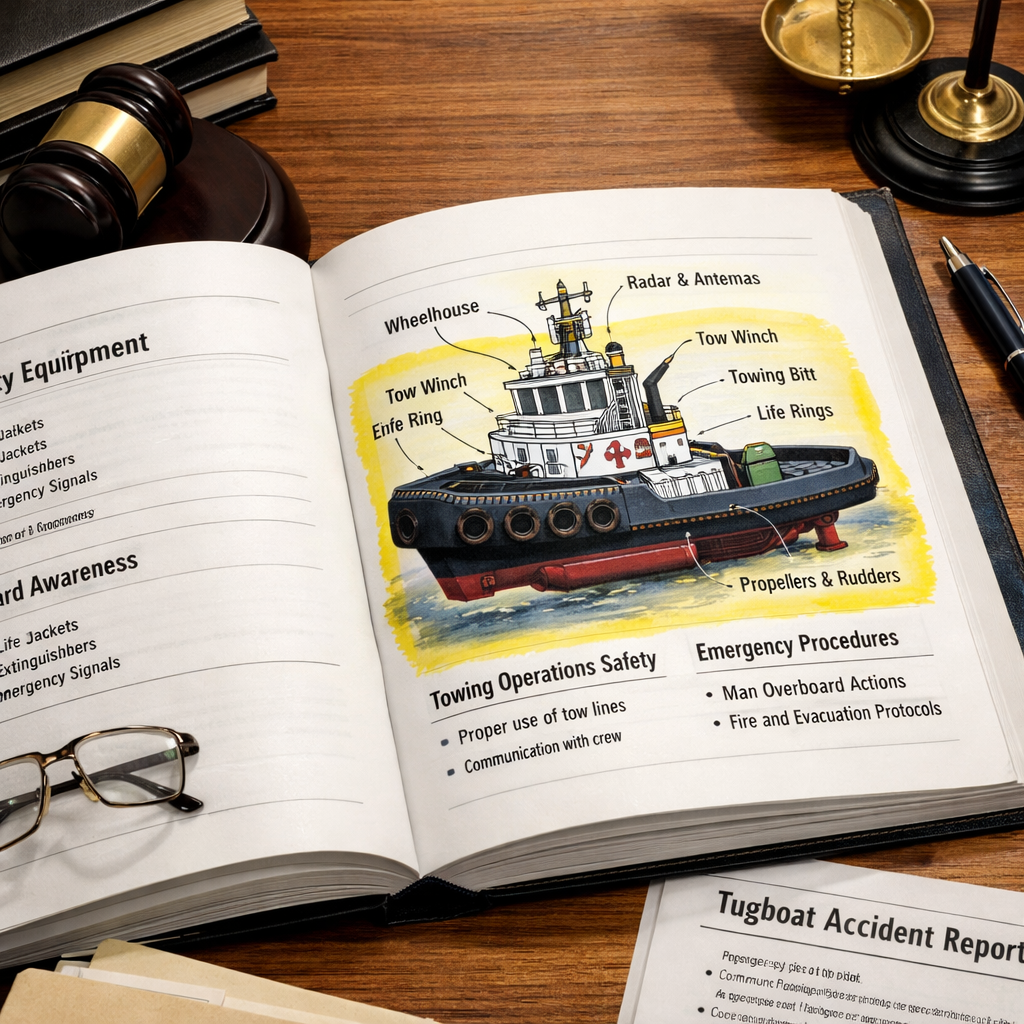
Understanding Compensation and Claims Process
When you file a tugboat injury claim, there are three main streams of compensation: maintenance‑and‑cure benefits, negligence damages, and statutory damages under the Jones Act.
Maintenance‑and‑cure pays for medical care and a daily living stipend until you reach maximum medical improvement. These benefits are no‑fault, meaning you don’t have to prove employer blame.
Negligence damages cover lost wages, pain‑and‑suffering, and future earnings. To win these, your lawyer must show the employer or vessel owner failed to follow safety rules.
Statutory damages under the Jones Act can add a multiplier for punitive purposes if the employer’s conduct was especially reckless.
Statutes of limitation vary by state but usually run two to three years from the date of injury. Missing the deadline can bar your claim entirely.
Because the process can stretch over years, keep detailed records of every medical bill, wage statement, and communication with insurers.
Bottom line: Knowing the claim types and timelines helps you and your lawyer plan a winning strategy.
Tips for Preparing Your Case and Working with Your Lawyer
Preparation is half the battle. Below are practical steps you can take right after an accident.
Document the Scene
Take photos of the tugboat, any visible damage, and your injuries. If you can, record a short video describing what happened while the scene is fresh.
Gather Witness Info
Ask fellow crew members for their names and phone numbers. Even a brief statement about unsafe practices can be powerful.
Secure Medical Records
Visit a doctor who specializes in occupational injuries. Ask for a detailed report that links your injuries to the tugboat incident.
Preserve Evidence
Your lawyer may send an evidence‑preservation letter to the tugboat company. This stops them from destroying logs, maintenance records, or video footage.
When you meet with your lawyer, bring a folder with all of the above. The more organized you are, the faster the attorney can build a case.
Ask your lawyer about their communication plan. Some firms give you a case portal where you can track updates, while others prefer email summaries.
Finally, stay realistic about settlement offers. Insurers often propose low amounts early on. Your lawyer can evaluate whether the offer covers your full medical costs and future earnings.
Bottom line: A well‑prepared file gives your tugboat accident lawyer the ammunition needed to win.
FAQ
What does a tugboat accident lawyer do?
A tugboat accident lawyer handles maritime law, files claims under the Jones Act, and negotiates with insurers. They gather evidence, interview witnesses, and fight for compensation covering medical bills, lost wages, and pain‑and‑suffering. Their expertise ensures you receive the benefits you’re entitled to, even if the accident was partially your fault.
How long do I have to file a claim?
Most states impose a two‑ to three‑year statute of limitations for maritime injury claims. The clock starts on the day of the accident. Filing early helps preserve evidence and prevents the insurer from arguing that the claim is stale.
Can I claim if the tugboat was old or poorly maintained?
Yes. If the vessel was unseaworthy, meaning it lacked proper maintenance or safety equipment, you can sue the owner for negligence. Documentation like maintenance logs or safety inspection reports strengthens your case.
Do I have to prove the employer was at fault?
No. Maintenance‑and‑cure benefits are no‑fault, so you receive medical care and a stipend without proving negligence. However, to recover additional damages for pain‑and‑suffering or lost future earnings, you’ll need to show the employer breached safety standards.
What if I was partially at fault?
Maritime law still allows recovery even if you share some blame. The compensation may be reduced proportionally, but you still receive benefits for the portion of the injury caused by the employer’s negligence.
How are damages calculated?
Damages include actual medical costs, lost wages, and a multiplier for pain‑and‑suffering. Future earnings are projected based on your work history. Courts also consider the severity of the injury and any lasting disability when setting a final amount.
Do I need to pay my lawyer up front?
Most tugboat accident lawyers work on a contingency basis. This means they only get paid if you win or settle. Their fee is taken as a percentage of the final award, so you won’t owe out‑of‑pocket fees during the case.
What if my claim is denied?
If an insurer rejects your claim, you can appeal or file a lawsuit. Your lawyer will review the denial letter, gather additional evidence, and may file a complaint in federal or state court to challenge the decision.
Conclusion
Being injured on a tugboat is stressful, but you don’t have to face the legal maze alone. By targeting a lawyer who knows the Jones Act, tapping into proven firms, and using free government and nonprofit resources, you set yourself up for a stronger claim.
Take the steps we outlined: gather evidence, reach out for a free consultation, and choose the firm that matches your comfort level and track record. The sooner you act, the better your chances of getting the full compensation you deserve.
When you’re ready, start with a no‑cost case review and let a seasoned tugboat accident lawyer guide you through the process. Your health, future earnings, and peace of mind are worth it.
Bottom line: With the right lawyer, resources, and preparation, you can secure the benefits you’re owed and move forward with confidence.