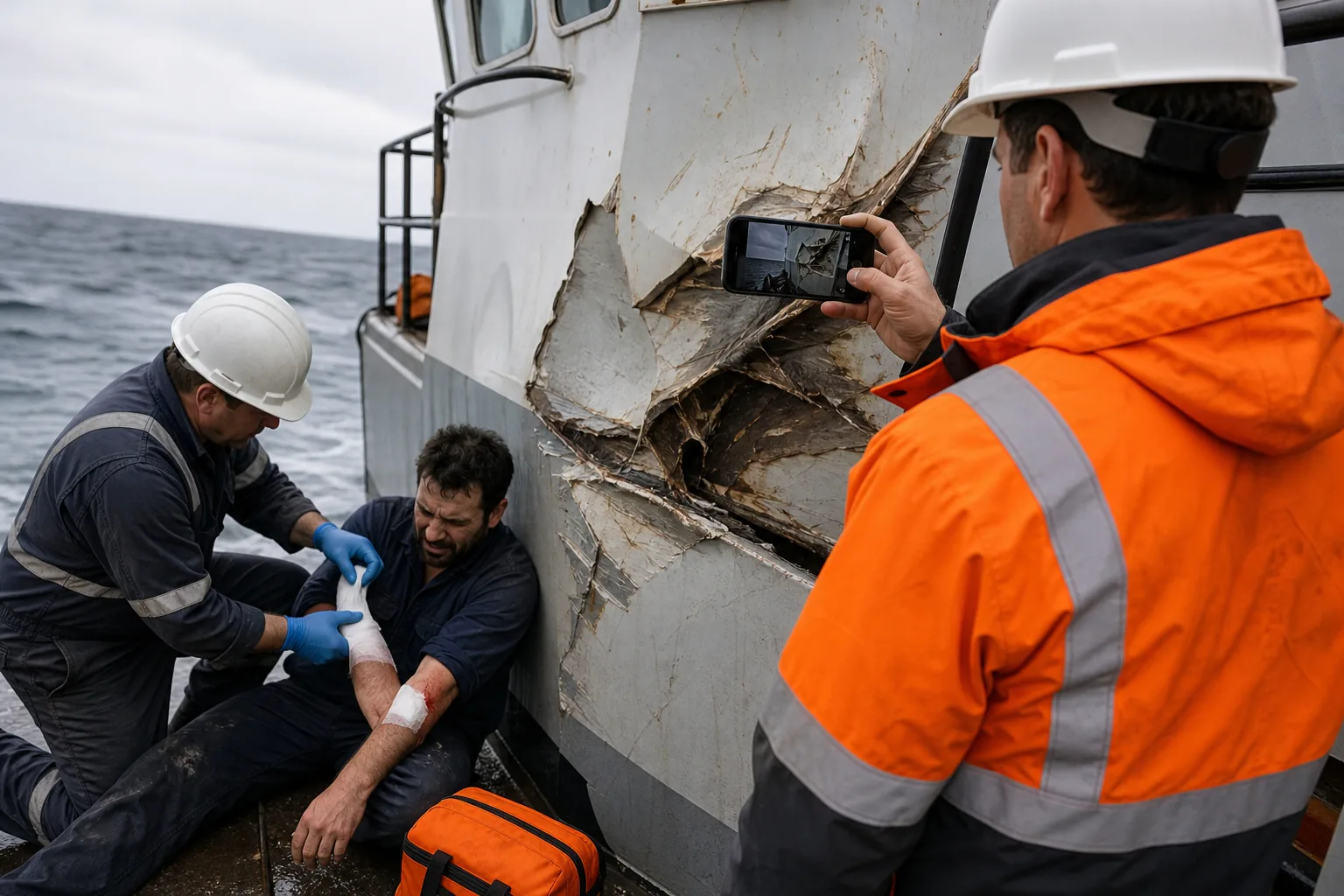
How to Respond to an Offshore Oil Rig Injury

If you’ve just been hurt on an offshore oil rig, you need a clear plan fast. The steps below walk you through getting treatment, documenting the event, figuring out the law, and protecting your rights.
Step 1: Get Medical Care and Report the Offshore Oil Rig Injury
First, get professional medical attention right away. Even if the pain seems minor, offshore injuries can hide serious damage that shows up later. Call the rig’s medical team, have them assess you, and request a full exam. Keep any medical reports, they become core evidence later.
Once you’re stable, the incident must be reported to the proper authorities. UK offshore operators follow a strict reporting regime that includes the Reporting of Oil and Gas Incidents (ROGI) form. The form must be filed within ten working days, and a phone call is required for major injuries. The requirement is spelled out in the UK offshore incident reporting regulations. Missing the deadline can trigger enforcement action.
After the phone call, follow up with the written ROGI report. Use the best information you have at the time; you can submit a partial form and update it later. The goal is to create a paper trail that shows you acted promptly.
For ongoing care, consider tools that simplify follow‑up appointments. Ethon AI hospital appointment platform lets you book and track recovery visits without paperwork delays, helping you stay on schedule while you heal.
Step 2: Document the Accident and Preserve Evidence
Accurate records are your strongest use. Write down the date, time, weather, and exactly what you were doing when the injury occurred. Note who was present, which equipment was involved, and any safety warnings that were ignored.
Take photos or videos of the scene as soon as you can. Capture damaged machinery, slippery surfaces, and any visible hazards. If you can, record statements from coworkers while the memory is fresh. Their accounts can corroborate your version of events.
Secure any physical evidence. Save damaged tools, clothing, or protective gear. Even a torn glove can prove a lack of proper safety equipment. Store these items in a sealed bag and label them with the incident date.
When you talk to supervisors, ask for a written copy of the incident report they file. Compare it to your own notes and point out any discrepancies. This creates a documented chain that shows you’re diligent.
For a deeper legal perspective, on offshore injury claims. Oil Rig Injury Lawyer: A Complete 2026 Guide to Your Rights and Compensation walks you through the claim process step by step.
Step 3: Determine Which Maritime Laws May Apply
Offshore injuries often fall under federal maritime statutes rather than state workers’ compensation. The key question is whether you’re classified as a seaman on a vessel or a worker on a fixed platform. That classification decides which legal path you can pursue.
If you’re a seaman, the Jones Act and general maritime law give you the right to sue for negligence, seek a jury trial, and recover full lost earnings, pain, and mental anguish. Jones Act and general maritime law provide those remedies, unlike a typical workers‑comp claim.
If you work on a fixed platform, the Oil Pollution Act and the Longshore and Harbor Workers’ Compensation Act (LHWCA) may apply instead. Those statutes have different filing windows and benefit structures.
Because the line between a vessel and a platform can blur, courts use the two‑part Chandris test. First, your duties must contribute to the vessel’s mission. Second, you must spend at least about 30 % of your work time on a vessel that is in navigation. The exact numbers vary, but the test helps judges decide which law governs.
Understanding the applicable regime early saves you from pursuing a dead‑end claim. It also guides the type of expert witnesses you’ll need, marine‑safety engineers for vessel cases, or structural engineers for platform cases.
Step 4: Check Filing Deadlines and Assess Potential Compensation
Every maritime claim has a strict statute of limitations. The Jones Act typically allows three years from the injury date, while LHWCA benefits must be claimed within a year, and a written notice of injury is often required within 30 days. Missing any of these windows can bar recovery.
Gather your medical bills, wage statements, and any loss‑of‑future‑earning projections. These documents let you estimate the monetary value of your claim. Keep in mind that seaman claims can include “maintenance and cure” payments, daily living expenses the ship owner must cover while you recover.
When you calculate potential compensation, factor in non‑economic damages like pain, suffering, and mental anguish. These amounts can dwarf medical costs, especially in catastrophic cases.
Before you sign any release, review the settlement language with a qualified maritime attorney. Some releases waive future claims, even if you haven’t reached maximum medical improvement.
Remember, many firms work on a contingency basis, meaning they only get paid if you win. Choose a lawyer with deep maritime experience; the right advocate can secure expert witnesses and handle complex jurisdictional issues.
Step 5: Consult maritimeattorney.ai Before Giving a Recorded Statement
Insurance adjusters and company lawyers often request a recorded statement soon after the incident. That recording can be used against you if you miss a detail or appear unsure.
Before you speak, schedule a free consultation with maritimeattorney.ai. The team will review your medical records, evidence, and the legal classification of your injury. They’ll advise you on what to say, and what to leave out.
During the call, answer only the questions asked. If a question feels invasive or unclear, say you need to check with your attorney first. This protects your rights and preserves the integrity of your claim.
After the consultation, the firm can help you draft a written statement that aligns with the facts you’ve collected. A well‑crafted statement can strengthen your case without exposing you to unnecessary risk.

FAQ
What should I do first after an offshore oil rig injury?
Get medical attention immediately and report the incident to the rig’s safety officer and the relevant offshore authority.
Do I have to file a claim under workers’ compensation?
Not necessarily; many offshore injuries fall under the Jones Act or LHWCA, which can offer higher compensation than state workers’ comp.
How long do I have to file a maritime claim?
Statutes vary: the Jones Act allows three years, while LHWCA benefits often require a written notice within 30 days and a full claim within one year.
Can I talk to the employer’s insurance adjuster without a lawyer?
It’s risky; a recorded statement can be used against you. Speak with a maritime attorney first to protect your rights.
What evidence is most valuable for my case?
Photos of the scene, medical records, eyewitness statements, and any physical evidence like damaged equipment are important.
Will I have to pay legal fees up front?
Most maritime injury lawyers work on contingency, meaning they only get paid if you recover money.
Recovering from an offshore oil rig injury takes quick action and careful documentation. Start with medical care, then lock down evidence, figure out which law applies, watch every deadline, and get expert legal guidance before you speak on record.
Next step: schedule a free case review with maritimeattorney.ai to protect your rights and start building a solid claim.