Maritime Law for Dummies: Beginner's Guide

Maritime law can change the answer to a claim, the court that hears it, and the deadline you face. That makes a sea related injury or dispute hard to handle with ordinary legal advice alone. This beginner's guide walks you through the key checks, records, and next steps in plain English.
Step 1: Check Whether Maritime Law Applies
Start by tying the event to navigable water or a vessel. Maritime law for dummies becomes much easier when you ask two plain questions: where did it happen, and what work or activity caused it?
In the United States, maritime rules may apply to incidents on oceans, bays, rivers, lakes, ports, and other waters used for interstate or foreign trade. The exact test depends on the claim. A worker hurt aboard a vessel may have a different path from a passenger who slipped on a cruise ship. A cargo dispute may turn on the shipment contract instead.
Write down the location with as much detail as you can. Include the vessel name, dock, terminal, offshore site, river mile, or work platform. Then describe the activity. Was the person loading cargo, repairing equipment, fishing, operating a recreational boat, or traveling as a passenger?
Do not assume that a job near water counts as maritime work. A person who works in an office beside a port may face ordinary employment law. A person who spends part of the workday aboard a vessel may qualify for special protections, but the legal test depends on the facts.
For a plain overview of the main terms, Maritime Law Basics: What You Need to Know can help you sort the first questions before you seek case specific advice.
Keep the first review factual. Avoid labels such as “seaman” or “longshore worker” until someone checks the legal definition against the person's actual duties.
Step 2: Identify the Rules and Court That Govern the Matter
Maritime law for dummies often feels confusing because several rule sets can overlap. Your next task is to identify the claim first, then identify the court and law tied to it.
Common claim types include an injured seafarer's negligence claim, a maintenance and cure claim, a cargo loss claim, a collision claim, a salvage dispute, and a passenger injury claim. Each one can bring its own defenses and filing rules. A written ticket or shipping contract may also contain a forum clause, arbitration clause, or short notice period.
Federal courts have authority over many admiralty and maritime cases, but a state court may hear some claims too. The choice can affect procedure, available remedies, and how a judge handles the case. The United States Courts overview of admiralty and maritime cases explains that these cases can involve disputes over vessels, cargo, injuries, and maritime contracts.
Make a short rule map before you speak with a lawyer. Put each fact beside the rule it may trigger. This keeps a dramatic detail from hiding a more important contract term or deadline.
Rules outside the United States may differ. A vessel, claimant, or contract tied to another country can bring treaty rules or a foreign court into the picture. Treat the table as a sorting tool, not a legal answer.
Step 3: Classify the Incident and Check Legal Deadlines
Classify the event before you count time. A maritime law for dummies checklist should separate the type of claim from the date of injury or loss.
Start a timeline with the exact date, local time, and place. Add the date when you first reported the event. Include each medical visit, notice to an employer or carrier, repair estimate, cargo inspection, and payment offer.
Then look for every deadline source:
- A statute may set the time to file a lawsuit.
- A passenger ticket or cargo contract may require earlier written notice.
- A government claim may use a separate notice process.
- An insurance policy may set its own proof or notice terms.
- A court order may impose a deadline after a case begins.
Do not rely on a single general rule. For example, federal law provides a three year limitation period for many personal injury or death claims under 46 U.S.C. § 30106, but another law, contract, or claim type may change the result. The statutory text is available through the official text of 46 U.S.C. § 30106.
A notice deadline can arrive before a lawsuit deadline. Missing notice may weaken a claim even when the filing period appears open. Passenger tickets are especially important because the terms may sit in small print or in a link sent during booking.
Preserve the original documents. Save ticket emails, bills of lading, pay records, texts, and photographs in their first format. Do not edit the files or rely only on screenshots.
If a deadline may arrive soon, treat that as an emergency. An online service such as maritimeattorney.ai can help organize the basic facts for an initial review, but only a qualified lawyer who knows the case can advise on filing or notice.
By now you should have a dated timeline and a list of every possible notice or filing requirement. Never wait for a final medical diagnosis before checking the clock.
Step 4: Gather Evidence and Estimate Potential Damages
Evidence gives a maritime claim its shape. In a maritime law for dummies review, separate what you know from what you suspect.
Build one folder for the event and one folder for financial loss. Label each file with the date and a short description. Keep the originals. Store a backup in a safe place that other people involved in the case cannot change.
What to collect after an injury
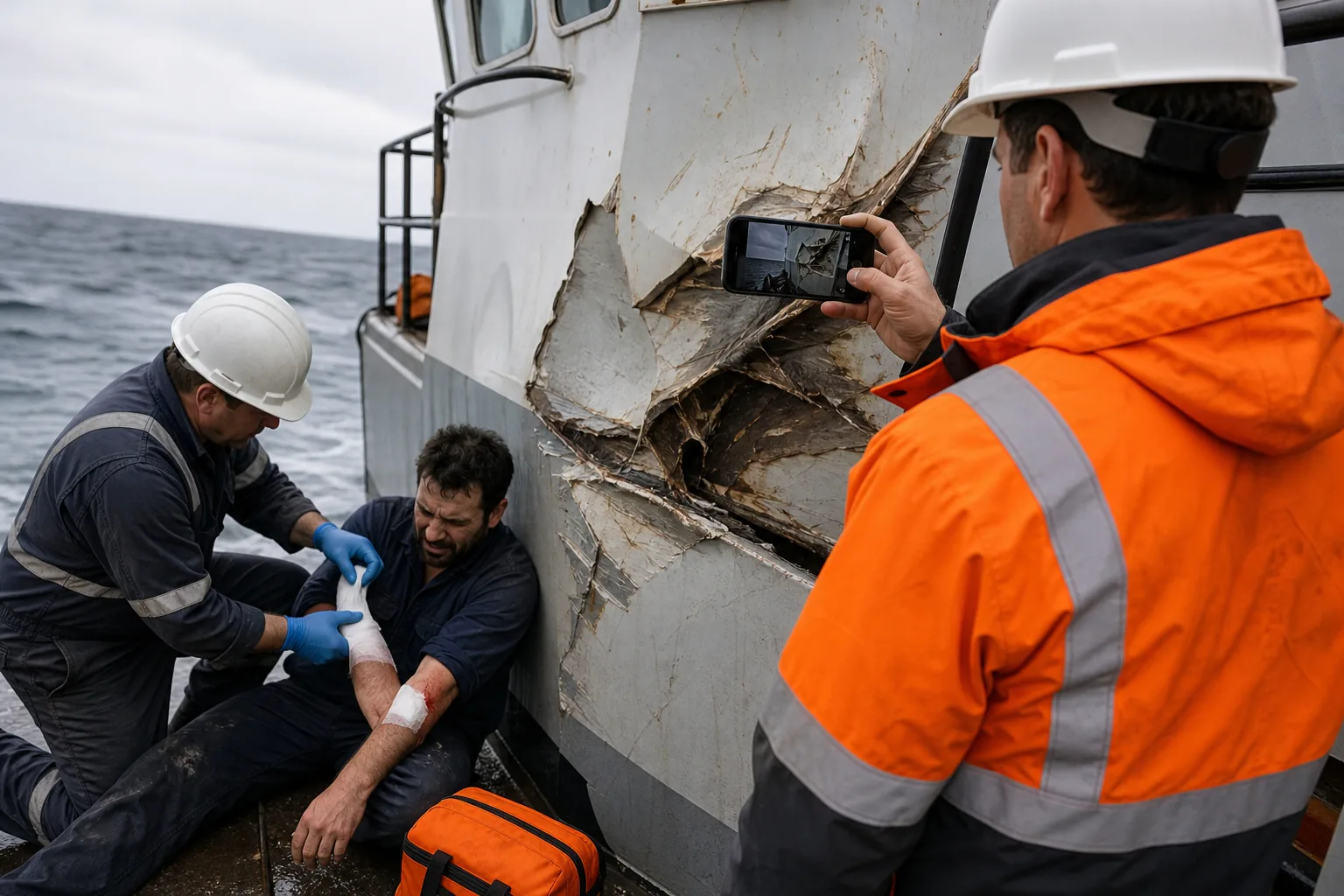
- Photos of the deck, ladder, machinery, weather, lighting, and warning signs.
- The incident report, safety report, and any written statement you gave.
- Names and contact details for witnesses, without coaching their accounts.
- Medical records, bills, prescriptions, work restrictions, and travel costs.
- Pay records that show missed work or a change in duties.
Ask for records in writing when possible. A vessel may have maintenance logs, inspection records, training files, bridge data, camera footage, and crew statements. Some records disappear through routine retention policies, so a lawyer may send a preservation demand.
What to collect after cargo loss or vessel damage
Gather the contract, bill of lading, survey report, delivery receipt, repair estimate, and photos taken before loading. Note who had custody at each handoff. A gap in that chain may matter more than the final damage total.
Estimate losses in separate lines. Include medical care, lost wages, repair costs, cargo value, storage, survey fees, and other documented expenses where the law allows them. Keep projected losses apart from paid bills. A spreadsheet can show the math, but it cannot prove that every item is legally recoverable.
Do not post a detailed account online or argue with an insurer in writing. A casual message can later appear as an admission, even if you wrote it while upset.
Step 5: Choose the Safest Next Action for Your Situation
The safest next action depends on urgency, harm, and the strength of the records. This final maritime law for dummies step is about choosing a path without damaging your position.
Seek urgent medical care first when someone is hurt. Tell the provider how the injury happened and keep every discharge paper. If the employer controls treatment, ask for the instructions in writing and keep your own record of each visit.
Report the event through the required channel. Be accurate and brief. State the date, place, and injury or loss. Do not guess about fault. Do not sign a release or a settlement form before you understand what rights it ends.
Use this decision rule:
- Immediate danger: Get to safety and contact emergency services through the proper local channel.
- Serious injury or death: Preserve evidence and seek maritime legal advice at once.
- Possible deadline problem: Give a lawyer the timeline the same day.
- Small property dispute: Gather the contract and repair proof before discussing payment.
- Unknown jurisdiction: Avoid signing a release until the governing law is checked.
When you contact maritimeattorney.ai, bring the fact sheet, timeline, contract, and key records. The service can be a useful starting point for sorting a sea related legal question. It cannot replace a licensed attorney's review of the facts, local law, and filing strategy.
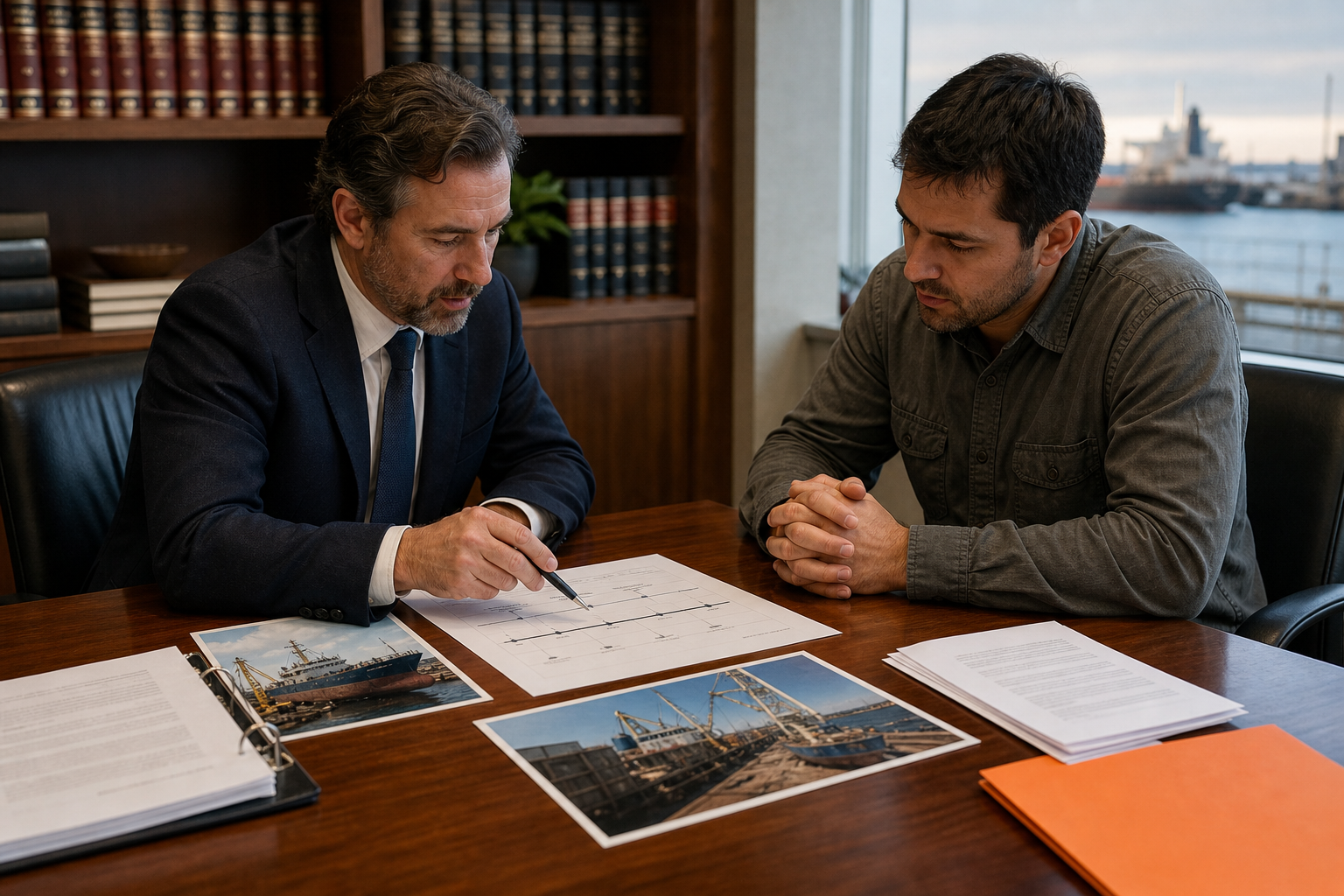
Choose the next action that protects health, preserves proof, and keeps the clock in view. If you are unsure, pause before signing anything that gives up a claim.
Frequently Asked Questions About Maritime Law
What is maritime law in simple terms?
Maritime law is the body of rules used for ships, navigable waters, marine commerce, and many water related injuries. It can include federal statutes, general maritime law, contracts, and international rules. For a maritime law for dummies explanation, start with the place, the vessel, the person's role, and the event that caused the dispute.
Does maritime law apply on a lake or river?
Maritime law can apply on a lake or river when the water has a sufficient connection to commercial or interstate activity. The answer depends on the waterway and the claim. A recreational boating accident may raise different questions from a commercial cargo loss. A local lawyer must check the facts instead of relying on the word “maritime” alone.
How long do I have to file a maritime injury claim?
The deadline for a maritime injury claim depends on the claim type, worker status, contract, and governing law. Some federal personal injury claims use a three year period, but notice rules can arrive sooner. Check the date at once. Waiting for a settlement discussion may not stop the filing clock.
Do I need a maritime lawyer for a boat accident?
You may need a maritime lawyer when the accident involves commercial work, serious injury, death, cargo, a vessel contract, or disputed fault. A routine minor loss may be handled through an insurer, but first check the policy and deadline. maritimeattorney.ai can help you organize the issue before you seek case specific legal advice.
What should I do after getting hurt on a vessel?
After a vessel injury, get medical care, report the event, record what happened, and preserve photos and witness details. Keep copies of medical and work records. Avoid signing a release before legal review. The right claim may depend on your duties aboard the vessel, your employer, the location, and the cause of the injury.
Start with the facts, not a legal label. Write the timeline today, save every document, and ask a maritime lawyer to review the deadline and governing rules before you sign a release or accept a final payment.