Maritime Law Firm Guide: Services, Costs & Choosing the Right Team

Finding the right help for sea‑related legal trouble can feel like a storm. A good maritime law firm can steer you clear of costly mistakes. In this guide you’ll learn what services a maritime law firm offers, how they charge, and how to choose the best one for your business.
We’ll break down the basics, show real examples, and give step‑by‑step tips you can act on today. By the end you’ll know exactly what questions to ask and what red flags to watch for.
Understanding Maritime Law: Foundations for Your Business
Maritime law is also called admiralty law. It covers anything that happens on navigable waters , seas, rivers, lakes. The rules are a mix of U.S. statutes and international treaties. Think of it as a rule book that ships, crews, and cargo owners must follow.
When a ship sails beyond 24 miles from shore, the flag state’s law applies. A British‑flagged vessel 30 miles off New York follows British law, not U.S. law. Inside the U.S. contiguous zone (up to 24 miles) the Coast Guard can step in for things like smuggling.
Because the law is federal, most cases end up in federal court. Small claims courts usually can’t hear these disputes.
Understanding who has authority helps you know where to file a claim. If you’re unsure, a maritime law firm can map the jurisdiction for you.
For a deeper dive, see the primer from Friedman James on maritime law basics. It explains how courts decide which law applies and why the federal system matters.
Two paragraphs later we’ll look at how firms use this knowledge in practice.
Another trusted source is Holland & Knight’s maritime practice page. They show how a firm can handle everything from shipbuilding contracts to pollution claims.
Knowing the foundation lets you talk the same language as your lawyer. It also helps you spot hidden costs later on.
And that’s just the start. Let’s move to the services a maritime law firm can provide.
Key Services Offered by a Maritime Law Firm
A maritime law firm does more than chase after wrecks. It helps with personal injury, cargo loss, ship arrest, and environmental claims.
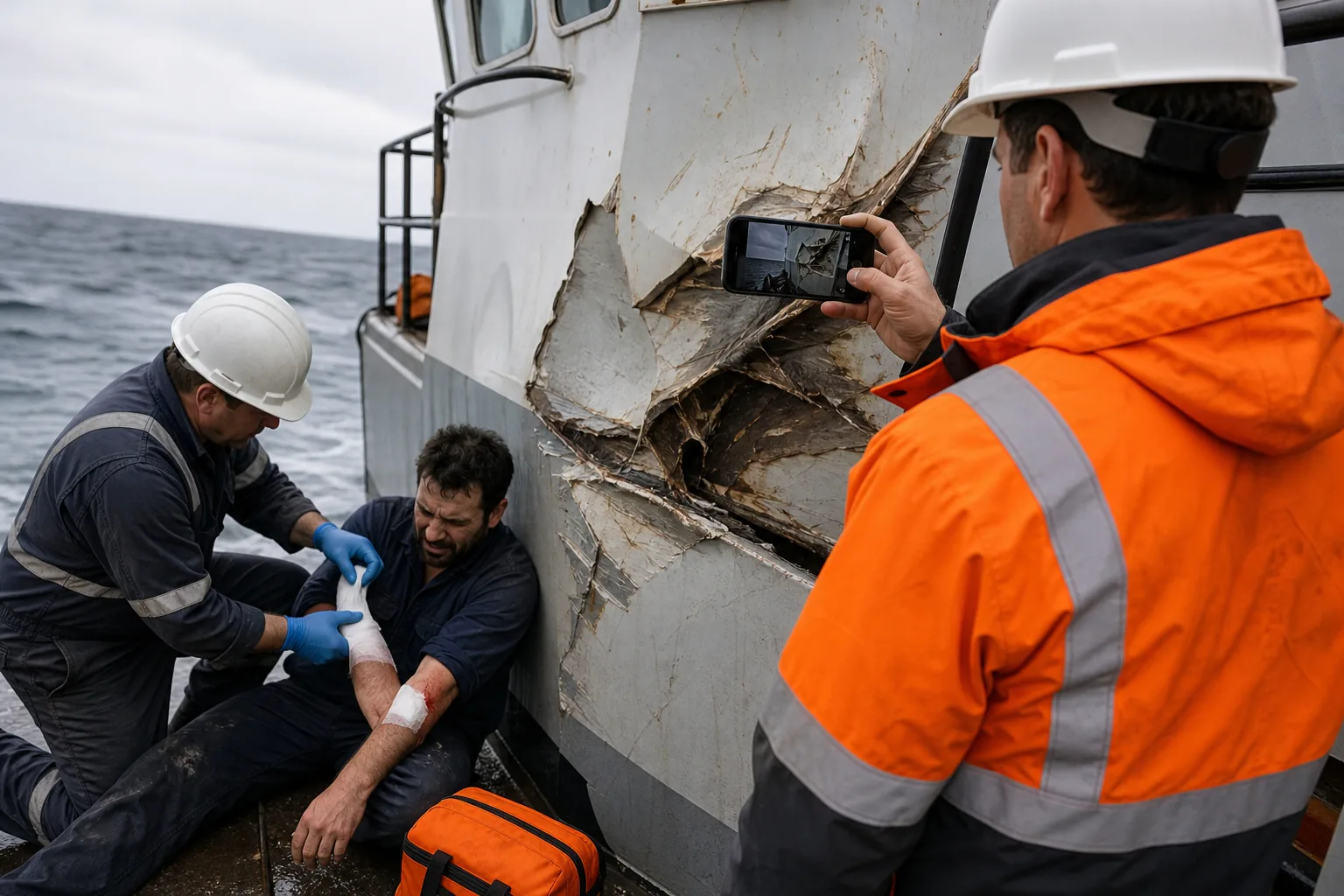
Injury cases often involve the Jones Act. A lawyer will gather medical records, prove the employer’s fault, and chase compensation for seamen, deckhands, or offshore workers.
Cargo claims are another big area. If a shipment is damaged or delayed, the firm can invoke the Carriage of Goods by Sea Act or the Hague‑Visby Rules to get you paid.
Insurance disputes also come up. A firm may fight a hull‑and‑machinery insurer or a Protection & Indemnity club over coverage limits.
Salvage awards are a niche service. When a crew saves a ship or cargo, a maritime law firm can negotiate the award amount.
Environmental cases, such as oil spills, bring the Oil Pollution Act of 1990 into play. The firm can defend a shipowner or seek damages for the affected parties.
Ship arrest is a unique tool. If a crew isn’t paid, a lawyer can have a court “arrest” the vessel in port until wages are settled.
These services often overlap. For example, a collision may trigger personal injury claims, cargo loss, and salvage awards all at once.
For more detail on what a maritime lawyer does, check BoatLaw’s overview. It lists the most common case types and explains how lawyers protect injured workers.
Legal case summaries can help you see how courts have ruled. See the collection at PacLII maritime case summaries for real examples.
Ready to protect your rights? Try our solution free →
One more thing: if you’re looking for a specialist near you, you might want to read a guide on choosing the right attorney. That’s where our internal link comes in.
Guide to Choosing the Right Maritime Law Attorney in 2026
Now let’s see how a firm works behind the scenes.
How a Maritime Law Firm Works: Video Walkthrough
Most firms start with a free intake call. They ask about the incident, dates, and parties involved. This helps them decide if they can help and which laws apply.
Next they sign a retainer. The agreement spells out fees, scope, and confidentiality.
After that, the firm builds a case file. They collect logs, witness statements, and expert reports. For a collision, they may hire a naval architect to model the impact.
When the evidence is ready, the firm files a complaint in federal court. The opponent can file motions, and the firm must respond quickly.
If the case settles, the firm drafts a settlement agreement. If it goes to trial, they prepare witnesses, exhibits, and opening statements.
Watch the walkthrough video below to see these steps in action.
For a transcript of a similar video, see the YouTube transcript video. It breaks down each phase of a maritime case.
Behind the scenes, the firm’s staff includes paralegals, investigators, and billing specialists. Each plays a part in moving the case forward.
Finally, the firm keeps you posted. Regular updates help you stay calm and plan your next steps.
Cost Structures and Billing Practices
Maritime cases often use a contingency fee. That means you pay only if you win. The fee is usually higher than for a car accident because the work is more complex.
One firm charges a flat 40% of any settlement. They cover all expenses up front , filing fees, expert reports, and travel costs.
If the case settles, the firm takes its cut and you keep the rest. If it fails, you owe nothing.
Some firms use an hourly rate instead. They bill for every minute spent on the case. This can add up quickly if the case drags on.
Another model is an “escalating fee” that rises as the case progresses. That can be risky if you don’t get a big payout.
When you talk to a maritime law firm, ask for a clear fee schedule. Get it in writing so there are no surprises.
For an example of a contingency model, read Jones Act Law’s fee page. It explains why the rate is higher for maritime work.
Two paragraphs later you’ll see a practical tip for comparing fee structures.
Tip: Ask the firm to itemize expected costs before you sign. Knowing the budget helps you avoid hidden fees.
Remember, the cheapest fee isn’t always the best. Experience can make a huge difference in the final payout.
Choosing the Right Maritime Law Firm: Capability Comparison
Not all maritime law firms are equal. Some focus on personal injury, others on commercial litigation or environmental defense.
First, look at the firm’s track record. How many Jones Act cases have they won? What size settlements do they achieve?
Second, check the team’s expertise. Do they have naval architects, marine insurers, and environmental specialists on staff?
Third, consider geography. A firm with offices near major ports can act faster when a vessel is arrested.
Finally, assess client service. Do they assign a single point of contact? Do they provide regular updates?
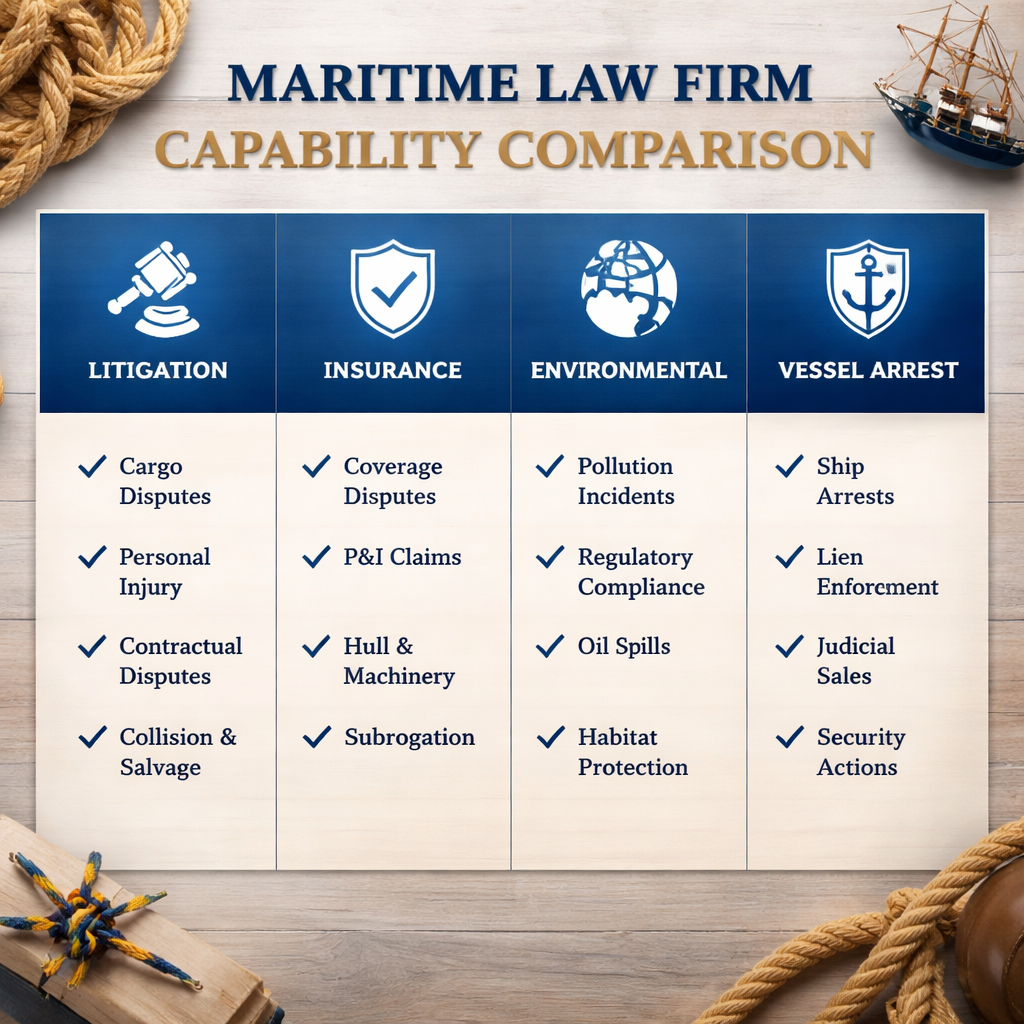
Here’s a quick matrix you can use to score firms.
| Criteria | Score (1‑5) | Notes |
|---|---|---|
| Case win rate | — | Higher is better |
| Average settlement | — | Look for amounts above industry median |
| Specialist staff | — | Naval architects, environmental experts |
| Port proximity | — | Near New York, Houston, LA, etc. |
| Client communication | — | Dedicated liaison, regular reports |
Use this table during your interviews. Fill in each firm’s score and add up the total. The highest total often points to the best fit.
Another tip: ask for references from past clients in the same industry. Real feedback beats marketing copy.
And remember to verify the firm’s standing with the bar. A clean record is a must.
For a broader view of how large firms rank, see the list of America’s top law firms by revenue. It shows that big firms often have deep maritime benches, but midsized firms can offer more personalized service.
External source: America’s 100 Largest Law Firms Ranked by Revenue
Another source: Maritime UK Capability Brochure
By weighing these factors you can pick a maritime law firm that matches your risk profile and budget.
Conclusion
Choosing the right maritime law firm can save you time, money, and headaches. We covered the legal foundations, the services you can expect, how a firm runs a case, and the ways firms charge.
Use the comparison table to score each firm, ask the right fee questions, and verify their track record. When you feel confident, reach out and start the intake call.
Ready to protect your shipping or offshore venture? Start your free consultation today and see how a skilled maritime law firm can boost your chances of a successful outcome.
FAQ
What does a maritime law firm handle?
A maritime law firm deals with any legal issue that happens on navigable waters. That includes personal injury under the Jones Act, cargo loss, ship collisions, salvage claims, pollution disputes, and ship arrests. They know which federal statutes and international rules apply, so they can guide you through the right court and process.
How are fees usually structured?
Most maritime law firms work on a contingency fee, often around 40% of any settlement. Some may bill hourly or use a sliding scale. Ask for a written fee agreement and an itemized estimate of likely costs before you sign.
Do I need a maritime law firm if my incident happened in a river?
Yes. Admiralty law covers all public waters, including rivers and lakes. A maritime law firm will know the specific jurisdiction and can file your claim in the proper federal court.
Can a maritime law firm help with offshore oil rig claims?
Absolutely. Offshore energy disputes, such as rig injuries or contract breaches, fall under maritime law. A firm with offshore experience can handle the complex statutes and insurance issues that arise.
What should I ask during a first consultation?
Ask about the firm’s experience with cases like yours, their success rate, who will handle your case day‑to‑day, and how they bill. Also request references from similar clients and a clear timeline for the case.
How long does a typical maritime case take?
Timelines vary. Simple cargo claims may settle in a few months, while Jones Act injury cases can take a year or more, especially if they go to trial. Your firm should give you a realistic schedule based on the facts.