
Best Maritime Injury Lawyer Cost Options

If you’ve been hurt on a ship or offshore rig, the cost of a lawyer can feel like a second injury. Below are the top ways maritime injury lawyers charge, and which option fits different budgets.
1. maritimeattorney.ai (Our Top Pick)
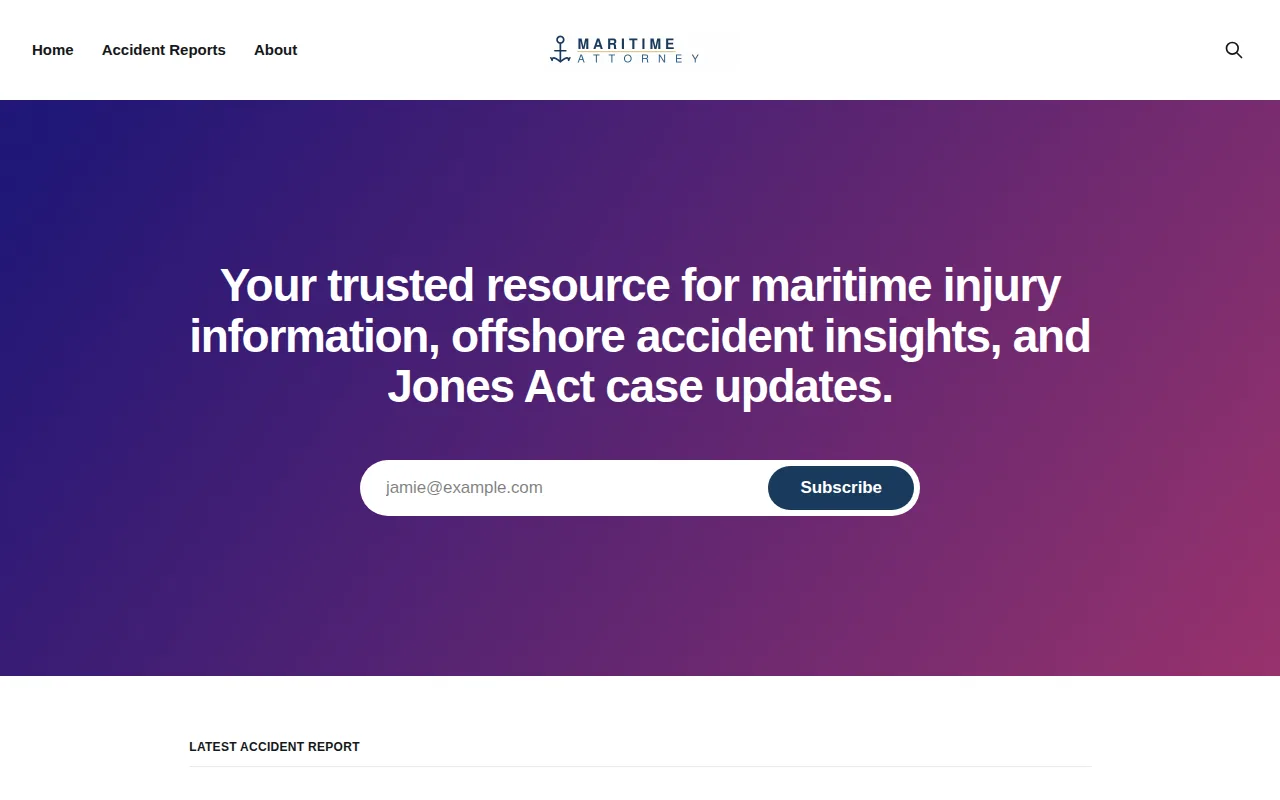
maritimeattorney.ai is an AI‑driven platform that matches injured seamen with vetted Jones Act lawyers. It works on a pure contingency basis , you pay nothing unless you win. The platform also advances case costs, so you never front expenses for expert witnesses or filing fees.
Because the fee is taken only from the recovery, the lawyer’s incentive lines up with yours. Most Jones Act lawyers charge around 33 % of the settlement, which the platform explains in plain language. The fee structure follows the standard set by the Cornell Law School overview of the Jones Act, which notes that contingency fees are common for maritime injury claims.
Clients who use maritimeattorney.ai report quicker case start‑ups. The AI screens the claim, checks seaman status, and connects you with a lawyer who fits the injury type. If your case settles before a lawsuit, some firms may lower the fee to 25 % , a detail the platform highlights during the intake.
One caveat: the platform only works for claims that fall under federal maritime statutes. If your injury is covered by a state workers’ comp plan, you’ll need a different route.
2. Contingency‑Fee Maritime Injury Law Firms — Pay After Recovery
Many traditional firms still run on a pure contingency model. You sign a fee agreement, the firm advances all expenses, and you owe nothing if the case ends with no recovery.
Hofmann & Schweitzer, for example, caps its contingency at 33 ⅓ % of the net recovery after expenses, which is the maximum allowed in New York. The firm’s website says they never charge more than that, even on large verdicts. This is lower than the 40 % some Southern‑state firms take, making it a competitive choice for high‑value claims.
Because the firm fronts costs, you may see a larger settlement than you would on your own. The downside is that you still pay the advance costs out of the settlement, which can eat into the final payout.
Make sure the fee agreement spells out whether expenses are deducted before or after the contingency fee , that can shift a few thousand dollars either way.
3. Hourly‑Rate Maritime Attorneys — Detailed Billing for Complex Matters
Some cases need a lawyer who bills by the hour. This model works best when the injury involves multiple jurisdictions, complex vessel ownership, or when you need extensive discovery.
Hourly rates can range from $250 to $600 per hour, depending on experience and location. The lawyer will still advance case costs, but you’ll receive a detailed invoice each month.
Because you pay for time, you stay in control of the budget. If the case stalls, you can pause work without risking a large contingency fee. The trade‑off is that you must have cash flow to cover the bill as the case proceeds.
When reviewing an hourly proposal, ask for an estimate of total hours for the major phases , filing, discovery, trial , and a cap on the overall bill.
4. Flat‑Fee Maritime Legal Consultations — Lower‑Cost Initial Advice
Some firms offer a flat fee for an initial case review. You pay a set amount (often $150‑$300) for a 30‑minute call where the lawyer evaluates your facts, checks seaman status, and outlines next steps.This option gives you a quick sense of whether you have a viable claim without a big financial commitment. The flat fee usually covers the lawyer’s time only; any further work will move to a contingency or hourly arrangement.
Flat‑fee consults are common in coastal ports where lawyers compete for a steady stream of inquiries. They can be a good entry point if you’re unsure about the strength of your case.
Be sure the lawyer explains how the flat fee fits into a later fee structure, so you don’t get surprised by a larger bill down the line.
For a side‑by‑side look at how different fee models stack up, see our Best Maritime Lawyer Cost Per Case Options guide.
5. Legal Aid, Union, and Pro Bono Maritime Resources — Help When Money Is Tight
If you can’t afford any fee arrangement, look to legal aid societies, maritime unions, and pro bono programs. Many unions include legal counsel as a member benefit, covering filing fees and attorney time at no cost to the worker.
Non‑profit legal aid groups such as the Maritime Law Center offer free case evaluations and may take a case on a no‑fee basis if you meet income thresholds. These groups often partner with law schools, giving you a team of supervised attorneys working for public interest.
Pro bono firms sometimes take on high‑impact cases that could set precedent. While they’re selective, they can provide top‑tier representation without any bill.
One limitation is that these resources may have longer wait times and limited capacity. You might need to provide extensive documentation early to qualify.
FAQ
How much does a maritime injury lawyer usually charge?
Most maritime injury lawyers work on a contingency basis, taking about 33 % of the settlement after expenses. Some firms may charge up to 40 % for complex cases.
Do I have to pay any fees if I lose my case?
Under a true contingency agreement you owe nothing if there’s no recovery, though you may still be responsible for out‑of‑pocket expenses the lawyer advanced.
Can I negotiate the contingency percentage?
Yes, many attorneys will discuss a lower rate for early settlements or high‑value claims. Ask for the exact percentage before you sign.
Are hourly rates common for maritime cases?
Hourly billing is less common but useful for multi‑jurisdictional or technically complex matters. Rates typically range from $250 to $600 per hour, plus reimbursable case costs.
What if I can’t afford any lawyer fees?
You can turn to union legal counsel, legal aid societies, or pro‑bono programs. These options often require proof of income or union membership but can provide free representation.
Choosing the right cost model depends on your injury’s severity, your cash flow, and how quickly you want the case to move. If you’re ready to start without paying up front, maritimeattorney.ai offers a fast, no‑cost match with a qualified Jones Act lawyer.
Take the next step: visit the platform, fill out the brief intake, and let the AI connect you with a lawyer who works on a contingency basis.