How to Sue a Cruise Line: Step-by-Step Guide
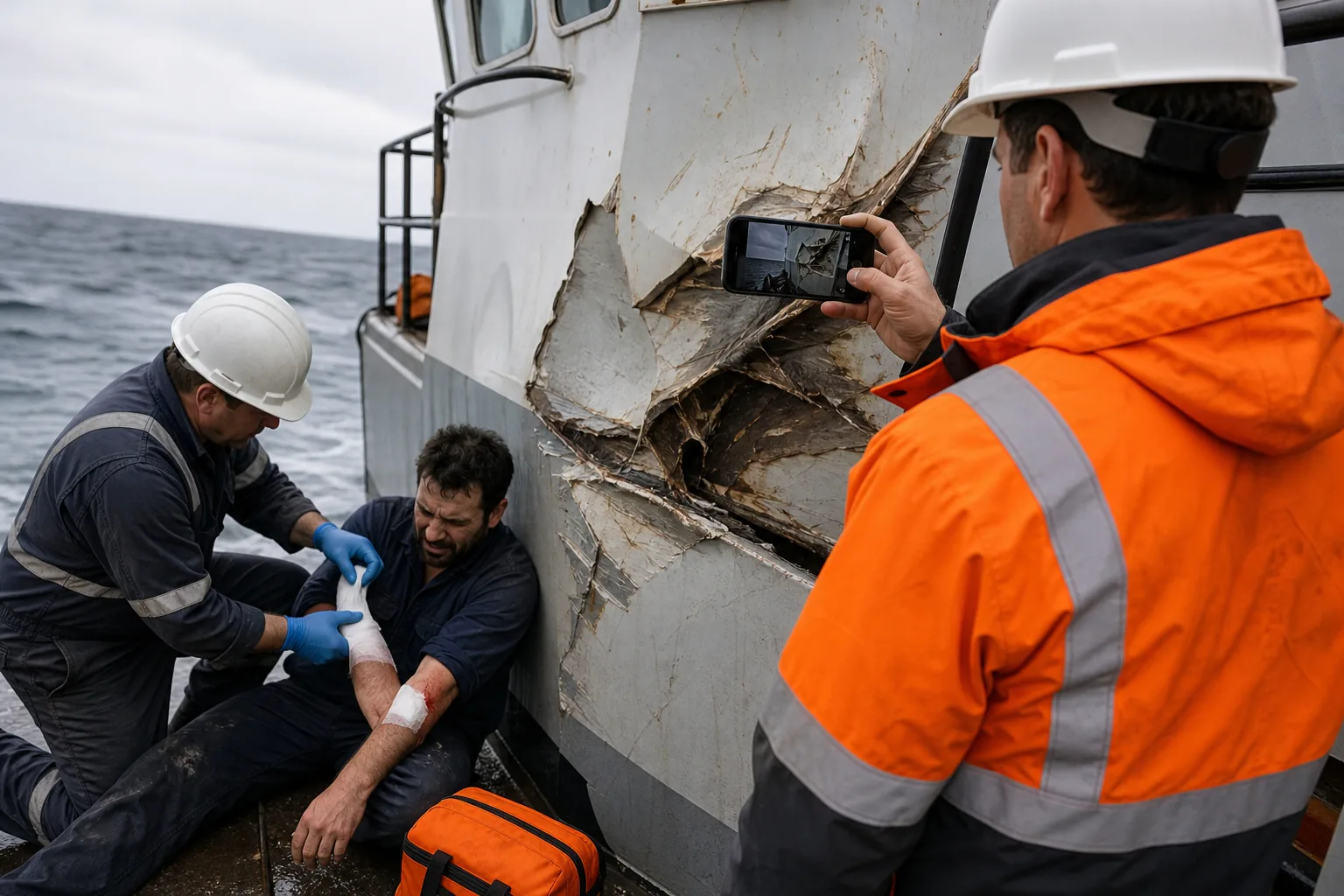
You stepped off the gangway and into a nightmare. A slip on a wet deck. A sickness from bad food. Worse, an assault. The cruise line that promised paradise now feels like a trap. You want to sue. But can you? And how?
This guide shows you exactly how to sue a cruise line. I'll walk you through five steps. From reading your ticket fine print to filing a federal lawsuit. You'll learn the deadlines, the evidence you need, and why you need a special lawyer.
Cruise lines have armies of lawyers. Their contracts are written to protect them, not you. But you have rights. Let's get started.
Step 1: Understand Your Cruise Ticket Contract
Your cruise ticket is not just a receipt. It's a binding contract. A very long one. And it's written by the cruise line's lawyers to make suing as hard as possible.
Every major cruise line puts important limits in this contract. You agree to them just by buying the ticket. Even if you never read them. The law says you are bound.
Here are the four most important things to look for:
| Clause Type | What It Does | Typical Time Limit |
|---|---|---|
| Notice of Claim | You must write to the cruise line within a short window after the incident. Tell them what happened, where, and when. | 6 months (180 days) |
| Statute of Limitations | The deadline to file a lawsuit in court. Miss it and your case is dead. | 1 year from the incident |
| Venue Selection | You must sue in a specific city and court. Often Miami, Florida. No matter where you live or where the incident happened. | — |
| Arbitration | Some claims must go to private arbitration instead of court. Injury and death claims are often exempt. | Varies |
Let's look at a real example. Royal Caribbean's ticket contract says you must give written notice within six months of any injury. Then you have one year to file a lawsuit. And you have to file that suit in Miami-Dade County, Florida. Other lines like Carnival and Norwegian have similar rules.
Notice that many contracts include an arbitration clause for some disputes. Arbitration is a private process like a mini-trial. But for personal injury or death, most cruise lines allow you to go straight to court. The National Arbitration and Mediation (NAM) administers arbitration for lines like Carnival and Royal Caribbean, but their rules say bodily injury claims are not subject to arbitration.
"Your ticket contract is a trap door. The cruise line hopes you'll never find the deadline."
Bottom line: Your ticket contract sets strict time limits and location rules that you must follow or your case will be thrown out.
Step 2: Collect and Preserve Evidence
Evidence is everything. Without it, you have no case. Cruise lines will not preserve evidence for you. They might even destroy it to protect themselves. You have to act fast and grab what you can.
Here's what to do right after an incident on the ship:
- Report it immediately. Go to guest services or ship security. Ask for an incident report. Demand a copy of that report right then and there. If you don't get it on the spot, you never will.
- Seek medical attention. Go to the ship's infirmary. Get checked out. Even if you feel fine. Some injuries take hours to show up. The medical record becomes key evidence.
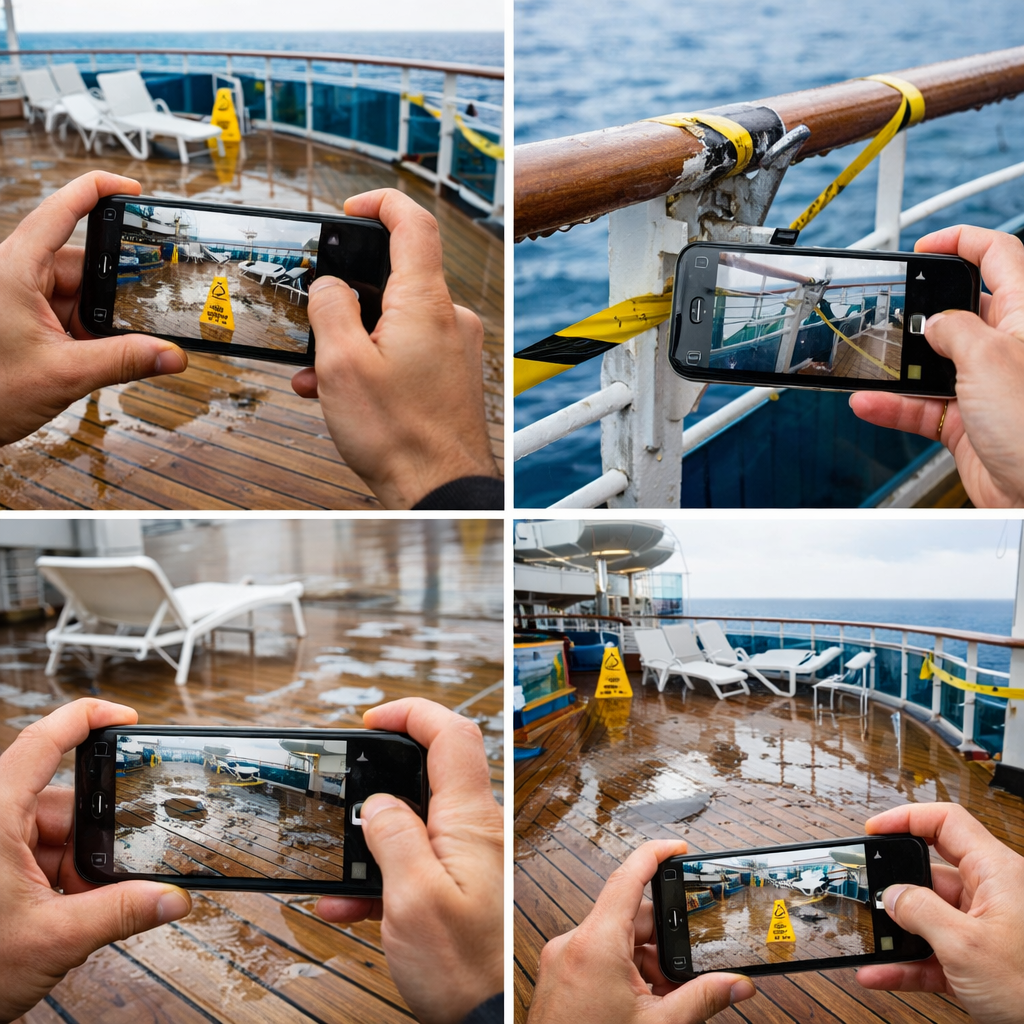
- Take photos and videos. Use your phone. Photograph the dangerous area from every angle. Capture the floor, the stairs, the broken railing. Take a video walking through the area. Do this before anything changes.
- Find witnesses. Get names, cabin numbers, email addresses, and phone numbers of anyone who saw the incident or the condition. Crew members are also witnesses. Write down their badge numbers.
- Keep physical evidence. If you slipped on a wet spot, save the shoes you were wearing. If you got sick from food, save the leftovers or take a photo of the meal. Keep any medical braces, casts, or medication bottles.
According to experienced maritime attorney sources, cruise lines will not preserve photographs they take during their investigation. They are not required to give them to you. That's why you need your own. In a medical negligence case, you also need to request all medical records from the ship's infirmary in writing.
One more thing: if the incident involves a crime, especially a sexual assault, report it to the FBI as soon as you reach port. Do not rely on the cruise line to do that. The FBI has jurisdiction over crimes on the high seas.
Bottom line: Collect evidence immediately , photos, witness info, medical records, and the incident report. The cruise line won't save it for you.
Step 3: Consult with a Maritime Attorney
Do not call your neighbor's cousin who handles car accidents. Cruise ship cases are not like land cases. They are governed by a special set of laws called maritime law, also known as admiralty law.
Maritime law comes from old federal statutes and court decisions going back centuries. It applies to any injury that happens on a navigable waterway. That includes cruise ships in the ocean, rivers, and even lakes.
A regular personal injury lawyer likely has never stepped foot in a federal admiralty case. They don't know about venue selection clauses, notice requirements, or the Jones Act. You need a maritime specialist.
How do you find the right one? Look for a lawyer who is Board Certified in Admiralty and Maritime Law by The Florida Bar. That is the gold standard. Many of the best maritime law firms are based in Miami because that's where most cruise lines require lawsuits to be filed.
Firms like Lipcon, Margulies & Winkleman and Perkins Law Offices focus exclusively on cruise ship injuries. They have recovered millions for passengers. They know the tricks cruise lines use to deny claims.
During your consultation, ask these questions:
- How many cruise ship cases have you handled?
- Are you board certified in maritime law?
- Do you know the specific deadlines in my ticket contract?
- What is your success rate against cruise lines?
- Will you actually take my case to trial if needed?
Most experienced maritime attorneys offer free initial consultations. They work on contingency , you only pay if you win. Use that to your advantage. Talk to two or three firms before picking one. You want a lawyer who makes you feel heard and who has the resources to take on a giant corporation.
If you need more information on what to expect, read our detailed guide on how to file a cruise ship lawsuit for a deeper look at the process.
Bottom line: Hire a board-certified maritime attorney who specializes in cruise ship injury claims , your case depends on it.
Step 4: File a Notice of Claim and Attempt Mediation
Before you can sue, you must send the cruise line a formal written notice. This is not optional. It is required by your ticket contract. Without it, the court will dismiss your case.

The notice must include specific details: the date, time, and location of the incident. Describe what happened and why you think the cruise line was at fault. List your injuries. State the amount of damages you are seeking if possible.
Most ticket contracts say you must send this notice within six months of the injury. For property damage claims, it may be as short as 30 days. Check your contract immediately.
Send the notice by certified mail with return receipt requested. That gives you proof the cruise line received it. Keep a copy. Send it to the address listed in the ticket contract for legal notices.
After you send the notice, many cruise lines require you to try mediation before filing a lawsuit. Mediation is a meeting with a neutral third party who helps both sides negotiate a settlement. It is not binding unless you agree to a deal.
Some lines use NAM (National Arbitration and Mediation) to manage this step. NAM's rules say mediation is voluntary, but in practice, most claims go through a mediation conference. It can save time and money if the cruise line offers a fair settlement.
"The notice period is the first filter. If you miss it, you lose the right to sue , even with a strong case."
Remember, sending the notice does not preserve your claim forever. You still have to file the actual lawsuit within the one-year statute of limitations (or longer for minors or wrongful death). The notice and the lawsuit are two separate requirements. Missing either one kills your case.
Bottom line: Send a detailed written notice within six months, then attempt mediation , but always keep the one-year lawsuit deadline in mind.
Step 5: File a Lawsuit in Federal Court
If mediation fails or is not required, the last step is to file a lawsuit. This must be done in the exact court specified in your ticket contract. For most cruise lines, that is the United States District Court for the Southern District of Florida, located in Miami.
Why federal court? Because maritime law is federal law. The ticket contract often requires you to file in federal court, not state court. The U.S. Supreme Court has upheld these venue selection clauses. In the 1991 case Carnival Cruise Lines v. Shute, the Court said passengers are bound by the forum clause in their ticket.
A maritime lawyer will draft the complaint. The complaint states the facts of your case, the legal basis for suing (usually negligence under maritime law), and the damages you want. Your lawyer will then file it electronically with the court and serve a copy on the cruise line.
Once the lawsuit is filed, the cruise line will respond. They may try to get the case dismissed by arguing you missed deadlines, signed away your rights, or failed to prove negligence. Your attorney will fight those motions.
Discovery follows. Both sides exchange evidence, take depositions (recorded interviews under oath), and gather documents. Cruise lines have massive legal departments and deep pockets. They will try to delay and wear you down.
Most cruise ship cases settle before trial. But your attorney must be willing to go to trial to get the best settlement. According to maritime law as defined by Wikipedia, passengers on common carriers like cruise ships are owed a high duty of care. The cruise line must take reasonable steps to prevent foreseeable harm.
Bottom line: Your lawsuit must be filed in the specific federal court named in your ticket contract, within the time limit, or your case is dead.
Frequently Asked Questions
How long do I have to sue a cruise line after an injury?
Most ticket contracts give you one year from the date of injury to file a lawsuit. You also must send a written notice within six months. For minor children or in a wrongful death case, the deadline can be up to three years under federal law (46 U.S.C. § 30508). Check your ticket immediately because missing either deadline means you lose the right to sue.
Can I sue a cruise line without a lawyer?
Technically yes, but it is a very bad idea. Maritime law is complex. The ticket contract contains traps designed to trip you up. A lawyer who knows how to sue a cruise line can handle the deadlines, draft proper notices, and deal with the cruise line's legal team. Most offer free consultations and work on contingency, so you have nothing to lose.
Where do I have to file a cruise ship lawsuit?
Your ticket contract will specify a specific court. For the largest cruise lines, that is usually the U.S. District Court for the Southern District of Florida in Miami. Visiting the Wikipedia article on maritime law can help you understand federal jurisdiction, but your attorney will know the exact venue. If you file in the wrong place, the case will be dismissed.
What kind of evidence do I need to prove the cruise line was negligent?
You need proof that the cruise line owed you a duty of care, that it breached that duty (acted negligently), that the breach caused your injury, and that you suffered damages. Good evidence includes incident reports, photos of the hazard, witness statements, medical records, and maintenance logs. A maritime lawyer can subpoena records the cruise line tries to hide.
Can I sue for medical malpractice on a cruise ship?
Yes. The cruise line may try to claim the ship's doctor is an independent contractor, not an employee. But courts have held cruise lines vicariously liable for their medical staff's negligence in cases like Franza v. Royal Caribbean. Your attorney will investigate the employment relationship and fight to hold the cruise line accountable.
What if the incident happened on a shore excursion?
It depends on whether the excursion was booked through the cruise line. If you bought it from the ship, the cruise line may be responsible. If you arranged it yourself, the liability lies with the third-party tour operator. Your attorney can analyze the ticket contract to see if the excursion is covered.
Can I get compensation for pain and suffering?
Yes. Maritime law allows uncapped damages for pain and suffering. You can also recover medical bills, lost wages, and other expenses. Unlike some states, there is no cap on non-economic damages in cruise ship injury cases. A skilled attorney will present evidence of the physical and emotional toll of your injury.
What if I missed the notice deadline by a few days?
Missing the notice deadline can be fatal to your case. The courts strictly enforce the contract terms. However, if you can show that the cruise line was not prejudiced by the delay, some judges may allow the case to proceed. Do not gamble on this , act immediately. Contact a maritime attorney the same day you are injured to ensure no deadline is missed.
Conclusion
Suing a cruise line is hard. The system is stacked against passengers. But it is not impossible. Thousands of people have successfully recovered compensation for injuries suffered at sea.
The key is speed. Report the incident. Collect evidence. Read your ticket contract. Find a maritime attorney who knows how to sue a cruise line. Send the notice within six months. File the lawsuit within one year. Follow these steps in order.
Don't let the cruise line's lawyers bully you into silence. You have rights under maritime law. The shortest route to justice is a good lawyer working for you.
Now is the time to act. If you are on a ship, start gathering evidence tonight. If you are already home, pull out your ticket contract and circle the deadlines. Call a board-certified maritime attorney tomorrow morning. Every day you wait narrows your window.
You didn't plan to get hurt. You didn't plan to sue. But now that you're here, do it right. Follow this guide step by step, and you'll have the best chance of getting the compensation you deserve.