
Defense Base Act Lawyer: What You Need to Know

Injured while working on a U.S. overseas contract? You could lose weeks of pay and medical care if you don’t act fast. This guide shows you why a defense base act lawyer matters, how to pick the right one, and what to avoid.
We’ll walk through the law, the benefits, the hiring process, and common pitfalls. By the end you’ll know the exact steps to protect your income and health.
Understanding the Defense Base Act and When You Need a Lawyer
The Defense Base Act (DBA) is a federal workers’ compensation law. It covers civilian contractors who work overseas for the U.S. government. If you get hurt on the job, the DBA should pay for your medical bills and a portion of your wages.
In practice, filing a claim is not as simple as filling out a form. You must file with the Division of Longshore and Harbor Workers’ Compensation (DLHWC). The claim needs solid proof: medical records, witness statements, and proof that the injury happened while you were on duty.
Insurance adjusters will call you right after you file. They may sound helpful, but their goal is to pay as little as possible. That’s why a defense base act lawyer can make a big difference. A lawyer knows how to gather extra evidence quickly and can push the adjuster to act faster.
When a claim gets denied, the clock starts ticking on the appeal timeline. The first appeal goes to an Office of Administrative Law Judge (OALJ). That hearing can be set months later, and the judge may take several more months to write a decision. A lawyer can keep the process moving and avoid long gaps where you receive no benefits.
Imagine you are waiting for weeks with no paycheck because the insurer is stalling. A defense base act lawyer can request an interim payment while the case is pending, keeping your cash flow steady.
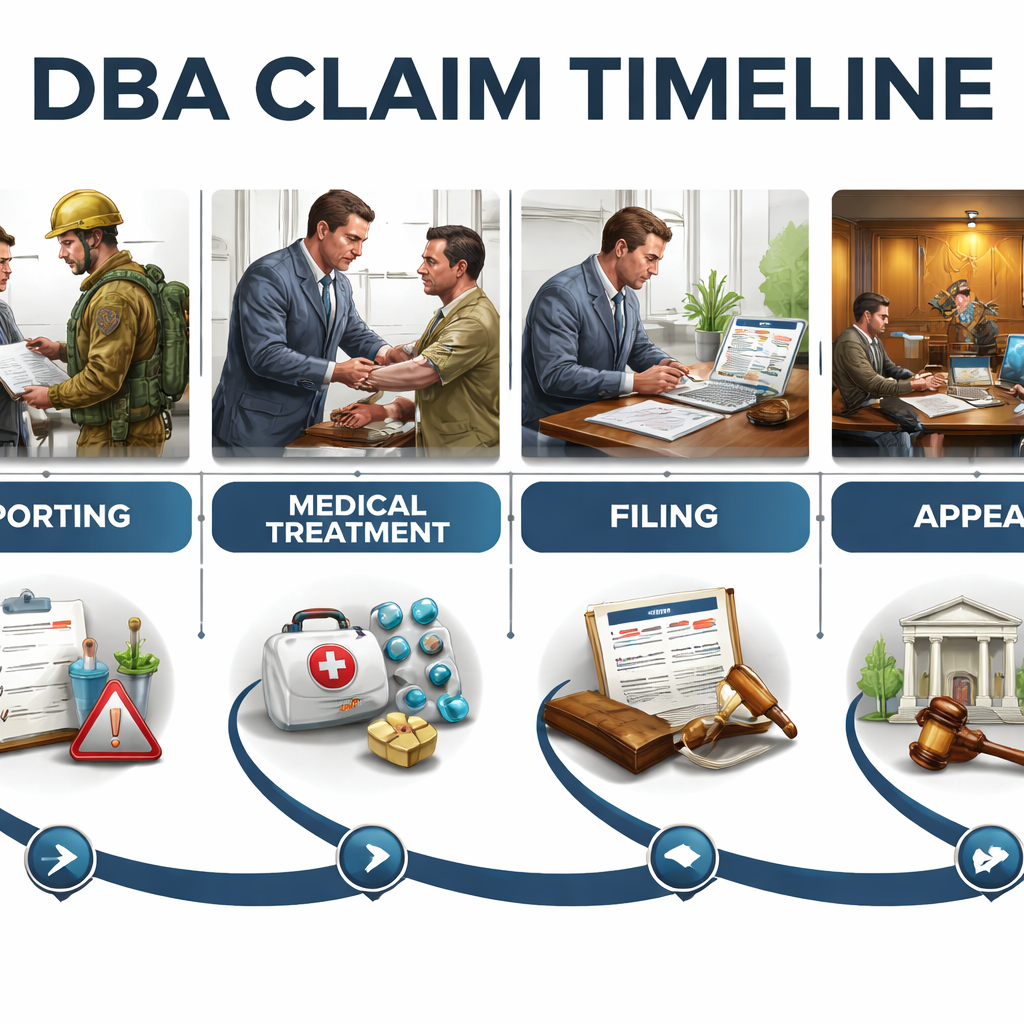
For a step‑by‑step look at the claim timeline, on DBA claim timelines. It breaks down each stage from filing to final settlement.
Even if your claim looks solid, you might still need legal help. The military justice attorneys blog explains why many contractors hire a lawyer before a denial even arrives. Early advice can stop mistakes that cost time and money.
One real‑world example: a logistics worker in the Middle East broke his back on a loading dock. He filed a claim, but the insurer said the injury wasn’t work‑related. His lawyer gathered video footage from the site and a testimony from a supervisor. The evidence forced the insurer to approve the claim and pay back‑pay for the months he was denied.
Back‑up your claim with these actionable steps:
- Notify your employer of the injury in writing within 30 days.
- Seek immediate medical care and keep every bill and note.
- Ask a defense base act lawyer to review your paperwork before you submit it.
- Track all deadlines on a calendar to avoid missed filing windows.
Contractors who skip these steps often face delayed or reduced benefits. A lawyer helps you stay on track and pushes back against insurers who want to cut costs.
For contractors who work on large government projects, like the commercial renovation firms in Central Florida, legal guidance is even more critical.Commercial renovation contractorsoften have overseas contracts that fall under the DBA, so a lawyer can keep them compliant and protected.
Key Benefits of Hiring a Defense Base Act Lawyer
A defense base act lawyer does more than file paperwork. They fight for the full range of benefits you’re entitled to under the law.
First, you get medical care that the insurer can’t refuse. The DBA covers all reasonable and necessary treatment. That includes specialist visits, surgery, physical therapy, and even long‑term palliative care if you need it.
Second, you receive wage replacement. The law pays about two‑thirds of your average weekly wage, up to a yearly cap set by the Department of Labor. If you can’t return to work, the benefits continue for life in some cases.
Third, if a worker dies, the DBA provides death benefits to the spouse and children, plus funeral costs. This can be a lifeline for families left without income.
One of the biggest myths is that you have to pay the lawyer out of pocket. In DBA cases, the insurer pays the attorney’s fees if you win. That means you get expert help with no upfront cost.
Below is a quick pros‑and‑cons matrix that shows why a lawyer is worth it.
| Benefit | With Lawyer | Without Lawyer |
|---|---|---|
| Medical coverage | Full, timely, no gaps | May be delayed or limited |
| Wage replacement | Accurate calculation, quicker start | Risk of underpayment |
| Appeal support | Experienced OALJ representation | Self‑navigation, higher denial risk |
| Fee risk | No out‑of‑pocket fees | Potential attorney fees if you self‑represent |
For a deeper dive on the exact benefits, from Defense Base Act Lawyers. It lists the medical and wage benefits in detail.
Another source, theAttorney at Law Magazine, compares DBA benefits to state workers’ comp and shows why federal coverage often offers higher limits and cost‑of‑living adjustments.
Ready to get the benefits you deserve? Try our solution free →
Below is a short video that explains the claim process in plain terms. It helps you see where a lawyer fits in.
When you watch, note the steps where the insurer tries to stall. Those are the exact moments a defense base act lawyer steps in to keep the claim moving.
Technology also helps lawyers manage cases. AI appointment tools can schedule free consultations quickly, saving you time.AI appointment setter guideshows how firms use this tech to stay responsive.
How to Choose the Right Defense Base Act Attorney
Not every lawyer knows the DBA. The law sits under the Longshore and Harbor Workers’ Compensation Act, and it has its own rules and deadlines.
Start by looking for experience. A lawyer who has handled many DBA cases will know the exact paperwork the insurer expects. Ask for the number of cases they’ve settled and the average time to resolution.
Second, check for specialization. Some attorneys practice general workers’ comp but rarely see overseas contracts. A specialist focuses on the DBA’s unique aspects, like cross‑border medical records and OALJ hearings.
Third, review their reputation. Look for peer reviews, bar association standing, and client feedback on independent sites. A solid reputation often means the lawyer can negotiate better with insurers.
Fourth, discuss fees up front. DBA lawyers usually work on a contingency basis, meaning they get paid only if you win. Make sure the agreement spells out that the insurer will cover their fees.
Here’s a quick checklist you can use during the interview:
- How many DBA claims have you handled?
- What is your success rate in getting full benefits?
- Do you have relationships with medical and vocational experts?
- Can you explain the timeline and what to expect at each stage?
For real‑world insight, on choosing a DBA lawyer. It walks through the interview process and sample questions.
Client stories illustrate why specialization matters. In one testimonial, a contractor with a repeated injury needed a lawyer who understood the insurer’s tactics. The lawyer’s veteran background helped him push back and secure back‑pay.
Read those stories atDefense Base Act lawyer testimonials. They show how a focused attorney can turn a denied claim into a full settlement.
When you’re ready to talk, theUnderstanding the Role of a Jones Act Attorneypage offers a good example of how a clear, focused lawyer page can help you decide.
Make sure the lawyer you pick can communicate in plain language. You should never feel confused about your own case.
Common Mistakes and How to Avoid Them in DBA Claims
Even seasoned contractors slip up. Knowing the pitfalls can save you months of lost benefits.
Mistake #1: Waiting too long to report the injury. The DBA requires a prompt report. Delays give insurers a reason to argue the injury isn’t work‑related.
Mistake #2: Skipping medical follow‑ups. If you stop treatment because you think you’re fine, the insurer may say you’re not disabled.
Mistake #3: Not keeping detailed records. Lose a receipt or a note, and you lose a dollar. Keep a folder with every bill, email, and note.
Mistake #4: Trying to handle the claim yourself. Without legal knowledge, you might miss deadlines or misinterpret insurer letters.
Here’s how to avoid each mistake:
- Report the injury to your supervisor and HR within 24 hours.
- Schedule all recommended doctor visits and keep the appointment cards.
- Use a spreadsheet or notebook to log every expense and date.
- Call a defense base act lawyer as soon as you have the first medical report.
A real example: a construction worker in Afghanistan filed his claim three weeks after a fall. The insurer claimed the delay meant the injury wasn’t covered. His lawyer filed an “equitable tolling” motion, showing that the remote location caused the delay. The judge granted the claim.
Another tip: always ask the lawyer to explain any legal jargon. You should understand what an “MMI” (maximum medical improvement) means for your benefits.
When you need a visual reminder, see the image below that shows a typical claim timeline with common stumbling blocks.
Lastly, remember that the insurer will try to reduce your future medical costs. A good lawyer will request expert opinions that project long‑term care needs, ensuring the settlement covers the full lifetime cost.
Conclusion
A defense base act lawyer can be the difference between a broken paycheck and a steady stream of benefits. The law gives you medical care, wage replacement, and even death benefits for your family. But the process is full of deadlines, paperwork, and tough insurers.
By understanding the DBA, knowing the exact benefits, picking a lawyer with proven DBA experience, and avoiding common mistakes, you put yourself in the best position to get what you deserve.
Take the next step today. Contact a qualified defense base act lawyer for a free case review. It costs nothing, and it can protect your income and health for years to come.
FAQ
What does a defense base act lawyer actually do?
A defense base act lawyer guides you through filing the claim, gathers medical and witness evidence, negotiates with the insurer, and represents you at OALJ hearings. They also calculate the full amount of benefits you’re owed, including future medical costs.
When should I call a defense base act lawyer?
Call as soon as you have a medical diagnosis. Early legal help can prevent missed deadlines, ensure proper documentation, and stop insurers from stalling your benefits.
Do I have to pay a defense base act lawyer up front?
No. DBA lawyers work on a contingency basis. The insurer pays their fees if you receive a settlement or award. You pay nothing out of pocket.
Can I get benefits if my injury isn’t fully healed?
Yes. The DBA pays for all reasonable medical treatment until you reach maximum medical improvement. Even partial disabilities qualify for ongoing wage replacement.
What if my claim is denied?
If denied, a defense base act lawyer can file an appeal with the Office of Administrative Law Judge. They will prepare the legal brief, gather expert testimony, and argue why the insurer’s decision is wrong.
How long does the whole process take?
Timelines vary. Simple cases may settle in a few months. Complex cases with appeals can take a year or more. A lawyer can shorten the wait by handling paperwork quickly and fighting delays.
Are there any limits on the amount I can receive?
The law caps weekly wage benefits based on a federal rate, but there is no limit on medical expenses. A lawyer will calculate the total lifetime cost of your care to ensure the settlement covers it.
Do I need a lawyer if I work on a U.S. base in my own country?
Yes. The DBA applies to any contract work for the U.S. government abroad, even if the base is in your home country. A defense base act lawyer knows the specific federal rules that differ from state workers’ comp.