Boating Accident Lawyer: A Resource Guide
A fun day on the water can turn into a nightmare in seconds. You're enjoying the sun, and then a collision throws you into chaos. Bodies hurt. Boats are damaged. Life gets turned upside down.
If this happened to you, you need help. You need someone who knows the law and can fight for your rights. That's where a boating accident lawyer comes in. This guide will walk you through everything you need to know. From picking the right lawyer to understanding what evidence matters, we've got your back.
Think of this as your roadmap. We'll show you the steps to take after an accident, how to find a great lawyer, and what compensation you might get. By the end, you'll feel ready to take the next step. Let's get started.
How to Choose a Boating Accident Lawyer
Finding the right lawyer is like finding a captain for your ship. You want someone who knows the waters and can steer you to safety. Not all lawyers are the same. Some handle car accidents. Some handle slip and falls. You need someone who focuses on boating accidents.
Start by looking for experience. You want a lawyer who has handled cases like yours. Ask how many boating accident cases they've taken in the last year. If it's only one or two, keep looking. Experience matters. A lawyer who does this all the time knows the tricks insurance companies use. They know the laws that apply to your situation.
Over 5,000 boating accidents happen in the US each year, causing about $62.5 million in damages. Around 767 deaths and 3,191 injuries happen each year. These numbers come from many sources, but they show how common these accidents are. That means there are lawyers who specialize in this area. Find one.
Check their credentials. Are they licensed in your state? Do they belong to groups like the American Association for Justice? These things show they care about staying up to date. Ask about their success rate. You want a lawyer who wins.
Also ask about fees. Most personal injury lawyers work on contingency. That means they only get paid if you win. This is good because it shows they believe in your case. But ask for the percentage. Typical fees range from 33% to 40% of the settlement.
Don't forget to ask who will actually handle your case. Some fancy law firms pass your case to a junior associate. You want the experienced lawyer to work on it, not some rookie. Make sure you know who will be at the table.
Finally, trust your gut. After you talk to a lawyer, do you feel confident? Do they listen? Do they explain things clearly? If something feels off, move on. There are plenty of good lawyers out there.
Bottom line: Look for a lawyer with proven boat accident experience, good client reviews, and a fee that only pays if you win.
Immediate Steps After a Boating Accident
The moments right after a crash are scary. Adrenaline pumps. You might not feel pain right away. But what you do in these first hours can make or break your case. Here's your step-by-step plan.
Step 1: Check for Injuries and Call for Help
First, make sure everyone is safe. Call 911 or the Coast Guard right away. Even if injuries seem minor, get medical help. Some injuries like head trauma or internal bleeding don't show symptoms right away.
Also, let the adrenaline fade before you decide you're fine. Many people say they're okay, only to discover later they have a concussion or damaged disc. A doctor's visit creates a record that ties your injuries to the accident. Without that record, the insurance company will argue your injuries came from something else.
Step 2: Report the Accident
You must report the accident to the authorities. In many states, you have 48 hours to report if someone died or was seriously injured. Other accidents get a longer window, like five days. Do it as soon as possible. The official report becomes a key piece of evidence.
The U.S. Coast Guard keeps statistics on boating accidents. You can find more information at their official site U.S. Coast Guard Boating Safety. But first, get that report filed with local marine police or the Coast Guard.
Step 3: Document Everything
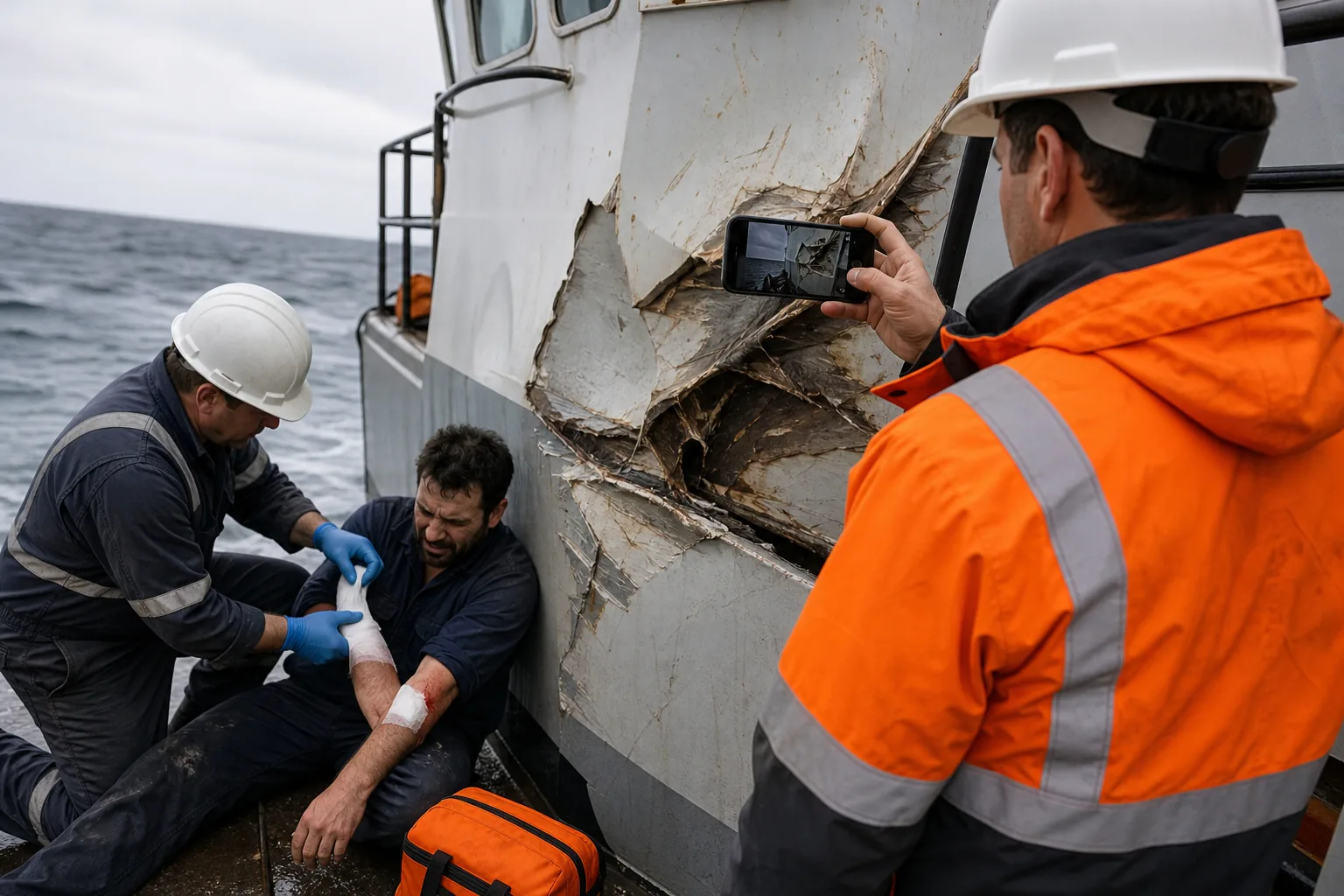
Take photos. Video. Write down everything you remember about the accident. Get names and phone numbers of any witnesses. The scene changes fast. Boats get towed. People leave. Lock in the facts while they're fresh.
If you have a GPS or phone, save the location coordinates. Note the weather conditions, water conditions, and any hazards. The more details, the better.
Step 4: Exchange Information
Get the other boat operator's name, registration number, and insurance info. Also get the owner's information if it's different. Be polite but firm. Don't argue about fault at the scene. Just collect the details.
Step 5: Notify Your Insurance Company
Call your insurance company soon, but be careful what you say. Stick to the facts. Don't speculate about who was at fault. Let your lawyer handle the tricky conversations later. Your insurance agent will ask for a report. Give them the basics, then refer them to your attorney.
Step 6: Call a Boating Accident Lawyer
The sooner you get legal help, the better. A lawyer can preserve evidence, send preservation letters, and start building your case. They can also tell you exactly what not to say to the other side's insurance company.
Bottom line: Get medical help, report the accident, gather evidence, and contact a lawyer as soon as possible to protect your rights and your claim.
Key Evidence to Preserve for Your Claim
Evidence is the backbone of your case. Without it, your story is just words. With it, you can prove what happened and who was at fault. Here's what you need to collect.
Photos and Videos
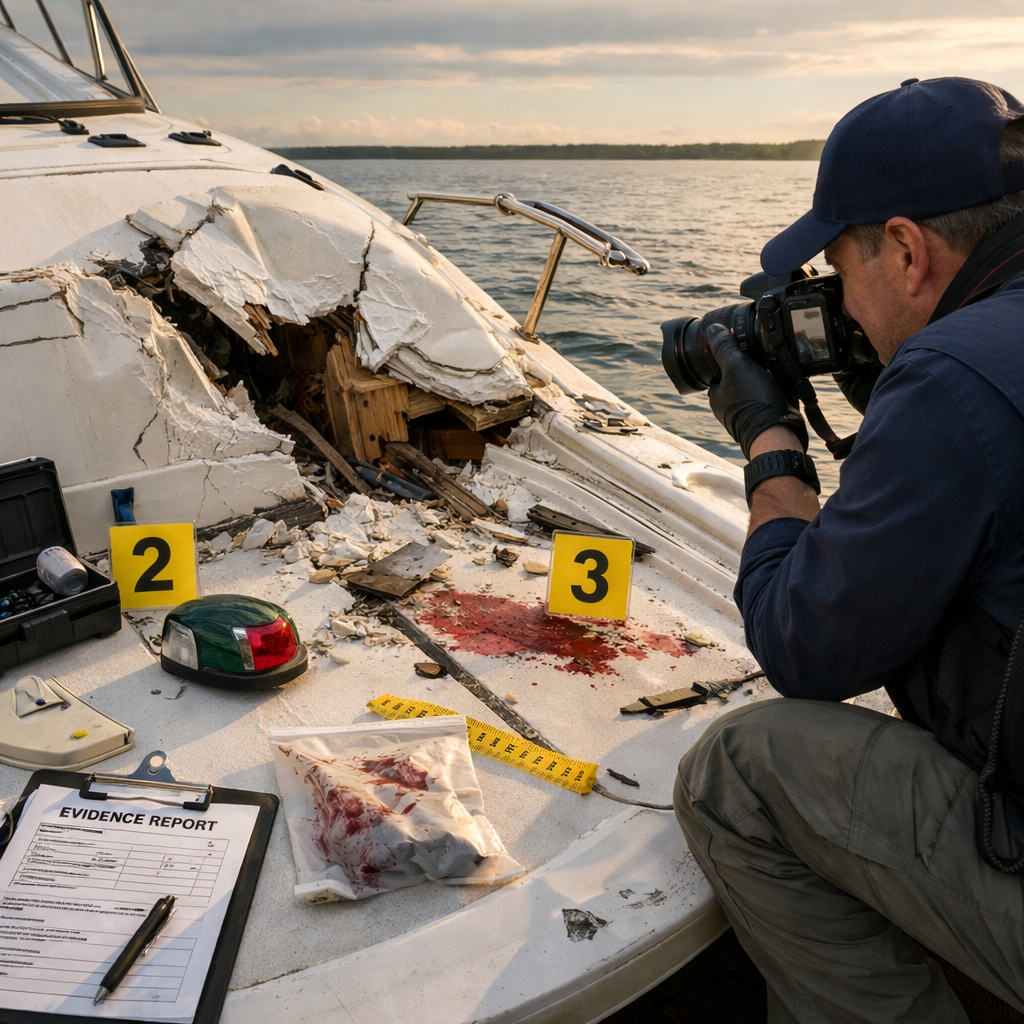
Take pictures of everything. Damage to the boats. Injuries. The surrounding area including buoys, navigational markers, and water conditions. Also take photos of any safety equipment (or lack thereof). If you have a video, even better. Videos show how things looked in motion.
Make sure your photos have timestamps. Use a phone camera that automatically records date and time. If possible, take photos from multiple angles. Show the big picture and close-ups of specific damage.
Official Reports
Get a copy of the accident report from the police or Coast Guard. These reports contain official observations, witness statements, and often a diagram of the accident scene. They can also note if anyone was cited for violations like BUI (boating under the influence) or reckless operation.
If law enforcement was at the scene, request their report too. Sometimes local police respond to boating accidents on inland lakes and rivers.
Medical Records
Every visit to a doctor, hospital, or physical therapist counts. Medical records prove that your injuries are real and connected to the accident. Keep track of all bills, prescriptions, and follow-up appointments. Even if you miss work for a few days, document that lost income.
If you had to undergo surgery or long-term rehab, those records are even more crucial. They show the lasting damage the accident caused.
Witness Statements
Other boaters, passengers, or people on shore might have seen the accident. Get their names and contact information. Ask them to write down what they saw while it's still fresh. Witnesses can confirm key details like speed, direction, and who had the right of way.
Boat Maintenance and Rental Records
If the accident was caused by equipment failure, you'll need maintenance logs, repair records, and rental agreements. If you were on a rental boat, the rental company's records might show that they failed to properly maintain the vessel. A good lawyer will request these records as part of discovery.
Electronic Data
Modern boats have electronic systems. GPS tracks, engine data, and even dash cams can show exactly what happened. If possible, download this data before it's overwritten. Also check if there are any surveillance cameras at the marina or nearby homes that might have captured the accident.
Bottom line: Gather photos, official reports, medical records, witness info, and any electronic data right away; your lawyer will use this to build a strong case.
Common Types of Compensation in Boating Accident Cases
When you're hurt, money can't undo the pain. But it can cover your bills and help you move forward. Here are the types of compensation you might be able to get.
Medical Expenses
This covers everything from your initial ER visit to hospital stays, surgery, physical therapy, and future medical care if your injuries require ongoing treatment. Keep every medical bill and receipt. This is usually the biggest chunk of compensation.
Lost Wages
If you missed work because of your injuries, you can get back that lost income. If your injuries are severe enough that you can't return to your old job, you might also get money for lost earning capacity. Your lawyer will work with economists and vocational experts to calculate these losses.
Property Damage
Your boat, fishing gear, electronics, and other personal property that was damaged in the accident can be recovered. Get appraisals or repair estimates. If your boat is a total loss, you're owed its fair market value.
Pain and Suffering
This is for the physical pain and emotional distress caused by the accident. It's harder to put a number on, but a good lawyer knows how to calculate it. They'll consider how much your life has changed, the severity of your pain, and how long it's expected to last.
Loss of Enjoyment of Life
If your injuries prevent you from doing things you used to love , like fishing, waterskiing, or even just walking , you may be compensated for that loss. This is especially common in cases involving permanent disability.
Wrongful Death Damages
If someone died in the accident, their family can file a wrongful death claim. This covers funeral expenses, loss of financial support, and loss of companionship. Each state has its own laws about who can sue and what damages are available.
Punitive Damages
In rare cases where the at-fault party was extremely reckless (like drunk boating), the court might award punitive damages. These are meant to punish the wrongdoer and deter others. They are not tied to your actual losses.
| Type of Compensation | What It Covers | Example |
|---|---|---|
| Medical Expenses | All medical treatment, past and future | Surgery, rehab, prescription drugs |
| Lost Wages | Income lost during recovery and future if disabled | Two months off work, reduced hours |
| Property Damage | Repair or replacement of boat and gear | Boat hull repair, new fishing rods |
| Pain and Suffering | Physical pain and emotional trauma | Chronic back pain, anxiety |
| Loss of Enjoyment | Inability to do hobbies or daily activities | Can no longer waterski or play sports |
| Wrongful Death | Funeral costs, lost support, companionship | Spouse's lost income, children's loss |
| Punitive Damages | Punishment for egregious behavior | Drunk boating, gross negligence |
“The compensation you deserve should cover not just what you've already paid, but what you'll face in the future. Don't settle for less.”
Bottom line: You can claim compensation for medical bills, lost income, property loss, and pain and suffering; talk to a lawyer to estimate the full value of your case.
Understanding Liability: Who Is At Fault?
Liability means responsibility. Who caused the accident? The answer isn't always simple. Multiple people might share the blame. Here are the common parties who could be at fault.
The Boat Operator
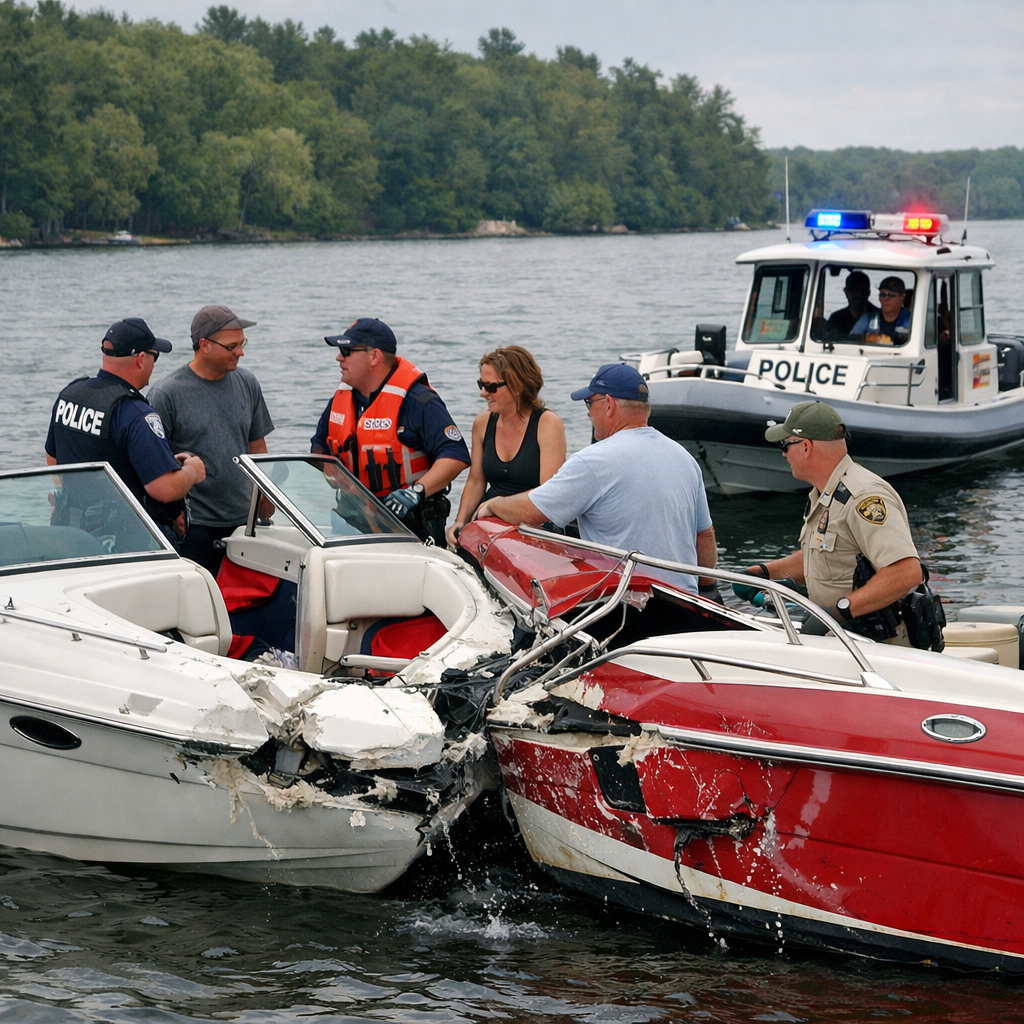
The person driving the boat has a duty to be careful. They must follow navigation rules, keep a lookout, and avoid reckless behavior. If they were speeding, distracted, or under the influence of alcohol, they are likely at fault. In fact, alcohol is a leading factor in fatal boating accidents.
New York's Navigation Law Section 49-a prohibits reckless operation. Similar laws exist in every state. A violation of these laws is strong evidence of negligence.
The Boat Owner
Even if the owner wasn't driving, they can be held responsible. If they lent the boat to someone they knew was inexperienced or intoxicated, they share the blame. Also, if the boat was poorly maintained , like failing brakes or expired safety equipment , the owner is on the hook.
The Rental Company or Charter Company
Rental companies have a duty to provide safe, properly maintained boats. They must also check that renters have basic boating knowledge. If they rent to someone without verifying experience or without giving safety instructions, they can be liable.
The Manufacturer of the Boat or Parts
If a defective part caused the accident , like a steering mechanism that failed, or an engine that caught fire , the manufacturer might be responsible. This is called product liability. These cases can be complex, but a skilled lawyer knows how to pursue them.
The Marina or Dock Owner
Marinas must keep their premises safe. Poor lighting, broken docks, or unmarked hazards can cause accidents. If your accident happened while docking or launching, the marina might be partly at fault.
Government Entities
Sometimes government agencies are responsible for maintaining waterways. If a navigational buoy was missing or a channel was not marked, and that caused your accident, the government could be liable. But suing the government has strict rules and short deadlines, often 90 days, so act fast.
Liability can be split under comparative negligence rules. If you were partly at fault, your compensation might be reduced by your percentage of fault. For example, if you were speeding and the other driver was drunk, you might be 30% at fault. Your award is reduced by 30%.
“Liability on the water can spread across multiple parties. That's why you need an attorney who can identify every deep pocket.”
Bottom line: Determine all possible at-fault parties with your lawyer's help, as multiple parties may share liability and comparative negligence laws still allow recovery.
Frequently Asked Questions
How long do I have to file a boating accident lawsuit?
The statute of limitations varies by state. In most places, you have 2 to 3 years from the date of the accident to file a personal injury lawsuit. For wrongful death, the deadline may be shorter. Some states have special rules if the claim involves a government entity (as short as 90 days). Talk to a boating accident lawyer immediately so you don't miss the deadline.
Can I still get compensation if I was partly at fault?
Yes, in most states. Under comparative negligence laws, your compensation is reduced by your percentage of fault. For example, if you're found 20% at fault, you can still recover 80% of your damages. Some states have a 50% bar: if you're more than 50% at fault, you get nothing. A boating accident lawyer can explain your state's rules.
What if the accident happened on a rented boat?
You can still file a claim. The rental company may be liable if they failed to maintain the boat or provide safety instructions. You may also have a claim against the boat's manufacturer if a defect caused the accident. Your boating accident lawyer will investigate all possible sources of compensation.
How much does a boating accident lawyer cost?
Most personal injury lawyers work on a contingency fee basis. This means you pay nothing upfront. The lawyer only gets paid if you win, usually taking a percentage (33% to 40%) of the settlement or court award. Always ask about fees and any additional costs like expert witness fees before hiring.
What should I say to the insurance company?
As little as possible. Give them your name, contact info, and the basic facts. Do not admit fault. Do not speculate about your injuries. Do not sign any documents without your lawyer's approval. Insurance adjusters are trained to minimize your claim. Let your boating accident lawyer handle all communication.
Can I sue the Coast Guard or Marine Police?
It's difficult but possible in specific circumstances, such as if a government employee's negligence directly caused the accident (e.g., a faulty buoy placed by the Coast Guard). However, you face strict notice requirements and can't sue for more than the government's liability limit. A lawyer experienced in maritime law can advise you.
What damages can I get for a wrongful death boating accident?
Family members can recover funeral and burial expenses, loss of financial support, loss of companionship, and the deceased's pain and suffering before death. Each state caps certain damages. An experienced boating accident lawyer can tell you what's available in your state.
Do I need a lawyer if my injuries are minor?
Even minor injuries can lead to complications. What seems like a small strain might require weeks of physical therapy. Insurance companies often offer lowball settlements to claimants without lawyers. A boating accident lawyer can assess the true value of your claim and negotiate for a fair amount. The consultation is usually free.
Conclusion
Boating accidents are serious. They can leave you with medical bills, lost income, and a lot of pain. But you don't have to go through it alone. A skilled boating accident lawyer can make the difference between a fair settlement and a frustrating fight.
We've covered a lot in this guide. From picking the right attorney to gathering crucial evidence, you now know the steps to protect yourself. Remember: get medical help first, document everything, and call a lawyer as soon as you can. The sooner you start, the stronger your case becomes.
Every case is different. But one thing stays the same: you deserve compensation for what you've been through. A good lawyer will fight for you. They'll handle the insurance companies, the paperwork, and the legal strategy. Your job is to focus on healing.
Don't wait. If you've been in a boating accident, reach out for a free consultation with an experienced boating accident lawyer today. Find out what your case is worth. You might be surprised at how much help is available. For more resources on finding the right representation, check out our boating accident attorney guide. It will connect you with professionals who understand your situation.
Stay safe on the water. And if something goes wrong, know that you have options. You're not alone.