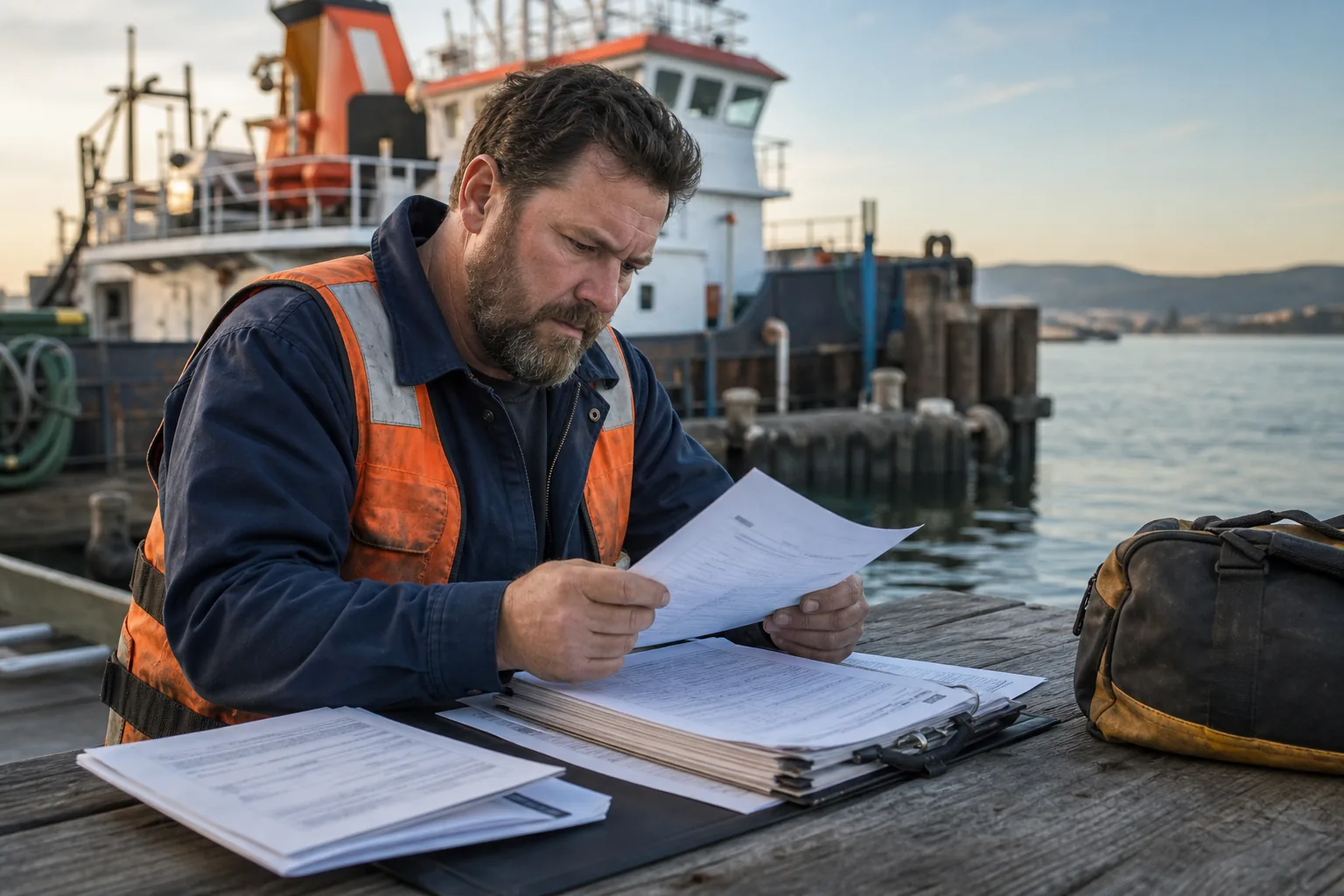
How to Choose Top Maritime Law Firms for Your Case

Maritime law is its own world. The rules are different, the courts are different, and the attorneys who handle it well have usually spent years doing nothing else. If you're dealing with a cargo dispute, a Jones Act injury, or a vessel collision, picking the wrong firm can cost you the case before it starts. This guide walks you through exactly how to find and vet the right maritime counsel for your situation.
Step 1: Understand What Maritime Law Actually Covers
Before you call a single attorney, you need to know what kind of case you actually have. Maritime law, also called admiralty law, covers a broad set of disputes that arise on navigable waters. But "broad" doesn't mean "anything involving a boat."
The main categories include:
- Crew injuries under the Jones Act or general maritime law
- Cargo damage and freight claims
- Vessel collisions and allisions
- Salvage and general average
- Pollution and environmental liability
- Charter party and bill of lading disputes
- Offshore drilling and platform accidents
Each of these has its own statutes, jurisdictional rules, and procedural quirks. A Jones Act seaman injury claim, for example, operates under a different legal framework than a commercial cargo dispute. According to Wikipedia's overview of maritime law, admiralty jurisdiction in the United States extends to all navigable waters, including rivers and lakes, not just the open ocean. That surprises a lot of people.
Why does this matter before you pick a firm? Because firms that dominate cargo work may have little experience with personal injury on offshore platforms, and vice versa. You want a firm whose bread-and-butter matches your case type. If you're not sure which category your situation falls into, start with a broad consultation and let the attorney help you classify it. But go in with some basic awareness , it makes the conversation far more useful.
Step 2: Identify the Right Type of Maritime Law Firm for Your Situation
Not all maritime law firms are built the same. The type of firm you need depends on who you are, what you're fighting over, and how much money is at stake.
Here's how the main firm types break down:
Plaintiff-Side Personal Injury Firms
These firms represent injured workers, typically on contingency. Their clients are seamen, longshoremen, and offshore workers hurt on the job. They know the Jones Act inside out and usually advance litigation costs. If you're an injured worker with no money to pay upfront, this is the model you want.
Commercial Maritime Litigation Firms
These firms handle cargo claims, vessel arrests, charter disputes, and commercial contracts. Their clients are shipping companies, freight forwarders, and cargo underwriters. They often charge hourly and may require a retainer. If your dispute involves a bill of lading or a collision between two commercial vessels, this is the lane.
Offshore and Energy Law Firms
These firms sit at the intersection of maritime and oil and gas law. They handle platform accidents, drilling contracts, and regulatory compliance for energy companies. The cases are often large and technically complex.
Insurance Defense and P&I Club Work
Some firms work almost exclusively for Protection and Indemnity clubs and marine insurers, defending shipowners against claims. If you're a shipowner with a P&I policy, your insurer will usually appoint counsel, but knowing this segment helps you understand who's across the table from you.
Location matters too. Firms based in major port cities like Houston, New Orleans, New York, and Miami tend to have stronger dockets and more courtroom experience with maritime matters than general practices in landlocked cities. That said, jurisdiction follows the case, not the firm's ZIP code, so don't rule out a specialist based elsewhere if they have the right track record for your case type.
Step 3: Evaluate Credentials, Experience, and Track Record
Credentials in maritime law are less standardized than in some other specialties. There's no single "maritime law certification" that guarantees competence. So you have to dig deeper.
Start with bar admission and any specialty certification through the relevant state bar. Then look at actual case history. A firm that lists "admiralty" as one of fifteen practice areas is not the same as one that bills 80% of its hours on maritime matters. Ask directly what percentage of the firm's work is maritime. The answer tells you more than the website copy.
Some concrete things to evaluate:
- Years of maritime-specific practice, not years in law generally
- Verdicts and settlements, ask for examples in your case category
- Federal court experience, maritime cases often land in federal court under admiralty jurisdiction
- Expert witness network, top firms have relationships with marine engineers, accident reconstructionists, and medical experts who understand offshore injuries
- Published work or speaking history, attorneys who write for maritime law journals or speak at industry conferences often signal genuine depth
Don't rely only on peer reviews from legal rating sites. Those are useful as a starting filter, but they're self-reported and often skew toward visibility rather than actual case outcomes. A better signal is whether the firm has handled cases against the specific type of defendant or counterparty you're facing. If you're an injured crew member suing a large shipping company, you want a firm that has gone to trial against that class of defendant, not just settled small claims.
Also check whether the lead attorney will actually handle your case, or whether it gets handed to a junior associate after the initial pitch. Ask this directly during the consultation. At high-volume plaintiff firms especially, the partner who meets you may not be the attorney who negotiates your settlement.
Step 4: Know What Questions to Ask During a Consultation
Most maritime firms offer a free initial consultation. Don't waste it. Come with specific questions and pay attention to how the attorney answers, not just what they say.
Here's a usable question set to bring to any first meeting:
One thing many people skip: ask about venue. Maritime cases can sometimes be filed in state or federal court, and the choice affects everything from jury composition to procedural timelines. A firm that understands venue strategy is thinking several steps ahead.
Also ask whether the firm has handled cases in the specific geographic jurisdiction where your incident occurred. Courts in Louisiana, Texas, and Florida each have their own local admiralty practice culture, and judges remember the firms that appear before them regularly.
Logistics companies and freight operators often face maritime legal questions around cargo compliance and customs. Tools like AgentWave's AI agents for logistics operations help companies in that space stay organized on the operational side, which can make the legal consultation more focused when disputes do arise.
Step 5: Understand Fee Structures in Maritime Cases
Fee structure varies significantly depending on what kind of case you have and which side you're on.
Contingency Fees (Plaintiff Injury Cases)
If you're an injured maritime worker, you almost certainly won't pay anything upfront. Plaintiff-side maritime firms typically work on contingency, meaning they take a percentage of whatever you recover. Rates usually run between 33% and 40%, with the higher end applying if the case goes to trial. The firm advances costs for experts, depositions, and court filings, and recoups those from the settlement or verdict.
Hourly Billing (Commercial and Defense Work)
Commercial maritime disputes, cargo claims, and vessel arrests typically run on hourly billing. Rates vary by market and attorney seniority. Firms in major port cities with strong track records tend to sit at the higher end of the market. Expect to fund a retainer upfront, which the firm draws down as work is done.
Fixed Fees and Hybrid Arrangements
Some firms offer fixed fees for defined work, like drafting a charter party or reviewing a bill of lading. Hybrid arrangements, where a reduced hourly rate is paired with a small success premium, appear occasionally in commercial cases where the outcome is uncertain but the client wants cost predictability.
One thing to clarify early: what costs are billed separately from legal fees? Expert witnesses in maritime cases can be expensive. A marine accident reconstructionist or a naval architect hired to testify can add tens of thousands of dollars to a case budget. Make sure you know upfront whether those costs come out of the contingency percentage or are billed additionally.
For more detail on what maritime firms typically charge and how to compare their services, the Maritime Law Firm Guide on maritimeattorney.ai breaks down typical fee ranges and what to expect at each stage of a case.
Step 6: Use maritimeattorney.ai to Find and Vet Maritime Counsel Fast
Finding a qualified maritime attorney on your own takes time you may not have. Searching general lawyer directories returns too many generalists. Asking a non-maritime attorney for a referral is hit or miss. That's the gap maritimeattorney.ai was built to fill.
The platform connects people who have maritime legal needs with attorneys who actually specialize in the area. Whether you're a seaman with a Jones Act injury, a cargo owner with a damaged shipment, or a shipowner facing a pollution claim, maritimeattorney.ai helps you identify the right type of counsel for your specific situation quickly.
Here's what makes it a useful starting point:
- It filters by case type, not just location, so you're matched to firms with relevant experience rather than the nearest generalist
- The resources on the site explain what each type of maritime case involves, which helps you go into consultations better prepared
- You can use it to understand your situation before you commit to any one firm
Think of maritimeattorney.ai as the first step in the vetting process, not the last. Use it to get oriented, identify candidates, and understand what questions to ask. Then apply the evaluation steps above to make your final decision.
Maritime law firms that operate at a high level also tend to run tight client operations internally. Law practices focused on managing large caseloads sometimes use specialized CRM tools, and platforms like Revio's CRM solutions are one example of how firms in professional services track client intake and case workflows. That kind of operational discipline often shows up in how a firm communicates with you during representation.
If you're injured at sea or dealing with a commercial dispute, speed matters. Statutes of limitations in maritime cases can be shorter than you'd expect. The Jones Act has a three-year limitation period, but some admiralty claims run as short as one year. Getting into the right firm's hands quickly protects your options.
"The statute of limitations in a maritime case can close faster than you think. Getting the right firm involved early isn't just smart , in some cases, it's the difference between having a claim and losing the right to file one."
maritimeattorney.ai makes that first step faster, so you're not spending weeks searching while the clock runs.
FAQ
What makes a maritime law firm different from a regular law firm?
A maritime law firm focuses on admiralty and maritime law, a specialized federal body of law governing disputes on navigable waters. These firms handle cases under statutes like the Jones Act, the Longshore and Harbor Workers' Compensation Act, and COGSA. General practice firms rarely have the case history, expert networks, or courtroom experience needed to handle these matters effectively. The procedural rules alone, like in rem vessel arrests, are unique to this area.
How do I know if my case falls under maritime law?
Your case likely falls under maritime law if the incident happened on a navigable waterway, involved a vessel, or arose from a maritime contract or employment relationship. Offshore platform injuries, cargo damage during ocean transport, and crew contract disputes are common examples. The jurisdictional test can be nuanced, and a short consultation with a maritime attorney will usually clarify whether federal admiralty jurisdiction applies to your situation.
What does a contingency fee mean in a maritime injury case?
Contingency means you pay no attorney fees unless you win or settle. The firm takes a percentage of your recovery, typically 33% to 40%. They also advance case costs like expert fees, which are reimbursed from the settlement. This arrangement means injured maritime workers can access strong legal representation without any upfront cost, which is particularly important for seamen who may be out of work during the case.
Can I use any attorney for a Jones Act case, or do I need a specialist?
You should use a specialist. Jones Act cases involve maritime-specific negligence standards, maintenance and cure obligations, and unseaworthiness claims that general personal injury attorneys don't regularly handle. The defense side, usually a well-funded shipping company with experienced maritime counsel, will exploit any gap in your attorney's knowledge. A firm that handles Jones Act cases regularly will know the medical evidence, the expert witnesses, and the court practices that matter.
How long does a maritime case typically take?
Timelines vary widely. A straightforward cargo claim may resolve in months through arbitration or negotiation. A contested Jones Act injury case going to trial can take two to four years. Factors include how disputed liability is, whether multiple parties are involved, which court the case is in, and the complexity of the medical picture. Your attorney should give you a realistic range based on similar cases they've handled, not a best-case estimate designed to close you as a client.
Is location important when choosing a maritime law firm?
Location matters, but it's not the only factor. Firms based in major port cities like Houston, New Orleans, Miami, and New York often have more maritime-specific courtroom experience. But federal admiralty jurisdiction means a skilled firm can handle cases across different venues. Prioritize expertise in your case type first. Then consider whether the firm has experience in the specific court or arbitration forum where your case is likely to land.
Conclusion
Finding strong maritime counsel starts with knowing your case type, then matching it to a firm with actual experience in that lane. Use the questions in this guide during consultations, understand the fee structure before you sign anything, and don't let the clock run on your claim. Start your search at maritimeattorney.ai to find attorneys who specialize in exactly the kind of case you're dealing with.