
Steps to Take After a Maritime Injury at Sea
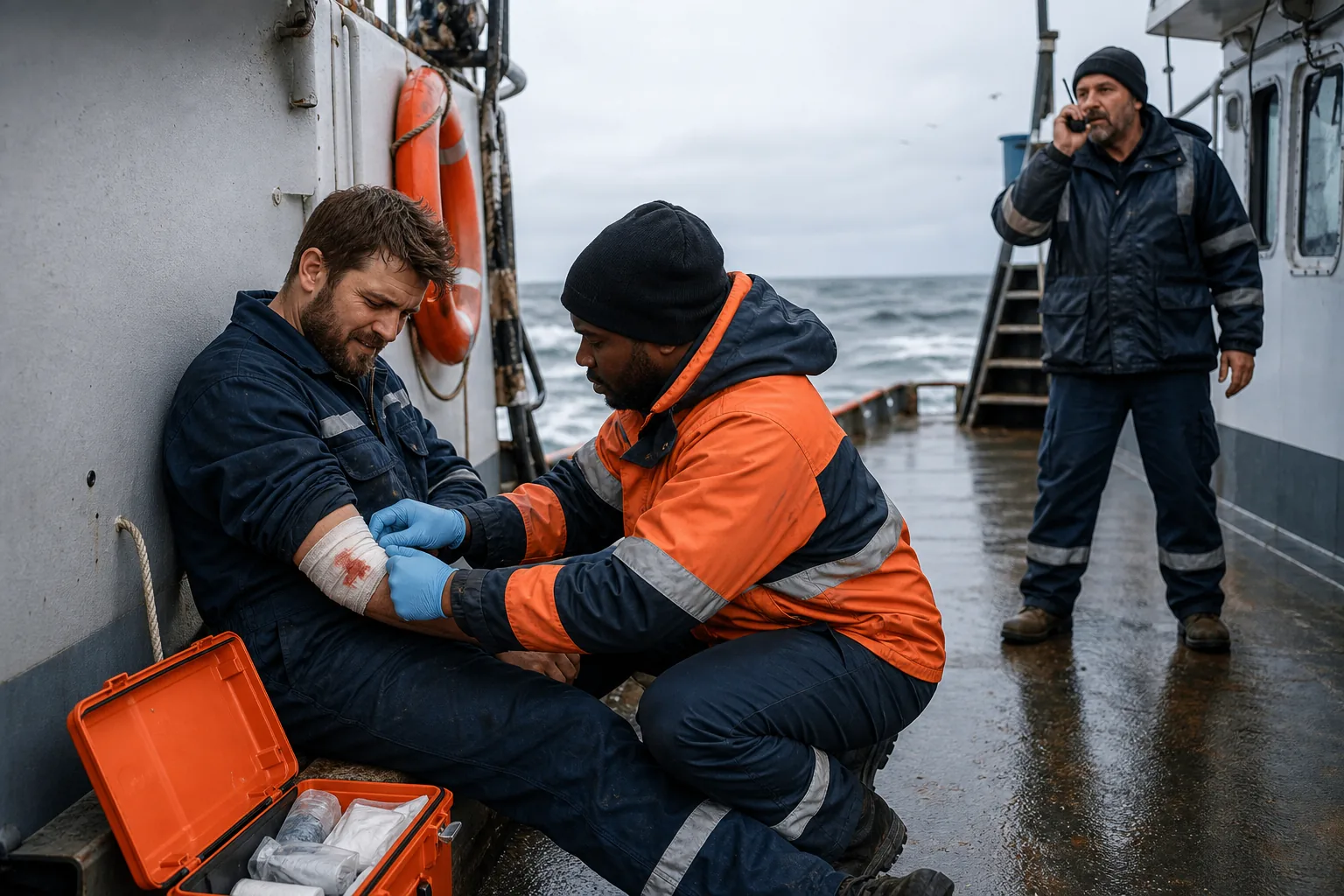
A deck fall or equipment injury can leave you unsure what to do first. The steps to take after a maritime injury at sea start with urgent care and a prompt report, then move to records, benefits, and advice about your rights.
Step 1: Get Medical Help and Report the Injury
Goal: Get care quickly and make a clear record that the injury happened.
Ask for first aid or emergency care as soon as you can. If you’re on a vessel, tell the captain or supervisor right away. A head injury, back strain, burn, or cut may need more care than it first seems. Don’t wait for a shift to end if you need urgent help.
Tell the clinician what happened, where you hurt, and when the symptoms began. Be plain and specific. If pain spreads or changes later, report that too. Ask how to get copies of your medical notes and any test results.
Report the event in writing when you’re able. Include the date, time, location on the vessel, task you were doing, and what caused the injury, if you know. Keep your own copy. If the report has a mistake, ask for a correction or add a short written note. Don’t guess at details you can’t recall.
Some marine casualty rules apply only when an event meets defined conditions.
Some qualifying incidents require alcohol testing within two hours and drug testing within 32 hours. A vessel doesn’t need to keep an approved alcohol testing device aboard if one can be obtained within two hours. That flexibility doesn’t remove the testing deadline. Ask who is handling any required report or test, and note the answer for your records.
For a broader view of how falls, equipment failures, and other maritime accident types may affect a claim, keep the focus on what happened in your own incident.
Step 2: Document the Incident and Follow Medical Guidance
Goal: Preserve details while they’re fresh, then follow a treatment plan that tracks your recovery.
When it’s safe, take photos of the area, the equipment involved, and any visible injury. Show the wider scene as well as close details. A photo of a wet deck, for example, may be more useful when it also shows where the water came from and what was nearby.
Write a short account in your own words. Note what you were doing just before the injury, what you noticed, and who was nearby. Ask witnesses to write down what they saw, using their own words. Don’t pressure anyone to agree with your account.
Save the incident report, relevant messages, work schedule, and medical paperwork. Keep bills and receipts for care-related costs. If a piece of equipment may have caused the injury, don’t move or alter it yourself. Tell the person in charge and note its condition. A vessel’s maintenance records or safety logs may matter later, but a lawyer can advise how to request them.
Make a simple recovery log. Add each appointment, new symptom, missed shift, and out-of-pocket cost. You don’t need a long entry. A dated note such as “pain worsened after lifting” is more useful than trying to rebuild the details weeks later.
Follow your clinician’s care advice and ask questions if a limit is hard to follow at work. If symptoms change, report them at your next visit or sooner if you need urgent care. Don’t stop treatment or return to strenuous duties just to satisfy a supervisor. If a company-selected provider is involved, you can ask what your options are for another qualified medical opinion.
Preserve original photos and messages when you can. If you make a copy for a claim file, keep the original intact too.
Step 3: Protect Your Benefits and Understand Your Rights
Goal: Find out which rules cover your work and what support may apply while you recover.
If you’re a seaman, possible claims may involve the Jones Act or general maritime law. A Jones Act claim may address employer negligence. Unseaworthiness may matter if a vessel or its equipment was not reasonably fit for its intended use. Maintenance and cure may provide living expenses and medical care for a seaman injured while working, subject to the facts and law that apply.
These are separate legal questions. A crew member’s job and connection to a vessel can affect which rules apply. Longshore and harbor workers may have a different benefits system. Passengers, contractors, and workers on foreign-flag vessels can also face different issues. Don’t assume a co-worker’s claim process fits your case.
Ask your employer, in writing, how to submit medical bills and request any available benefits. Keep copies of forms and note when you sent them. Track unpaid expenses in your log. If a payment stops or a request is denied, ask for the reason in writing and share it with a maritime lawyer.
Benefits and legal claims aren’t the same thing. An employer or insurer may ask for a statement, medical release, or settlement form. Read it before signing. If you don’t understand what it gives up, pause and get legal advice. Don’t make a recorded statement about fault before you know what the request is for.
Write down any response to your injury report that concerns you, especially a change in duties or pressure to stay quiet. Keep messages and record the date of each conversation. Some federal protections cover certain safety reports or injury reports, but the facts and filing rules matter. A lawyer can help sort that out.
maritimeattorney.ai publishes information for people dealing with maritime injury claims. You can use its maritime injury legal resources as a starting point, then speak with a qualified lawyer about the law that fits your work and incident.
Step 4: Plan Your Claim, Recovery, and Return to Work
Goal: Make a recovery plan that accounts for your health, your income, and any claim deadlines.
Ask your clinician what tasks you can safely do and what limits you need. If you’re ready for some duties but not your full job, ask whether light duty is available. Get any work limits in writing, then share them through the right workplace process. Keep a copy of what you send and the employer’s response.
Don’t rush back because you feel pressure to earn wages or prove you’re fine. A return plan should match your current medical limits. If the employer offers duties that seem unsafe or conflict with those limits, ask for clarification in writing. Your health needs to guide the pace.
Build a basic cash record while you recover. Save pay records that show missed shifts, plus receipts for injury-related costs. Ask which benefits may cover medical care or living expenses and how to submit a request. If you belong to a union, a representative may help you understand contract steps or raise a workplace concern.
There may be a claim deadline, and the time limit can depend on the law and the parties involved. Don’t rely on a general rule found online. Ask a maritime lawyer to identify the likely claim type, the correct deadline, and any earlier notice requirement. Contacting counsel early also gives you a chance to ask about vessel logs, maintenance records, and insurer requests before evidence gets harder to obtain.
Claim planning includes emotional recovery. Pain, poor sleep, or worry about money can weigh on you after the immediate injury is treated. Tell your clinician if distress is affecting sleep or daily life. Ask about support that fits your situation, and let someone you trust know what kind of help would be useful.
Before settling, get advice on what the proposed payment covers and whether it ends future claims. A settlement can affect future medical care or wage claims. Don’t sign a release just to get a quick payment unless you understand its effect.
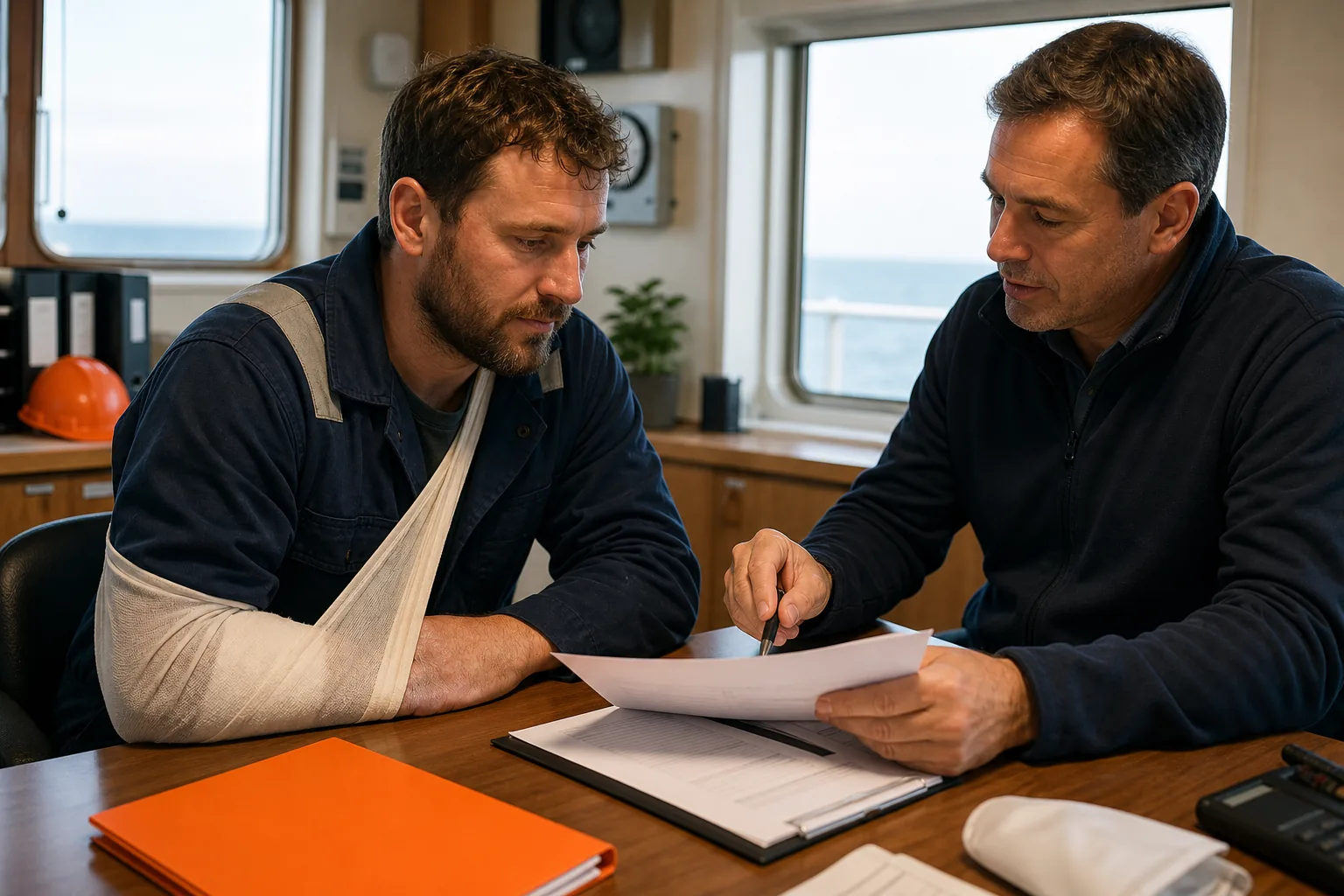
maritimeattorney.ai can be one place to begin learning about maritime claims, but your next move should be based on your records, work role, and medical advice. Bring those details to a lawyer who handles maritime injury matters.
Quick Checklist to Keep Handy
- Get medical care and report the injury to the captain or employer.
- Keep a copy of the incident report and your medical records.
- Photograph the scene when it’s safe and note witness names.
- Track symptoms, care, expenses, and time missed from work.
- Ask which benefits and claim deadlines apply to your role.
- Get advice before signing a release or giving a recorded statement.
Frequently Asked Questions
What should I do first after an injury on a ship?
Get medical help first, then report the injury to the captain or employer as soon as you can. Tell the clinician how it happened and describe each symptom. When you’re able, write a brief factual report and keep a copy. If the injury is urgent, don’t delay care to complete paperwork.
Do I have to report a maritime injury right away?
Report it promptly to your captain or employer and keep a written record. Formal notice rules can vary with your job, the claim, and the law that applies. Some vessel casualty reports are the responsibility of owners or operators under federal rules. Ask a maritime lawyer which deadlines govern your own injury.
What is maintenance and cure?
Maintenance and cure is a maritime-law remedy that may cover basic living expenses and medical care for a seaman injured while working. Eligibility and the amount or duration can depend on the facts. It is separate from a negligence claim, so ask a lawyer how it may fit with other rights.
How long do I have to file a maritime injury claim?
There isn’t one deadline for every maritime injury claim. The time limit can depend on your work status, the law involved, and who may be responsible. Some notice steps may come sooner than a court filing deadline. Ask a maritime lawyer to identify both dates and put them on your calendar.
Can I go back to work before I’m fully recovered?
Only return to duties that fit the medical limits you’ve been given. Ask your clinician to put restrictions in writing, then discuss light duty with your employer if it’s available. If the offered work conflicts with your restrictions, pause and ask for clarification before accepting it.
Conclusion
Put your health first, preserve the record, and get advice before you sign claim papers or agree to a final payment. Your next step is to gather your incident report and medical records, then ask a maritime lawyer which benefits and deadlines apply to your situation.