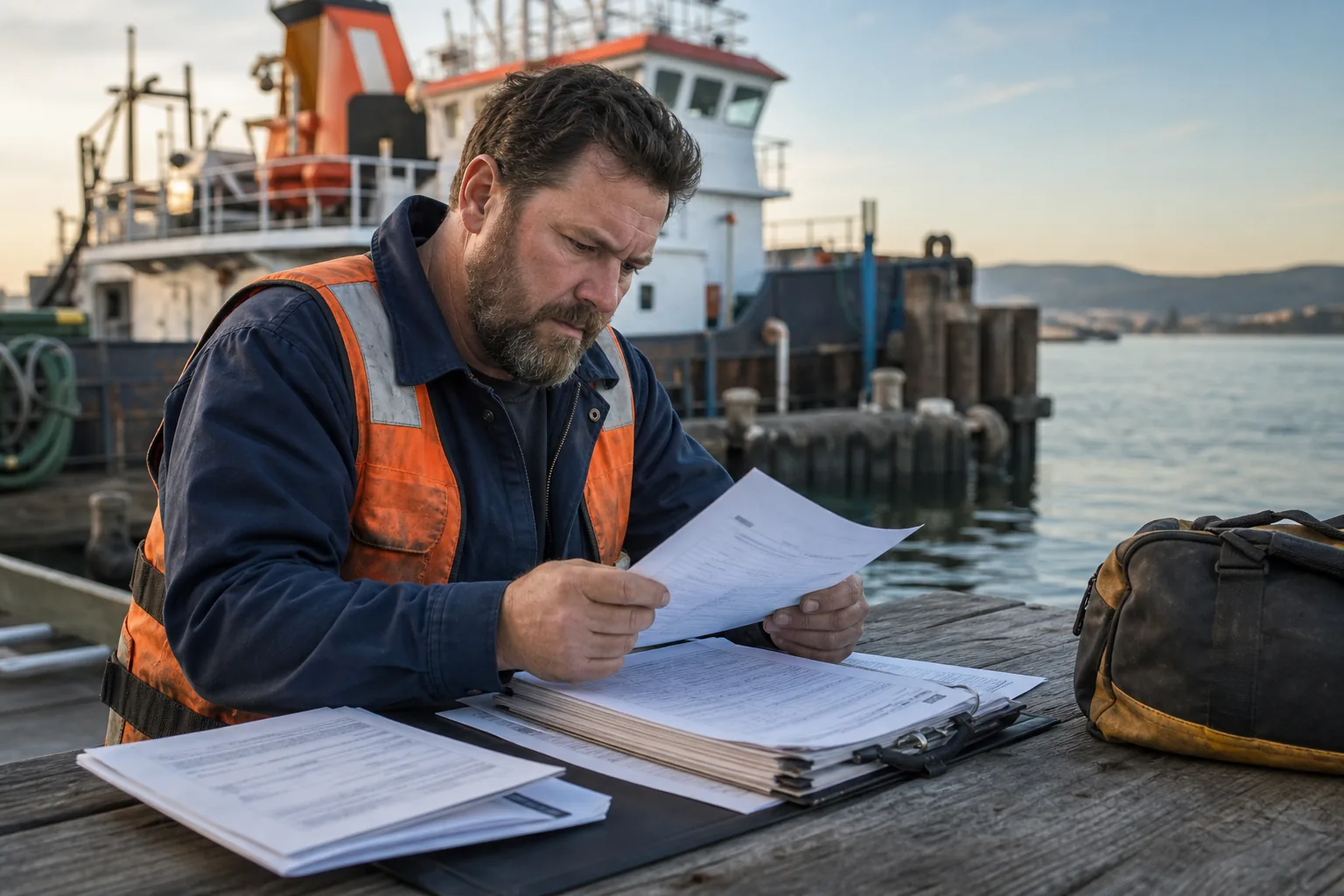
How to Handle a Shipyard Accident

When a shipyard accident hits, panic can set in fast. You need a clear plan that gets you safe, records what happened, and protects your legal rights. Below are the six steps you should follow right after a shipyard incident.
Step 1: Ensure Immediate Safety
First, stop any activity that could cause more harm. Turn off machinery, shut down power sources, and move away from dangerous equipment. If you can do so without risking injury, activate emergency stop buttons on cranes or lifts.
Workers should wear any personal protective equipment (PPE) they have on hand , hard hats, safety glasses, gloves, and hearing protection. A quick check for burns, cuts, or exposure to chemicals can prevent a minor injury from becoming serious.
for shipyards, regular training on hazard recognition and emergency shutdown procedures cuts accident rates and keeps morale high. When everyone knows the exact steps, the response is faster and more coordinated.
Remember that shipyard environments often have hidden dangers like pressurized hydraulic lines. The 2003 NIOSH case of a welder who ignited hydraulic fluid shows how a small leak can turn into a severe burn within minutes. NIOSH’s report stresses daily inspections of hoses and proper grounding of equipment to avoid such flash fires.
By the end of this step you should have secured the area, accounted for everyone, and called for help if needed.
Step 2: Call Emergency Services
Dial 911 (or the local emergency number) as soon as you’ve confirmed safety. Give the dispatcher a concise description: type of incident, location on the yard, number of injured workers, and any hazardous materials involved.
While you wait, assign a teammate to guide responders to the exact spot. Clear pathways for ambulances and fire trucks; remove obstacles like stacked crates or stray cables.
The U.S. Occupational Safety and Health Administration tracks shipyard incidents and stresses rapid reporting. Their database shows that delayed emergency calls correlate with higher fatality rates. OSHA’s accident search lists dozens of cases where a slow 911 call cost lives.
Keep the phone line open in case responders need more details. If you’re the only person with a phone, hand it to a coworker who can stay on the line while you assist the injured.
Once help is en route, stay with the injured and monitor their condition.
Step 3: Preserve Evidence
Do not move equipment or clean up the scene until investigators arrive, unless doing so prevents further danger. Photographs are the fastest way to capture the layout, damaged machinery, and any visible hazards.
Take wide‑angle shots of the whole area, then close‑ups of broken parts, warning signs, and spill sites. If you can, record a short video walking through the scene; note timestamps for each view.
Collect witness statements while memories are fresh. Write down names, job titles, and contact information. Ask each witness what they saw and heard, and whether any safety procedures were ignored.
Secure any physical evidence , damaged tools, fragments of a broken crane hook, or spilled chemicals , in sealed bags. Hand these to the safety officer or the investigator when they arrive.
Preserving this evidence creates a clear picture for insurance adjusters and any future legal claim.
Step 4: Notify Your Employer & Insurance
Report the incident to your direct supervisor or the shipyard’s safety manager right away. Ask them to file a formal injury report and copy it to the human‑resources department.
Under most state workers’ compensation laws, you must notify your employer within a set period , often 30 days , to keep your claim valid. Delays give insurers a reason to deny benefits.
Ask for the name and contact of the company’s workers’ compensation insurer. Request that they assign a claims adjuster to your case.
For guidance on the paperwork, you can turn to the Shipyard Injury Lawyer Resources Guide. It walks you through the forms you’ll need and explains what to expect from the insurance carrier.
By now you should have a written record that the employer knows about the accident and has begun the claims process.
Step 5: Document Injuries & Medical Treatment
Seek medical attention immediately, even if you think the injury is minor. Some shipyard injuries, like inhalation of fumes or crush injuries, can worsen over time.
Ask the treating doctor to provide a detailed medical report that lists diagnoses, treatments, and any recommended work restrictions. Keep every prescription label, therapy invoice, and follow‑up appointment note.
Take photos of visible injuries , burns, lacerations, swelling , and store them in a secure folder on your phone or laptop. If you’re unable to take photos yourself, ask a coworker to help.
Write a personal journal of how the injury affects your daily life , pain levels, inability to lift, loss of sleep. This narrative can be powerful evidence if you need to prove lost wages or reduced earning capacity.
Step 6: Seek Legal Assistance
If the accident involved negligence, faulty equipment, or a failure to follow safety regulations, a maritime lawyer can protect your rights.
Look for attorneys experienced with the Longshore and Harbor Workers' Compensation Act (LHWCA). That federal law covers most shipyard workers and provides benefits that state workers’ comp may not.
During the first consultation, the lawyer should ask for all the evidence you collected , photos, witness statements, medical records, and the employer’s incident report.

They will help you file the proper claim, negotiate with insurers, and, if needed, pursue a third‑party lawsuit against equipment manufacturers.
Act quickly. Many claims have strict filing deadlines, and waiting can jeopardize your ability to get compensation.
FAQ
What should I do first after a shipyard accident?
The first move is to secure the area and make sure no one else gets hurt. Turn off equipment, move away from hazards, and check everyone for injuries.
How long do I have to report a shipyard injury to my employer?
Most states require you to notify your employer within 30 days of the incident, but filing sooner protects your claim.
Can I still get compensation if the accident was partially my fault?
Yes. Maritime law often allows recovery even when the injured worker shares some blame, as long as the employer or a third party was also negligent.
Do I need a lawyer if my injury is minor?
You may not need a lawyer for a simple first‑aid case, but if medical costs rise or you miss work, an attorney can help you claim workers’ comp benefits and protect you from insurance push‑back.
What evidence is most important for a shipyard accident claim?
Photos of the scene, written witness statements, the official incident report, and detailed medical records are the strongest pieces of proof.
Act fast, document everything, and get the right legal help to protect your future.
Ready to put this into practice? maritimeattorney.ai was built for exactly this.