
Oil Rig Accident Lawyer Guide: Protect Your Rights

One mistake can cost you everything.If you’ve been hurt on an offshore rig, the clock starts ticking the moment you breathe the salty air again. In this guide you’ll learn how an oil rig accident lawyer can help you keep your rights, gather proof, and get the money you need to move forward.
We’ll walk through what a claim looks like, the evidence you need, how to pick the right lawyer, the types of compensation you can ask for, and the filing deadlines that vary by state. By the end you’ll have a clear, step‑by‑step plan you can start using right now.
Understanding Oil Rig Accident Claims
When a worker gets hurt on a rig, the first thing to do is tell the boss and the proper government agency. The law says the operator must file a report with the Bureau of Safety and Environmental Enforcement within two days. That paper trail is the first piece of proof you’ll need.
But reporting is only the start. You also have to think about the medical side. A doctor who knows how hard rig work can be will write notes that match the injury you suffered. Those notes become part of the claim.
Here’s what the Low Law Firm says: you should take photos of the injury, the site, and any broken gear. You should also get the contact info of any coworkers who saw what happened. All of that helps an oil rig accident lawyer build a strong case.
Imagine you slipped on a wet deck and broke a wrist. The company might try to say it was a personal accident. If you have a photo of the slick oil spill that caused the slip, you can show the company ignored safety rules. That simple picture can tip the scales.
Spence Lawyers adds that workers who spend at least 30% of their time on a vessel in navigable waters qualify as "seamen" under the Jones Act. That gives you the right to sue the employer for negligence, not just file a workers’ comp claim.
Why does that matter? Because a lawsuit can bring back lost wages, medical bills, and even pain and suffering. A workers’ comp claim often caps what you can get. An oil rig accident lawyer knows which path fits your situation.
What to do right after the accident:
- Tell your supervisor immediately.
- Ask the company to file the BSEE report.
- Get a copy of the incident report.
- Seek medical care from a doctor who treats offshore injuries.
- Start a written log of symptoms, treatments, and any missed work.
And remember: you have a short window to act. The Jones Act gives you three years from the date of injury, but some state rules are tighter. That’s why a quick call to an oil rig accident lawyer can save you from missing the deadline.
Oil Rig Injury Lawyer: A Complete 2026 Guide to Your Rights and Compensationexplains how a skilled attorney can launch an investigation, preserve evidence, and negotiate with big oil firms that have deep pockets.
Key Evidence Needed for a Strong Case
Evidence is the backbone of any claim. Without it, an oil rig accident lawyer has nothing to show the court or the insurer.
First, secure the official incident report. That document lists the date, time, location, and a brief description of what went wrong. It also notes who was on duty. If the report is missing or vague, you can request a copy through the Freedom of Information Act.
Second, gather witness statements. Talk to anyone who saw the accident, even if they were on a different platform. Write down what they remember while it’s fresh. Ask them to sign a written statement. A strong lawyer will also interview them later.
Third, collect photographs and video. A photo of a cracked pipe, a missing safety rail, or a spill can prove a hazard existed. If a coworker captured video on a phone, that can become key proof.
Fourth, keep all medical records. From the first ER visit to follow‑up therapy notes, each document shows the injury’s impact. Make sure the doctor notes link the injury to the rig event.
Fifth, pull employment records. Your contract, shift schedules, and safety training logs help show you were on duty and followed protocol.
Sixth, request equipment maintenance logs. If a crane failed because it wasn’t inspected, the log will show that neglect.
Here’s a real‑world example: a diver on a Gulf of Mexico platform suffered a crush injury when a malfunctioning winch snapped. The diver’s lawyer obtained the winch’s maintenance log, which revealed the last inspection was six months overdue. That single record helped the jury award a six‑figure settlement.
To make sure nothing slips through, follow this step‑by‑step checklist:
- Ask for the official incident report within 48 hours.
- Write down names and contact info of all witnesses.
- Take photos of the injury, the equipment, and the surrounding area.
- Request copies of all medical bills and doctor notes.
- Secure employment and training records from HR.
- Get equipment inspection and maintenance logs from the safety officer.
When you hand these items to an oil rig accident lawyer, they can piece together a timeline that shows negligence.
And if you need a place to rest while you recover, consider a supportive sleeping setup.How to Choose a Restless Legs Adjustable Bed That Improves Sleep , 2026 Guideoffers tips on picking a bed that eases back pain and helps you heal faster.
How to Choose the Right Oil Rig Accident Lawyer
Not every attorney knows the twists of maritime law. You need a lawyer who lives and breathes oil rig cases.
First, check experience. Look for a lawyer who has handled at least a dozen oilfield cases. Zehl & Associates notes that they have represented over 1,000 oilfield workers and know the American Petroleum Institute standards inside out.
Second, ask about track record. A win‑or‑lose ratio isn’t enough; you want to see the size of past settlements or verdicts. The firm boasts several record‑setting wins, which signals they can take on big oil firms.
Third, evaluate resources. Big oil companies have whole teams of lawyers. Your lawyer should have a team of investigators, medical experts, and financial analysts ready to fight for you.
Fourth, consider communication style. You’ll be sharing personal details and medical info. A lawyer who listens, answers calls quickly, and explains steps in plain language will make the process less stressful.
Fifth, discuss fees up front. Most oil rig accident lawyers work on a contingency basis, meaning they only get paid if you win. Make sure you understand what percentage they take and if any expenses come out of the settlement.
Sixth, request a free consultation. That meeting lets you feel the lawyer’s vibe and see if they ask the right questions about your case.
Here’s a quick way to score the right lawyer:
When you meet with a potential lawyer, bring a copy of your evidence checklist. That shows you’re serious and helps the lawyer see the strength of your claim.
And don’t forget the tech side. A modern law firm can set up an online booking page so you can schedule follow‑up calls without endless emails.$100K+ in Signed Project Revenue in 90 Days | 10XAppointmentexplains how an appointment system can simplify client intake for busy firms.
Ready to protect your future? Try our solution free →
Common Compensation Types and How They're Calculated
Money from a claim can come from several buckets. An oil rig accident lawyer will pull them together to get the highest total.
Economic damages cover any out‑of‑pocket costs. That includes hospital bills, surgery fees, prescription costs, and any medical devices you need. It also counts lost wages, both the pay you missed right now and future earnings if you can’t return to the same job.
Non‑economic damages are harder to count but just as real. Pain and suffering measure the physical hurt and the emotional toll. A severe burn can cause anxiety and sleep loss for years. Courts often use a multiplier (usually 1.5 to 5) on the economic total to arrive at a non‑economic figure.
Punitive damages are rare but possible if the company acted with gross negligence. If an investigation shows they ignored a known safety flaw, a judge may add a punitive sum to punish the bad behavior.
Let’s look at a sample calculation:
| Damage Type | Example Amount |
|---|---|
| Medical bills | $120,000 |
| Lost wages (2 years) | $80,000 |
| Future earning loss | $150,000 |
| Economic total | $350,000 |
| Non‑economic (multiplier 3) | $1,050,000 |
| Punitive (if applicable) | $200,000 |
| Potential settlement | $1,600,000 |
The numbers above are just an example. Real cases depend on injury severity, age, and the jurisdiction’s rules.
High Rise Legal Funding notes that some states follow fault‑based insurance, where the at‑fault party’s insurer pays the damages. Other states use no‑fault rules, meaning you claim from your own policy. That shift changes how the lawyer frames the demand letter.
Here are three tips to maximize your compensation:
- Document every medical appointment, even the small ones.
- Keep a diary of how the injury affects daily life, pain, fatigue, missed events.
- Don’t settle too early. Let the lawyer run a full investigation before any offer.
Finally, remember that an oil rig accident lawyer can help you get pre‑settlement funding if you need cash now. That way you can pay bills while the case moves through the courts.
Statute of Limitations and Filing Deadlines by State
Every state sets its own clock for when you must file a claim. Miss the deadline and you lose the right to sue.
In Texas, the Jones Act gives you three years from the injury date. But if you file a workers’ comp claim, you usually have only one year. That means you might need two separate filings depending on the case.
Louisiana follows a two‑year limit for personal injury claims, but the state also allows a three‑year period for maritime claims under the Jones Act. Knowing which law applies can add or shave a year off your timeline.
Florida uses a two‑year limit for personal injury, but if the case is deemed “no‑fault,” the deadline can shrink to 20 months. In California, you have two years for personal injury and three years for wrongful death.
Here’s a quick state‑by‑state snapshot:
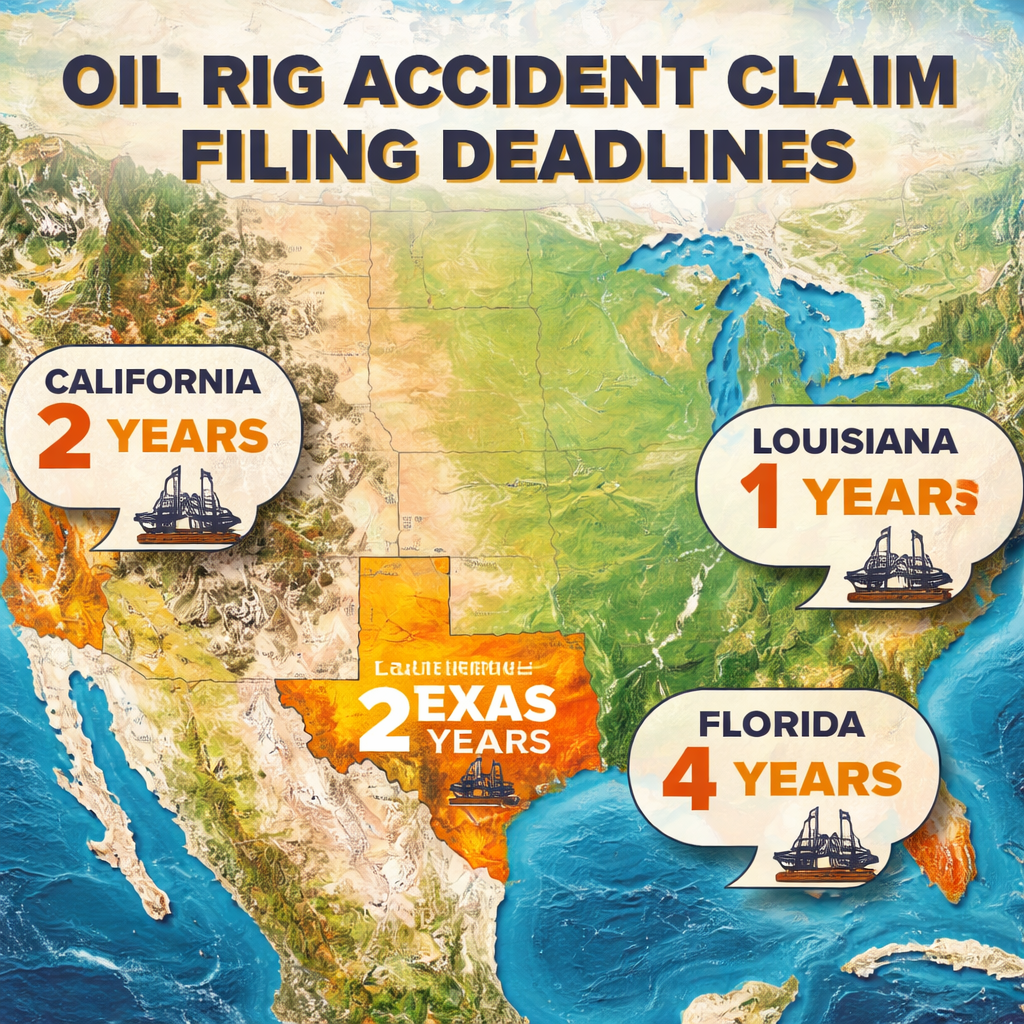
Why does this matter? Because the sooner you talk to an oil rig accident lawyer, the sooner they can start the clock on the right claim. They’ll also check if any tolling rules apply, like if you were under a medical hold that paused the deadline.
Tips to protect the deadline:
- Write down the exact date of the accident as soon as possible.
- Set a calendar reminder for the filing deadline.
- Ask your lawyer to file a notice of claim before the deadline, even if you need more time to gather evidence.
Missing a deadline can mean you get nothing, even if the company was at fault. That’s why a seasoned oil rig accident lawyer never lets the clock run out.
Frequently Asked Questions
What does an oil rig accident lawyer actually do?
An oil rig accident lawyer guides you through the legal maze after a rig injury. They collect evidence, talk to insurers, file the proper paperwork, and negotiate or litigate for the compensation you deserve. They also keep the deadline clock ticking so you don’t lose your right to sue.
Can I still claim if I was partly at fault?
Yes. Most states follow comparative negligence, which means the compensation you get is reduced by your share of fault. If you’re 20% at fault, you’ll receive 80% of the total award. An oil rig accident lawyer will argue that your fault, if any, is minimal.
Do I have to pay anything up front to hire a lawyer?
Most oil rig accident lawyers work on a contingency fee basis. That means they only get paid if you win, usually taking a percentage of the settlement. You won’t owe any fees unless the case is successful.
How long does a typical oil rig accident case take?
Timeline varies. Simple cases may settle in six months. Complex ones, especially with multiple defendants, can take two to three years. An oil rig accident lawyer will give you a realistic outlook based on your facts.
What if my claim is denied?
If a claim is denied, you can appeal. An oil rig accident lawyer will review the denial, gather additional proof, and file an appeal or a lawsuit. Many denials are overturned when a skilled lawyer steps in.
Can I receive compensation for future medical costs?
Yes. Future medical expenses are considered economic damages. An oil rig accident lawyer works with doctors to estimate long‑term care costs and includes those numbers in the demand.
Is there a difference between workers’ comp and a personal injury lawsuit?
Workers’ comp usually limits you to medical bills and a portion of lost wages, and you can’t sue the employer. A personal injury lawsuit, often under the Jones Act, can add pain and suffering and let you hold the employer liable for negligence.
Do I need to file a claim in federal or state court?
It depends on the law that applies. Jones Act claims go to federal court. State law claims, like workers’ comp, stay in state court. An oil rig accident lawyer will choose the venue that gives you the best chance.
Conclusion & Next Steps
Getting hurt on an offshore rig is a heavy blow, but you don’t have to face the legal fallout alone. An oil rig accident lawyer can protect your rights, gather the proof you need, and chase the compensation that covers medical bills, lost wages, and the pain you feel.
Start by gathering the evidence checklist we laid out, note your accident date, and reach out for a free consultation. The sooner you act, the stronger your claim will be, and the less likely you’ll miss a filing deadline.
If you’re ready to take the next step, call a qualified oil rig accident lawyer today or fill out an online form to schedule your free case review. Protect your future now, don’t let the rig’s silence keep you silent.
- Ask how many oil rig cases they’ve handled in the last three years.
- Request examples of settlements that covered medical costs, lost wages, and pain.
- Find out who will be your day‑to‑day contact.
- Check if they have a network of doctors who specialize in offshore injuries.
- Make sure they’re willing to fight in federal court if needed.