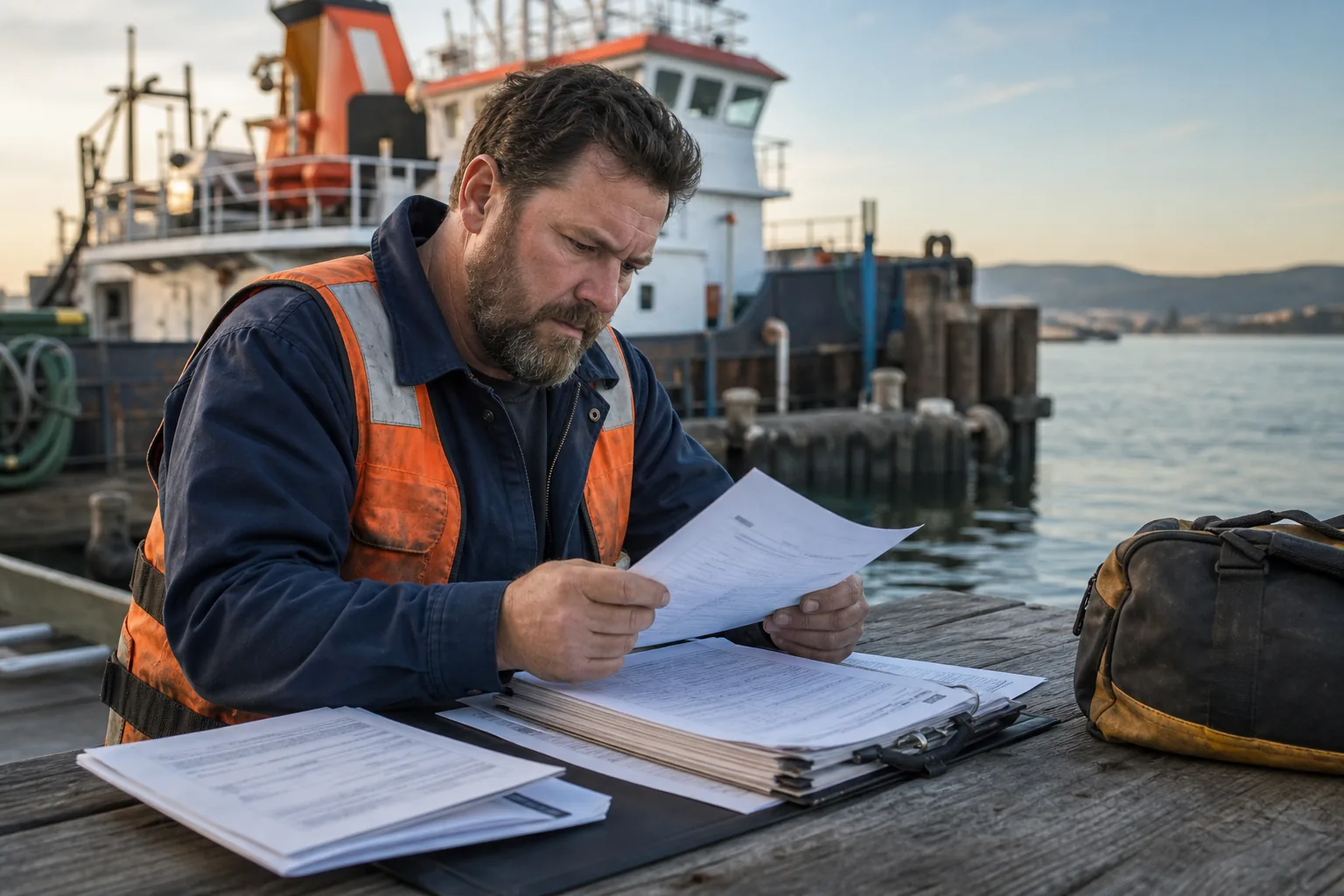
How to Claim Offshore Injury Compensation

An offshore injury claim can involve more than one employer, vessel owner, or legal rule. The right path depends on your job, the site of the accident, and how the injury happened.
Move quickly. Report the injury, preserve proof, identify the law that fits your work, and track every deadline. These steps can help protect your claim while maritimeattorney.ai reviews your options.
Step 1: Identify Which Offshore Injury Law Applies
Offshore injury compensation starts with one question: which law covers your work? Your job title alone doesn't answer it. Your daily duties, time spent on vessels, work site, and employer's business all matter.
Seamen may bring claims under the Jones Act when employer negligence or an unsafe condition contributed to an injury. A seaman may also seek maintenance and cure. Those benefits can cover basic living costs and medical care tied to the injury, subject to the facts of the case.
Workers who aren't seamen may fall under the Longshore and Harbor Workers' Compensation Act. That law can cover some longshore workers, ship repair workers, terminal workers, and other maritime employees. Workers on fixed platforms may also raise claims under the Outer Continental Shelf Lands Act, depending on the location and facts.
Don't assume that working offshore automatically means one law applies. A person who spends most of a shift on a vessel may face a different analysis from a worker stationed on a fixed platform. A contractor may also have claims against a site owner or another company.
For basic background, compare the plain-language definitions of offshore and onshore work in this offshore versus onshore overview. It isn't a legal guide, but it shows why location alone doesn't settle the issue.
| Work setting or role | Possible legal path | Question to check |
|---|---|---|
| Seaman on a vessel | Jones Act and general maritime law | Did vessel work make up a meaningful part of the job? |
| Longshore or harbor worker | LHWCA | Did the injury occur in a covered maritime job and site? |
| Fixed offshore platform worker | OCSLA or another law | Was the platform on the outer continental shelf? |
| Contractor or visitor | Negligence or premises claim | Who controlled the hazard? |
Write down your job title, normal duties, vessel assignments, platform location, and the names of companies on site. Save your work contract, pay records, safety rules, and crew records if you can access them lawfully.
By now you should have: a short timeline of your work, a list of possible laws, and the names of every company involved.
Step 2: Report the Injury and Preserve Evidence
Prompt reporting helps establish when and how the injury occurred. It also starts a record that may later show what your employer knew about the hazard.
Tell your supervisor or designated safety officer as soon as you can. Use the required report system, but don't rely on a verbal report. Ask for a copy. If the company won't provide one, write down the date, time, person notified, and exact words used.
Get medical care even if the pain seems minor. Offshore injuries can worsen after a worker returns home. Tell the medical provider that the condition began at work. Describe symptoms in plain terms. Don't guess at a diagnosis, and don't downplay pain to stay on the job.
Build your own evidence file. Keep copies of:
- Incident reports and witness names.
- Photos of the work area, tools, deck, equipment, and visible injuries.
- Medical records, prescriptions, travel costs, and treatment instructions.
- Pay records, schedules, tax documents, and missed-work dates.
- Texts, emails, safety complaints, training records, and inspection notes.
Preserve the original files when possible. A screenshot may help, but the original message or photo carries more context. Store a second copy somewhere outside your work account.
Don't post about the incident on social media. Don't sign a release or recorded statement before you understand what it covers. A quick settlement may close claims you haven't yet identified.
The U.S. Occupational Safety and Health Administration's recordkeeping guidance explains how workplace injury records function in covered settings. Its rules don't decide every maritime claim, but they show why timely records matter.
If the company sends you to a doctor, attend the visit. You can still seek an independent review when needed. Tell your lawyer about every provider, even if one visit seemed unimportant.
By now you should have: a report trail, medical proof, preserved records, and a private copy of key evidence.
Step 3: Determine Who May Be Liable
Offshore injury compensation may come from more than one responsible party. Start with the event, then work outward to the people and companies that controlled the risk.
Ask who hired you. Then ask who supervised the task. The answers may differ. A staffing company may pay you while an operator controls the platform. A vessel owner may control the ship while another company directs the job.
Possible parties can include:
- Your direct employer.
- A vessel owner, operator, or charterer.
- An offshore platform owner or operator.
- A drilling, production, or service company.
- An equipment maker or maintenance contractor.
- A coworker whose conduct caused the event.
Liability depends on proof. A loose grate suggests one set of questions. A crane strike suggests another. For a fall, look at lighting, access, guardrails, inspection logs, training, and the steps taken after earlier complaints.
Don't focus only on the company that issued your paycheck. Identify who supplied the equipment. Find out who had the power to stop the work. Check whether another crew changed the work area before the accident.
Write a simple control map. Put the task in the middle. Around it, list the employer, site owner, vessel owner, supervisor, equipment provider, and witnesses. Add the document that may connect each party to the hazard.
For example, a failed hose may point toward maintenance records. A collision may require vessel logs and voyage data. A toxic exposure may call for chemical records and prior safety complaints. The same injury can support different theories based on its cause.
Don't accuse a company in writing without proof. Keep your notes factual. State what you saw, who gave an instruction, and what happened next.
At maritimeattorney.ai, you can organize this control map before seeking a case review. Bring the names, records, and timeline rather than relying on memory alone.
Step 4: Calculate the Compensation You May Recover
The value of offshore injury compensation depends on the legal claim and the proof behind each loss. Don't pick one number too early. First list every cost and effect of the injury.
Economic losses may include past medical care, future treatment, travel for appointments, lost wages, reduced earning ability, and household help. Keep bills and receipts. Ask your employer for wage and schedule records if you don't have them.
Non-economic losses may include pain, emotional distress, loss of normal activities, and the effect of a lasting disability. The strength of these parts often depends on medical records and your own consistent account.
Some maritime claims can also raise issues tied to unseaworthiness or employer negligence. A seaman's claim may involve maintenance and cure. A covered employee may instead pursue benefits under a compensation statute. These paths have different rules, so don't combine figures from one legal theory with another without review.
Make a loss worksheet with four columns:
- Loss or symptom.
- Date and amount.
- Document that supports it.
- What remains uncertain.
Include unpaid time, reduced hours, job changes, and work you can no longer perform. If your earnings vary, gather pay records from before and after the injury. A lawyer may need to separate normal income changes from losses caused by the accident.
Future losses need care. A doctor may explain treatment needs. A vocational expert may assess work limits. Your own account matters, but it works best beside records that show the change.
Be careful with social media and work applications. A photo of a recreational activity doesn't prove full recovery, but an insurer may use it to question your limits. Explain activity changes to your doctor rather than trying to prove your condition online.
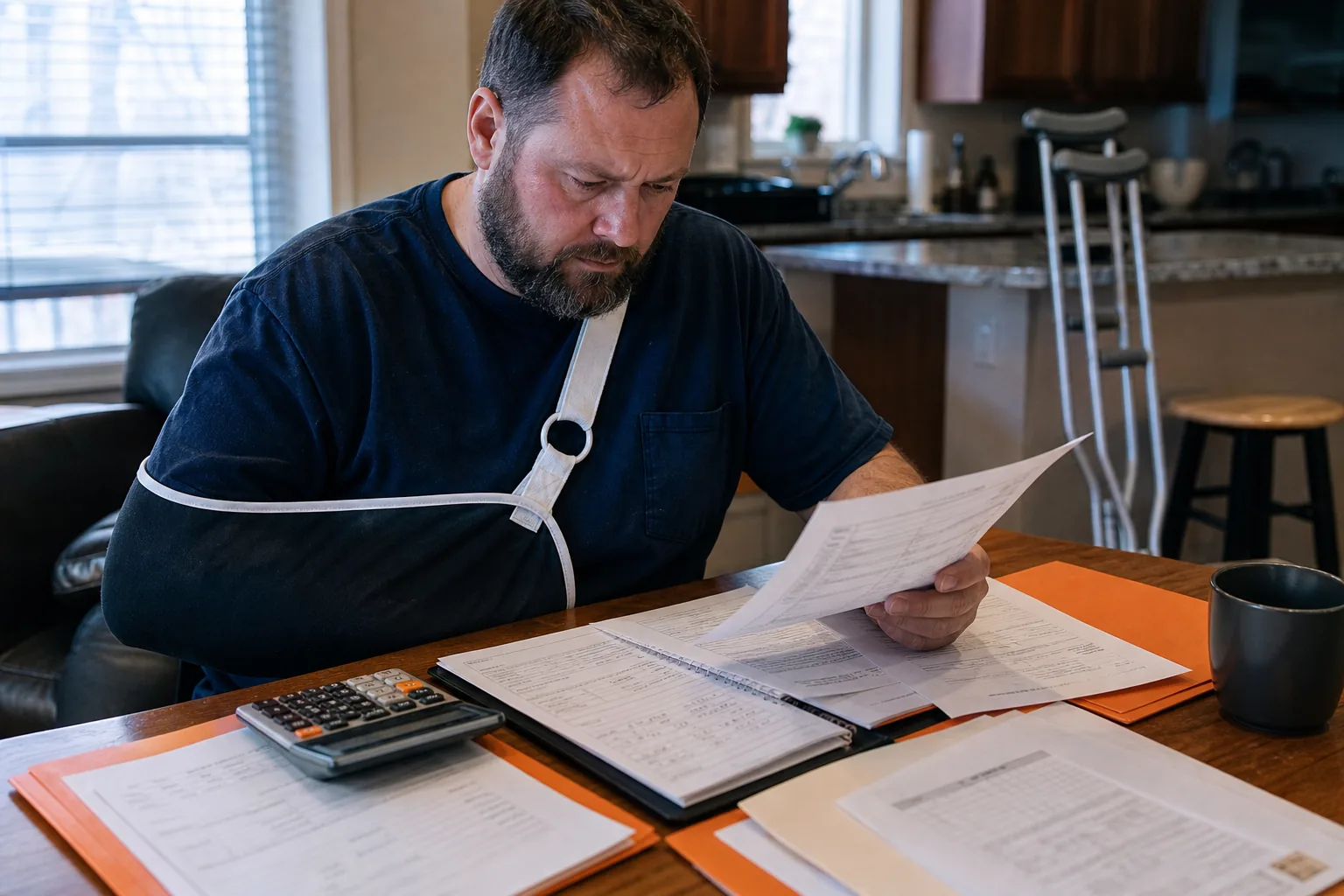
A settlement should account for known losses and a fair estimate of future effects. Once you sign a release, you may lose the right to seek more money for later treatment.
By now you should have: a documented loss worksheet, supporting records, and a list of future medical or work questions.
Step 5: File the Claim Before the Applicable Deadline
Deadlines can end an offshore injury claim even when the injury is serious. The correct deadline depends on the law, defendant, location, and claim type.
Some Jones Act claims use a three-year limitation period. LHWCA claims have their own notice and filing rules. Contract terms, government defendants, and claims against third parties can add separate requirements. Never treat one deadline as a safe rule for every offshore worker.
Start a deadline file on the day of the injury. Record the accident date, first notice date, medical diagnosis date, last treatment date, and any date in a company form. Keep letters from insurers and employers in that file.
Ask a maritime lawyer to check:
- Which law applies.
- When the clock began.
- Whether notice had to be sent in a certain form.
- Whether a government or public entity is involved.
- Whether a contract changes where or how a claim must be filed.
Filing a workers' compensation form may not preserve every third-party claim. A settlement negotiation may not stop a court deadline. An internal injury report is not the same as filing a lawsuit.
If you're still receiving treatment, don't wait for a final diagnosis before getting legal advice. A lawyer can help protect the claim while the medical picture develops. That doesn't mean you must sue at once. It means you should know the steps that cannot wait.
Keep communication careful. Give accurate facts. Don't speculate about fault. Don't sign broad releases without legal review.
For a focused review of documents and timing, maritimeattorney.ai can help you sort the claim into the right legal path. Gather your evidence before the first consultation so the review can address facts rather than guesswork.
Frequently Asked Questions About Offshore Injury Compensation
How much is offshore injury compensation worth?
There is no fixed amount for offshore injury compensation. The value depends on medical costs, lost income, future limits, pain, the legal claim, and proof of fault. A short treatment period may produce a different result from a permanent disability. Don't rely on an online estimate before reviewing records with a maritime lawyer.
Can I sue my employer for an offshore injury?
You may be able to sue your employer under the Jones Act if you qualify as a seaman and employer negligence contributed to the injury. Other workers may use a maritime compensation law instead. The answer turns on your duties, work site, employer, and the cause of the accident.
What should I do after an offshore accident?
After an offshore accident, get medical care and report the injury in writing. Save photos, messages, work records, and witness details. Keep copies outside your employer's system. Avoid signing a release or giving a recorded statement until you understand its effect on possible offshore injury compensation.
How long do I have to file an offshore injury claim?
The filing period varies by claim type. Some Jones Act claims use a three-year limit, while LHWCA claims have different notice and filing rules. A third-party claim may have another deadline. Get a date review early because an injury report alone may not preserve every legal claim.
Do I need an offshore injury lawyer?
You don't always need a lawyer, but maritime claims can involve overlapping laws and several companies. A lawyer can assess coverage, preserve evidence, value future losses, and check deadlines. maritimeattorney.ai is a place to begin that review, especially when an insurer asks you to sign papers.
Conclusion
Start with the law that fits your work, then build the claim around records rather than memory. Report the injury, protect evidence, track every date, and avoid signing a release too soon. Your next step should be a prompt case review with maritimeattorney.ai or another maritime lawyer who can assess the facts before a deadline passes.