Offshore Injury Attorney: Essential Resource Guide

Working on a boat, rig, or vessel is dangerous. One wrong step can change your life. If you get hurt, you need help fast. That's where an offshore injury attorney comes in. They know the special laws that protect maritime workers. This guide walks you through everything you need to know. You'll learn what these lawyers do, how to pick one, and what steps to take right after an accident. We'll cover the Jones Act, common hurdles, and resources to find help. No fluff. Just clear, practical advice.
Understanding Offshore Injury Law
Maritime law is not like regular personal injury law. It has its own rules and its own terms. The most important law for offshore workers is the Jones Act. It passed in 1920. It lets seamen sue their employers for negligence. That's a big deal. Most workers can't sue their bosses for workplace injuries. But seamen can. And they can recover full damages, including pain and suffering, lost wages, and medical bills. That's way more than workers' comp offers.
To qualify as a seaman under the Jones Act, you must spend at least 30% of your work time on a vessel that's in navigation. Your job must also help the vessel do its mission. That could be fishing, towing, drilling, or transporting goods. Courts use the 30% rule from the Supreme Court case Chandris, Inc. v. Latsis (1995). If you don't meet that, you might be covered by a different law, like the Longshore and Harbor Workers' Compensation Act (LHWCA) or the Outer Continental Shelf Lands Act (OCSLA). It gets complicated. That's why an offshore injury attorney is essential.
Let's look at the three main ways an injured seaman can get money:
- Jones Act negligence claim , You prove your employer was at least partly at fault. The bar is low. You only need to show that their negligence played "any part, even the slightest" in causing your injury. That's called the featherweight standard.
- Unseaworthiness claim , You don't need to prove fault. You just show that the vessel wasn't reasonably safe for its job. This is strict liability. The owner is responsible even if they didn't know about the problem.
- Maintenance and cure , This is your automatic right to daily living expenses and medical care until you reach maximum medical improvement. It doesn't matter who caused the injury. The employer must pay it.
Here's a quick comparison of how Jones Act claims differ from workers' compensation:
| Feature | Jones Act | Workers' Comp |
|---|---|---|
| Pain and suffering | Yes, you can get it | No |
| Lost wages (future) | Full amount | Capped |
| Burden of proof | Very low (featherweight) | No fault needed |
| Jury trial | Yes | No |
| Maximum payout | No cap | Limited by law |
The Jones Act is powerful. But you have to act fast. The statute of limitations is only three years from the date of injury. Miss that window, and you lose your right to sue. That's another reason to contact an offshore injury attorney right away. They'll make sure you file on time.
According to this guide from Southern Injury Attorneys, average Jones Act settlements for serious injuries range from $500,000 to $1.5 million. But every case is different. The amount depends on how bad your injuries are, how much you lost, and how strong the evidence is. A good lawyer can help you get the maximum.
Bottom line: Offshore injury law is unique and complex, but the Jones Act gives seamen strong protections that regular workers don't have.
Key Traits of an Effective Offshore Injury Attorney
Not every personal injury lawyer can handle offshore cases. You need someone who specializes in maritime law. The right offshore injury attorney will have specific experience and a clear track record. Here are the key traits to look for:
Deep Knowledge of Maritime Law
Maritime law is a whole different world. It includes the Jones Act, general maritime law, the LHWCA, and the OCSLA. A good attorney knows which law applies to your situation. They also understand how to prove unseaworthiness or employer negligence. They should be able to explain the featherweight standard to you in plain terms. Ask them how many Jones Act cases they've handled. If they can't answer, keep looking.
Experience with Your Type of Injury
Offshore injuries range from broken bones to burns to brain injuries. Each type requires different experts and evidence. For example, a back injury might need a biomechanical engineer to show how the accident happened. A burn case might need a medical expert to explain future surgeries. An experienced offshore injury attorney
They should also know the specific vessels and conditions you work on. Offshore supply vessels, fishing boats, oil rigs , each has different hazards. A lawyer who has handled cases on rigs will know what evidence to look for. They'll know about the usual safety violations and the tricks employers use to avoid responsibility.
Resources to Build a Strong Case
Maritime cases are expensive to litigate. You need experts, accident reconstruction, and sometimes private investigators. A solo practitioner might not have the cash to fight a big oil company. Look for a firm with the resources to do a full investigation. They should have a track record of taking cases to trial, not just settling for quick money.
Good Communication and Trust
You'll be working closely with this person for months or years. They should answer your calls and emails. They should explain things in plain English. If you feel rushed or confused, that's a red flag. A great lawyer treats you like a partner, not a number.
Bottom line: The right attorney knows maritime law inside and out, has experience with your injury type, and has the resources and communication style you can trust.
Questions to Ask in Your First Consultation
Your first meeting with an offshore injury attorney is your chance to decide if they're the right fit. Come prepared with questions. Here are the most important ones to ask:
- How many offshore injury cases have you handled? You want someone who does this regularly, not a generalist who takes one every few years.
- What kind of results have you gotten? Ask for specifics , settlements, trial verdicts, and appeals. They shouldn't promise a specific amount, but they should share past outcomes.
- Who will work on my case? Will it be you, or will a junior associate handle most of it? Know who you'll be dealing with.
- What is your fee structure? Most maritime lawyers work on contingency. That means they take a percentage (often 33-40%) of your settlement. Ask about costs too , fees for experts, filing, etc.
- How will you communicate with me? Will you call, email, or use an online portal? How often can I expect updates?
- What are the strengths and weaknesses of my case? A honest lawyer will tell you both. If everything sounds too perfect, be wary.
- How long do you think my case will take? Give you a rough timeline. Maritime cases can take six months to two years.
These questions come straight from advice given by the Knightshead Law Firm. They know that the right fit is not just about skill. It's also about how well the lawyer communicates and how comfortable you feel.
Bottom line: Asking the right questions helps you find a lawyer who matches your needs and gives you confidence in the process.
Common Hurdles in Offshore Injury Cases

Even with a great offshore injury attorney, you'll face challenges. Knowing them ahead of time helps you prepare. Here are the biggest hurdles:
Proving Your Seaman Status
Your whole case depends on whether you qualify as a seaman under the Jones Act. Employers often fight this. They'll say you didn't spend enough time on the vessel or that your duties were not maritime. You need solid records of your work history. A lawyer will help gather evidence like time logs, pay stubs, and witness statements.
The Employer's Team of Lawyers
Big offshore companies have huge legal teams. They will try to make you settle cheap. They'll pressure you to sign a release. They might even try to blame you for the accident. This is where an experienced offshore injury attorney levels the playing field. They know the tricks and how to counter them.
Difficult Evidence Collection
An offshore accident happens miles out at sea. By the time you get a lawyer, the scene may be cleaned up, witnesses may have left, and equipment may be repaired. That's why you need to act fast , preserve evidence, take photos, and get witness names. Your lawyer can also send investigators or use legal orders to protect evidence.
The Statute of Limitations
You have only three years to file a Jones Act lawsuit. In some cases, you may have even less time if the accident happened on a fixed platform or in state waters. If you miss the deadline, your case is dead. A lawyer will make sure you file on time.
Dealing with Insurance Companies
Insurance adjusters are trained to pay as little as possible. They might record your calls, ask tricky questions, or offer a quick settlement that doesn't cover your future needs. Never give a statement or sign anything without your lawyer. The advice from this maritime injury checklist is clear: don't talk to anyone but your attorney.
Bottom line: The biggest hurdles are proving your status, fighting the employer's resources, preserving evidence, and beating deadlines. A skilled attorney handles these for you.
Resources for Finding the Right Attorney
Finding the best offshore injury attorney doesn't have to be random. Use these resources to make an informed choice:
- State and local bar associations , Many have lawyer referral services. They can give you names of maritime specialists in your area.
- Legal directories , Websites like Justia and the LII Lawyer Directory (from Cornell Law School) list lawyers by practice area. You can search for maritime law in your state. This directory from Cornell is a good starting point.
- Online reviews and ratings , Check Avvo, Martindale-Hubbell, and Google reviews. Look for a pattern of positive feedback about communication and results.
- Trade unions and associations , If you belong to a maritime union, ask for their list of recommended attorneys. They often have pre-screened lawyers.
- Referrals from coworkers , Someone you trust who has been through this can point you to a lawyer who fought for them.
Once you have a few names, check their websites. Look for articles and case results related to offshore injuries. Call them and see how they treat you on the phone. Most offer a free initial consultation. Take advantage of that.
Bottom line: There are many resources to find a good lawyer , use them all to ensure you get someone who truly knows maritime law.
Immediate Steps After an Offshore Accident
Your actions right after an accident can make or break your case. Follow this step-by-step guide to protect yourself and your claim:
- Get medical help. Even if you feel okay, see a doctor. Some injuries, like concussion or internal damage, don't show symptoms right away. Your health comes first. Plus, a medical record creates proof that you were hurt.
- Report the accident. Tell your supervisor immediately. Ask for an accident report form. Write down everything you remember. Sign nothing you don't understand. Get a copy of the final report.
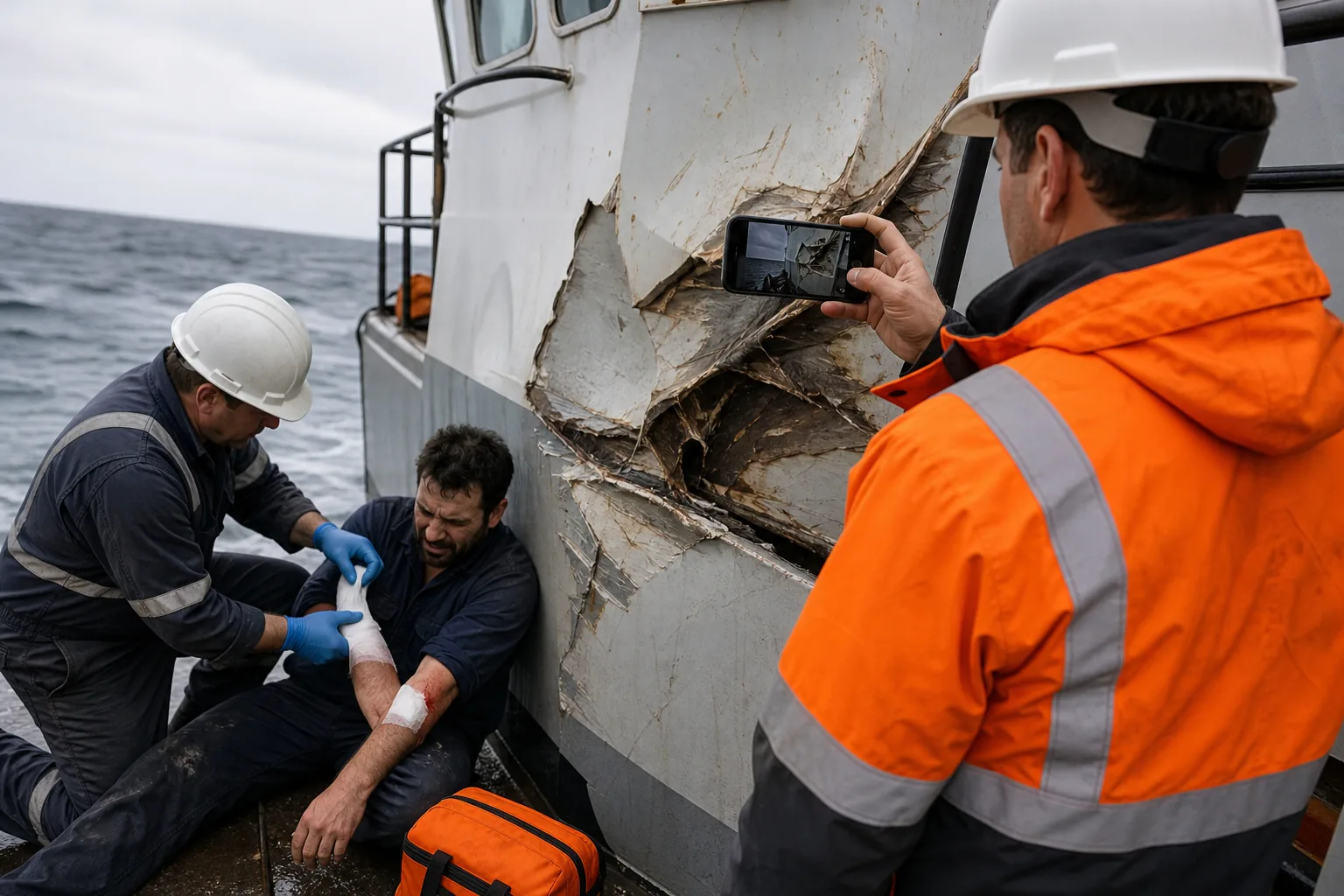
- Document everything. Take photos of the scene, your injuries, and any equipment involved. Get contact info for witnesses. Write down what happened in your own words while it's fresh.
- Preserve evidence. If you can, keep your work clothes, boots, and any damaged gear. Don't let the company take them without a fight. Your lawyer may need them.
- Do not give recorded statements. Insurance adjusters or company safety officers may ask for one. Politely decline: "I need to talk to my lawyer first." Anything you say can be used against you.
- Contact an offshore injury attorney immediately. Don't wait. The sooner you get legal advice, the better your chances. A lawyer can send preservation letters, gather evidence, and start the claim process.
- Keep all paperwork. Save medical bills, receipts, pay stubs, and correspondence. Organize them in a folder. Share copies with your lawyer.
These steps come right from the Maritime Injury Checklist by Pierce Skrabanek. Missing even one step can cost you thousands of dollars.
Bottom line: Act quickly , get medical care, report the incident, preserve evidence, and hire a lawyer. These steps protect your rights and strengthen your claim.
Frequently Asked Questions
What is an offshore injury attorney?
An offshore injury attorney is a lawyer who specializes in maritime law. They help workers injured on vessels, oil rigs, and other offshore facilities. They handle claims under the Jones Act, the Longshore Act, and general maritime law. They know how to prove negligence, unseaworthiness, and win maintenance and cure payments. These attorneys work on contingency, so you pay only if they win your case.
How much does an offshore injury attorney cost?
Most offshore injury attorneys work on a contingency fee basis. That means you pay nothing upfront. They take a percentage of your settlement or verdict, usually between 33% and 40%. Some also charge for costs like expert witnesses and filing fees. Always ask for a written fee agreement that explains exactly what you owe. If you don't win, you typically don't owe attorney fees, but you might still owe some costs.
How long do I have to file a claim?
The time limit depends on the law. Under the Jones Act, you have three years from the date of injury. For cases under the Longshore and Harbor Workers' Compensation Act, it's one year. If you sue in a different court or under a different law, the deadline may be shorter. That's why you should talk to an offshore injury attorney as soon as possible after an accident. Missing the deadline means you lose your right to compensation.
Can I sue my employer if I was partly at fault?
Yes. Under the Jones Act, pure comparative negligence applies. That means you can recover even if you were partly responsible for the accident. Your settlement will be reduced by your percentage of fault. For example, if you were 20% at fault, you could still collect 80% of the damages. But the employer's insurance will try to blame you as much as possible. A good lawyer fights to minimize your fault percentage.
What compensation can I recover?
You can recover economic damages like medical expenses, lost wages, and future earning capacity. You can also recover non-economic damages like pain and suffering, mental anguish, and loss of enjoyment of life. In some cases, you may get punitive damages if the employer's conduct was extreme. There is no cap on damages under the Jones Act, unlike workers' compensation. An offshore injury attorney will calculate all your losses, including future costs.
Do I need to live in a coastal state to hire a maritime lawyer?
No. Your lawyer can be licensed in any state but must be admitted to the federal court where you file your case. Many maritime lawyers have national practices and represent clients from all over the U.S. They can handle cases that happen on vessels anywhere in U.S. waters. Some even handle accidents in international waters if you meet certain criteria. When choosing an attorney, look for someone with experience in federal maritime law, not just someone local.
What is maintenance and cure?
Maintenance and cure is an ancient maritime right. If you're injured while working on a vessel, your employer must pay for your medical treatment and provide a daily living allowance (maintenance) until you reach maximum medical improvement. This is no-fault , you get it regardless of who caused the injury. If the employer unreasonably withholds maintenance and cure, a court can order punitive damages and attorney's fees. An offshore injury attorney will enforce this right for you.
Will my case go to trial?
Most offshore injury cases settle before trial. But a good attorney prepares every case as if it will go to court. If the insurance company offers a fair settlement, your lawyer will recommend accepting it. If they lowball you, your lawyer can file a lawsuit and take the case to a jury. Jones Act cases give you the right to a jury trial. Having a lawyer with trial experience gives you use , the other side knows you're not afraid to fight.
Conclusion
Getting hurt offshore is scary. You're in pain, you can't work, and the future is uncertain. But you don't have to face it alone. An offshore injury attorney can guide you through the process and fight for the money you need. The Jones Act gives you powerful protections, but only if you act quickly and choose the right lawyer. Use the questions in this guide to vet candidates. Take the immediate steps we outlined: get medical care, document everything, and call a lawyer. Don't sign anything or give recorded statements without legal advice. The resources listed here , from bar associations to legal directories , will help you find a qualified professional. Your health and your family's well-being depend on getting the best representation. Start today. Contact an experienced offshore injury attorney for a free consultation. They'll evaluate your case and explain your options. You owe it to yourself to get the full compensation you deserve.