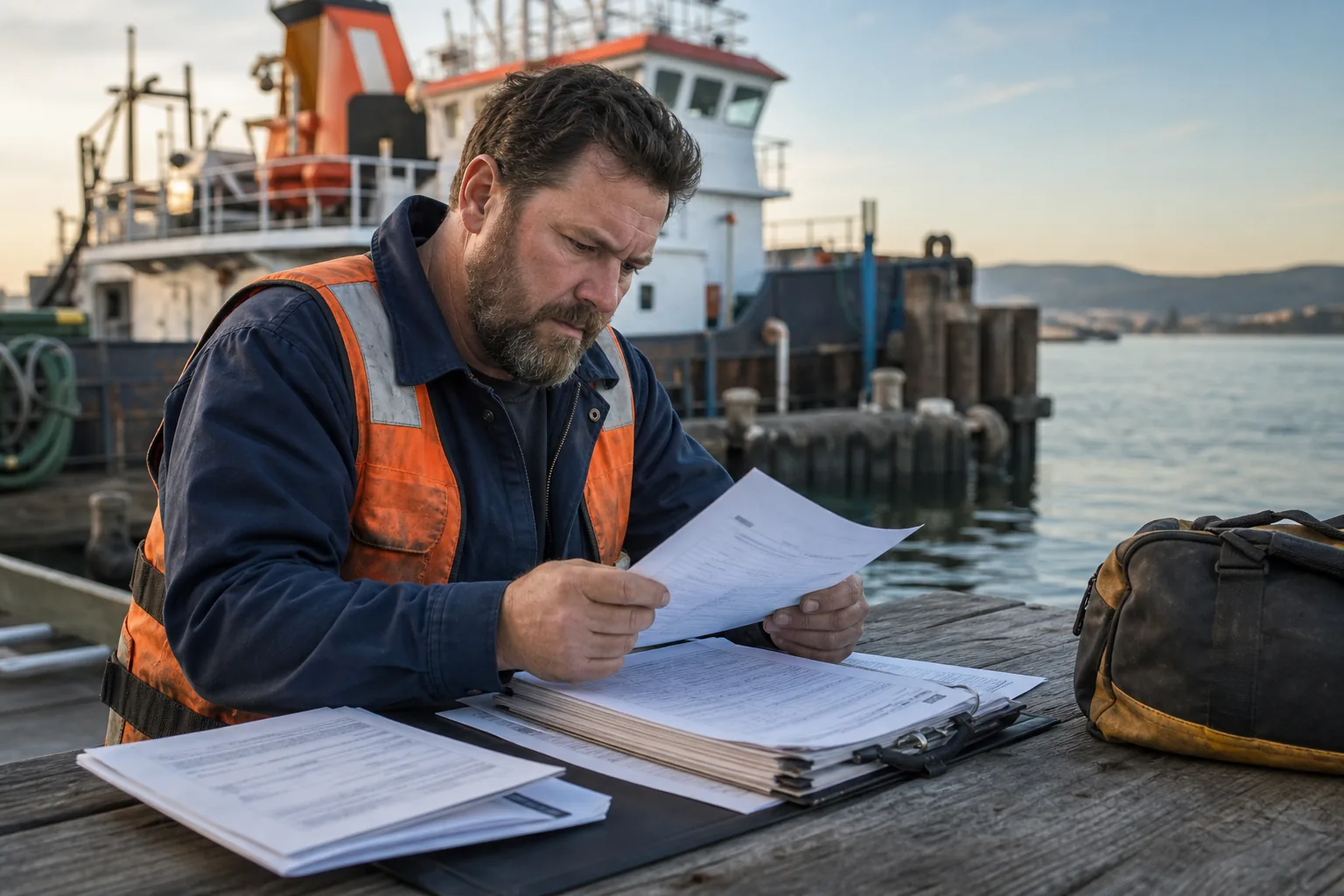
How to Find a Merchant Marine Lawyer
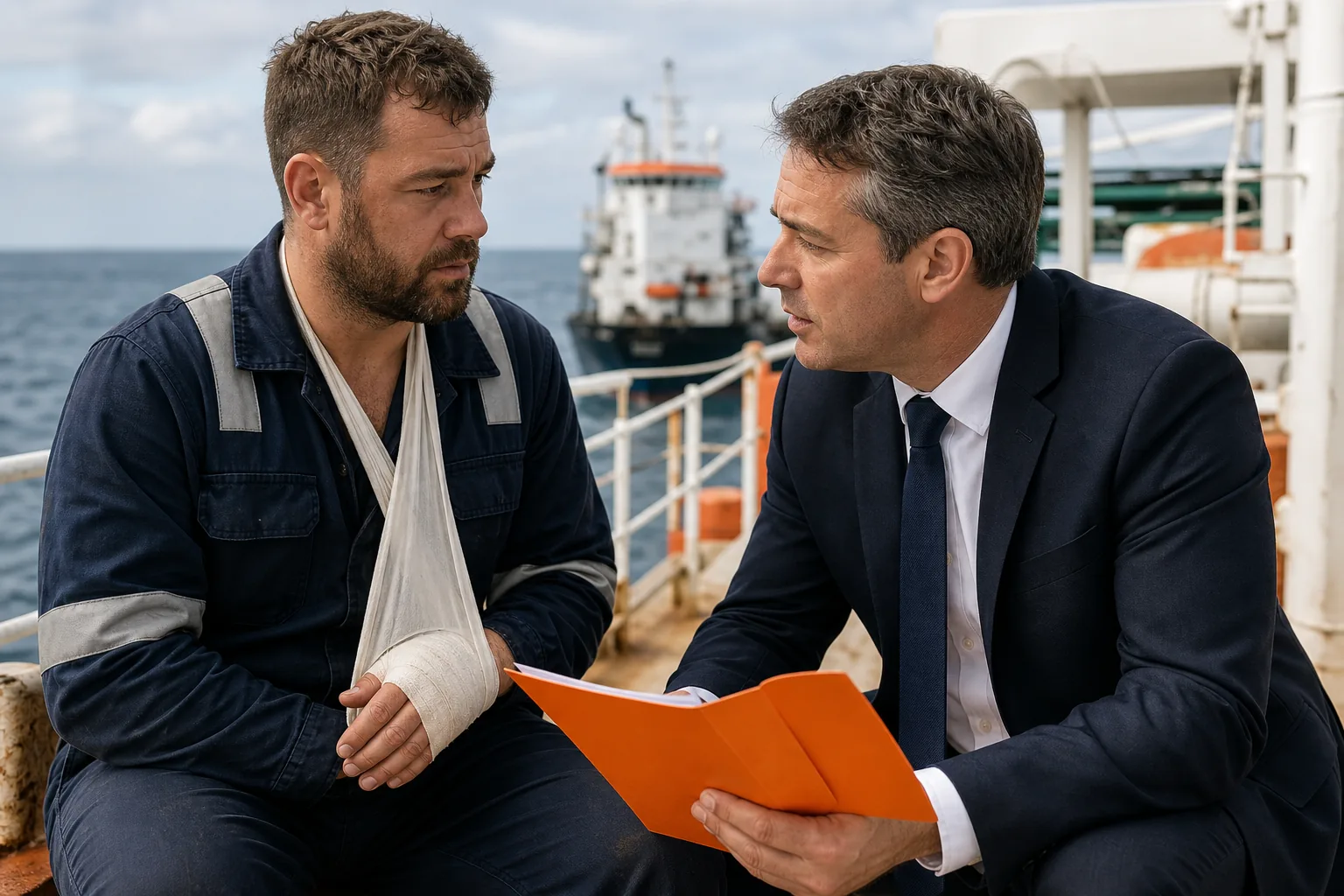
A workplace injury at sea can raise legal issues that ordinary injury firms may not handle. The right merchant marine lawyer can assess your status, preserve key evidence, and protect your claim before deadlines close. Use these four steps to find counsel who understands the vessel, your job, and the law behind your injury.
Step 1: Confirm That Your Injury Falls Under Maritime Law
Your first task is to learn which maritime rules may apply. A merchant marine lawyer will need details about your job, your vessel, and where the injury took place.
Start by writing down your job title and your daily duties. A deckhand, engineer, mate, pilot, captain, or other crew member may have a different legal path from a dock worker or a visitor. Your work pattern matters too. Ask how much time you spent working aboard a vessel and what connection your work had to the vessel’s mission.
The Jones Act may apply when a qualifying seaman suffers an injury because of employer negligence, a co-worker’s conduct, unsafe work conditions, or defective equipment. The law can also involve claims for lost wages, pain, disability, and related losses. The facts must be reviewed case by case.
Do not assume that your employer’s workers’ compensation process settles the issue. Merchant mariners often have rights under maritime law instead of a standard state workers’ compensation system. A lawyer must still confirm the correct law, court, and claim route.
Review this Jones Act lawyer guide if you need a plain explanation of the worker protections that may apply. It can help you prepare better questions before your first legal meeting.
Look at the injury itself. A fall on a wet deck, a line strike, a lift injury, an engine-room accident, or harm caused by unsafe access may point to different evidence. Illness from repeated exposure may require a different review from a single accident.
Also identify whether maintenance and cure may be part of the case. These benefits can involve medical care and living support tied to a seaman’s injury or illness. Your lawyer should explain what you may seek, what your employer has paid, and what remains disputed.
Write down every place where the incident occurred. A ship in navigable waters, a dry dock, a terminal, an offshore worksite, and a shore facility may raise different questions. Location alone does not decide the case, but it gives the lawyer a starting point.
The legal label can wait. Your job now is to preserve the facts that let counsel apply the right label.
Step 2: Gather Evidence Before Speaking With a Lawyer
A merchant marine lawyer can work faster when you bring a clear record. Start with what you have. Do not delay a legal consultation while trying to build a perfect file.
Make a short timeline. Record the date, time, vessel, work task, weather or sea conditions, equipment involved, and the people who saw what happened. Add the first signs of pain, who you told, and what happened after the report.
Keep copies of documents that you can lawfully access, such as:
- Incident or injury reports.
- Medical records and discharge papers.
- Work schedules and pay records.
- Safety notices or written instructions.
- Emails or messages about the accident.
- Photos of the area, tools, gear, or visible injuries.
Save the original files when possible. Do not crop a photo in a way that hides the wider scene. Write down when each image was taken and who took it. If a co-worker has a photo, ask that person to keep the original.
Witness details can disappear quickly after a crew change. Record each person’s name, job, vessel role, and the best lawful way to reach them. Do not pressure anyone to change a statement. A clean record is more useful than a polished story.
Medical care comes first. Tell medical staff how the injury happened and describe every symptom. Do not leave out pain because it seems minor. Some injuries grow worse after a shift, a voyage, or a period of physical work.
Be careful with recorded statements. An employer, insurer, or claims adjuster may ask for one before you understand the legal issues. You can stay polite while asking for time to get legal advice. Do not sign a release or settlement paper because someone says it is routine.
Keep a simple expense log. List travel for care, prescriptions, unpaid time, and other costs tied to the injury. Add notes about missed duties and restrictions. Your lawyer can decide which losses belong in the claim.
Tell the lawyer about facts that may hurt your case too. Perhaps you missed a follow-up visit. Maybe you returned to work briefly. Full disclosure lets counsel plan for those facts instead of learning them from the other side.
By the time you speak with counsel, you should have a timeline, a witness list, and the main records tied to the injury.
Step 3: Evaluate Maritime Lawyers and Ask Focused Questions
The best merchant marine lawyer for your matter should understand maritime work, not merely accept personal injury cases. Compare lawyers by the match between their experience and your facts.
Look for a clear record of maritime cases involving crew members, vessel accidents, Jones Act claims, maintenance and cure disputes, or offshore injuries. Ask what part of the work the lawyer handles personally. A firm may have many lawyers, but your day-to-day contact could be someone with less maritime experience.
Ask focused questions during the consultation:
- Have you handled claims involving my type of vessel or job?
- Which maritime laws might apply to these facts?
- What evidence should we preserve now?
- What risks do you see in the claim?
- Who will manage my case after I sign?
- How will you keep me informed?
A good lawyer will not promise a result after a short call. The lawyer should explain what is known, what is missing, and what could change the analysis. That may include your seaman status, the employer’s conduct, medical proof, witness accounts, and the vessel’s condition.
Ask about the firm’s investigation plan. A prompt review may involve securing records, locating witnesses, studying company rules, and checking the equipment or work area. Maritime evidence can move or vanish after a vessel leaves port, so timing matters.
Experience should be specific. A lawyer who mainly handles cargo contracts may not be the right fit for a crew injury. A general injury lawyer may also lack experience with maintenance and cure, unseaworthiness issues, or the Jones Act’s proof rules.
Ask where the lawyer can practice and where the case may be filed. Maritime claims can involve federal law, state law, contracts, union rules, and more than one location. You need a lawyer who can explain that choice in plain language.
Some maritime firms describe their work with merchant mariners in detail, including the jobs performed on cargo ships, tankers, supply ships, and car carriers. That kind of detail can help you judge whether a firm knows the work setting behind your injury. The experience described by this merchant mariner injury practice shows the level of job-specific detail worth asking about.
Discuss fees before you decide. Many injury firms use a contingency arrangement, but the agreement should explain the fee, case costs, expert fees, and what happens if the claim does not recover money. Ask for those terms in writing.
Trust your ability to speak openly with the lawyer. You may need to discuss pain, job loss, prior injuries, medication, or pressure from an employer. If you cannot ask hard questions now, the relationship may become harder later.
Choose the lawyer who gives you a clear plan and realistic limits, not the one who makes the biggest promise.
Step 4: Review the Representation Agreement and Start the Claim
Before hiring a merchant marine lawyer, read the representation agreement line by line. It defines the work the lawyer will do and the money that may come out of a recovery.
Check whether the agreement covers only the injury claim or also includes maintenance and cure disputes, retaliation concerns, wage issues, or related claims. If a separate matter is excluded, ask who will handle it. Do not rely on a verbal answer.
Look for these terms:
- The lawyer’s fee percentage and when it changes.
- Responsibility for filing fees, records, experts, and travel.
- How case costs are paid if there is no recovery.
- Who may settle the claim.
- How you can end the relationship.
- How the file will be returned or transferred.
Ask the lawyer to explain every term you do not understand. A short pause now is better than a dispute over fees later. You can also ask for a copy to review before signing.
Once hired, give the lawyer a complete factual account. Include the names of supervisors, vessel owners, operators, medical providers, and witnesses. Tell counsel about every notice you received from an employer or insurer.
Follow medical advice and attend scheduled visits. Keep your lawyer informed about work restrictions, new symptoms, and changes in treatment. Do not post details about the accident or your recovery online. A public post can be taken out of context.
Your lawyer may send preservation requests or contact the employer and insurer. Let counsel handle claim discussions once representation begins. You should still read documents you receive and send them to the firm quickly.
Ask for a communication plan. Some clients want updates by email. Others need a scheduled check-in because they work at sea. Agree on how urgent messages will be handled when you are offshore or between voyages.
Maritime injury firms commonly stress the need for an early investigation because witnesses, physical evidence, and work records may become harder to find. A written plan helps turn that advice into tasks, such as gathering the vessel schedule, preserving gear, and requesting medical records. The fee and investigation terms should be clear before work begins, as explained in this discussion of maritime injury representation.
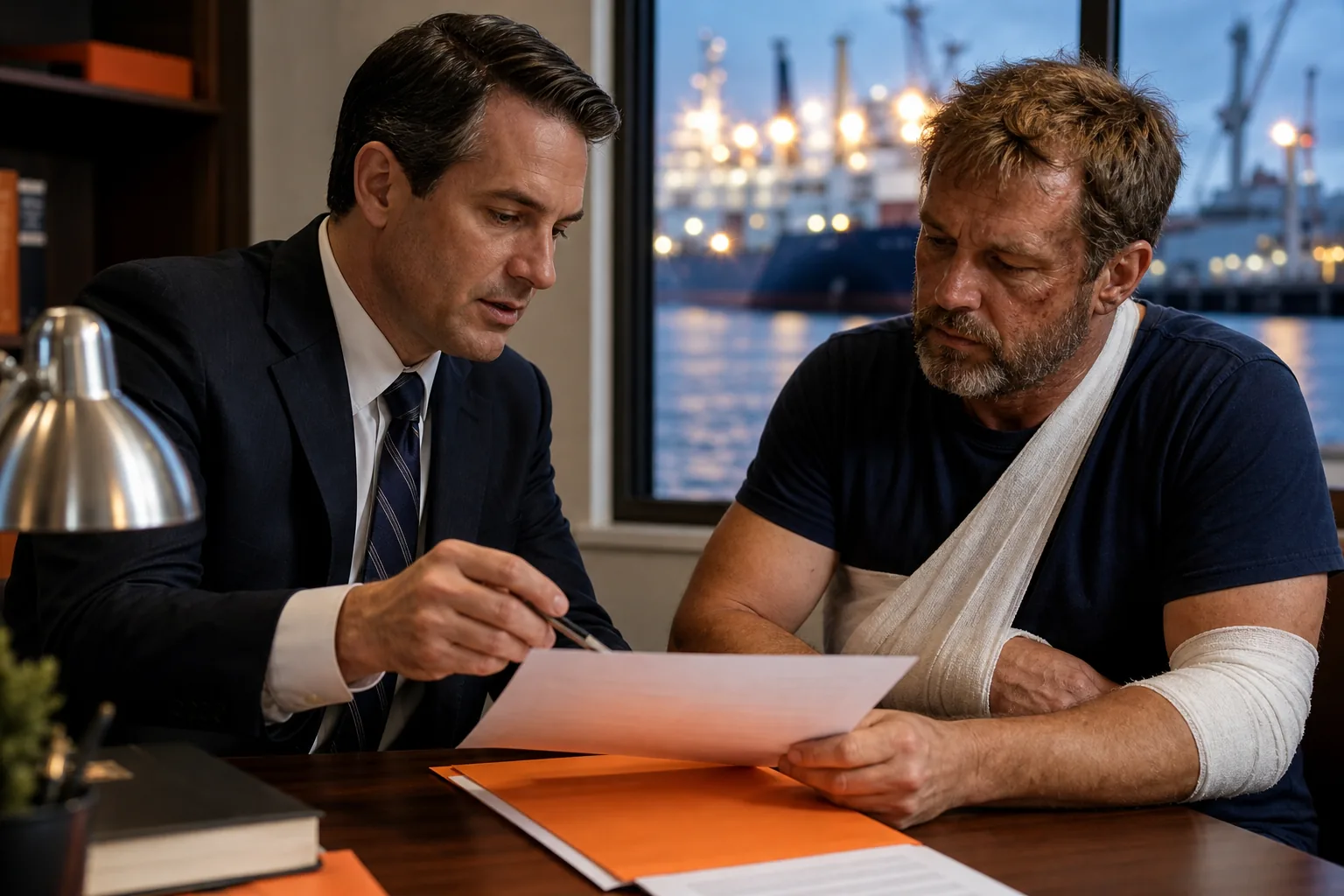
Keep copies of everything you sign. Note deadlines in a calendar, but do not assume a calendar replaces legal advice. The time limit may depend on the claim and the facts.
At this stage, you should know who represents you, what evidence must be protected, and what you need to do next.
Frequently Asked Questions About Merchant Marine Lawyers
What does a merchant marine lawyer do?
A merchant marine lawyer handles legal matters tied to commercial vessel work. That may include Jones Act injury claims, maintenance and cure disputes, unsafe vessel conditions, wage issues, or employer retaliation. The lawyer reviews your status, investigates the incident, deals with insurers, and explains which losses the law may allow you to seek.
When should I contact a maritime lawyer?
You should contact a maritime lawyer as soon as you can after an injury or disputed benefit. Early advice can help protect medical records, witness details, equipment, and statements. You do not need a complete case file first. A lawyer can tell you what to preserve and what communications to avoid.
How much does a merchant marine lawyer cost?
The cost depends on the firm and the type of claim. Many injury lawyers discuss contingency fees, but the written agreement should also explain case expenses and what happens if there is no recovery. Ask for the full fee terms before signing. Never assume that “no upfront fee” means no possible case costs.
Can I choose my own maritime lawyer?
In most situations, you can choose your own maritime lawyer rather than relying on an employer’s preferred contact. Your lawyer should represent your interests, explain conflicts, and keep your legal advice separate from the employer’s claims process. If you have already signed papers, show them to counsel before making another decision.
What should I bring to a maritime lawyer consultation?
Bring your timeline, medical records, pay information, injury reports, messages, photos, and witness details. Include letters from an employer, insurer, or vessel owner. If you cannot gather everything, bring what you have. A clear account of the injury is more useful than a delayed meeting with a perfect file.
Choose a lawyer who knows maritime work and gives you a clear plan without promising a result. If you want a starting point for organizing the legal questions, maritimeattorney.ai can help you frame the issues before you speak with counsel. Gather your records today, then arrange a consultation promptly.