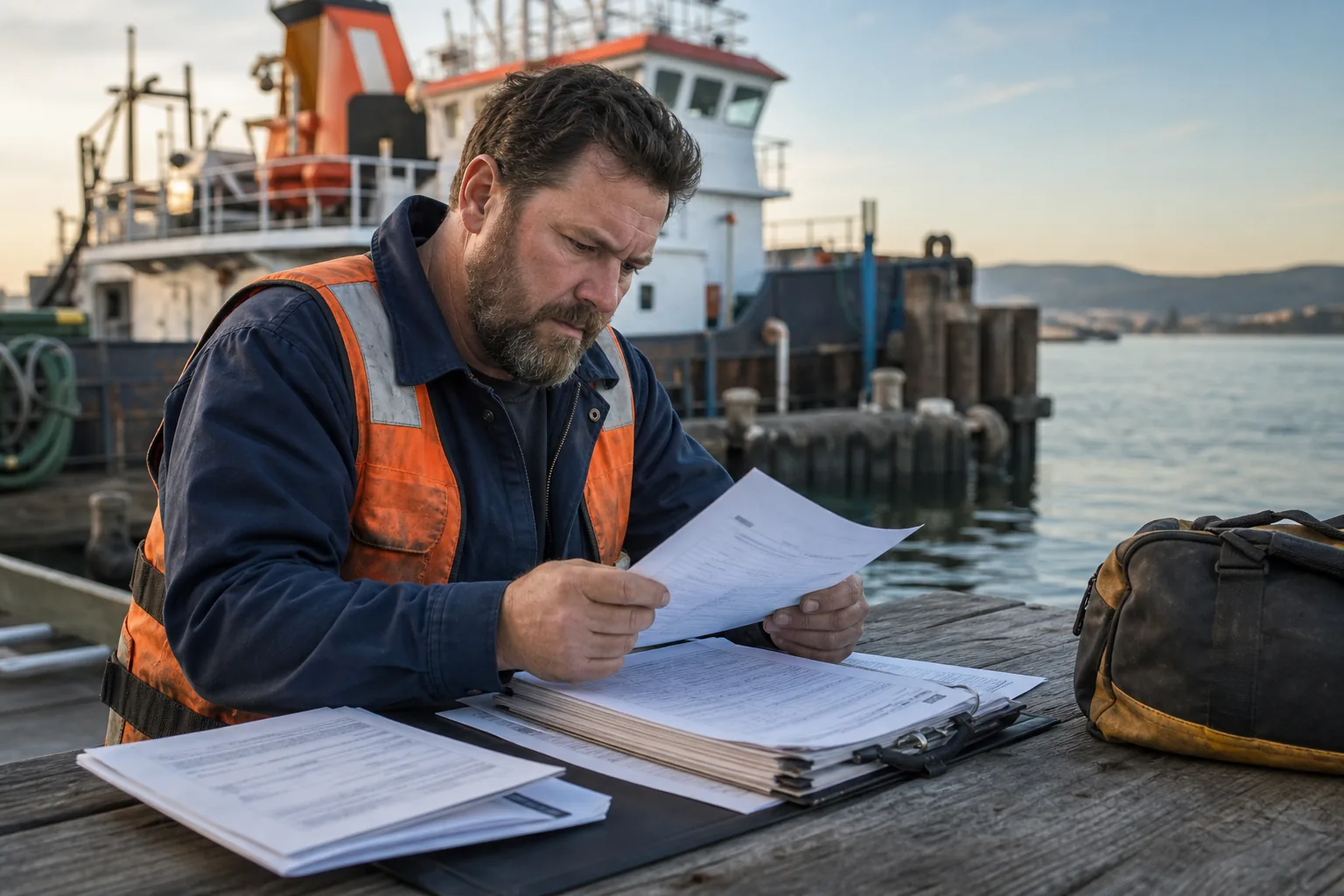
How to Handle Maritime Product Liability Claims
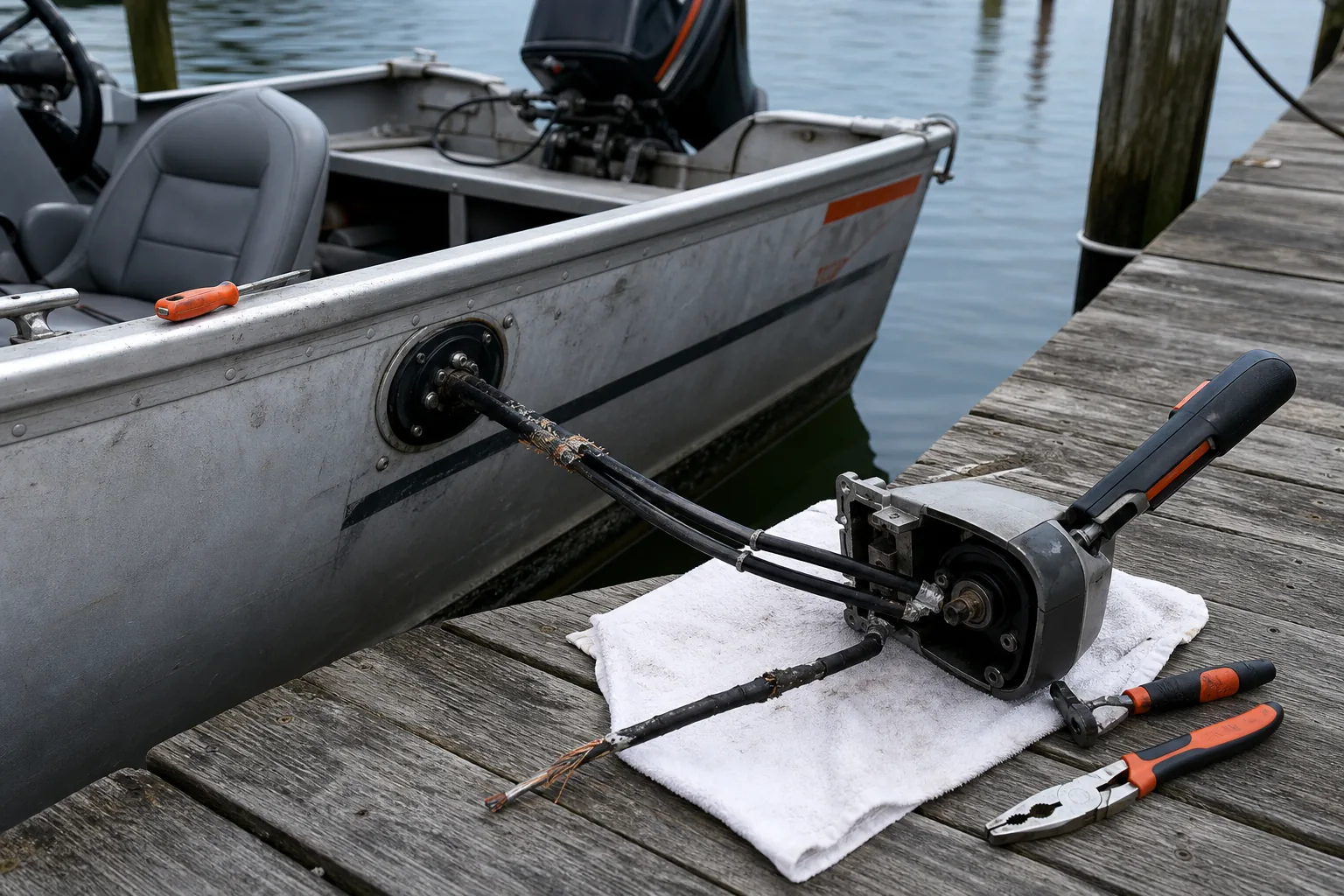
A broken marine part can turn a routine trip into a serious injury claim. The hard part is often proving what failed, who supplied it, and which legal rules apply. Follow these five steps to protect the evidence, build the claim, and avoid early mistakes.
Step 1: Identify the Product Defect and Maritime Connection
Start by defining the product defect and showing how the incident connects to maritime activity. A maritime product liability claim may involve a vessel, engine, steering system, safety device, cable, tool, or another marine component.
Write down what happened in plain language. Did a part break during normal operation? Did the product lack a needed warning? Was it installed in a way the maker could reasonably expect? Keep the focus on the product itself before deciding who is at fault.
Common defect theories include:
- Design defect: The product was built according to plan, but the plan made it unsafe.
- Manufacturing defect: One item varied from the intended design.
- Warning defect: The maker failed to explain a known danger or safe-use limit.
- Installation or maintenance issue: The product may have failed after an unclear instruction or an unsafe service process.
Next, record where the incident occurred. Admiralty jurisdiction often turns on two questions: did the event happen on navigable water, and did it have a connection to traditional maritime activity? The answer can affect the forum and the law that controls the claim.
A Louisiana federal court addressed this issue inThibodeaux v. T-H Marine Supplies, LLC. The case involved a trolling motor handle and cable that broke while the boat owner was moving the motor. The court allowed claims tied to failure to warn and possible reckless conduct to proceed past summary judgment. The case is discussed in Stone Pigman's summary of the maritime products liability ruling.
Don't throw away the failed item. Even a small fracture, worn thread, missing fastener, or altered fitting may help an engineer explain the failure. If the part is unsafe to store, photograph it in place before anyone moves it.
Step 2: Determine Which Law and Forum Apply
The next task in a maritime product liability case is to identify the law and court that may control it. Don't assume that every accident near water is governed by maritime law.
Gather the facts that shape jurisdiction:
- Where was the vessel when the event happened?
- Was the waterway navigable?
- Was the vessel being used for work, transport, fishing, recreation, or another purpose?
- Did the incident involve a vessel or marine equipment?
- Where do the injured person, manufacturer, seller, and repair business reside?
- Does a contract contain a forum, arbitration, warranty, or choice-of-law clause?
Federal maritime law may apply alongside state law. A state products law may also matter, especially when the claim concerns a purchase, warranty, or conduct that happened on land. The legal theories can overlap, but their rules may differ.
For example, a claim may rest on negligence, strict products liability, breach of express warranty, or breach of an implied warranty. A written warranty may limit some remedies. It may also set notice rules or require a particular process before suit. Read the purchase agreement, warranty booklet, service order, and any rental contract before sending a demand.
Admiralty law also has special rules for venue, removal, limitation actions, and procedural deadlines. The location of the injury does not answer every question. A case involving a pleasure boat can raise different issues from one involving a commercial vessel, even when the same part fails.
The interaction between maritime law, state remedies, and federal warranty law can be complex. A useful discussion of that overlap appears in Commette Law's explanation of marine warranties and admiralty products claims. Use it as background, not as a substitute for case-specific legal advice.
Make a short jurisdiction chart before you file anything. List each possible court, the facts supporting it, the likely law, and any deadline you need to check. Then have a maritime lawyer test that chart. Filing in the wrong place can waste time and give the defense an avoidable argument.
If the injured person works aboard a vessel, separate employment-based remedies may also apply. That can change the claim strategy. A worker should not assume a standard consumer products case covers every available remedy.
Step 3: Preserve Evidence and Document the Incident
Evidence preservation gives a maritime product liability claim its backbone. Start before the vessel is repaired, the part is discarded, or memories become unclear.
Take wide photos first. Show the vessel's position, weather conditions, deck layout, controls, and nearby objects. Then take close photos of the failed part. Include cracks, bends, corrosion, burn marks, worn areas, loose bolts, and any warning label. Keep the original files and note when each photo was taken.
Build an incident file with:
- The product, serial number, model, and purchase record.
- Installation instructions and maintenance logs.
- Service invoices and repair notes.
- Witness names and short factual statements.
- Coast Guard, harbor, employer, insurer, or incident reports.
- Medical records and work absence records.
- Messages, emails, videos, and social media posts about the event.
Preserve electronic evidence in its original form. Export vessel tracking data rather than relying on a screenshot. Save the full video file, not only a clipped version. Keep a copy in a secure location and avoid editing the original.
| Evidence | What it may show | First action |
|---|---|---|
| Failed component | Break point, wear, corrosion, or a manufacturing variation | Bag or store it safely without cleaning |
| Product manual | Warnings, use limits, and maintenance directions | Save every page and revision in your possession |
| Photos and video | Product position, operating conditions, and visible damage | Keep original files with date information |
| Medical records | Diagnosis, treatment, restrictions, and future care | Request complete records through the proper process |
| Wage records | Missed work and reduced earning capacity | Ask the employer for payroll and schedule records |
| Witness accounts | What happened before, during, and after the failure | Record names and facts before memories fade |
Send a written preservation request to the manufacturer, seller, marina, repair shop, vessel owner, and insurer when appropriate. Ask them to preserve the product, inspection records, complaint files, design documents, test data, and communications about the failure. Don't make accusations in that first notice. The goal is to stop evidence from disappearing.
maritimeattorney.ai can help readers organize the injury side of a case through its maritime personal injury claims guide. That resource is most useful when paired with a review of the failed product and the chain of custody.
Don't repair or return the product without legal advice. A well-meant repair can erase the condition that proves the defect.
Step 4: Identify Every Potentially Liable Party
Product liability rarely stops with the company whose name appears on the receipt. Map the full supply and service chain before choosing a defendant.
Potential parties may include:
- The product designer or manufacturer.
- The importer or distributor.
- The retailer or marine dealer.
- The boat builder or vessel seller.
- The installer, mechanic, or repair yard.
- The company that rented or supplied the equipment.
- The vessel owner or operator, if separate negligence contributed.
- An employer, charter company, or maintenance contractor in a work setting.
Separate product fault from service fault. Suppose a steering cable had a weak design, but a repair shop also installed it with the wrong fitting. Both facts may matter. One party may face a products claim while another faces negligence or warranty claims.
Warranty documents can point to the right parties. Check who gave the express promise, who sold the item, and whether the warranty was transferred to a later owner. A disclaimer may affect one theory but not every possible claim.
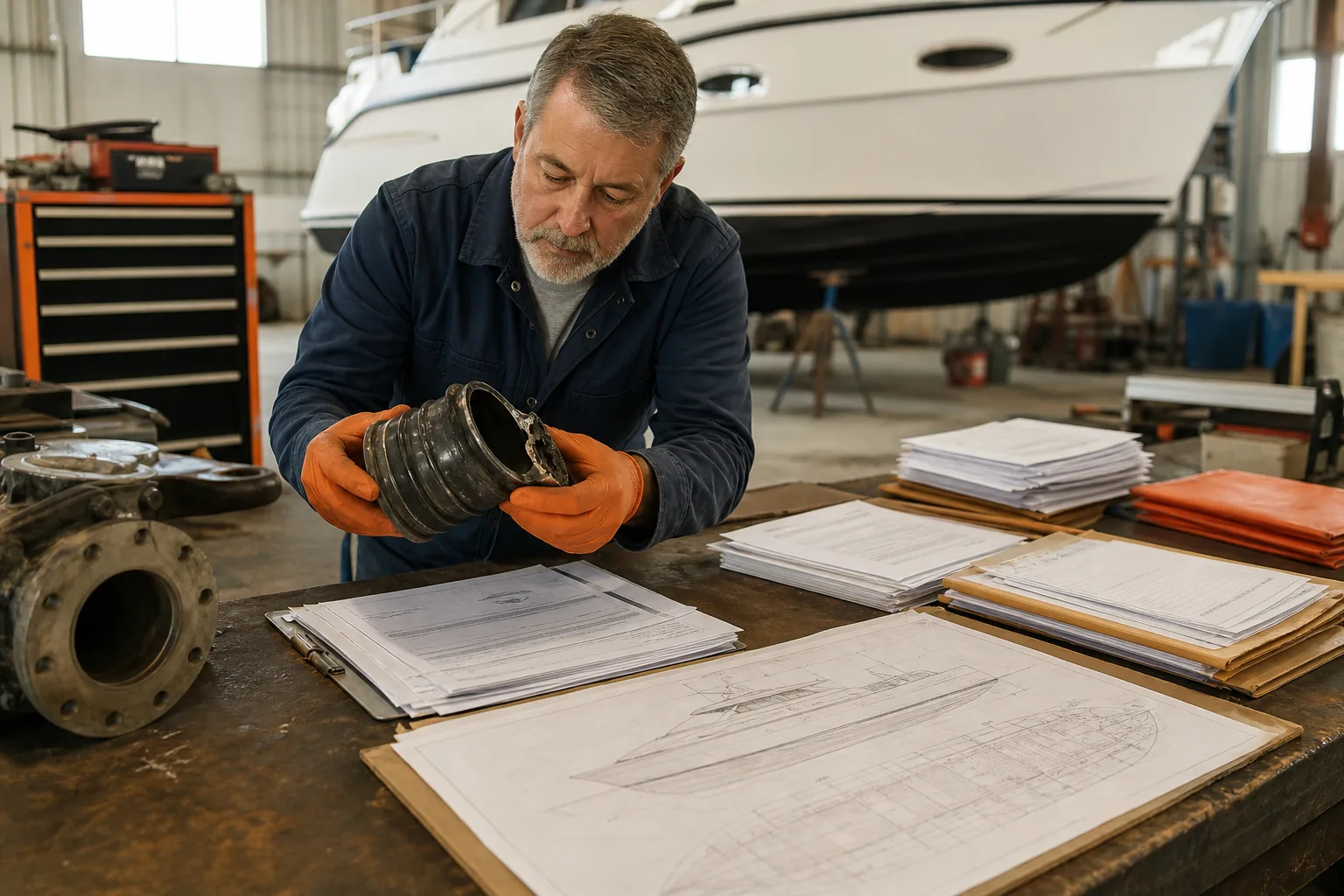
Build a party chart with four columns: name, role, relevant document, and possible legal theory. Add the insurer and any indemnity agreement to the chart, but don't treat insurance as proof of fault. Coverage questions and liability questions are separate.
Courts may also assess whether the product was defective when it left the defendant's control. Later changes, poor maintenance, misuse, or unauthorized repairs can become defense arguments. That doesn't end the claim, but it makes the product's condition at each handoff important.
Marine warranty claims can sit beside negligence and strict liability claims. As the discussion of vessel and equipment claims at Commette Law's marine warranty resource explains, a defective boat or component may raise both tort and contract theories. Ask counsel to preserve each theory before a deadline closes.
At maritimeattorney.ai, the sensible next move is a focused case review. Bring the party chart, purchase papers, photos, and product itself if it can be stored safely. That gives the lawyer something better than a general account of what went wrong.
Step 5: Prove Liability, Damages, and the Appropriate Remedy
The final step is to connect the defect to the harm and value the remedy. A maritime product liability claim needs more than proof that a part failed.
Most cases require evidence of four core points:
- The defendant made, sold, supplied, or controlled the product.
- The product had a defect or lacked a needed warning.
- The defect caused the accident and the claimed harm.
- The defect existed before substantial alteration or misuse.
An engineer may inspect the failed part and compare it with an exemplar that was never used. The expert may review the design, materials, load demands, installation method, maintenance history, and warnings. Keep the expert's work tied to the actual failure. A broad opinion about marine safety will not replace proof about this product.
Medical proof must connect treatment to the event. Keep the first emergency record, later diagnoses, therapy notes, prescriptions, and work restrictions together. If the injury affects future work, obtain evidence from medical and vocational experts. A person who returned to work may still have a wage-loss claim if the injury caused missed time or reduced capacity.
Damages may include:
- Past and future medical care.
- Lost income and reduced earning ability.
- Pain, disability, and loss of daily function.
- Property damage and repair costs.
- In some cases, other remedies allowed by the governing law.
Do not guess at a settlement value from a headline verdict. The result depends on the injury, evidence, defenses, venue, insurance, and applicable law. A demand should explain liability and damages with attached records, not rely on an inflated number.
Complex casualties can involve several jurisdictions and early investigation choices. Holland & Knight describes casualty work that may include crew interviews, expert retention, electronic discovery, product liability issues, and coordination across legal systems in its maritime casualty and product liability practice overview. That combination shows why a case may need legal, engineering, and medical work at the same time.
Before accepting an offer, check every claim that may be released. A settlement can affect claims for future care, property loss, warranty relief, or another injured person. Have a maritime attorney review the release and lien issues first.
Frequently Asked Questions
What is maritime product liability?
Maritime product liability is a claim involving a defective vessel or marine product that causes injury or property damage in a maritime setting. The defect may involve design, manufacture, warnings, or foreseeable use. Depending on the facts, the claim may rely on maritime law, state law, warranty rules, or more than one theory.
Who can be sued for a defective boat part?
The manufacturer is one possible defendant, but the seller, distributor, importer, installer, repair shop, or vessel owner may also matter. Liability depends on each party's role and the facts of the failure. Preserve sales records, service documents, and warranty papers before deciding whom to name.
What evidence helps a maritime product liability claim?
The failed product is often the most important evidence in maritime product liability cases. Keep it in the condition found after the incident. Add original photos, manuals, service records, witness details, medical records, wage proof, and electronic data that shows the vessel's position or operation.
Does a product defect have to cause an injury?
A defect does not always need to cause bodily injury for a legal claim to exist, but the available remedy may change. Property damage, warranty loss, and personal injury can involve different rules. A lawyer should review the product, the damage, the contract, and the place of the incident together.
When should I contact a maritime attorney?
Contact a maritime attorney soon after the incident, especially before the product is repaired or discarded. Early review helps protect evidence, check deadlines, identify the correct forum, and send preservation notices. maritimeattorney.ai is a starting point for organizing the facts, but a lawyer should give advice on your specific claim.
Conclusion
Handle the claim like an investigation: secure the failed part, record the maritime facts, preserve every document, and map each possible defendant. Then ask maritimeattorney.ai or a qualified maritime lawyer to review the evidence before you sign a release or file suit. Your next action should be simple: make a dated evidence folder today.