Maritime Collision Evidence Checklist: 4 Steps
A collision leaves little time to think clearly. Put crew safety first, then preserve the facts before the scene changes. The NTSB lists eight evidence categories for investigations, but it doesn’t say which rules require each item or how to collect it. Use these four steps to build a careful record.
Step 1: Secure the Vessel and Notify the Right Authorities
Start with people, then make the vessel safe. A maritime collision evidence checklist only helps if the crew can gather information without adding danger.
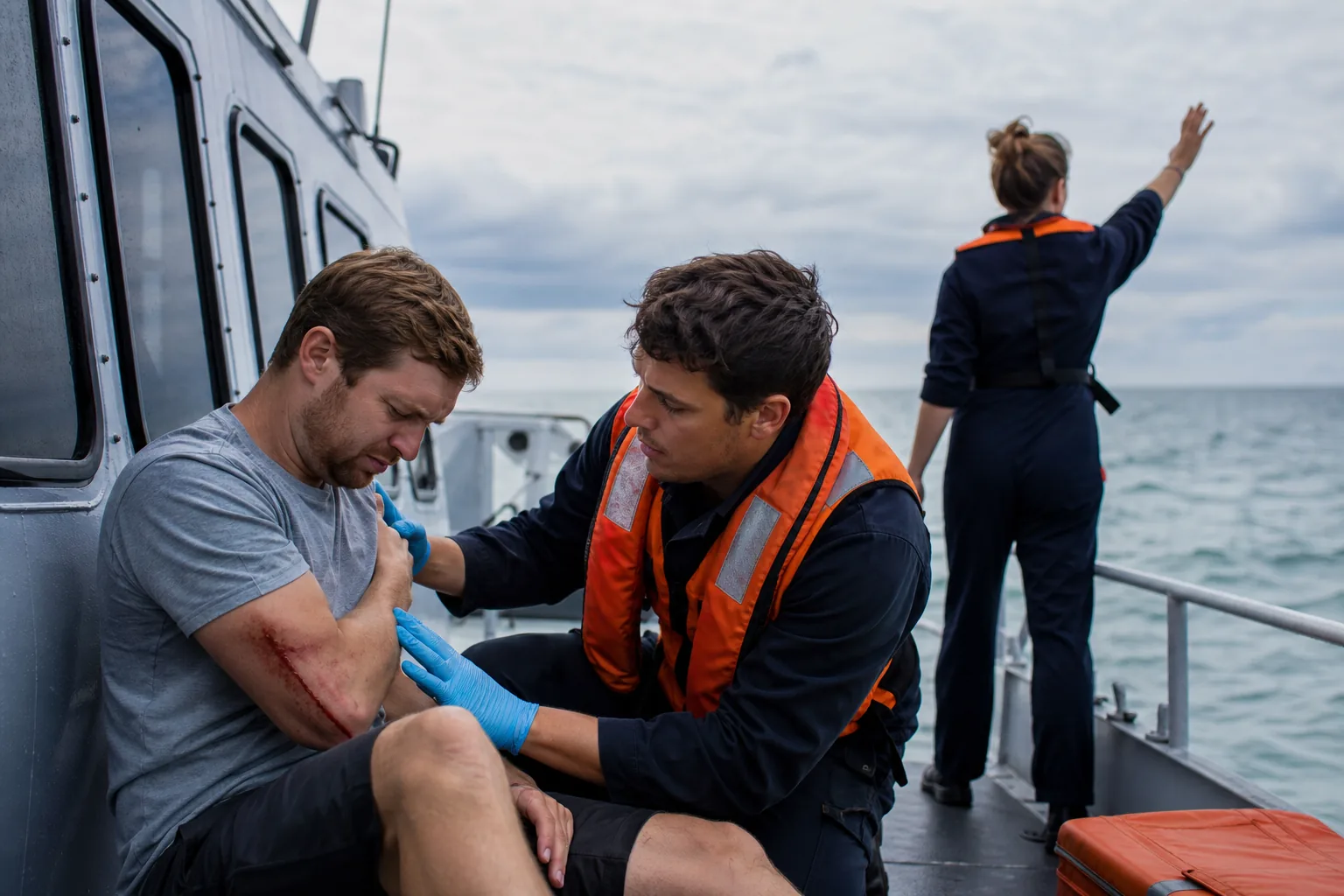
Check for injuries and people in the water. Arrange medical aid and rescue through the proper emergency channel. If the vessel can move safely, get clear of traffic and hazards. Don’t move damaged equipment or change controls unless safety requires it. Write down why any change was needed and who approved it.
Once immediate risks are under control, notify the authorities that may have jurisdiction. Depending on location and vessel status, that can include the Coast Guard, the vessel’s flag state, and the port authority. Ask what reports are required, who is leading the investigation, and whether anyone needs to preserve or inspect the vessel. Reporting duties vary by location and incident, so don’t treat one checklist as a universal legal rule.
The NTSB’s investigation process identifies evidence such as log books, maintenance records, personal interviews, engine performance data, weather information, accident-site observations, external information, and flight logs where applicable. It’s a useful evidence map, not a substitute for checking the rules that apply to your vessel and location.
Record each notification in a simple incident log. Include the time, agency or office reached, person’s name if available, instructions given, and any report reference. For a broader view of maritime accident types, keep in mind that the reporting path can differ by event and jurisdiction.
Don’t guess at fault or coach crew members on what to say. Ask each person to write down what they remember in their own words. They can add details later, but the first account should reflect what they recall now.
Milestone: People are safe, the vessel is stable if possible, and the required contacts and instructions are logged.
Step 2: Document the Scene, Damage, Witnesses, and Other Vessel
Build a clear visual and written record while the scene is still available. The maritime collision evidence checklist should cover the full setting, not only the point where the vessels touched.
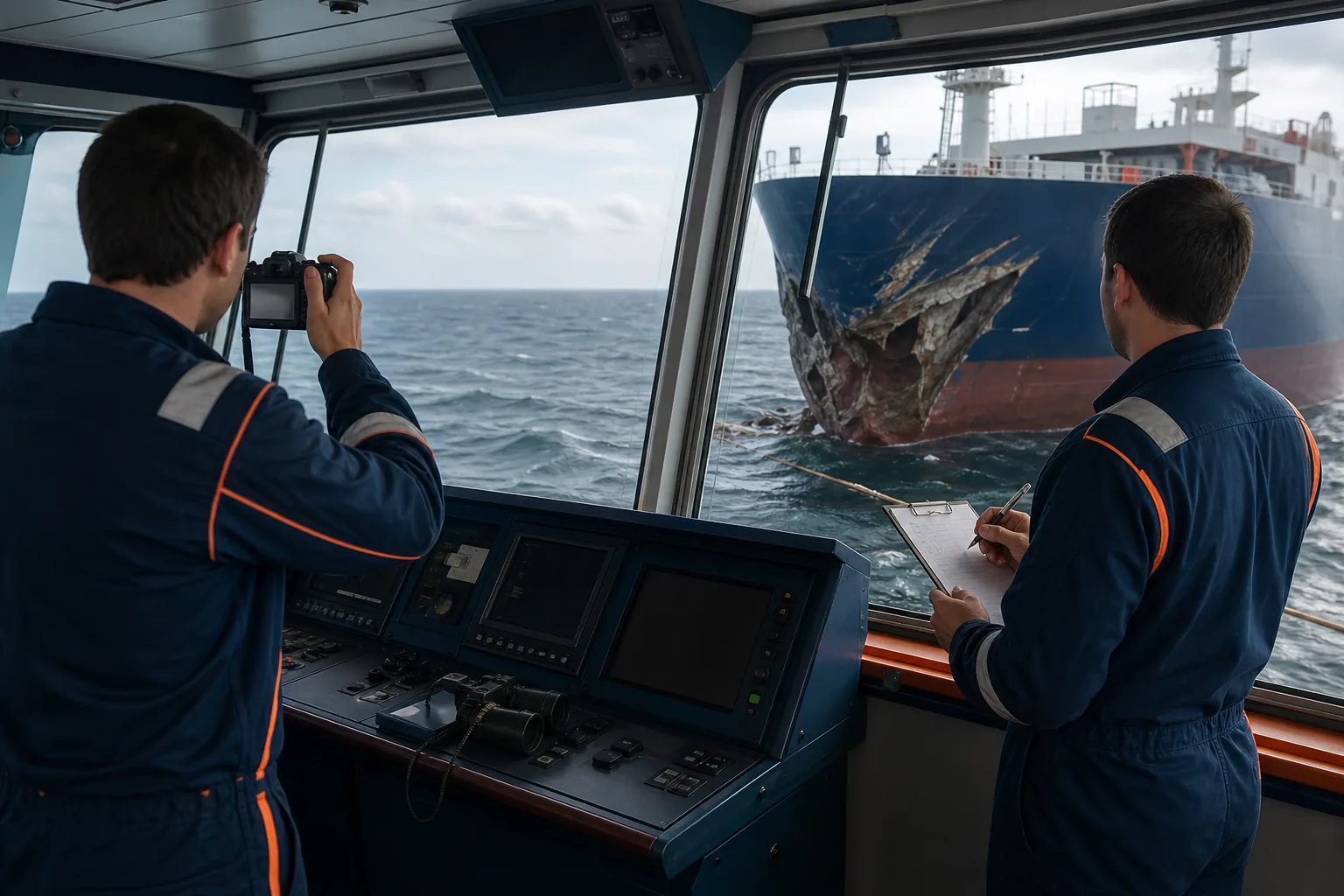
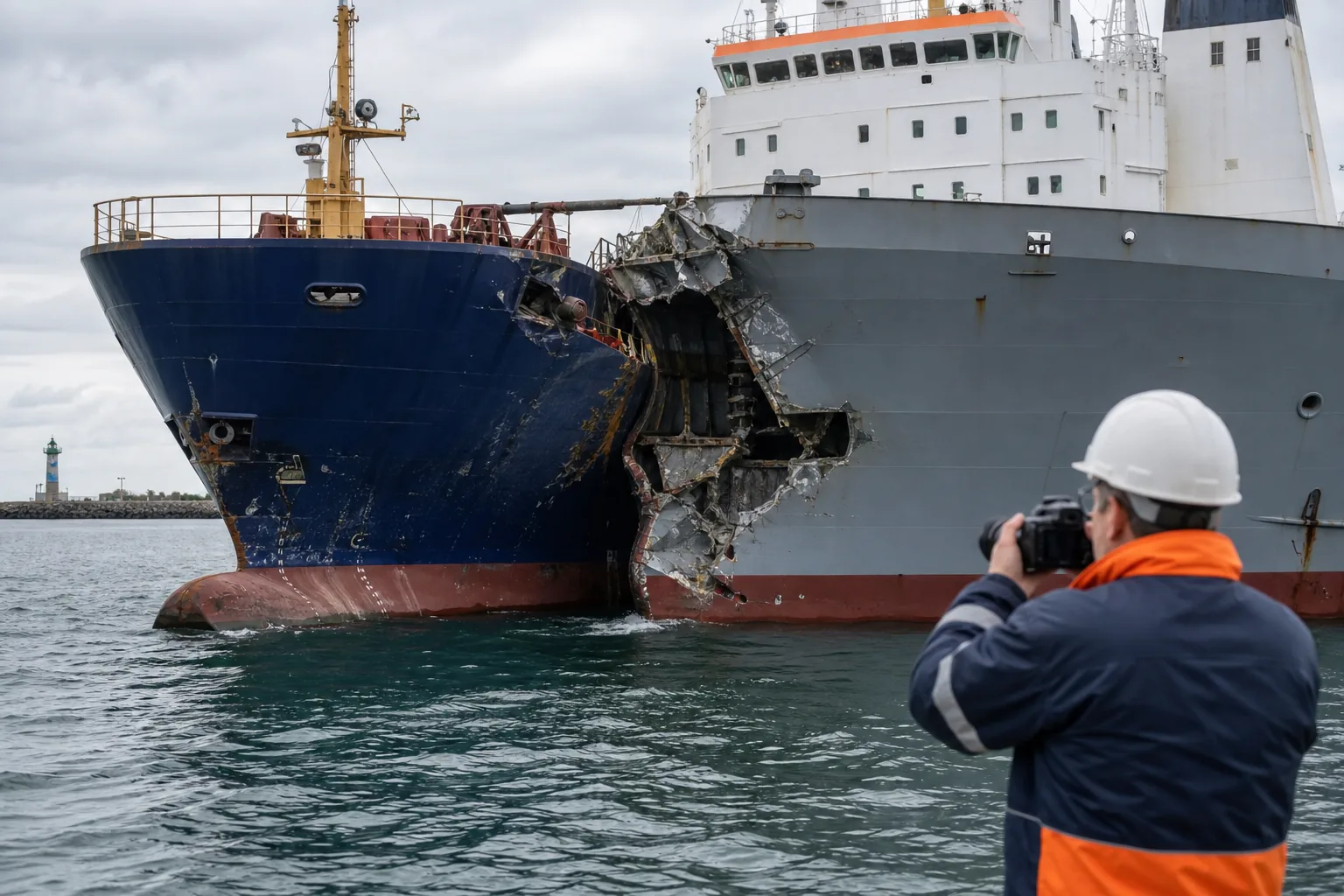
Take wide photos first. Show both vessels in relation to each other, nearby navigation marks, the water, and the surrounding area. Then take close views of each damaged section from more than one angle. Include a scale, such as a ruler, only when it can be placed safely and without disturbing evidence. Note the date, time, location, camera operator, and direction of each view.
Make a simple sketch. Mark vessel headings, approximate positions, visible debris, and the direction of travel if known. Add wind, visibility, current, and sea conditions as observations, not guesses. The NTSB’s evidence categories include both accident-site observations and weather information, which helps keep physical damage and outside conditions in the same record.
Record damage in plain terms. Note the location on the vessel, dimensions, shape, color, and any loose or bent parts. Photograph damage before cleanup or repair. If parts, paint, or other samples may matter, don’t collect them casually. Ask the investigator or qualified surveyor how to preserve them. If damage is below the waterline, note what is known and ask whether an underwater survey using sonar or an ROV is safe and suitable.
Get names and contact details for crew, passengers, and witnesses. Ask each person for a separate account in their own words. Record how they observed the event and where they were, but don’t suggest answers. For the other vessel, note its name, flag, registration or IMO number if available, operator details, and insurance information. If details aren’t available, record who you asked and when.
Structural damage may need expert review. A qualified engineering firm may be relevant when assessing damage to a structure. Confirm that any expert has the right marine experience for the work at hand.
Pro Tip: Give each photo and statement a unique ID, then record that ID in the incident log. It makes later handoffs easier to track.
Milestone: You have scene views, damage notes, witness accounts, and the other vessel’s identifying details, or a record of what remains unknown.
Step 3: Preserve Vessel Data and Maintain Chain of Custody
Electronic records can capture what people may not recall. Treat vessel data as evidence, not as a routine file cleanup task.
List the systems that may hold relevant data. This can include the Voyage Data Recorder, AIS, bridge logs, engine logs, navigation systems, and relevant communications. The NTSB evidence list also names engine performance data and log books. It does not set out a universal format or collection method, so follow the vessel’s approved procedures and the directions of the investigating authority.
Ask the person responsible for each system to preserve the data promptly. Don’t power down, reset, overwrite, or run a routine update unless safety or an investigator requires it. Use the system’s approved export process, and record the operator, date and time, device or system, time range, and export method. If a system has a retention limit, note it and raise it with the authority at once.
Keep the original export unchanged. Make a working copy for review and store the original in a restricted location. If the system can produce a checksum through an approved process, record it alongside the file. A checksum can help show whether a file changed, but it does not by itself prove that the data is complete or admissible.
Use a custody log for every item, digital or physical. Include an item ID, description, source, collection time, collector, storage location, and each transfer. For electronic files, add the file name and format. Have the receiving person confirm the handoff. Don’t rename or edit the only copy.
- Keep one untouched original in controlled storage.
- Work only from a duplicate when reviewing or sharing data.
- Record each transfer, access, and change to the working copy.
- Ask the investigator before using a third-party tool or changing the source system.
The same care applies to paper logs and maintenance records. Photograph or scan them without writing on the originals. Keep the source document and a clear copy together, and note any missing pages or gaps rather than trying to fill them in.
Milestone: Relevant systems are identified, exports are preserved, and each evidence item has an owner and a documented trail.
Step 4: Gather Operating Records, Notify Insurers, and File the Claim
Complete the record with documents that explain how the vessel was run and maintained. Then give insurers timely notice, using the policy’s reporting steps.
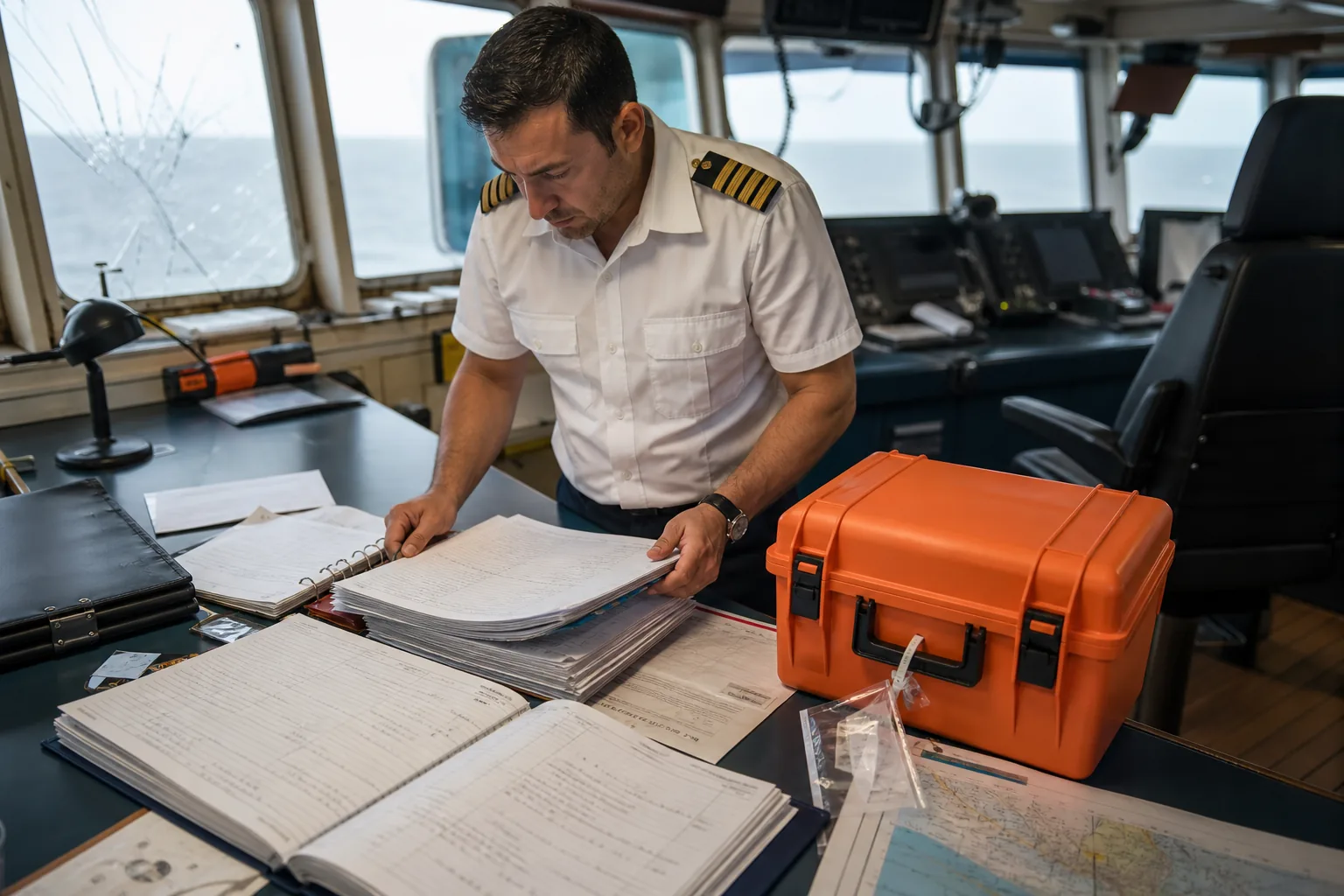
Gather the voyage and bridge logs, maintenance and repair records, engine data, and records of recent modifications. Add weather information for the time and place of the collision. The NTSB list spans vessel records and outside context, so keep both tracks: what the ship’s systems and crew recorded, and what conditions existed around it.
Build a document index. For each item, note its source, date range, format, custodian, and whether it is an original or copy. Flag missing records clearly. For example, write “engine log unavailable for this period” rather than leaving a blank that could look like an oversight. Keep versions separate when different copies contain different entries.
Review the policy and send notice through the listed claim channel as soon as the required process allows. Share known facts, the incident time and location, parties involved, injuries or damage reported, and the authority handling the matter. Mark estimates as estimates. Don’t guess at repair costs or assign blame in a first notice.
Keep copies of all claim forms and messages. Track when notice went out and what the insurer requested next. Before repairs or disposal, ask the insurer and relevant authority whether an inspection or preservation step is needed. If urgent work must happen to prevent further harm, document the condition first when safe, and keep records of what was changed.
For a claim involving disputed fault, missing data, or serious damage, it may help to get legal guidance before giving detailed statements or signing releases. maritimeattorney.ai focuses on maritime legal support; its maritime legal resource is one place to start. Keep the approach measured: organize the evidence, ask what must be preserved, then respond to each request in writing.
Milestone: Your operating records are indexed, the insurer has been notified, and outstanding requests have a named owner and due date.
Frequently Asked Questions
What evidence should I collect after a maritime collision?
Collect scene photos, damage notes, witness accounts, vessel identifiers, operating logs, maintenance records, relevant electronic data, and weather details. A maritime collision evidence checklist should also track who collected each item and where it is stored. First handle safety and required reporting, then preserve records without changing their original form.
Who should I notify after a ship collision?
Notify the authorities that may have jurisdiction, which can include the Coast Guard, flag state, and port authority. Your maritime collision evidence checklist should record who was contacted and any instructions they gave. Reporting duties depend on the location, vessel, and event, so confirm requirements with the relevant authority rather than relying on a general list.
How do I preserve VDR and AIS data?
Ask the system’s responsible operator to preserve relevant data using the approved export process. Record the system, time range, export method, operator, and file details. Keep the original unchanged and review a duplicate. Include each handoff in the chain-of-custody log, and follow directions from investigators if they specify a different process.
What does chain of custody mean for collision evidence?
Chain of custody is a record of who collected, stored, accessed, or transferred each evidence item. For this maritime collision evidence checklist, assign each item an ID and log its source, time, collector, and storage location. For digital files, also record the file name and format. This gives later reviewers a clear account of how the item was handled.
Conclusion
Use the four steps in order: protect people, record the scene, preserve data, and organize the claim file. Keep one person responsible for the evidence log, and ask the relevant authority or a maritime lawyer about any item you’re unsure how to preserve.