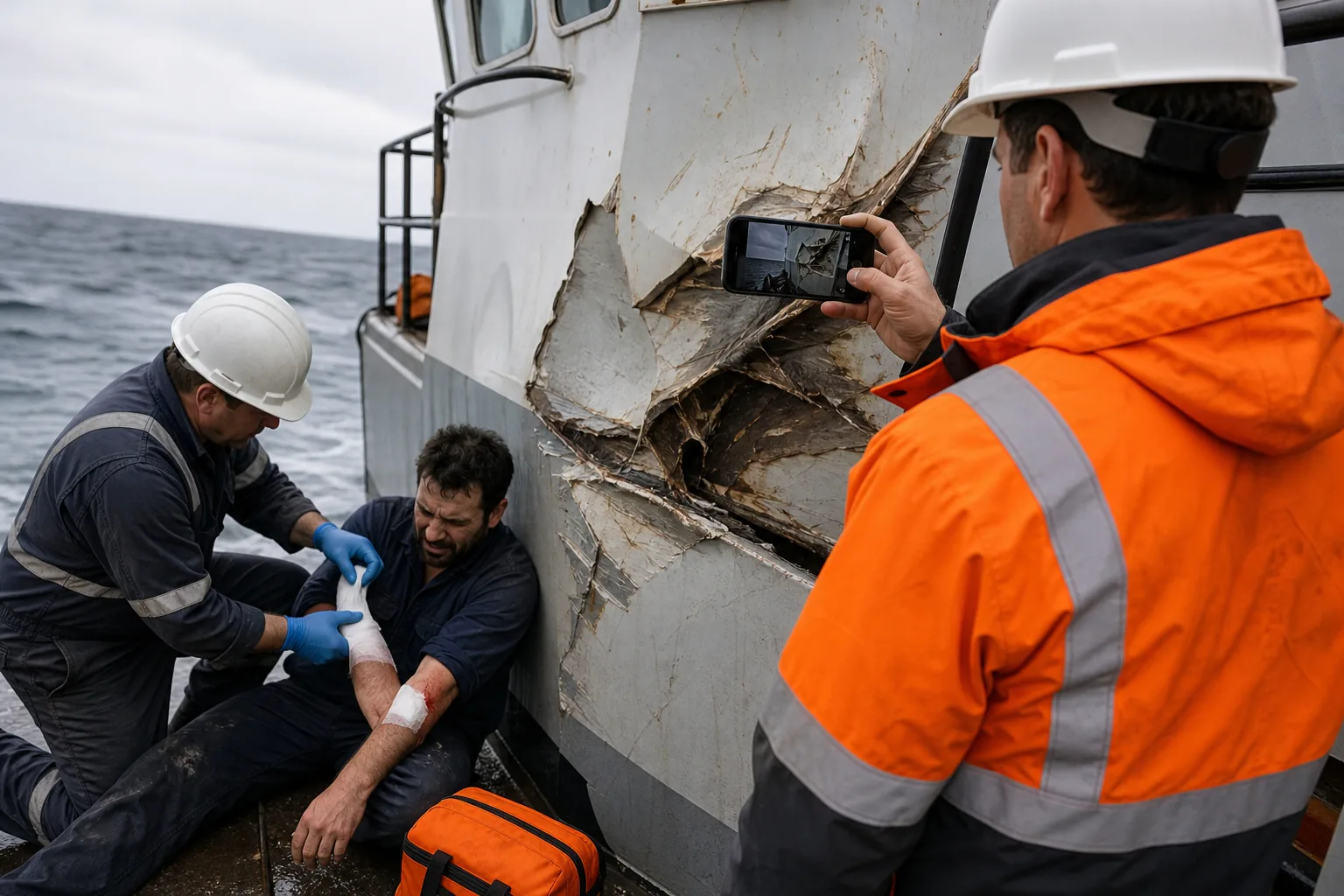
Marine Insurance Claim: A Step-by-Step Guide

Getting hit with damage or loss during a shipment feels terrible. You paid for insurance to protect yourself. Now you need to use it. But filing a marine insurance claim can feel like a maze. Forms. Deadlines. Adjusters. It can wear you down.
This guide walks you through every step. You'll learn what to do right after the damage happens. You'll find out what papers you need. You'll understand how the surveyor works and how to settle. By the end, you'll know exactly how to handle a marine insurance claim from start to finish.
Let's jump in.
Step 1: Secure the Scene and Preserve Evidence
The moment you spot damage or loss, stop everything. Your first action sets the tone for your whole marine insurance claim. Think of yourself as a detective. Everything you do now matters.
Start by taking pictures. Lots of them. Use your phone. Capture wide shots of the whole container. Then zoom in on the damage. Show the hole, the dent, the crushed carton. A ten-point checklist from Arete Adjusting says to get both overall and close-up shots. These photos become your proof.
Don't throw away any packaging. Even the box that looks fine might tell a story. The packing material inside could show if something moved around. Also, sign the delivery receipt with clear exceptions. Don't just write “damaged.” Write “hole in container, side panel, 4 inches by 6 inches.” Or “all cartons crushed on the right half.” This matters a lot later.
Make a list of every item that is damaged or missing. Write down the description, quantity, and value if you know it. This list helps the adjuster figure out how much the claim is worth.
If water is involved, separate wet cargo from dry cargo. Look inside the container with the doors closed. See if light gets in. That tells you where the leak is. Contact your adjuster for more advice.
Also, get witness statements. If someone saw the accident, ask them to write down what they saw. Do this while it's still fresh.
Finally, try to prevent more damage. Move the cargo to a dry spot. Cover it with a tarp. Do what you can to stop things from getting worse. Keep a log of every action you take.
This first step is the most important one. If you mess it up, your whole claim gets harder. Take it slow. Do it right.
Bottom line: The better you preserve evidence right after damage, the smoother your marine insurance claim will go.
Step 2: Notify Your Insurer and Initiate the Claim
Once the scene is secure, you need to tell your insurance company. Don't wait. Many policies have a strict time limit for reporting a loss. A few days could mean the difference between getting paid and getting denied.
Find the contact information on your insurance certificate or policy document. Usually there is a claims hotline or an email address. Call or write to them as soon as you can. Chubb's marine cargo claims guidelines emphasize reporting the loss in writing to your insurer, the carrier, and other involved parties. Do it in writing so there is a record.
When you contact them, be ready with basic info: your policy number, the date of loss, a brief description of what happened, and the estimated value of the loss. Don't guess numbers. Use the list you made in Step 1.
The insurer will assign a claims adjuster or a surveyor. This person is your main contact. They will ask for more documents. They will guide you on next steps. Cooperate fully. Answer their questions clearly. Send them the photos and receipts you already have.
While you wait for the adjuster, start collecting the paperwork your marine insurance claim will need. This includes the bill of lading, the commercial invoice, the packing list, the certificate of insurance, and any correspondence with the carrier. Gather everything in one folder, digital or physical.
Don't forget to notify the carrier (the shipping line, trucking company, airline) as well. They have their own time limits. If you miss theirs, you might lose your right to recover from them later.
"The sooner you report, the sooner the process starts. Delay only hurts your case."
Keep a log of all communications. Who you spoke to, when, and what was said. This helps if there are disputes later.
Some insurers have online portals where you can submit your claim. Use them if available. They often speed things up.
Bottom line: Reporting your marine insurance claim fast and in writing protects your rights and gets the ball rolling.
Step 3: Gather Essential Documents
Your marine insurance claim lives and dies on paperwork. The adjuster needs proof that the goods existed, that they were worth what you say, that they were in good condition before shipping, and that they arrived damaged or didn't arrive at all.
Here is a list of the key documents you need:
- Bill of Lading , This is the contract of carriage. It shows the carrier, the vessel, the ports, and the condition of the cargo at loading.
- Commercial Invoice , Shows the value of the goods. The adjuster uses this to calculate the claim amount.
- Packing List , Details what is in each package. Helps match damaged goods to the invoice.
- Certificate of Insurance , Proves you have coverage and lists the policy terms.
- Delivery Receipt with Exceptions , The document you signed when you got the cargo. Your exceptions prove the damage happened during transit.
- Photos and Videos , Visual evidence of damage.
- Survey Report , If a surveyor was called, their report is crucial.
- Correspondence with Carrier , Emails, letters, or claims filed with the carrier.
- Any Witness Statements , Written accounts from people who saw the damage.
The Voss Law Firm notes that an experienced legal team can help you organize these documents and avoid costly mistakes. Even if you don't hire a lawyer, getting these papers in order is something you can do yourself.
Organize everything in a clear folder. Label each document. Make copies. Keep the originals safe. If any document is missing, try to get a duplicate. For example, if you lost the bill of lading, ask the carrier for a copy.
One common mistake: people forget to include the packing list. Without it, the adjuster doesn't know exactly which items were in the damaged carton. That can lower your payout. Include everything.
Also, don't forget documents that prove the value of the goods, like purchase orders or contracts. The more proof you have, the harder it is for the insurer to undervalue your claim.
Bottom line: Complete documentation is the backbone of a successful marine insurance claim , gather every relevant paper and organize them carefully.
Step 4: Cooperate with the Marine Surveyor
After you notify the insurer, they will likely send a marine surveyor. This person is an expert who examines the damaged cargo, the container, and the conditions. Their job is to establish the facts: what happened, how much damage there is, and what caused it.

Treat the surveyor as a partner. Be honest and open. Show them everything you have: photos, documents, the damaged goods. Answer their questions clearly. Don't hide anything. If you made a mistake, admit it. Hiding information can get your claim denied.
The surveyor will check the packaging. They will look for signs of poor packing, water damage, or mishandling. They might take samples or measurements. They may interview you and your staff. Let them do their work.
Ask the surveyor for a copy of their report when it's done. You are entitled to it. This report will be a key piece of evidence for your claim. If you disagree with something in the report, you can point it out to the adjuster later. But do it respectfully.
Sometimes the surveyor will come from the insurer. Other times you can hire your own surveyor. If the claim is large, it might be worth hiring your own independent surveyor to double-check the findings. Their report can support your claim.
Make sure the surveyor has access to everything. If the cargo is stored somewhere, unlock the area. If the container is still sealed, let them open it. If you have already moved goods, tell them where they are. The easier you make it for the surveyor, the faster you get paid.
Also, note the surveyor's recommendations. They might suggest how to prevent future damage. Listen. It can help you avoid problems down the road.
Bottom line: Working with the surveyor honestly and transparently makes your marine insurance claim move faster and more smoothly.
Step 5: Review and Settle the Claim
Once the surveyor's report is in, the adjuster will make a decision. They will calculate the amount they think you are owed, based on the policy terms and the evidence.
You will receive a settlement offer. This is not the final word. You can review it, ask questions, and negotiate. Marine insurance disputes often revolve around policy interpretation and valuation. Don't accept the first offer if it seems too low.
Before you accept, compare the offer to your own calculations. Use your commercial invoice, the survey report, and your list of damaged items. If the offer is less than what you think you deserve, ask the adjuster to explain the difference.
Common reasons for a lower payout:
- The policy has a deductible that applies.
- The adjuster thinks the damage was partly due to poor packing (a common exclusion).
- The value of the goods was miscalculated.
- The policy excludes certain types of loss (like theft from an unattended vehicle).
If you disagree, present your evidence. Provide additional documents or a second opinion from your own surveyor. Be persistent but polite. Many claims are settled for more than the initial offer after negotiation.
If negotiation fails and the amount is significant, you might need to consider arbitration or legal action. But that is a last resort. Most marine insurance claims settle without a fight.
Once you agree on an amount, the insurer will send you a settlement check or wire transfer. Sign a release form if needed. The claim is then closed.
If your claim involves a vessel or personal injury, you may need legal advice. For example, if the claim is under the Jones Act for an injured crew member, consulting a Jones Act claim attorney can protect your rights. But for standard cargo claims, you can often handle it yourself with good documentation.
Bottom line: A successful marine insurance claim ends with you reviewing the settlement carefully and negotiating if needed to get fair compensation.
Frequently Asked Questions
What should I do first when I discover damage to my cargo?
Stop immediately and document everything. Take clear photos of the damage from multiple angles. Do not move or discard any packaging. Sign the delivery receipt with detailed exceptions like “hole in container” or “carton crushed.” Then notify your insurer and the carrier in writing as soon as possible. These first steps protect your rights and start your marine insurance claim on the right foot.
How long do I have to file a marine insurance claim?
Most marine insurance policies require you to notify the insurer within a few days of discovering the loss. Some give you as little as 7 days. The actual filing of the claim may have a longer deadline, often 90 days. Always check your policy for specific time limits. Missing the notification deadline can void your coverage. That is why reporting any loss immediately is crucial for a successful marine insurance claim.
What documents are absolutely required for a marine insurance claim?
The core documents are the bill of lading, commercial invoice, packing list, certificate of insurance, delivery receipt with exceptions, and photographs of the damage. You should also include any correspondence with the carrier and witness statements. If a surveyor inspected the goods, include their report. Missing any of these can delay your marine insurance claim or reduce your payout.
Can I negotiate the settlement amount offered by the insurer?
Yes, absolutely. The initial offer is often the starting point, not the final amount. Review the offer against your own evidence. If you think it's too low, present additional documentation or a second survey report. Be polite but firm. Many policyholders successfully negotiate a higher settlement for their marine insurance claim. If you cannot reach agreement, consider mediation or legal advice.
What if the insurer denies my marine insurance claim?
First, read the denial letter carefully to understand the reason. Common reasons include late notification, missing documents, or an exclusion in the policy (like inherent vice or insufficient packing). If you believe the denial is wrong, gather evidence that addresses their concern and write a formal appeal. You can also hire a maritime attorney to help. Many denied claims are eventually paid after a strong rebuttal.
Do I need a lawyer to file a marine insurance claim?
Not always. For small to medium cargo claims, you can handle the process yourself if you have good documentation and follow the steps. However, if the claim is large, complex, or involves a dispute over coverage, a maritime attorney can be very helpful. They understand policy language and can negotiate on your behalf. For claims involving personal injury or vessel damage, legal advice is strongly recommended.
How long does it take to settle a marine insurance claim?
It depends on the complexity of the loss. Simple claims with clear evidence can settle in a few weeks. Complex claims involving multiple parties, partial losses, or disputes can take several months. The key to speed is submitting all required documents quickly and cooperating fully with the surveyor and adjuster. Delays often happen because of missing paperwork or slow responses from the insured.
What is the role of a marine surveyor in my claim?
The surveyor is an independent expert appointed by the insurer (or sometimes by you) to inspect the damaged cargo and determine the cause and extent of the loss. They examine the packaging, the condition of the goods, the container, and any other relevant factors. Their written report becomes a critical piece of evidence for your marine insurance claim. Cooperate with them fully to ensure an accurate assessment.
Conclusion
Filing a marine insurance claim doesn't have to be a nightmare. If you follow these five steps, you set yourself up for the best possible outcome.
Start by securing the scene and preserving every piece of evidence. Take photos, list damaged items, keep packaging. Notify your insurer quickly and in writing. Gather all the documents from the bill of lading to the packing list. Work with the surveyor honestly and openly. Finally, review the settlement offer carefully and negotiate if you need to.
Most people only file a cargo claim once or twice in their life. It's easy to feel lost. But now you have a clear path. The more organized you are, the faster your claim moves. And the better your documentation, the more likely you are to get a fair payment.
Don't be afraid to ask questions. Your adjuster is there to help. If something doesn't make sense, speak up. If the offer seems low, push back with evidence. Your marine insurance claim is your right. Use the tools you have.
One last thing: learn from the experience. Look at what caused the damage. Was it poor packing? A bad container seal? Chose a different carrier next time. Use better packaging. The best claim is the one you never have to file. But when you do, you are ready.
If you need legal help for a contentious claim or a personal injury situation, consider reaching out to a maritime attorney who specializes in these cases. Your policy is a contract. You paid for protection. Make sure you get what you paid for.