87% of Boating Drowning Victims Weren't Wearing Life Jackets — Here's What the Data Shows
Coast Guard data shows 87% of boating drowning victims in 2024 were not wearing a life jacket. Drowning accounts for 76% of all boating deaths.
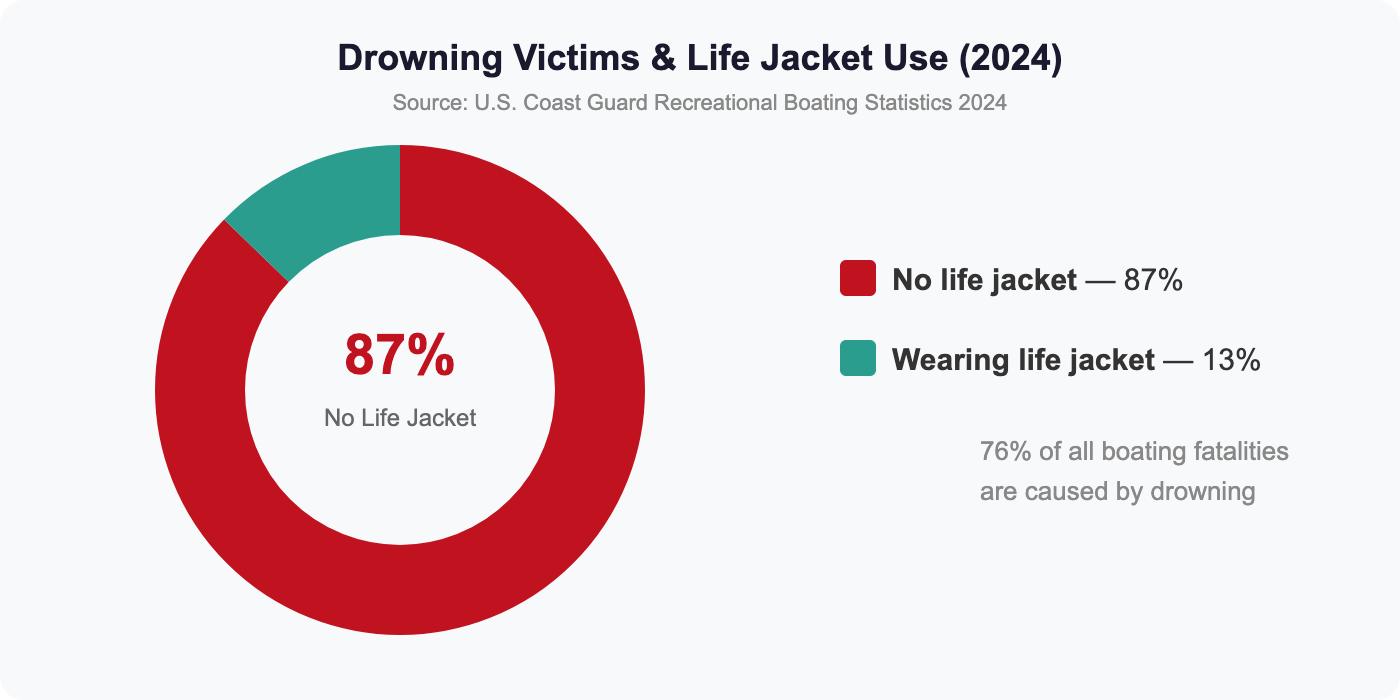
According to the U.S. Coast Guard's 2024 Recreational Boating Statistics, drowning remains the leading cause of death in boating accidents — accounting for 76% of all boating fatalities. But perhaps the most striking finding is just how preventable these deaths are.
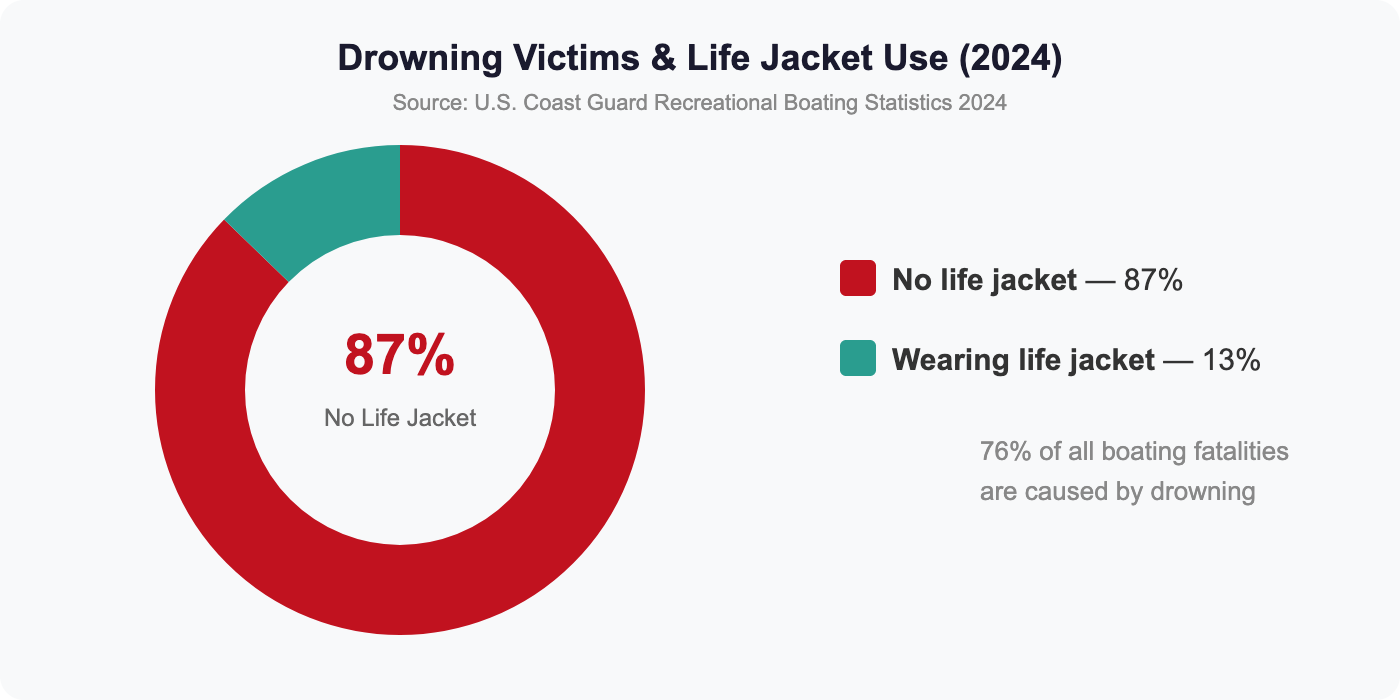
The data tells a clear story: 87% of drowning victims were not wearing a life jacket.
The Numbers Don't Lie
Of the 556 boating fatalities reported in 2024, drowning was the cause in roughly 423 cases. Of those, an estimated 368 people were not wearing any type of personal flotation device (PFD). That means nearly 7 out of every 8 people who drowned might have survived if they had simply been wearing a life jacket.
The Coast Guard has emphasized this point repeatedly: life jackets are the single most effective safety device on any vessel.
Why People Don't Wear Them
Despite decades of safety campaigns, boaters continue to resist wearing life jackets for common reasons: discomfort, overconfidence in swimming ability, concern about appearance, or simply forgetting. Many boaters keep life jackets on board but stowed away — which is essentially useless in a sudden capsize or fall overboard.
Modern inflatable life jackets are lightweight, comfortable, and barely noticeable when worn. They activate automatically upon water immersion, making them practical even for experienced boaters.
Who's Most at Risk?
The data shows that small open motorboats and paddlecraft (kayaks, canoes, paddleboards) account for the majority of drowning deaths. These vessel types are more prone to capsizing and offer less protection than larger boats. Yet operators on these vessels are often the least likely to wear PFDs.
What Maritime Law Says
If you've been injured or lost a loved one in a boating accident, life jacket use — or the failure of a boat operator or charter company to provide adequate safety equipment — can be a critical factor in any legal claim. Under maritime negligence law, vessel operators have a duty to ensure adequate safety equipment is available and that passengers are informed of its use.
A preventable drowning due to missing or inadequate safety equipment may constitute negligence. If you're dealing with a boating tragedy, an experienced maritime attorney can help you understand your rights.