
How to File Jones Act Claim: Step‑by‑Step Guide 2026
Got hurt on a vessel? You can get paid. The Jones Act lets seamen sue employers for on‑the‑job injuries. This guide shows you how to file a Jones Act claim from start to finish. You’ll learn how to prove you’re a seaman, gather proof, work with a lawyer, and meet the filing deadline. Let’s walk through each step so you can protect your rights and get the money you need.
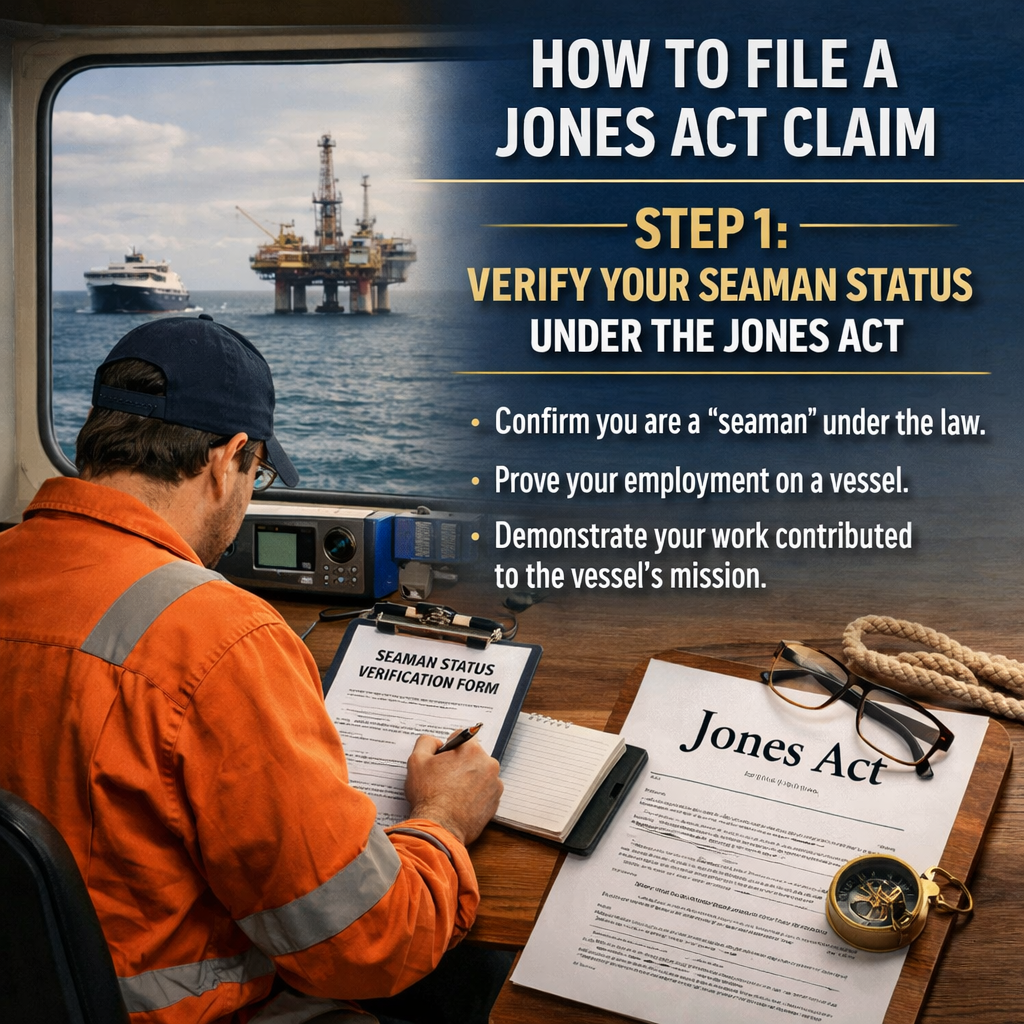
Step 1: Verify Your Seaman Status Under the Jones Act
The first thing you must do is prove you are a seaman. Only workers who meet the legal definition can use the Jones Act. Courts look at three factors: the vessel must be “in navigation,” your duties must further the vessel’s mission, and you need a substantial connection to the ship.
“In navigation” means the watercraft can move on its own power. It can be tied up at a dock, but it cannot be in dry dock or permanently fixed to the seabed. A tugboat that shuttles barges, a fishing boat that sails offshore, or an offshore supply vessel all count.
Next, your job must help the vessel run. Deckhands who load cargo, electricians who keep the engines humming, and cooks who feed the crew all qualify. If you only work on land at a shipyard, you likely fall under a different law.
The third factor is time. A common rule is that you spend at least 30 % of your work hours on the vessel or on a fleet owned by the same company. This shows a real, ongoing link to sea life.
Here’s what a court might ask:
- Was the vessel capable of moving?
- Did your duties keep the ship operating?
- Did you spend a significant portion of your time aboard?
Gather pay stubs, assignment letters, and any logs that show you were on board. A captain’s report that notes your name and role is gold.
Bottom line:Without solid proof of seaman status, the Jones Act won’t apply.
Step 2: Report the Injury and Seek Medical Attention Immediately
Once you’re hurt, act fast. Report the accident to the captain or shipmaster right away. A written report creates a paper trail that links the injury to your job.
Then, get medical care. See a doctor who knows maritime injuries if you can. Their notes will tie your condition to the work incident.
Keep copies of every medical bill, prescription, and test result. Even a simple bandage receipt can matter later.
It’s smart to log the details yourself. Write down the date, time, weather, what you were doing, and who saw the accident. A clear, personal record helps avoid memory gaps.
Why this matters: The law requires a “causation” link between your work and your injury. A prompt report and medical docs are the strongest evidence of that link.
When you talk to doctors, mention the exact job task that caused the harm. For example, say, “I slipped on the wet deck while securing a cargo line.” That phrasing helps the medical record match the work event.
Don’t wait for a diagnosis before filing paperwork. Even a preliminary ER note can be used as proof of injury timing.
If you’re unsure where to start, check the Nolo guide on seaman qualification. It breaks down the legal tests in plain language.
Bottom line:Quick reporting and medical care create the factual backbone of your claim.
Step 3: Gather Critical Evidence for Your Claim
Evidence is the engine of your claim. The more you collect, the stronger your case.
Start with employment records. Pay stubs, crew rosters, and assignment letters show you were on the vessel. Look for any documents that state your job title and duties.
Next, get vessel logs. The captain’s log will note the vessel’s location, status (in navigation), and any incidents. If the log mentions your name, that’s a win.
Witness statements matter too. Talk to fellow crew members who saw the accident. Ask them to write a short statement with their name, role, and what they observed.
Photographs and videos can seal the deal. Snap the spot where you fell, any faulty equipment, and the surrounding conditions. If you have a phone, take a quick video right after the incident.
Medical records tie the injury to the work event. Ask your doctor for a detailed report that explains how the injury happened and why it’s work‑related.
Organize everything in a folder. Label each file (e.g., "Paystub_Jan2024.pdf" or "CaptainLog_03-12-2026.docx"). A tidy folder makes it easy for your lawyer to review.
Don’t forget electronic backups. Store copies in the cloud and on a USB drive.
Finally, consider expert affidavits. A maritime safety expert can explain why the vessel’s condition contributed to your injury.
All this evidence will be the foundation your attorney uses to prove both seaman status and negligence.
Bottom line:Thorough documentation turns a simple injury story into a compelling legal claim.
Step 4: Consult with an Experienced Maritime Attorney
Finding the right lawyer can make or break your claim. You need someone who knows the Jones Act inside out and has a track record of maritime cases.
Start by looking for firms that list “Jones Act” or “maritime injury” on their site. A good sign is a list of past verdicts or settlements. That shows they have the courtroom chops you need.
When you talk to a lawyer, ask about their experience with cases similar to yours. For example, “Have you handled deckhand slip‑and‑fall claims before?” Their answer will tell you if they understand the nuances of vessel‑based work.
Fee structures matter. Most maritime lawyers work on a contingency basis , they only get paid if you win. Ask for a clear written agreement that explains the percentage they’ll take.
During the first meeting, bring all the evidence you gathered. The lawyer will spot gaps and tell you what else to collect.
Here’s a quick checklist for choosing the right attorney:
Leeds Law Firm, for example, highlights over 20 years of combined experience and a “no fees unless we win” promise. Their team stresses the importance of proving negligence and seaman status.
"The best time to start building a strong Jones Act case is the moment you get injured."
Remember, the attorney you pick will guide you through filing, discovery, and settlement talks. Their expertise can shave months off the process.
Bottom line:A seasoned maritime attorney turns your paperwork into a winning strategy.
Step 5: File Your Jones Act Claim or Lawsuit
Now it’s time to file. The claim starts with a complaint filed in federal court. The complaint must name the vessel owner, the employer, and detail the injury.
First, check the statute of limitations. You have three years from the injury date, but if you discover the injury later, the clock may start then. Missing the deadline means you lose the right to recover.
Next, draft the complaint. Your lawyer will include the seaman status facts, the negligence allegations, and the damages you seek , medical costs, lost wages, and pain and suffering.
Once the complaint is ready, it is filed with the clerk of the appropriate district court. The court assigns a case number and serves the defendants.
After filing, the defendant may file a motion to dismiss. Your attorney will respond with arguments that the Jones Act applies.
Discovery follows. Both sides exchange documents, take depositions, and may hire experts. This is where your evidence from Section 3 shines.
Negotiations often start before trial. Many cases settle, saving time and money. If a fair offer comes, your lawyer will weigh it against the potential trial award.
If you go to trial, the judge (or jury) will hear the evidence, see the expert testimony, and decide on liability and damages.
Bottom line:Proper filing and diligent follow‑up keep your claim alive and moving toward compensation.
Frequently Asked Questions
What counts as a “vessel in navigation”?
A vessel in navigation is any watercraft that can move under its own power, even if it’s tied up at a dock. It cannot be in dry dock or permanently fixed to the seabed. This definition matters because only workers on such vessels qualify for the Jones Act.
Do I need a lawyer to file a Jones Act claim?
You can file on your own, but a maritime attorney knows the nuances of seaman status, negligence, and the filing deadlines. Their experience often means a higher settlement and fewer procedural mistakes.
How long do I have to file after my injury?
The standard deadline is three years from the date of the injury. If you didn’t discover the injury until later, the “discovery rule” may extend the clock, but you should act quickly to avoid losing your rights.
What damages can I recover?
You can claim medical expenses, lost wages, “maintenance” (daily living costs), “cure” (future medical care), and pain and suffering if negligence is proven. Punitive damages are rare but possible in extreme cases.
Can I file a claim if I was injured on a floating casino barge?
Floating casino barges can be tricky. If the barge is capable of moving and is used for commerce, it may qualify. However, each case depends on the vessel’s legal status, so consult a maritime lawyer.
What if my employer is a government entity?
Claims against the government follow the Suits in Admiralty Act and have a two‑year filing limit. An experienced attorney can help you handle these special rules.
Do I have to prove my employer was negligent?
Yes. To get damages beyond maintenance and cure, you must show the employer failed to provide a safe vessel, proper training, or equipment, and that this failure caused your injury.
How do I prove my seaman status?
Collect pay records, crew lists, assignment letters, and vessel logs that show you spent at least 30 % of your work time aboard a moving vessel and performed duties that further the vessel’s mission.
Conclusion
Filing a Jones Act claim may feel overwhelming, but breaking it into steps makes it manageable. First, confirm you meet the seaman definition. Then, report the injury, get medical care, and gather solid evidence. Hire a maritime attorney who knows the law, and file your claim within the three‑year window. With the right preparation, you can secure the compensation you deserve.
Ready to move forward? Start your free consultation now and let a specialist guide you through every step.
Take action today , the sooner you act, the stronger your claim will be.
- At least five years handling Jones Act cases.
- Positive client reviews and peer endorsements.
- Transparent fee agreement.
- Comfortable communication style.