Dredging Accident Injury: What to Do Next
A dredging accident injury can become more serious after the vessel returns to port. Medical records may be delayed. Safety logs can change. An insurer may ask for a statement before you understand your rights. Take these steps in order, then speak with maritimeattorney.ai or another qualified maritime lawyer before signing anything.
Step 1: Get Emergency Medical Care and Report the Accident
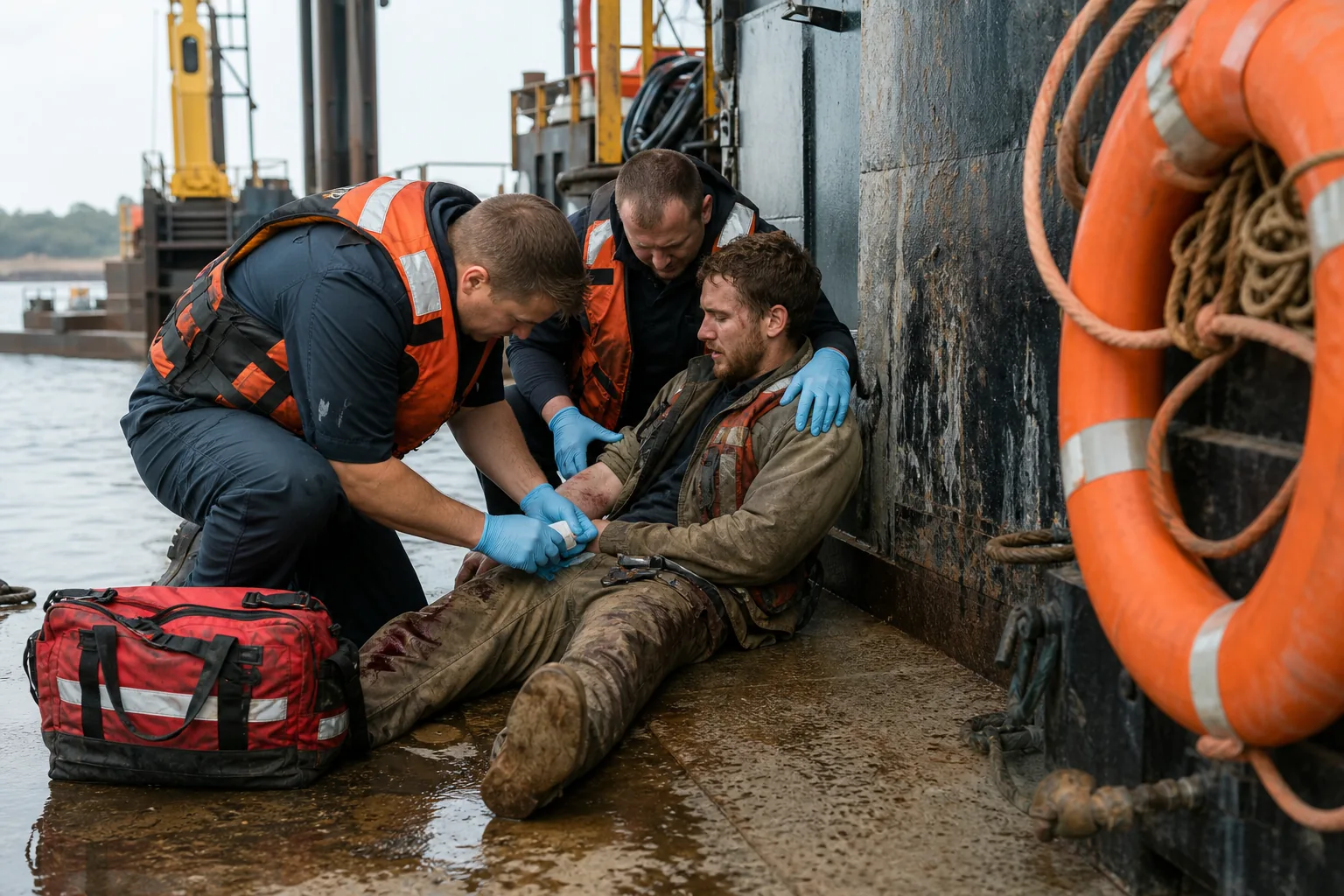
Your first goal after a dredging accident injury is safety. Get off the equipment if you can do so without creating another risk. Tell the operator, vessel master, supervisor, or shore contact that you are hurt.
Ask for emergency care when you have trouble breathing, chest pain, confusion, heavy bleeding, a head injury, severe pain, weakness, or possible exposure to fumes. Do not assume you are fine because you can still walk. Some injuries appear hours later.
On a dredge, barge, or scow, ask the crew to follow the vessel's emergency plan. If you are trapped, in the water, exposed to a gas, or near moving gear, let trained responders handle the rescue. Do not re-enter a confined space or return to a running machine to retrieve personal items.
Tell the medical team exactly what happened. Mention the task you were doing, the equipment involved, the body part that hurts, and any chemical or vapor exposure. If you inhaled fumes, say so even if your breathing feels normal. The medical chart should connect the symptoms to the work event.
Request a written accident report or incident number when one exists. Write down who took your report and when. You can also ask that the company preserve the vessel's log, radio traffic, work orders, inspection records, and video.
The OSHA accident report for a dredging-related barge fatality describes a worker who died after carbon dioxide built up in a scow house while a gas-powered generator and heater were in use. The point is plain: air quality and enclosed spaces deserve immediate attention after an incident.
Do not give a long recorded statement while you are in pain or taking medication. A short report with the basic facts is usually safer than guessing about details. You can correct a mistake later, but an early guess may be treated as your final account.
Step 2: Document the Scene and Preserve Evidence
Evidence from a dredging accident injury can disappear once the crew resumes work. Preserve what you can without entering a dangerous area or interfering with an investigation.
Use your phone to photograph the work area when it is safe. Take wide shots first. Then capture the specific gear, deck surface, ladder, line, winch, pipe, guard, control panel, or other item involved. Include lighting and weather conditions. Do not edit the original files.
Write a timeline while your memory is fresh. Note your start time, assigned task, instructions, warning signs, equipment condition, and the moment the injury occurred. Record what happened right before and right after the event.
List the names and job roles of people who saw the event. A witness does not need to agree with your view to matter. Someone who saw the condition before the injury may help establish what the work area looked like.
Save texts, emails, work messages, photos, video clips, training records, and shift schedules. Keep copies in a personal account or external drive. Do not alter a message thread. If a file has a date or time stamp, keep the original version.
Ask for preservation of records that you cannot access yourself. These may include:
- Vessel logs and daily work reports.
- Maintenance and inspection records.
- Safety meeting notes and training records.
- Equipment manuals and purchase records.
- Radio records or dispatch messages.
- Security video from the vessel or dock.
A short written request can say that you were injured during work and ask the company to preserve all records, video, photographs, electronic messages, and physical equipment tied to the event. Keep a copy of that request and proof that you sent it.
Do not post about the incident on social media. A photo from a later day may be used to suggest that your injury was minor. Do not argue with coworkers online. Your best record is a private, dated account supported by medical notes and original files.
Technology can also help a company prevent the next event. For teams that want cloud-based tools for safety monitoring or incident analysis, PlusAgents can deploy AI agents in one click. That kind of tool does not replace a formal investigation, a trained safety lead, or legal advice. It may help organize reports after the urgent work is done.
Never collect evidence at the cost of another injury. A damaged line, unstable deck, or contaminated space should remain under the control of qualified personnel.
Step 3: Determine Which Maritime Worker Law May Apply
The law that covers a dredging accident injury depends on your work, your connection to a vessel, and where the event occurred. Your job title alone does not decide the answer.
A worker who spends a meaningful part of work time on a vessel may qualify as a Jones Act seaman. A dredge or barge may count as a vessel, but the facts still matter. The worker's duties must have a connection to the vessel or a group of vessels under common ownership or control.
You can review the factors in this Jones Act seaman status guide before speaking with counsel. Do not self-diagnose your status from one fact, such as having worked on a boat once or being paid by a marine contractor.
Seaman claims may involve negligence under the Jones Act. They may also involve an employer's duty to provide a seaworthy vessel and the worker's possible right to maintenance and cure. These are separate ideas. A claim can involve more than one legal theory.
Some dockside or land-based workers fall under the Longshore and Harbor Workers' Compensation Act rather than the Jones Act. The location of the injury matters, but so does the worker's job. A person loading, unloading, repairing, or building vessels may need a different analysis from a crew member assigned to a dredge.
State workers' compensation may apply in some situations. A third-party negligence claim may also exist if a contractor, equipment maker, property owner, or other party caused the harm. The employer's insurance response does not always identify every possible claim.
Write down these facts for the lawyer:
- Your employer and the company that owned or operated the vessel.
- The vessel's name and type.
- How often you worked aboard that vessel or its fleet.
- Where you were standing when the injury happened.
- Whether the dredge was moving, moored, or tied to a work site.
- Who gave you instructions that day.
Bring your pay records, job description, work schedule, medical records, and accident report. If you do not have them, say so. A lawyer can often request records through the proper process.
Deadlines vary by claim type and by the parties involved. Some claims have short notice rules. Waiting for a final diagnosis can put a claim at risk, so ask about deadlines as soon as possible.
Step 4: Notify the Right Parties and Protect Your Claim
Prompt notice helps connect a dredging accident injury to the job. Give notice through the channel your employer requires, but keep the message short and factual.
State the date, time, work location, task, body part affected, and whether you received medical care. If symptoms are still developing, say that. Do not guess about fault or promise that you will return to work.
Send notice in writing when possible. Email can create a time-stamped record. If you report the injury in person, follow up with a short email that confirms what you reported and to whom.
Ask how to receive treatment and where to send medical bills. You may have rights to employer-paid care, maintenance and cure, workers' compensation benefits, or another form of payment. The correct path depends on your status.
Keep a claim file at home. Add medical bills, travel costs, pay stubs, benefit letters, prescriptions, restrictions, and missed-work dates. Track symptoms in plain language. Note what you could do before the injury and what you cannot do now.
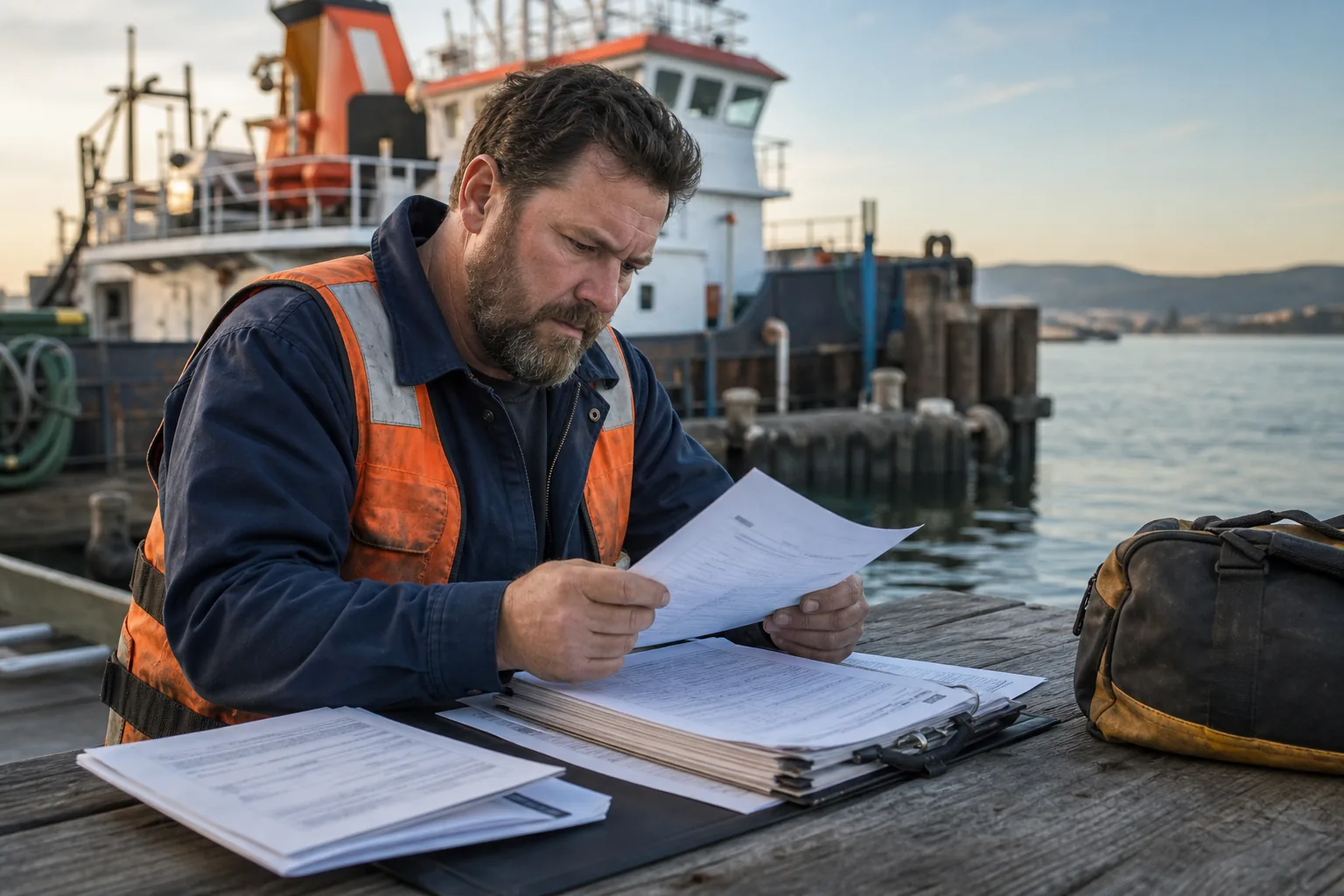
Be careful with forms from an insurer or employer. A document may look like a routine medical release but allow access to records that have nothing to do with the accident. A release may also contain settlement language.
Do not sign a waiver, resignation, broad medical authorization, or settlement agreement before getting legal advice. You may need immediate funds, but a quick payment can close claims before the full cost of care is known.
Never stop prescribed treatment to save money or appear well. Tell the doctor if the treatment is hard to afford. Missed appointments can give an insurer a reason to question the seriousness of your symptoms.
Keep communication calm. Do not threaten a supervisor. Do not accuse a coworker before the facts are clear. Your goal is a clean record that says what happened and shows how the injury affects your life.
maritimeattorney.ai can help readers organize the questions they need to ask about maritime injury claims. The site is an information resource, so use a qualified lawyer for advice about your specific facts.
Step 5: Speak With a Maritime Injury Attorney Before Settling
Speak with a maritime injury attorney before accepting money or giving a recorded interview. A lawyer can sort out the worker classification, possible defendants, deadlines, and value of future care.
Look for someone who handles maritime worker claims, not only land-based personal injury cases. Ask how the lawyer evaluates Jones Act claims, maintenance and cure, unseaworthiness, longshore claims, and third-party liability.
Prepare for the first meeting. Bring your accident notes, medical records, wage information, photographs, messages, and any forms you received. If you lack a document, do not delay the meeting. Explain what you know and what you do not know.
Ask direct questions:
- Which law may apply to my work?
- What notice or filing deadline should I watch?
- Who may be responsible besides my employer?
- How will medical care and living costs be handled?
- What will you need from me during the claim?
- What fee arrangement applies?
A good consultation should leave you with a plan. That plan may include more medical care, a written notice, a request for records, or an investigation of the vessel and work site.
Be wary of anyone who promises a fixed payout before reviewing your records. No honest lawyer can know the value of a serious injury without understanding the diagnosis, work limits, expected treatment, and legal claims.
Settlement timing matters. A settlement can resolve the dispute, but it may also end rights to future payment. Ask what claims the agreement releases and whether unpaid medical bills remain your responsibility.
You also have a duty to tell your lawyer the full story. Mention prior injuries, safety warnings, written statements, discipline, and gaps in treatment. Surprises hurt a case far more than difficult facts disclosed early.
maritimeattorney.ai is a useful starting point for general maritime injury information. If you decide to seek a consultation, bring a clear timeline rather than a folder of unsorted files. A simple chronology often shows what records are missing.

Do not wait until the employer offers a settlement. Early legal review gives counsel more time to preserve evidence and identify every possible source of recovery.
FAQ About Dredging Accident Injuries
What should I do after a dredging accident injury?
Get medical care, report the injury in writing, and preserve evidence. Tell medical staff about pain, breathing trouble, chemical exposure, or delayed symptoms. Record the task and equipment involved. Avoid recorded statements or settlement forms until a maritime lawyer reviews them.
Does the Jones Act cover dredge workers?
The Jones Act may cover a dredge worker who qualifies as a seaman, but the answer depends on the worker's duties and vessel connection. Working near water is not enough by itself. A lawyer will review vessel time, job duties, employer control, and the location of the injury.
Can I still file a claim if my employer says it was my fault?
You may still have a claim after an employer blames you for a dredging accident injury. Maritime law can assess shared fault, unsafe conditions, employer negligence, vessel unseaworthiness, or third-party conduct. Do not admit fault in writing before counsel reviews the accident evidence.
What evidence helps with a dredging accident case?
Useful evidence includes medical records, accident reports, vessel logs, photographs, witness names, training records, maintenance files, messages, and wage documents. Keep original files with their dates intact. Ask the employer to preserve video and equipment before the scene changes.
How long do I have to report a maritime injury?
There is no single deadline for every maritime injury claim. Notice rules and filing limits depend on the law involved, the employer, and the claim type. Report the injury promptly and ask a maritime attorney about all deadlines. Do not wait for symptoms to become permanent.
Conclusion
Treat a dredging accident injury as both a medical emergency and a legal matter. Get care, make a written report, preserve the evidence, and speak with maritimeattorney.ai or another qualified maritime lawyer before signing a release. Your next best step is to write a dated timeline today while the details are still clear.