
Cruise Ship Personal Injury: How to File a Claim
Getting hurt on a cruise ship is disorienting. You're far from home, possibly at sea, and the cruise line's staff is already managing the incident on their terms. What you do in the first 24 to 48 hours shapes your entire claim. This guide walks you through each step so you don't lose rights you didn't know you had.
Step 1: Seek Medical Attention Immediately After the Incident
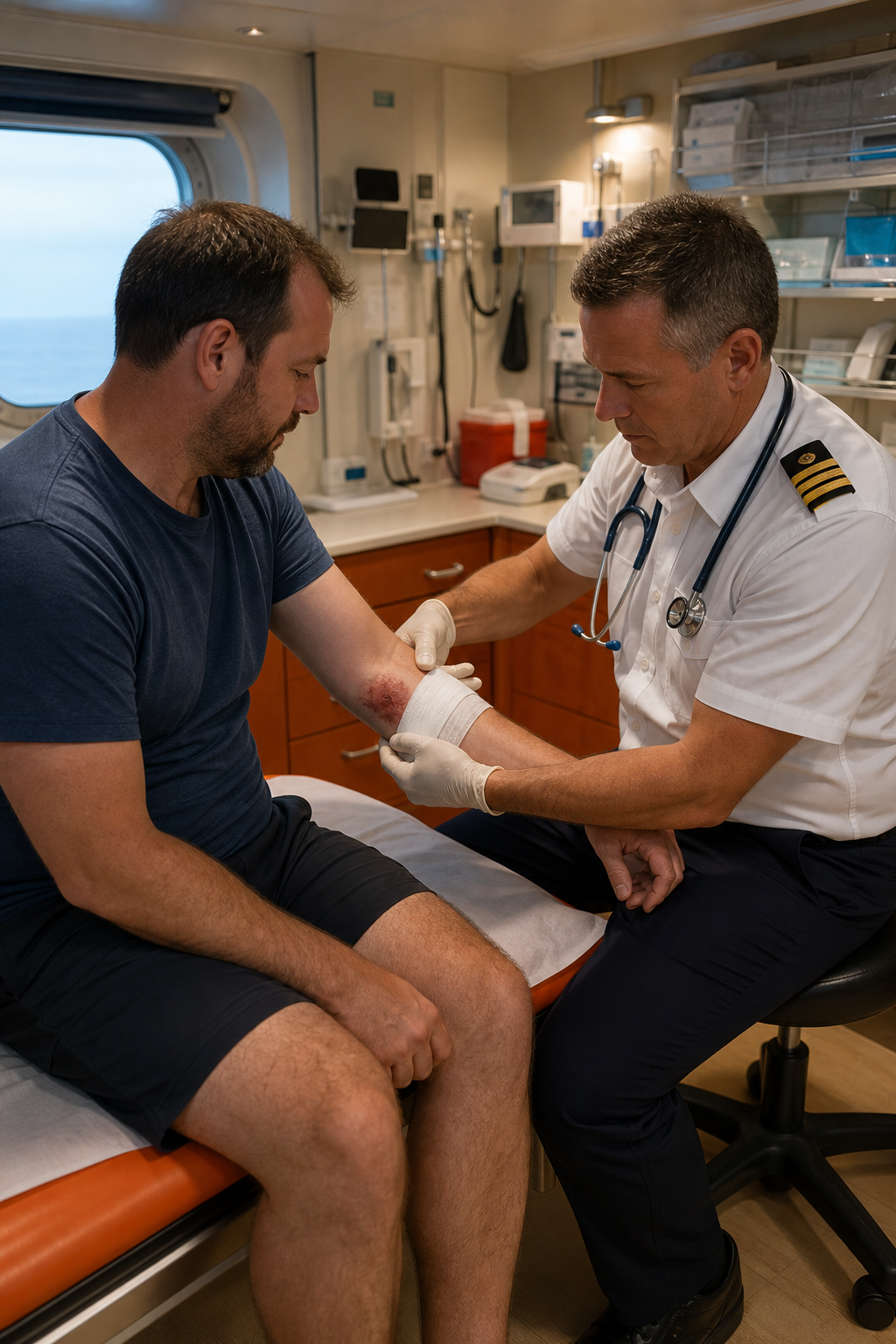
Go to the ship's medical center the moment the injury happens. Do not wait until you feel worse. Do not go back to your cabin to rest first. The ship's doctor will create a medical record, and that record becomes one of the most important documents in your case.
Tell the doctor everything. Describe the exact location where you were hurt, what caused it, and every symptom you feel, even minor ones. If you have a head injury, mention any dizziness or confusion. If you slipped, describe what surface you were on. Onboard medical notes are often the first official documentation the cruise line and its insurers will review.
One usable problem: ship doctors work for the cruise line. That doesn't mean they'll falsify records, but it does mean you should get a copy of every document they give you and keep it somewhere safe, like your phone's cloud storage, not just your cabin safe. According to the CDC's Vessel Sanitation Program, cruise ships are subject to federal health inspections, but medical care standards onboard vary widely by carrier and ship class.
After you leave the ship, see a doctor on land as soon as possible, even if you feel better. A gap in medical treatment is one of the first things a defense attorney will use to argue your injuries weren't serious.
Step 2: Report the Injury to Cruise Line Staff
After getting medical care, report the incident formally to ship staff. Find a senior officer, guest services manager, or security officer and tell them exactly what happened. Ask them to file an incident report and give you a copy.
This step matters for two reasons. First, it creates an official record with the cruise line before anyone edits or disputes the details. Second, it puts them on notice that an injury occurred, which has legal implications under maritime law. If you skip this step, the cruise line may later claim they had no knowledge of the dangerous condition that hurt you.
Be specific in what you say. Name the location on the ship. Give the time. Describe what happened without speculating about fault. You don't need to accuse anyone. You just need the facts documented. If a staff member witnessed the incident or helped you immediately after, write down their name and role.
Don't accept a verbal acknowledgment. If the staff tells you "we'll take care of it," ask again for a written incident report number or a copy. If they refuse, note that too. Keep every piece of paper they hand you.
One thing to avoid: signing any forms the cruise line gives you at this stage without reading them carefully. Some post-incident forms contain language that could be interpreted as releasing the cruise line from liability. If a form looks like more than a basic incident report, don't sign it until you've had a lawyer review it.
Step 3: Gather and Preserve Evidence on Board
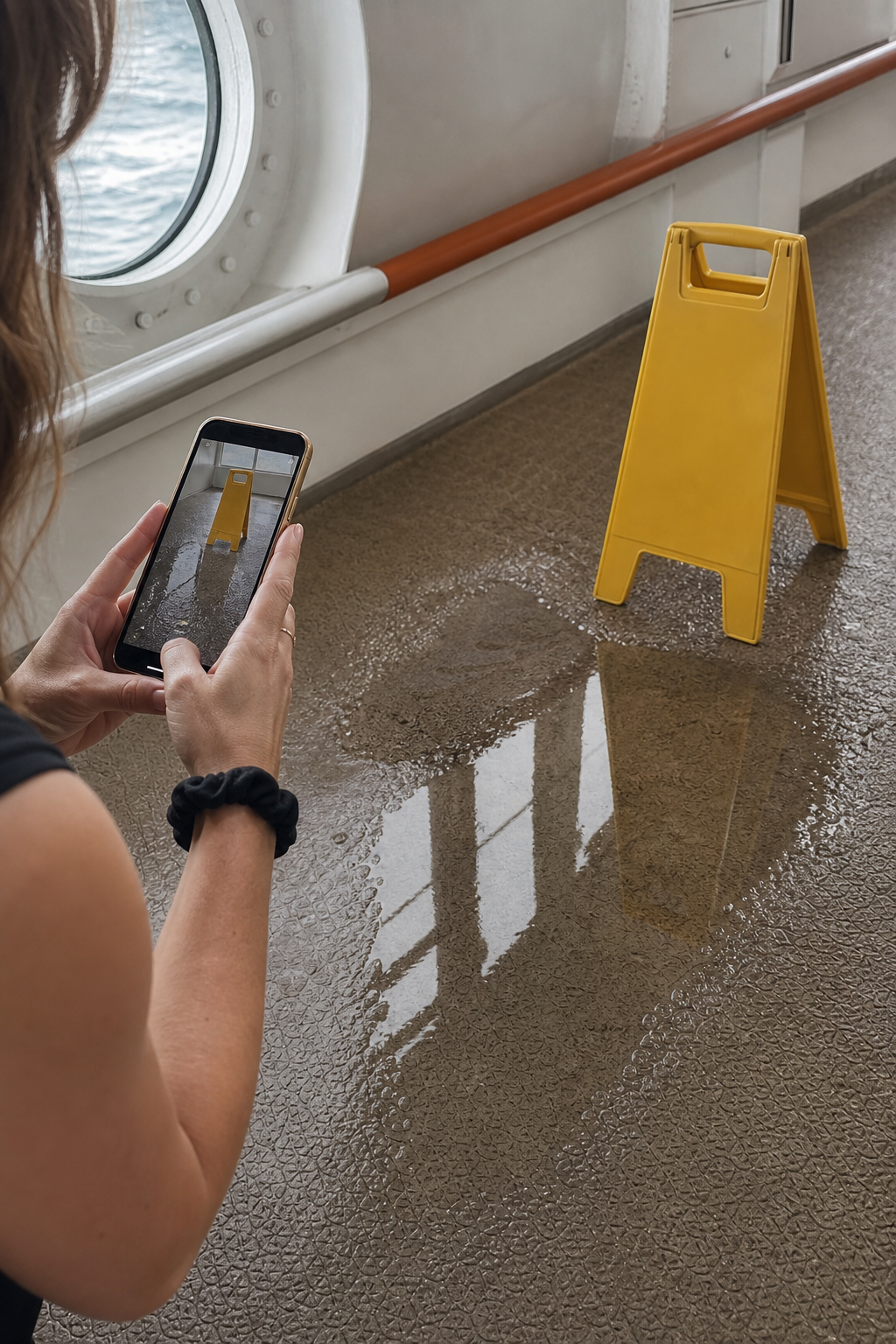
You have a short window to collect evidence before the ship's crew cleans up the scene or the conditions change. Use it.
Take photos immediately. Photograph the exact spot where the injury happened. Capture any hazard that caused it: a wet floor, broken railing, uneven step, spilled liquid, or poor lighting. Photograph your injuries too, including bruising and swelling, right away and again each day as they develop. Time-stamped phone photos are genuinely useful in court because metadata records when and sometimes where the image was taken.
Look for witnesses. Other passengers who saw what happened are valuable. Get their names and contact information while you're still on the ship. Once everyone disembarks and scatters to different states or countries, tracking them down becomes nearly impossible.
Write down everything you remember as soon as you can. Memory degrades fast after a traumatic event. A simple notes app entry with the time, location, what you were doing, what you saw, and who was nearby can fill in details that photos miss. Note whether there were any warning signs posted, and if so, where they were placed relative to the hazard.
If there's a video surveillance camera near the incident location, make a note of that too. Surveillance footage is something your attorney can formally request later, but it helps to document that the camera exists while you're still on the ship.
Step 4: Understand Your Legal Rights Under Maritime Law
Cruise ship injury claims don't follow your state's personal injury rules. They fall under federal maritime law, which is a distinct legal framework with its own standards for negligence, damages, and procedure. Most cruise ships sailing from U.S. ports are also governed by the Limitation of Vessel Owner's Liability Act, a federal statute that can cap what a carrier owes if they file first.
Under maritime law, a cruise line owes passengers a duty of reasonable care. That's a lower standard than what applies to some land-based businesses, which is one reason cruise ship injury claims can be harder to win than standard slip-and-fall cases. To succeed, you generally need to show the cruise line knew (or should have known) about the dangerous condition and failed to fix it or warn passengers about it.
The legal concept of "notice" is central here. If a crew member mopped a floor and didn't put out a wet floor sign, the cruise line likely had constructive notice of the hazard because their own employee created it. If a railing had been loose for weeks and maintenance records show prior complaints, that's actual notice. Both forms of notice can support a claim.
Jurisdiction is another factor many passengers miss. Most cruise ticket contracts require that any lawsuit be filed in a specific federal court, often in Miami, Los Angeles, or Seattle, regardless of where you live. This requirement has been upheld by U.S. courts. If you file in the wrong venue, your case can be dismissed, even if it's otherwise strong.
If the cruise line's negligence involved medical care you received onboard, that's a separate claim called maritime medical malpractice. The standards are different again, and the deadline to file can be shorter. A qualified cruise ship injury lawyer can tell you quickly which legal theories apply to your specific situation.
Step 5: Review the Cruise Ticket Contract and Deadlines
The ticket contract is the document you agreed to when you booked your cruise. Most passengers never read it. That's a problem, because it contains strict deadlines that can permanently bar your claim if you miss them.
The most common deadline is the written notice requirement. Many cruise lines require you to give written notice of your injury within six months of the incident. This is separate from the statute of limitations for filing a lawsuit. Miss the notice deadline and you may lose the right to sue even if the lawsuit deadline hasn't passed yet.
The statute of limitations for cruise ship injury claims is typically one year from the date of the incident, under the terms most major carriers include in their ticket contracts. This is shorter than the two or three-year window you might have for a standard personal injury claim on land. Some contracts set it even shorter. Read the exact language in your contract.
Find your ticket confirmation email or the cruise line's website and pull up the full passenger contract. Look for sections titled "Notice of Claims," "Limitation of Actions," or "Dispute Resolution." These are the sections that control your timeline.
If you can't locate the contract, call the cruise line and request it in writing. Do this immediately. Legal process is unforgiving about dates, and no attorney can help you if the deadline has already passed. Working with a legal team familiar with different areas of law, whether it's maritime injury or other civil claims, reinforces why deadline management matters across all practice areas, including cases handled by business and civil attorneys who regularly deal with contractual time limits.
Step 6: Consult a Maritime Personal Injury Attorney
Maritime law is not a specialty most general personal injury lawyers practice. The rules governing cruise ship claims, the specific federal statutes, the notice requirements, the venue restrictions, the negligence standards under admiralty law, are different enough that you need someone who works in this area regularly.
Most maritime injury attorneys offer free consultations. Use one early, ideally within the first week after your injury. You don't need to have a polished case ready. You just need to share what happened and let the attorney tell you whether you have a viable claim and what your timeline looks like.
At maritimeattorney.ai, injured passengers can get a fast assessment of their situation without having to cold-call law firms or guess whether their case qualifies. The platform connects you to maritime legal guidance and helps you understand the specific claims that apply to your injury type, whether that's a slip and fall, a medical negligence situation, or an assault by another passenger or crew member.
When you meet with an attorney, bring everything you've collected: photos, medical records, the incident report number, witness contact details, and a copy of your ticket contract. The more organized your documentation, the faster an attorney can assess the strength of your claim.
One realistic note: not every cruise ship injury becomes a strong legal case. If the cruise line had proper warning signs posted and the hazard was obvious, proving negligence gets harder. An honest attorney will tell you this upfront. What you want is someone who gives you a straight answer, not someone who promises a big settlement before seeing any facts. The maritimeattorney.ai team takes exactly that approach: assess first, promise nothing, then build the case if the facts support it.
"The biggest mistakes injured cruise passengers make are waiting too long to act and assuming their state's personal injury rules apply. Both errors can end a valid claim before it starts."
FAQ
How long do I have to file a cruise ship injury claim?
Most cruise ticket contracts set a one-year statute of limitations from the date of the injury, which is shorter than most state personal injury deadlines. Many contracts also require written notice of the injury within six months. Missing either deadline can permanently bar your claim, so contact a maritime attorney as soon as possible after the incident to confirm the specific deadlines in your ticket contract.
Can I sue a cruise line if I signed a ticket contract?
Yes. Signing the ticket contract doesn't waive your right to sue for injuries caused by the cruise line's negligence. The contract does set rules about where you must file (usually a specific federal court) and when you must file. Courts have enforced those rules, so you need to follow the contract's terms, but the right to bring a cruise ship personal injury lawsuit itself remains intact.
What damages can I recover after a cruise ship injury?
You may be able to recover medical expenses, lost wages, pain and suffering, and the cost of future treatment if your injury has lasting effects. In maritime law, the available damages depend on the specific legal theory your claim is based on. Some theories allow broader recovery than others. A maritime attorney can map out what applies to your specific injury and how strong each damages argument is.
What if the ship's doctor made my injury worse?
That's a maritime medical malpractice claim, which is separate from a standard negligence claim against the cruise line. The standards for proving it are different, and the deadline to file written notice may be shorter than for other injury types. Document every treatment you received onboard and every symptom that followed. Then consult a maritime attorney quickly, because these claims have some of the tightest deadlines.
Does it matter which country the cruise ship was registered in?
Yes, but less than most people think for U.S.-based passengers. Most major cruise lines sailing from U.S. ports are subject to U.S. federal maritime law regardless of where the ship is flagged. The ticket contract governs the venue and the applicable law. What matters most is where you boarded and what your ticket contract says, not the flag on the ship's stern.
Conclusion
The steps above follow a specific order because each one protects you for the next. Medical care creates the record. The incident report puts the cruise line on notice. Evidence preserves what the crew will later clean up. Understanding maritime law tells you what rules actually govern your case. And the ticket contract tells you how much time you have. If you've been hurt on a cruise, the best next action is a free consultation at maritimeattorney.ai before any of those deadlines slip past.