Alcohol Is the #1 Killer in Boating Accidents: What 2024 Coast Guard Data Reveals
Alcohol was the #1 known contributing factor in fatal boating accidents in 2024, responsible for 92 deaths — 20% of all boating fatalities.
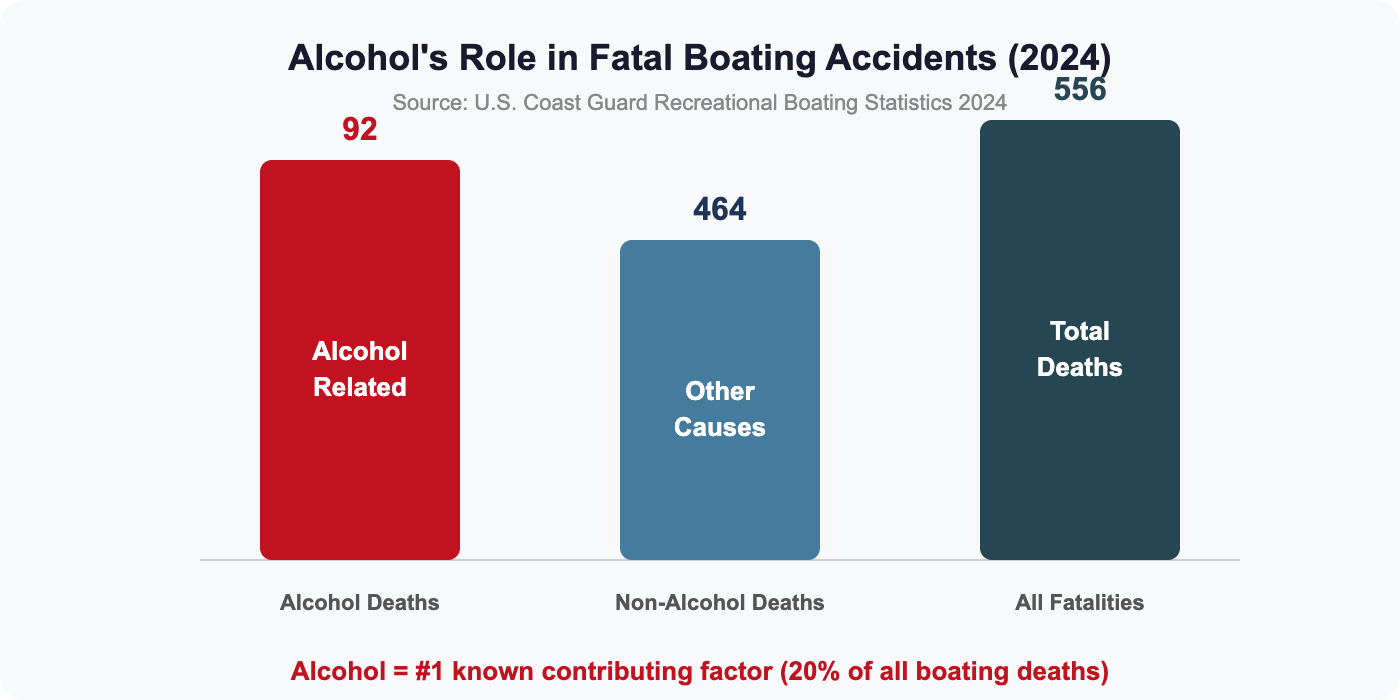
Drinking and boating is a deadly combination — and the numbers prove it. According to the U.S. Coast Guard's 2024 Recreational Boating Statistics, alcohol was the #1 known contributing factor in fatal boating accidents, responsible for 92 deaths — 20% of all boating fatalities.
BUI: Boating Under the Influence
Just like driving a car, operating a boat under the influence of alcohol is illegal in all 50 states. The federal legal limit for boating is 0.08% BAC — the same as for driving. But the effects of alcohol are amplified on the water due to sun exposure, wind, waves, engine vibration, and dehydration.
Studies show that a boater with a BAC of 0.10% is 10 times more likely to die in a boating accident than a sober boater. Even at lower levels, alcohol impairs balance, vision, judgment, and reaction time — all critical skills when operating a vessel.
Why Alcohol Is Even More Dangerous on Water Than on Roads
Several factors make alcohol-impaired boating especially lethal:
- No seat belts or airbags — falling overboard is the most common fatal outcome
- Environmental stressors — sun, heat, wind, and motion accelerate impairment
- Cold water shock — intoxicated individuals who fall overboard have severely reduced survival chances
- No lanes or traffic signals — waterways lack the structured safety systems of roadways
- Delayed emergency response — rescue on open water takes much longer than on roads
The Passenger Risk
It's not just operators at risk. Intoxicated passengers account for a significant portion of boating fatalities — often by falling overboard. On party boats, pontoons, and charter vessels, alcohol consumption among passengers creates a dangerous environment even when the captain is sober.
Legal Consequences and Your Rights
BUI carries serious legal penalties including fines, jail time, and loss of boating privileges. But if you or a loved one was injured by an intoxicated boat operator, you may have a strong negligence claim under maritime law.
Boat operators — including charter captains and rental companies — have a legal duty to operate their vessels safely. Operating under the influence is a clear breach of that duty. If alcohol contributed to an accident that caused your injury, you deserve experienced legal representation.
Maritime injury claims involving alcohol are often stronger than standard boating accident cases because the negligence is well-documented. Contact a maritime attorney to review your case.