How to Handle Maritime Drug Testing
Maritime drug testing can feel like a maze of rules, paperwork, and deadlines. Follow these five steps and you’ll keep your crew compliant and your operation safe.
Step 1: Identify the Rules and Personnel Covered
The Coast Guard’s drug‑testing rule applies to every commercial vessel that carries licensed crew members. Anyone listed on a Certificate of Inspection (COI) or holding a Merchant Mariner Credential must be in the testing pool. Even seasonal crew aren’t exempt , the regulation treats them the same as full‑time staff.
Start by pulling the rule itself. The Coast Guard’s employer guide spells out the ten mandatory requirements, from random testing to annual reporting. It also lists the fines for non‑compliance , $7,500 per day and possible license suspension. USCG employer guide
Next, inventory your crew. Separate those who perform safety‑sensitive functions (steering, line handling, life‑vest distribution) from non‑critical staff. Mark each person in a spreadsheet so you can see who needs testing now and who will join later.
Finally, verify who in your organization will act as the point of contact for the testing program. This is usually the safety officer or human‑resources manager. Give them a copy of the rule and a clear list of covered personnel.
Step 2: Build a Written Maritime Drug Testing Policy
A solid policy is the backbone of any compliant program. It must be on file, easy to read, and referenced whenever a crew member is hired or tested.
Include these core elements:
Make the language plain. For example, write “All crew must submit a urine sample at an approved site” instead of “Specimens shall be collected in accordance with 49 CFR 40.25.”
Once drafted, have a licensed Medical Review Officer (MRO) sign off. Their signature shows the policy meets the medical standards required by 46 CFR Part 16.
Need a template? Maritime Employer Negligence: An Explainer Guide offers a free checklist you can adapt.
Step 3: Schedule Tests and Select Qualified Providers
Only the DOT 5‑panel test is accepted for merchant mariners. It looks for marijuana, cocaine, PCP, opiates, and amphetamines. The sample must be sent to a DHHS‑certified lab and reviewed by a qualified MRO. Wikipedia on drug testing
Decide whether you’ll run a one‑off test for a single credential transaction or enroll in a consortium that handles random testing year‑round. Consortia locate collection sites within 30‑40 miles of your base and manage the paperwork for you.
When you pick a lab, verify its SAMHSA certification. A quick call to the lab’s compliance officer can confirm that they follow 49 CFR 40.29 cutoff levels.
Schedule the first round of random tests early in the calendar year. Use a computer‑generated randomization system that meets the 50 % annual testing requirement. Mark the dates in your crew roster so the point‑of‑contact can notify each selected member.
After the lab returns results, the MRO will send a confidential report to your safety officer. That report kicks off the next step.
Step 4: Manage Collection, Results, and Positive Tests
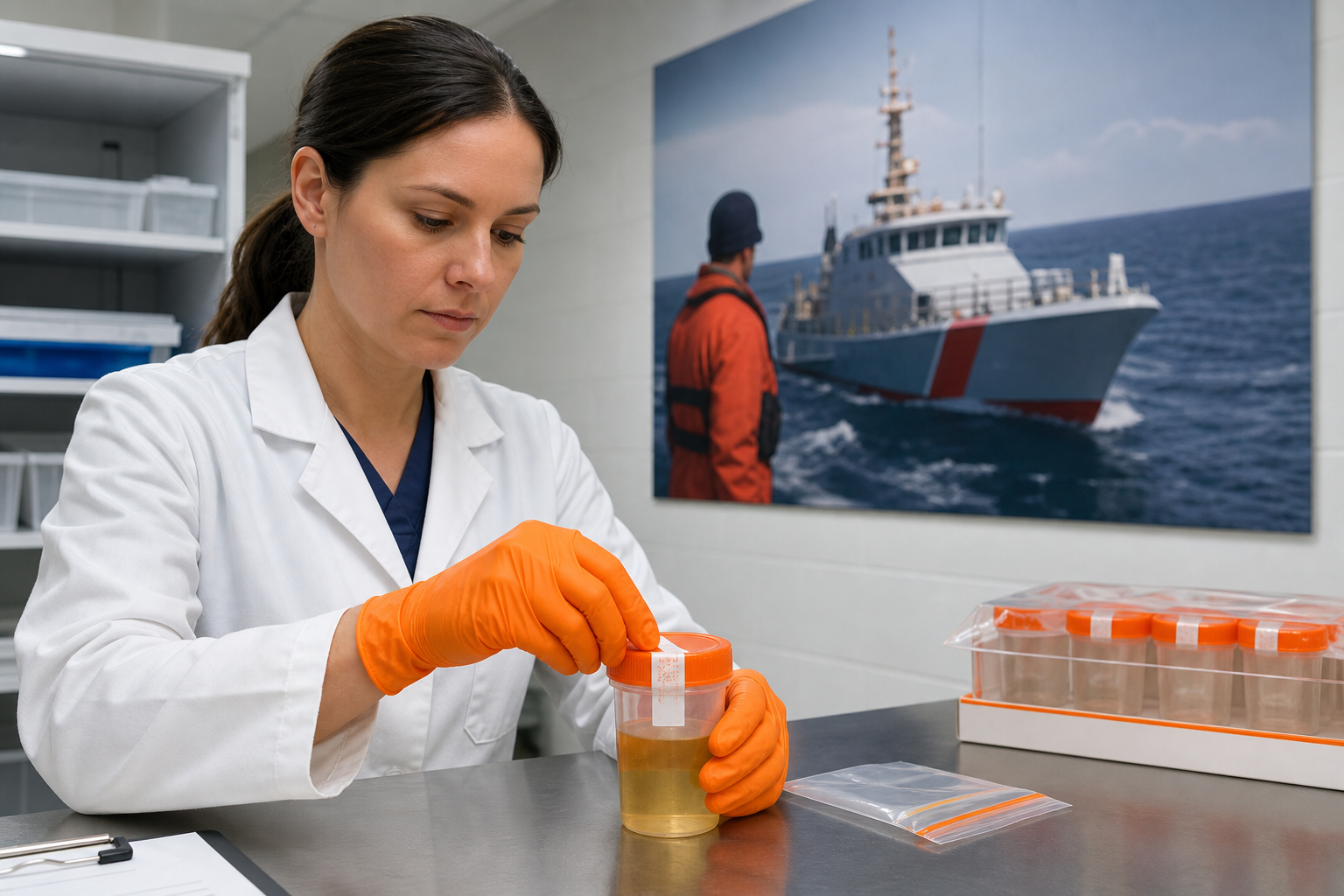
When a specimen arrives at the lab, the chain‑of‑custody form travels with it. The lab locks the sample, runs the DOT panel, and stores any confirmed positive in a frozen archive.
The MRO reviews the lab’s findings. If the result is negative, the crew member returns to duty and the record is filed. If it’s positive, the MRO must verify the result and then contact the employer.
At that moment you must act fast. Remove the mariner from any safety‑sensitive duties, document the removal, and prepare a written report for the nearest Officer in Charge, Marine Inspection (OCMI). The report must name the crew member, the credential number, the test date, and the substance detected. USCG regulation
Next, refer the mariner to a Substance Abuse Professional (SAP). The SAP conducts an assessment, recommends treatment, and clears the individual for a return‑to‑duty test after a period of sobriety.
Step 5: Handle Refusals, Records, and Legal Exposure
If a crew member refuses to submit a specimen without a valid medical excuse, the refusal counts as a positive under the rule. Treat it the same way: remove the mariner, report to OCMI, and start the SAP referral.
All documentation , policy, test orders, chain‑of‑custody forms, lab reports, MRO notices, SAP clearances , must be kept for at least five years. The Coast Guard can request any of these records during an inspection.
Failure to keep proper records or to act on a positive result can lead to civil penalties of $5,000 per day and possible suspension of your vessel’s license. That’s why many operators join a consortium that handles record‑keeping and annual Management Information System (MIS) filing for them.
Finally, consult a maritime attorney if you anticipate litigation. An experienced lawyer can help you handle credential suspensions, appeal decisions, and protect your company from downstream liability.
FAQ
What crew members must be tested under maritime drug testing?
All crew listed on a Certificate of Inspection or anyone holding a Merchant Mariner Credential must be covered, including seasonal and temporary staff.
How often does random testing need to occur?
The Coast Guard requires that at least 50 % of the eligible crew be tested randomly each year.
Can I use a company‑policy drug test instead of a DOT test?
No. Only the DOT 5‑panel test meets the federal requirement for pre‑employment, random, reasonable‑cause, and post‑accident testing.
What should I do if a crew member tests positive?
Remove the mariner from safety‑sensitive duties immediately, report the result in writing to the nearest OCMI, refer the mariner to a Substance Abuse Professional, and keep detailed records of every step.
Do I need a Medical Review Officer for every test?
Yes. Every lab result must be reviewed by a certified MRO before you can act on it.
How long must I keep drug‑testing records?
Records must be retained for at least five years and be available for Coast Guard inspection at any time.
Staying on top of these steps keeps your fleet compliant and your crew safe.
Ready to put this into practice? maritimeattorney.ai was built for exactly this.